Affiliate Link Tracking: Understanding Affiliate Tracking, Analytics, and Conversions
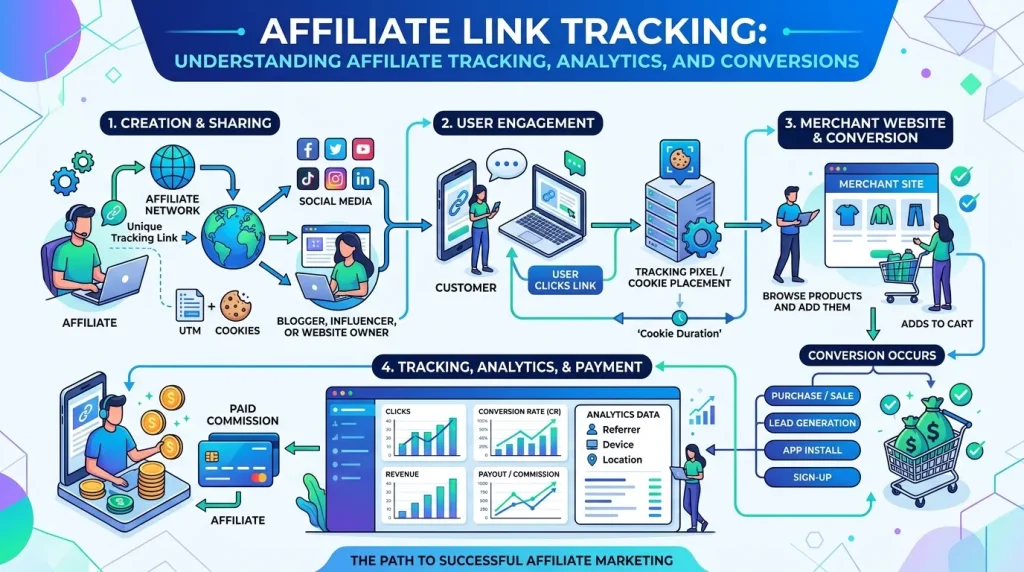
Affiliate link tracking is an essential part of modern affiliate marketing because it allows businesses, advertisers, publishers, and affiliates to understand how promotional links generate traffic, leads, and sales. Without reliable tracking, it can be difficult to determine which affiliates are generating results, which campaigns are performing well, and how commissions should be attributed.
Affiliate marketing depends on measurable relationships. An affiliate promotes a product or service using a unique link, and when a customer interacts with that link and completes a qualifying action, the affiliate may receive a commission. The tracking system connects the customer’s activity with the appropriate affiliate so that the transaction can be accurately recorded.
As affiliate programs become more complex, businesses may work with hundreds or thousands of affiliates across websites, social media platforms, email campaigns, video channels, and other marketing environments. Managing these activities manually can quickly become difficult. This is where affiliate link tracking, tracking software, analytics, and automated attribution become increasingly valuable.
What Is Affiliate Link Tracking?
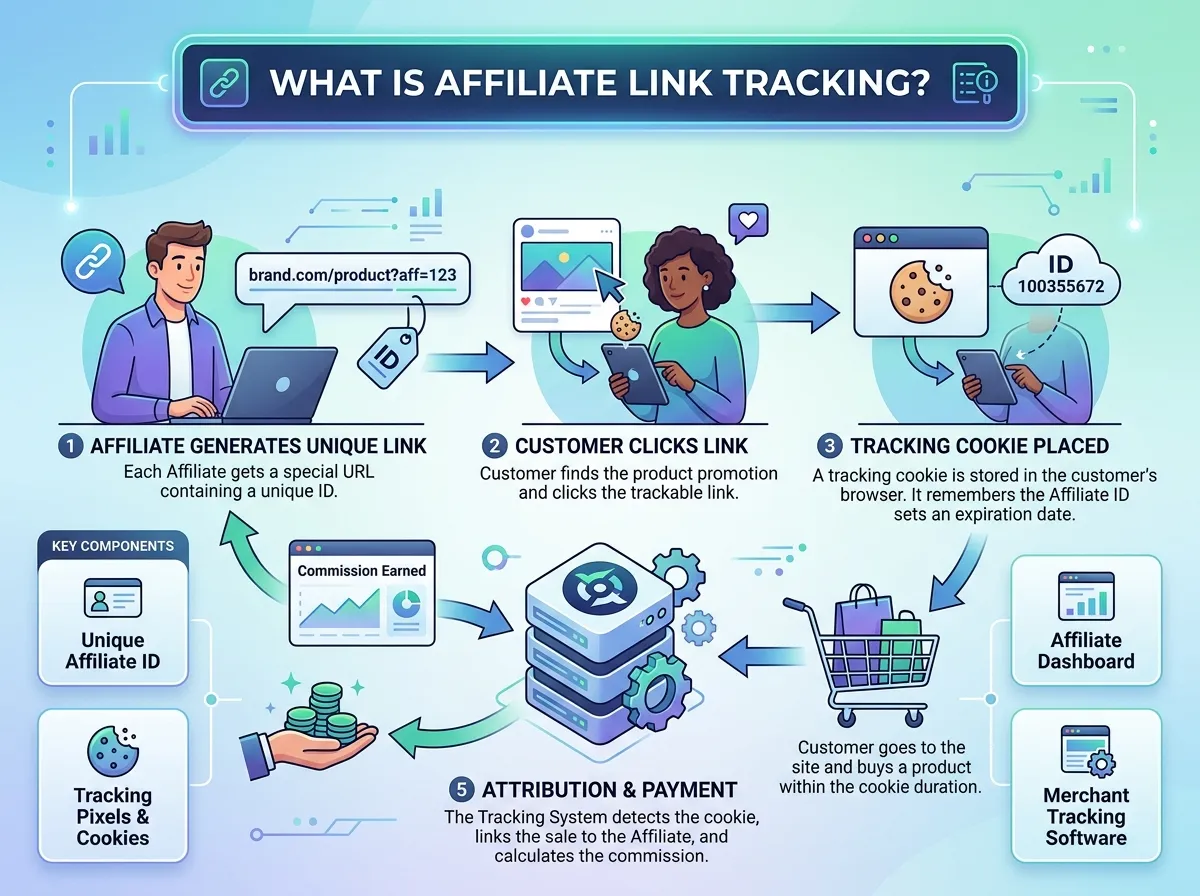
Affiliate link tracking is the process of monitoring clicks and conversions generated through unique affiliate URLs. Each affiliate typically receives a link containing identifying information that allows a tracking platform to associate visitor activity with a particular partner.
When someone clicks an affiliate link, tracking technology can record information such as the affiliate identifier, campaign, referral source, timestamp, landing page, and other relevant attribution data. If the visitor later completes a tracked action, the system can connect that conversion to the original affiliate referral according to the program’s attribution rules.
The tracked action may be a purchase, registration, subscription, app installation, lead submission, or another conversion defined by the affiliate program.
This makes affiliate link tracking much more than simply counting clicks. It provides the foundation for understanding the complete relationship between affiliate traffic and business outcomes.
Why Affiliate Link Tracking Matters
Affiliate marketing is performance-oriented, which means businesses need reliable information about results. Traffic numbers alone do not reveal whether an affiliate is generating valuable customers.
For example, one affiliate might generate 10,000 clicks but only a small number of purchases, while another might generate 2,000 clicks and produce significantly more revenue. Without conversion and sales data, the business may incorrectly assume that the affiliate generating the most traffic is the strongest performer.
Affiliate link tracking provides greater visibility into this difference. It can be especially useful when businesses work with influencers and content creators, where understanding influencer marketing psychology and consumer behaviour can help explain why certain audiences respond more effectively to specific promotional messages.
Businesses can analyze clicks, conversions, conversion rates, revenue, commissions, average order values, and other performance indicators. Affiliates can also use tracking data to understand which promotional methods generate the strongest results.
Reliable tracking can therefore improve decision-making for both sides of the affiliate relationship.
Affiliate Tracking Software
Affiliate tracking software provides the technology needed to create, manage, and monitor affiliate links and referrals. Instead of manually recording affiliate activity, businesses can use specialized platforms to automate tracking and reporting.
Modern software may include features for affiliate registration, link creation, conversion tracking, commission management, campaign reporting, fraud monitoring, and performance analysis.
The software generally assigns a unique identifier to each affiliate. When an affiliate shares a promotional URL, the tracking system recognizes that identifier when visitors click the link.
Depending on the implementation, tracking can use cookies, first-party data, server-to-server tracking, pixels, postback URLs, or other attribution technologies.
The right tracking infrastructure depends on the business model, technology stack, privacy requirements, and affiliate program structure.
Affiliate Link Management
Affiliate link management involves organizing and maintaining the URLs used throughout an affiliate program. As the number of affiliates and campaigns increases, businesses may have thousands of links distributed across different channels.
Without effective management, outdated links can remain active, campaigns can become difficult to identify, and reporting can become confusing.
A centralized system can help businesses organize affiliate links according to affiliate, product, campaign, geographic market, promotional channel, or other relevant categories.
Link management can also make it easier to update destination URLs. If a product page changes, a business may need to redirect affiliate traffic to a new destination without requiring every affiliate to manually replace their existing links.
Branded or shortened tracking URLs can also make links easier to share, although transparency and compliance should always be considered when modifying affiliate URLs.
Affiliate Tracking System
An affiliate tracking system connects affiliate referrals with the actions generated by those referrals. It typically sits between the affiliate’s promotional activity and the advertiser’s conversion environment.
The system records the referral and associates it with a unique affiliate identifier. When a visitor performs a tracked conversion, the system attempts to attribute that action to the appropriate affiliate.
This process can become more complicated when customers interact with several marketing channels before converting. A customer might click an affiliate link, return through an organic search result, receive an email, and then purchase later.
Attribution rules determine how the conversion is credited. Different affiliate programs may use different attribution windows and models, so businesses need to understand how their tracking system handles multiple interactions.
A well-designed tracking system provides consistent attribution while reducing the amount of manual work required to manage affiliate activity.
Affiliate Conversion Tracking
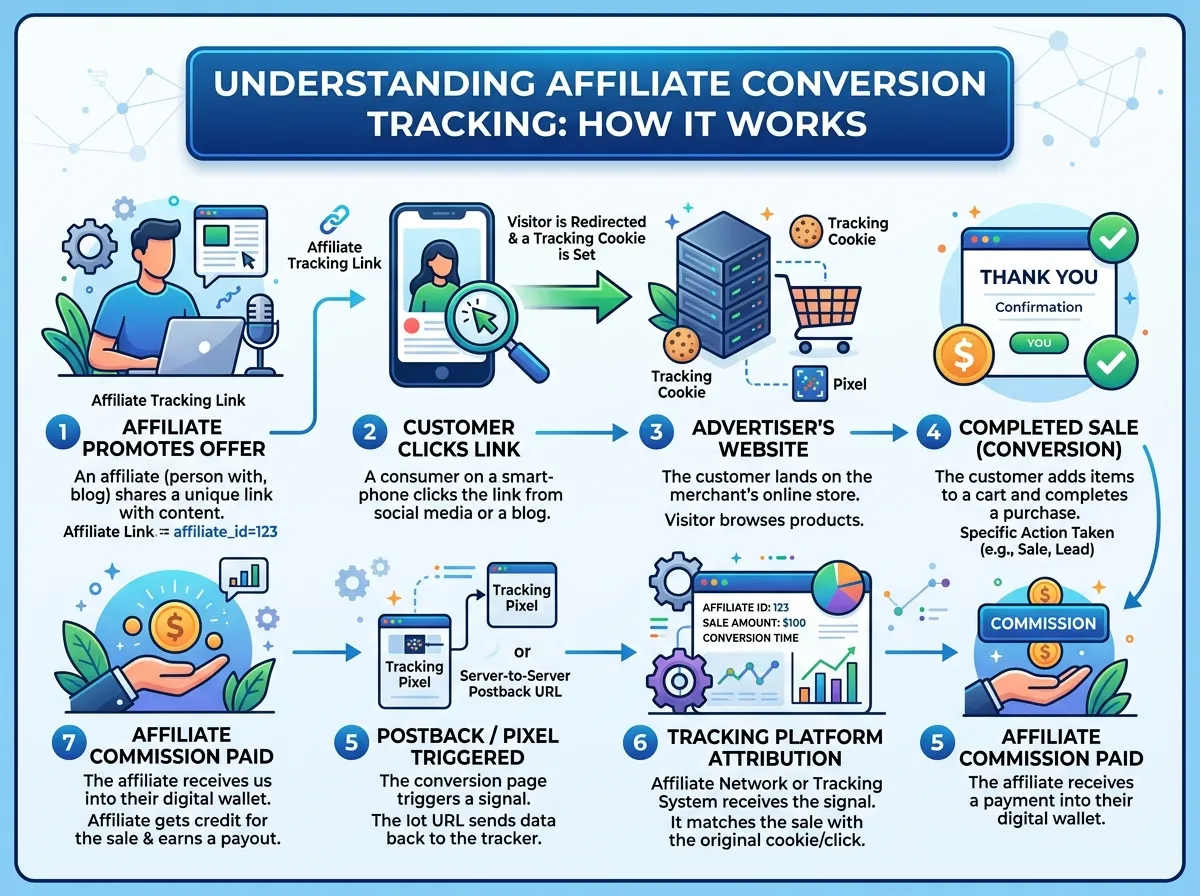
Affiliate conversion tracking measures the actions that occur after someone interacts with an affiliate link. While clicks indicate interest, conversions provide stronger evidence of marketing effectiveness.
A conversion could represent a completed purchase, lead submission, software subscription, free-trial registration, application download, or another desired action.
For ecommerce businesses, conversion tracking can connect an affiliate referral to an order and determine the revenue generated by that referral. For lead-generation businesses, the system may track form submissions and later connect qualified leads to affiliate sources.
Accurate conversion tracking is essential for commission calculations. If a conversion is not properly attributed, an affiliate may not receive the correct commission, while a business may have inaccurate performance data.
Testing tracking implementations is therefore an important part of maintaining an affiliate program.
Affiliate Marketing Analytics
Affiliate marketing analytics turns tracking information into insights that can support better marketing decisions. Analytics can reveal which affiliates, products, campaigns, and channels are generating the strongest results.
Businesses can compare traffic volume with conversion rates and revenue to understand the quality of affiliate traffic.
For example, an affiliate with a high conversion rate may be particularly effective at reaching an audience with strong purchase intent. Another affiliate may generate substantial awareness but produce fewer immediate conversions.
Analytics can also reveal trends over time. A campaign may perform strongly during a product launch but decline afterward. Seasonal promotions may produce different results from evergreen affiliate campaigns.
Analyzing this information helps businesses understand not only what happened but also where opportunities for improvement may exist. For influencer-led campaigns, measuring these outcomes is equally important, particularly when evaluating influencer marketing ROI across different creators, campaigns, and promotional channels.
Affiliate Link Tracking Tools
Affiliate link tracking tools range from simple URL tracking systems to comprehensive affiliate management platforms. The complexity of the tool should match the size and needs of the affiliate program.
Small businesses may only require basic link creation and conversion reporting. Larger organizations may need advanced attribution, API integrations, automated commission calculations, fraud detection, partner segmentation, and detailed reporting.
Tracking tools can also integrate with ecommerce platforms, customer relationship management systems, payment processors, analytics platforms, and advertising technologies.
The purpose is to create a connected data environment where affiliate activity can be evaluated alongside other marketing and sales information.
Businesses should also consider privacy and compliance when selecting tracking technology. Changes in browser policies, privacy regulations, cookie restrictions, and consent requirements have made affiliate tracking more technically complex.
Affiliate Referral Tracking
Affiliate referral tracking focuses on identifying where referred visitors and customers originate. The affiliate link acts as the connection between the promotional activity and the visitor’s subsequent actions.
Referral tracking can help businesses understand the sources responsible for generating valuable traffic.
For example, a business might have affiliates promoting its products through review websites, YouTube videos, newsletters, social media, and comparison websites. Tracking allows the company to compare the performance of these different referral environments.
The information can also help affiliates improve their own strategies. If a specific content format consistently produces higher conversion rates, the affiliate can create more content around that approach. This can be particularly useful when developing sponsored content marketing campaigns, where performance tracking can help businesses evaluate engagement, conversions, and overall campaign effectiveness.
Referral tracking therefore benefits both advertisers and publishers. Businesses can use these insights to refine their affiliate programs, while publishers can identify the content and channels that generate the best results.
For businesses building their own affiliate-focused websites, a structured approach to content, SEO, monetization, and referral tracking is also important. A guide to building a successful affiliate marketing website can provide additional context for developing a sustainable affiliate strategy.
Affiliate Campaign Tracking
Affiliate campaign tracking allows businesses to distinguish between different promotional campaigns within an affiliate program. An affiliate may promote the same product through multiple campaigns, seasonal offers, landing pages, or promotional messages.
Campaign identifiers can make these activities easier to analyze.
For instance, an affiliate could promote a product during a holiday campaign and then run an evergreen campaign several weeks later. Tracking the campaigns separately allows the business to determine which promotion generated more clicks, conversions, and revenue.
Campaign tracking also makes it easier to evaluate promotional strategies across affiliates. Businesses can identify which messaging, offers, or products are consistently associated with stronger results.
This creates a more detailed understanding of affiliate performance than simply measuring total affiliate revenue.
Affiliate Performance Tracking
Affiliate performance tracking provides a broader view of how individual affiliates contribute to a program. Businesses can evaluate affiliates using metrics such as clicks, conversions, conversion rate, revenue, commission, earnings per click, and customer value.
Performance data can help identify high-performing partners as well as affiliates who may require additional support.
For example, an affiliate may generate substantial traffic but have a low conversion rate. This could indicate a mismatch between the affiliate’s audience and the promoted product, or it could suggest that the landing page or offer needs improvement.
Another affiliate might generate fewer visitors but consistently produce high-value customers. That affiliate could represent an important growth opportunity.
Performance tracking makes these differences visible.
Affiliate Sales Tracking
Affiliate sales tracking focuses specifically on revenue generated through affiliate referrals. It is particularly important for ecommerce and subscription businesses where commissions are directly connected to sales.
When an affiliate-generated customer completes a transaction, the tracking system can record the sale and attribute the associated revenue to the affiliate.
Businesses can then compare affiliate sales with other acquisition channels. This helps determine the overall contribution of affiliate marketing to revenue growth.
Sales tracking can also support commission management. Different affiliates may have different commission rates, product categories may have different payouts, and special promotions may temporarily change commission structures.
Automated tracking and reporting can reduce errors when managing these calculations.
The Relationship Between Clicks, Conversions, and Revenue
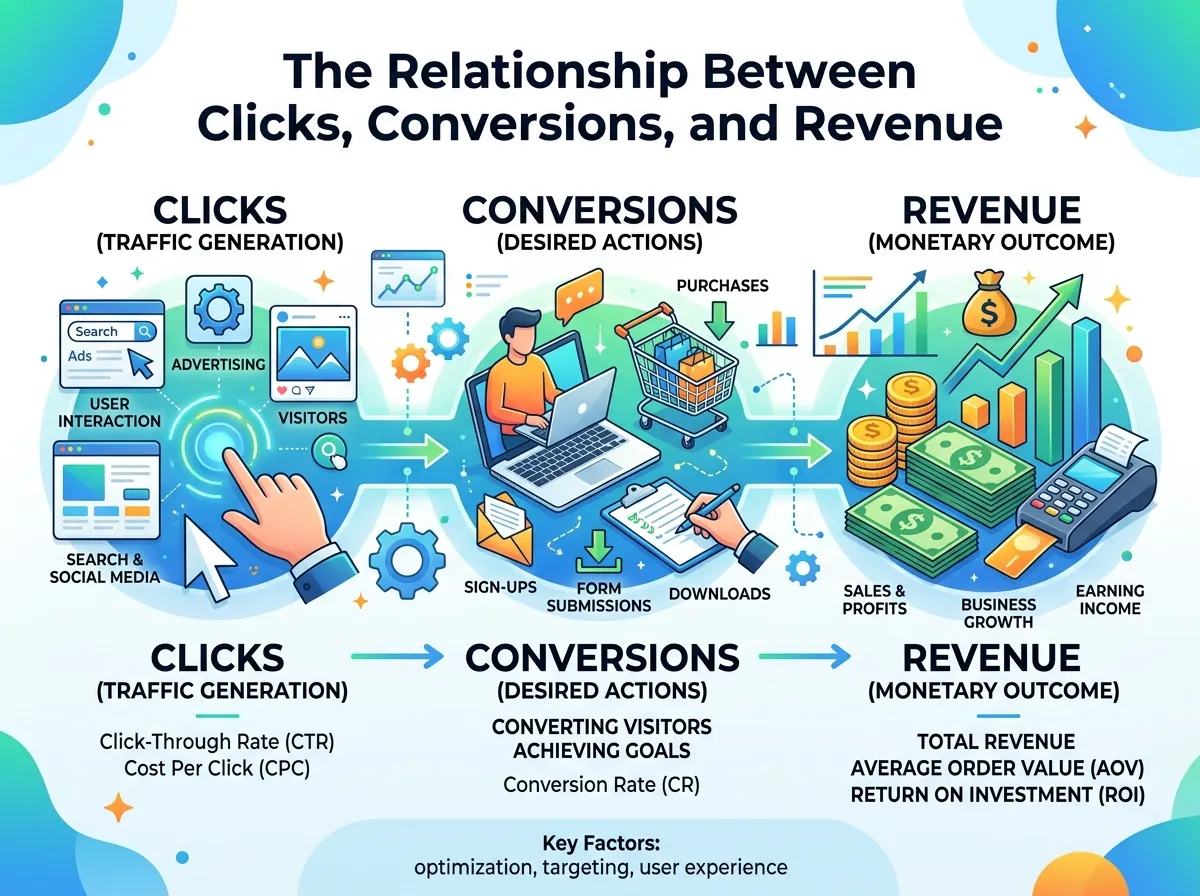
One of the most important aspects of affiliate analytics is understanding the relationship between traffic, conversions, and revenue.
Clicks measure the number of people who interact with affiliate links. Conversion rate measures how many of those visitors complete a desired action. Revenue measures the financial value generated from those conversions.
Looking at only one metric can produce misleading conclusions.
An affiliate with many clicks but few conversions may have strong promotional reach but weak audience-product alignment. An affiliate with fewer clicks but high conversions may have a highly relevant audience.
Revenue adds another dimension because not all conversions have the same value. A campaign producing a large number of low-value purchases may generate less revenue than a campaign producing fewer high-value transactions.
Comprehensive tracking allows businesses to evaluate all these factors together.
Affiliate Link Tracking and Attribution
Attribution is one of the most challenging aspects of affiliate link tracking. Customers rarely follow a perfectly predictable path from first interaction to purchase.
A person may discover a product through an affiliate article, research it independently, click a retargeting advertisement, return through a search engine, and then purchase after receiving an email.
Affiliate programs need defined attribution rules to determine which interaction receives credit.
Attribution windows are also important. A visitor may click an affiliate link today but make a purchase several days later. The tracking system needs to determine whether that purchase falls within the program’s eligible referral period.
Clear attribution rules help reduce disputes and create greater transparency between advertisers and affiliates.
Privacy and the Future of Affiliate Link Tracking
Privacy expectations and technological changes continue to influence affiliate tracking. Browser restrictions, consent requirements, third-party cookie limitations, and changing regulations have encouraged businesses to explore more resilient tracking methods.
First-party tracking and server-side technologies are becoming increasingly important in situations where traditional browser-based tracking may be less reliable.
At the same time, businesses need to maintain responsible data practices. Tracking should be implemented transparently and in accordance with applicable privacy and consent requirements.
The future of affiliate tracking is likely to involve more sophisticated attribution, stronger integration with customer data platforms, improved fraud detection, and greater use of automated analytics.
Artificial intelligence may also help businesses identify unusual traffic patterns, predict affiliate performance, segment partners, and identify opportunities within large datasets.
Conclusion
Affiliate link tracking provides the foundation for measuring and managing modern affiliate marketing programs. From identifying referral traffic to recording conversions and attributing sales, reliable tracking allows businesses to understand how affiliate partnerships contribute to growth.
Affiliate tracking software, affiliate link management, and a reliable affiliate tracking system can simplify the technical side of managing affiliate relationships. Meanwhile, affiliate conversion tracking, affiliate marketing analytics, and affiliate performance tracking provide the data needed to evaluate results.
As affiliate programs become more sophisticated, affiliate referral tracking, affiliate campaign tracking, and affiliate sales tracking can help businesses understand which partners and promotional activities create meaningful commercial value.
Ultimately, effective affiliate link tracking is not simply about counting clicks. It is about connecting promotional activity with real customer actions and business outcomes. When tracking data is accurate, businesses can make more informed decisions, affiliates can optimize their campaigns, and both sides can build stronger and more profitable partnerships.
Frequently Asked Questions
1. What is affiliate link tracking?
Affiliate link tracking is the process of monitoring clicks, referrals, conversions, and sales generated through unique affiliate links. It allows businesses to identify which affiliate generated a particular customer action.
2. How does affiliate link tracking work?
An affiliate receives a unique tracking link containing an identifier. When someone clicks the link, the tracking system records the referral. If the visitor later completes a qualifying action, the system attributes the conversion according to the affiliate program’s tracking and attribution rules.
3. Why is affiliate tracking software important?
Affiliate tracking software automates the process of creating links, recording referrals, tracking conversions, calculating commissions, and generating performance reports. It can be particularly valuable for businesses managing large affiliate programs.
4. What is affiliate conversion tracking?
Affiliate conversion tracking measures actions completed after an affiliate referral, such as purchases, registrations, subscriptions, or lead submissions. It helps businesses understand whether affiliate traffic produces meaningful results.
5. What is affiliate link management?
Affiliate link management involves organizing, monitoring, updating, and maintaining affiliate URLs. It helps businesses manage large numbers of affiliate links and keep campaign tracking organized.
6. What metrics should affiliate marketers track?
Common metrics include clicks, conversions, conversion rate, revenue, commissions, earnings per click, average order value, and customer acquisition performance. The most useful metrics depend on the objectives of the affiliate program.
7. What is affiliate referral tracking?
Affiliate referral tracking identifies the affiliate responsible for sending a visitor or customer to a business. It connects referral activity with later actions so that conversions and commissions can be properly attributed.
8. How does affiliate campaign tracking improve marketing?
Affiliate campaign tracking allows businesses to compare different promotional campaigns, offers, landing pages, and marketing messages. This makes it easier to identify which campaigns generate the strongest traffic, conversions, and revenue.
9. Can affiliate tracking work without third-party cookies?
Affiliate tracking can use different technologies, including first-party tracking, server-side tracking, postbacks, and other attribution methods. The appropriate approach depends on the affiliate platform, website technology, privacy requirements, and consent framework.
10. How can businesses improve affiliate performance tracking?
Businesses can improve performance tracking by using consistent tracking parameters, reliable conversion tracking, clear attribution rules, accurate reporting, and regular analysis of affiliate traffic, conversions, revenue, and customer value.