Sponsored Content Marketing Explained: From Planning to Performance

Sponsored content marketing is a paid strategy where brands fund content that aligns with a publisher’s editorial style. This guide covers everything from core definitions and planning frameworks to performance measurement—helping marketers build campaigns that drive real results.
Brands spend billions on sponsored content every year—and the numbers keep climbing. According to Business Insider Intelligence, spending on sponsored content was projected to reach $18.27 billion by 2025. The reason is straightforward: audiences are increasingly resistant to traditional ads, and sponsored content marketing offers a subtler, more credible alternative.
But here’s where most brands get it wrong. They confuse sponsored content marketing with banner ads or native advertising, launch campaigns without a clear plan, and then wonder why the results are underwhelming. A well-executed sponsored content marketing strategy requires careful planning, creative alignment, and a disciplined approach to performance tracking—none of which happen by accident.
This guide breaks down every stage of the process. Whether you’re new to sponsored content marketing or looking to sharpen an existing program, you’ll find a clear, practical framework here—covering what sponsored content marketing is, how it works, how to plan a campaign from scratch, and how to measure what’s actually driving results.
By the end, you’ll have a complete picture of how to use sponsored content marketing as a growth lever, not just a line item in your media budget.
What Is Sponsored Content Marketing?

Sponsored content marketing is a form of paid media where a brand pays a publisher, creator, or platform to produce or distribute content that educates, entertains, or informs an audience—while aligning with the sponsor’s marketing objectives.
Unlike a display ad that interrupts the user experience, sponsored content marketing is designed to blend into the surrounding editorial environment. The content looks and feels like something the publisher would produce organically, but it’s funded by a brand with a specific goal: awareness, engagement, lead generation, or conversion.
This distinction matters. Sponsored content marketing is not the same as a paid advertisement that screams “buy this.” It’s closer to a recommendation from a trusted source—delivered in a format the audience already trusts and consumes.
What makes sponsored content “sponsored”?
The defining feature of sponsored content marketing is transparency combined with editorial alignment. Publishers are required by the FTC (Federal Trade Commission) to disclose when content is paid for. Common disclosures include labels like “Sponsored,” “Paid Partnership,” or “Presented by [Brand].”
Despite this disclosure, audiences still engage with sponsored content marketing at high rates—provided the content is genuinely useful. A 2021 study by Edelman found that 61% of consumers trust branded content more than traditional advertising when it provides real value.
Sponsored content marketing formats
Sponsored content marketing appears in many formats across different channels:
|
Format |
Platform Examples |
Best For |
|---|---|---|
|
Sponsored articles |
Media publications, blogs |
Brand awareness, SEO |
|
Sponsored videos |
YouTube, streaming platforms |
Storytelling, product education |
|
Sponsored social posts |
Instagram, TikTok, LinkedIn |
Reach, engagement |
|
Sponsored podcasts |
Spotify, Apple Podcasts |
Niche audience targeting |
|
Sponsored newsletters |
Substack, Morning Brew |
High-intent audiences |
|
Sponsored research/reports |
Industry sites, trade media |
B2B authority, lead gen |
Each format serves different objectives within a broader sponsored content marketing strategy. Choosing the right format depends on where your audience spends time and what type of content they trust.
How Does Sponsored Content Marketing Work?
At its core, sponsored content marketing works by connecting a brand’s message to an established audience through a trusted content vehicle. The process involves three key players: the brand (sponsor), the publisher or creator, and the audience.
Here’s how the typical sponsored content marketing flow operates:
The brand identifies an objective. This might be driving awareness of a new product, generating leads for a service, or building credibility in a new market.
The brand selects a publisher or creator. The selection is based on audience alignment, content quality, reach, and engagement rates. A software company targeting developers might partner with a tech newsletter. A food brand might collaborate with a cooking creator on YouTube.
Both parties agree on content parameters. This includes the topic, format, tone, messaging guidelines, disclosure requirements, and distribution plan.
Content is produced and published. In some arrangements, the publisher creates the content independently. In others, the brand contributes drafts or creative direction. The best sponsored content marketing partnerships give publishers significant creative control—because that’s what keeps the content authentic.
Performance is tracked. Metrics are agreed upon in advance. Impressions, click-through rates, time on page, and conversions are all common KPIs for sponsored content marketing campaigns.
Understanding how inbound marketing works can also inform your approach to sponsored content. Inbound marketing attracts audiences with valuable content rather than interrupting them—and sponsored content marketing, when done well, follows the same principle. It earns attention rather than demanding it.
What makes sponsored content marketing effective?
Several factors determine whether a sponsored content marketing campaign delivers results:
- Audience alignment: The publisher’s readership should closely match the brand’s ideal customer profile.
- Content quality: Low-effort content undermines both the brand and the publisher. Audiences notice.
- Authentic fit: The brand’s offering should feel like a natural match for the publisher’s editorial style and topic area.
- Clear CTA: Even informational sponsored content marketing pieces should guide readers toward a next step.
- Proper disclosure: Transparent labeling builds trust. Hiding the sponsored nature of content erodes it.
Types of Sponsored Content Marketing
Sponsored content marketing is not a single tactic—it’s a category that covers several distinct approaches. Understanding the differences helps brands allocate budgets more effectively and tailor campaigns to specific goals.
Influencer-led sponsored content marketing
Influencers—from mega-celebrities with millions of followers to micro-creators with highly engaged niche audiences—produce sponsored content marketing on behalf of brands. This model is particularly effective on Instagram, TikTok, and YouTube, where creators have built strong personal trust with their audiences.
Micro-influencers (typically 10,000–100,000 followers) often deliver higher engagement rates than larger influencers, making them a cost-efficient option for sponsored content marketing at scale.
Publisher-produced sponsored content marketing
Media companies and editorial publications produce branded content directly in partnership with brands. This is common in outlets like The New York Times (T Brand Studio), BuzzFeed, and Forbes BrandVoice. The content is written and produced by the publisher’s editorial team, giving it a credibility boost while advancing the brand’s objectives.
Platform-native sponsored content marketing
Platforms like LinkedIn, Meta, and Twitter/X offer sponsored content marketing tools that allow brands to promote content directly in users’ feeds. These formats look like organic posts but carry a sponsored label and are amplified through paid distribution.
Sponsored content marketing through podcasts
Podcast sponsorships are one of the fastest-growing segments of sponsored content marketing. Hosts read brand messages in their own voice—a format that feels native to the medium and has proven remarkably effective. Edison Research found that 54% of podcast consumers are more likely to consider buying from a brand after hearing a podcast sponsorship.
Sponsored research and thought leadership
B2B brands frequently fund research reports, white papers, or data studies that are published on industry platforms. This form of sponsored content marketing builds authority, generates leads through gated downloads, and positions the brand as a credible voice in its field.
Sponsored Content Marketing vs. Traditional Advertising
The differences between sponsored content marketing and traditional advertising go beyond format. They reflect fundamentally different philosophies about how to reach and influence audiences.
|
Dimension |
Sponsored Content Marketing |
Traditional Advertising |
|---|---|---|
|
Format |
Editorial, informational, narrative |
Promotional, interruptive |
|
Audience perception |
Trusted, useful |
Promotional, often ignored |
|
Disclosure |
Required and transparent |
Clearly identified as an ad |
|
Engagement |
Higher average engagement |
Lower engagement rates |
|
Production |
Higher effort, editorial alignment |
Faster, template-driven |
|
Longevity |
Content can rank and circulate long-term |
Short campaign lifespan |
|
Cost |
Often higher per unit |
Variable; often lower per impression |
The growing gap in audience trust is a major driver behind the shift toward sponsored content marketing. Global ad-blocking usage has increased steadily over the past decade. Meanwhile, sponsored content marketing—when it delivers real value—doesn’t trigger the same resistance because it doesn’t feel like an ad.
Brands exploring what is inbound marketing quickly realize that sponsored content marketing shares its DNA with inbound principles: create content audiences want, deliver it where they already are, and earn attention through relevance rather than repetition.
Planning Your Sponsored Content Marketing Strategy
Execution without planning is expensive. A sponsored content marketing campaign that lacks strategic grounding tends to produce vanity metrics—impressions and clicks that don’t connect to business outcomes.
Effective planning for sponsored content marketing involves five core steps.
Step 1: Define your objectives
Start with a specific, measurable goal. Sponsored content marketing can serve multiple objectives, but each campaign should have a primary one:
- Brand awareness: Reach new audiences who haven’t encountered your brand.
- Audience engagement: Drive deeper interaction with your content—shares, comments, time on page.
- Lead generation: Convert readers into prospects through gated content, email sign-ups, or demo requests.
- Sales and conversions: Drive direct purchase behavior through affiliate links or promotional offers embedded in content.
Your objective dictates everything that follows—partner selection, format, measurement approach, and budget allocation.
Step 2: Identify your target audience
Sponsored content marketing only works when the content reaches the right people. Define your audience clearly using demographic data, psychographic profiles, and behavioral indicators. Consider:
- What do they read, watch, and listen to?
- What problems are they trying to solve?
- What content formats do they prefer?
- Where are they in the buyer journey?
Precision matters here. A sponsored content marketing campaign aimed at enterprise CFOs requires different publishers, formats, and messaging than one targeting millennial consumers making first-time purchases.
Step 3: Select the right partners
Publisher and creator selection is where many sponsored content marketing campaigns succeed or fail. Look beyond reach and follower counts. Evaluate:
- Audience overlap: What percentage of their audience matches your target profile?
- Engagement quality: Are followers actively engaging, or is the audience largely passive?
- Content fit: Does the publisher’s editorial style complement your brand voice?
- Credibility: Is the publisher respected in their space?
Ask potential partners for audience insights, engagement rate benchmarks, and examples of previous sponsored content marketing they’ve produced for other brands.
Step 4: Set your budget
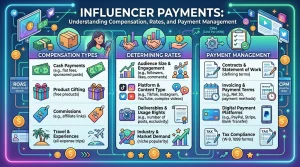
Sponsored content marketing costs vary widely depending on format, partner, and distribution scope. Sponsored articles on major publications can range from $5,000 to $100,000+ per piece. Influencer partnerships range from a few hundred dollars for micro-creators to six figures for top-tier talent. Podcast sponsorships are typically priced on a CPM basis.
Allocate budget across three areas:
- Content production: Creation costs, whether by the publisher, an agency, or in-house.
- Distribution: Paid amplification to extend the reach of sponsored content marketing beyond organic audiences.
- Measurement: Tools and resources needed to track and attribute performance.
Step 5: Establish KPIs before launch
Define what success looks like before the campaign begins. Align KPIs with your primary objective:
- Awareness campaigns: Impressions, reach, brand lift surveys
- Engagement campaigns: Click-through rate, time on page, social shares
- Lead gen campaigns: Form submissions, email sign-ups, cost per lead
- Conversion campaigns: Purchases, demo requests, revenue attributed
Without pre-defined KPIs, sponsored content marketing campaigns become difficult to evaluate—and nearly impossible to improve.
How to Create a Sponsored Content Marketing Strategy That Performs
Knowing how to create an inbound marketing strategy informs a core truth about sponsored content marketing: the best content serves the audience first and the brand second. That’s the mindset that separates high-performing sponsored content marketing from expensive noise.
Here’s a step-by-step framework for building a sponsored content marketing strategy that generates measurable results.
Define your content pillars
Content pillars are the themes your sponsored content marketing will consistently address. They should sit at the intersection of what your brand knows, what your audience cares about, and what your publisher covers well.
For example, a cybersecurity company might identify three pillars: data privacy, remote work security risks, and compliance frameworks. Every piece of sponsored content marketing produced under this strategy connects back to at least one of these pillars.
Develop a content brief
A detailed brief is the foundation of every successful sponsored content marketing piece. Include:
- Topic and angle: What specific story are you telling?
- Audience persona: Who is this for?
- Key message: What should the reader take away?
- Brand role: How does the brand fit naturally into the narrative?
- CTA: What action do you want readers to take?
- SEO considerations: What keywords should the content target?
- Disclosure requirements: How will the sponsored nature be labeled?
Give publishers creative room
The best sponsored content marketing emerges when brands resist the urge to over-control the creative process. Publishers know their audiences. Heavy-handed brand messaging turns a piece of sponsored content marketing into something that reads like an ad—and audiences disengage accordingly.
Provide clear guardrails around brand messaging and accuracy, then let the publisher’s editorial voice carry the content.
Build a distribution plan
Publishing the content is only half the job. A strong distribution plan extends the reach of sponsored content marketing through:
- Social amplification: Promote the piece across brand and publisher social channels.
- Email newsletters: Include it in relevant email campaigns.
- Paid promotion: Use paid social or display to drive additional traffic.
- SEO: Ensure the content is optimized to rank in search and generate ongoing organic traffic long after the campaign ends.
Best Inbound Marketing Strategies Applied to Sponsored Content
Marketers who study best inbound marketing strategies often find direct parallels with sponsored content marketing. Both disciplines prioritize audience-first thinking, content quality, and long-term relationship building over short-term interruptive tactics.
Several inbound principles translate directly into stronger sponsored content marketing:
Lead with value, not promotion. Audiences engage with content that teaches them something, solves a problem, or entertains them. Sponsored content marketing that leads with brand promotion rather than audience value consistently underperforms.
Use the buyer journey as a content map. Match sponsored content marketing formats to different stages of the funnel. Awareness-stage audiences need broad educational content. Decision-stage audiences need comparison guides, case studies, and detailed product explanations.
Repurpose strategically. A sponsored article can be clipped into social posts, turned into an email series, quoted in a newsletter, or adapted into a video script. Sponsored content marketing assets have longer shelf lives than most brands realize.
Measure what matters. Both inbound marketing and sponsored content marketing suffer when teams optimize for vanity metrics. Focus on engagement quality, lead quality, and revenue attribution—not raw traffic numbers.
Measuring Sponsored Content Marketing Performance
Performance measurement is where many sponsored content marketing programs break down. Without a clear attribution framework, it’s difficult to justify continued investment or to identify what’s working and what isn’t.
Core metrics by campaign objective
Awareness metrics
- Total impressions and unique reach
- Brand lift (measured via pre/post surveys)
- Share of voice in target publications
Engagement metrics
- Click-through rate (CTR)
- Average time on page
- Social shares, comments, and saves
- Scroll depth
Lead generation metrics
- Cost per lead (CPL)
- Form completion rate
- Email opt-in rate
- Quality of leads generated
Conversion metrics
- Conversion rate from sponsored content marketing traffic
- Revenue attributed to sponsored content marketing
- Return on ad spend (ROAS)
- Customer acquisition cost (CAC)
Attribution challenges in sponsored content marketing
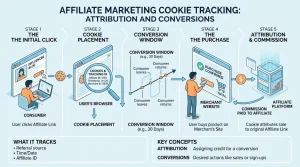
Attribution is genuinely difficult in sponsored content marketing, particularly for upper-funnel campaigns. A reader who encounters a sponsored article today might not convert for three months. Standard last-click attribution models miss this entirely.
Consider using:
- UTM parameters on all links within sponsored content marketing pieces to track traffic in Google Analytics.
- Unique landing pages created specifically for each campaign, making it easier to isolate traffic.
- Multi-touch attribution models that give credit to the sponsored content marketing touchpoint even when it isn’t the final interaction before conversion.
- Lift studies run by publishers or third-party measurement partners to quantify brand impact beyond direct clicks.
Reporting cadence
Establish a regular reporting rhythm. Weekly check-ins help catch underperforming campaigns early. Monthly reviews allow for broader pattern recognition across your sponsored content marketing portfolio. Quarterly reviews should assess contribution to business goals, not just campaign-level metrics.
Sponsored Content Marketing Trends Shaping the Next Wave
The landscape for sponsored content marketing continues to evolve. Brands that stay ahead of these shifts will be better positioned to capture audience attention and generate returns.
AI-assisted content production
Artificial intelligence is accelerating content production within sponsored content marketing workflows. Tools like ChatGPT, Jasper, and Claude are being used to generate first drafts, optimize headlines, and scale content output. The caveat: AI-generated sponsored content marketing still requires strong human editorial oversight to maintain quality and authenticity.
Creator economy expansion
The influencer and creator economy continues to mature. Micro- and nano-creators (under 10,000 followers) are gaining traction in sponsored content marketing because of their highly engaged, trust-based relationships with niche audiences. Brands are moving away from one-off campaigns and toward longer-term creator partnerships.
Audio and video dominance
Podcasts and short-form video remain the fastest-growing formats for sponsored content marketing. TikTok, YouTube Shorts, and Instagram Reels are increasingly integrated into sponsored content marketing strategies, particularly for brands targeting younger demographics.
Performance-linked deals
Publishers and creators are increasingly open to performance-linked sponsored content marketing deals—where a portion of compensation is tied to measurable outcomes rather than flat fees. This aligns incentives and gives brands more confidence in ROI.
Privacy-first targeting
As third-party cookies continue their phase-out and privacy regulations tighten globally, contextual targeting is making a comeback. Sponsored content marketing aligned to relevant editorial contexts—rather than behavioral data—is becoming a more reliable way to reach the right audiences.
Inbound Marketing vs. Outbound Marketing: Where Does Sponsored Content Fit?

The inbound marketing vs outbound marketing debate has shaped digital marketing strategy for over a decade—and sponsored content marketing occupies an interesting position between the two.
Outbound marketing pushes messages to audiences who haven’t asked for them: cold emails, paid display ads, direct mail, and TV commercials. Inbound marketing pulls audiences in through valuable content, SEO, and earned trust.
Sponsored content marketing is technically a form of paid (outbound) media, but it behaves like inbound. The content earns attention. It educates. It meets audiences where they already are, in formats they already trust. When executed well, sponsored content marketing generates the kind of durable brand credibility that paid display simply cannot.
This hybrid nature makes sponsored content marketing particularly effective as part of an integrated strategy—one that combines paid distribution with genuine editorial value.
Conclusion
Sponsored content marketing is one of the most powerful tools available to modern marketers—but only when it’s grounded in strategy, executed with editorial integrity, and measured with rigor. The brands that treat sponsored content marketing as a quick-hit advertising shortcut rarely see meaningful returns. Those who invest in audience alignment, creative quality, and performance tracking consistently outperform. Start with a clear objective, choose your partners carefully, give creative room to those who know their audience best, and build a measurement framework before you launch. The groundwork you lay at the planning stage is what determines performance at the other end.
Frequently Asked Questions
1. What is sponsored content marketing?
Sponsored content marketing is a paid strategy where a brand funds content—articles, videos, podcasts, social posts, or reports—produced or distributed by a publisher, creator, or platform. The content is designed to provide value to the audience while advancing the brand’s marketing objectives, and it must be clearly disclosed as paid content.
2. How is sponsored content marketing different from native advertising?
Sponsored content marketing refers specifically to content pieces (articles, videos, podcasts) that are editorially rich and created with audience value in mind. Native advertising is a broader category that includes sponsored content but also covers paid placements designed to match the look of surrounding content—such as in-feed social ads or recommendation widgets. All sponsored content marketing is a form of native advertising, but not all native advertising qualifies as sponsored content marketing.
3. How much does sponsored content marketing cost?
Costs range widely based on the publisher, format, and audience size. Sponsored articles on major publications can cost $5,000–$100,000+. Influencer-produced sponsored content marketing ranges from a few hundred dollars (micro-creators) to six figures (top-tier talent). Podcast sponsorships are typically priced at $15–$50 CPM. Platform-native sponsored content marketing through LinkedIn or Meta is priced through auction-based bidding systems.
4. Does sponsored content marketing need to be disclosed?
Yes. The FTC in the United States requires that sponsored content marketing be clearly disclosed as paid content. Common disclosure labels include “Sponsored,” “Paid Partnership,” “Presented by,” or “Advertorial.” Failure to disclose properly carries legal and reputational risks for both the brand and the publisher.
5. What metrics should I use to measure sponsored content marketing performance?
Metrics depend on your campaign objective. For awareness campaigns: impressions, reach, and brand lift. For engagement campaigns: CTR, time on page, and social shares. For lead generation: cost per lead and form completion rate. For conversions: revenue attribution, ROAS, and customer acquisition cost.
6. How do I choose the right publisher for sponsored content marketing?
Evaluate publisher partners based on audience alignment (not just size), engagement quality, editorial credibility, and content fit with your brand. Request audience demographic data, engagement benchmarks, and examples of previous sponsored content marketing they’ve produced. Prioritize partners whose editorial style complements your brand voice naturally.
7. Can small businesses use sponsored content marketing effectively?
Yes. Small businesses can leverage sponsored content marketing through micro-influencer partnerships, niche newsletters, local publications, and industry-specific blogs—often at costs far below major media placements. The key is precision: reach a smaller, highly relevant audience rather than pursuing scale for its own sake.
8. How long does it take to see results from sponsored content marketing?
Results vary by objective and format. Conversion-focused sponsored content marketing campaigns can generate measurable results within days of launch. Awareness and brand-building campaigns typically require several months of consistent activity before meaningful shifts in brand perception are measurable. SEO-optimized sponsored articles can generate traffic and leads for months or years after publication.
9. What is the biggest mistake brands make with sponsored content marketing?
The most common mistake is prioritizing brand messaging over audience value. Sponsored content marketing that reads like a product brochure—rather than genuinely useful or engaging editorial content—fails to earn audience trust and underperforms against key metrics. Giving publishers creative control and focusing on what the audience needs, rather than what the brand wants to say, consistently produces better results.
10. How does sponsored content marketing fit into a broader content strategy?
Sponsored content marketing works best as part of an integrated content strategy that also includes owned content (your blog, social channels, email newsletters) and earned content (press coverage, organic shares, user-generated content). Use sponsored content marketing to reach new audiences and drive them into your owned content ecosystem, where you can build longer-term relationships and convert them over time.