Influencer Audience: Understand Followers and Improve Marketing Results
An influencer’s audience plays a central role in determining the success of an influencer marketing campaign. While a large follower count can create visibility, it does not automatically guarantee meaningful engagement, customer trust, or business growth. Brands need to understand who follows an influencer, what those followers care about, how they interact with content, and whether their interests align with the brand’s products or services.
Influencer audience analysis helps businesses evaluate these factors before investing in partnerships. By examining audience demographics, engagement patterns, follower interests, authenticity, and reach, marketers can identify creators who connect with the right people. This makes influencer selection more strategic and helps businesses build campaigns around genuine audience relevance rather than popularity alone.
Understanding an influencer’s audience also improves campaign planning. Brands can develop more relevant messaging, choose suitable content formats, and estimate whether a partnership is likely to reach potential customers. When audience insights are combined with clear objectives and reliable performance measurement, influencer marketing becomes a more informed way to build awareness, strengthen relationships, and support business growth.
Why Influencer Audience Understanding Matters
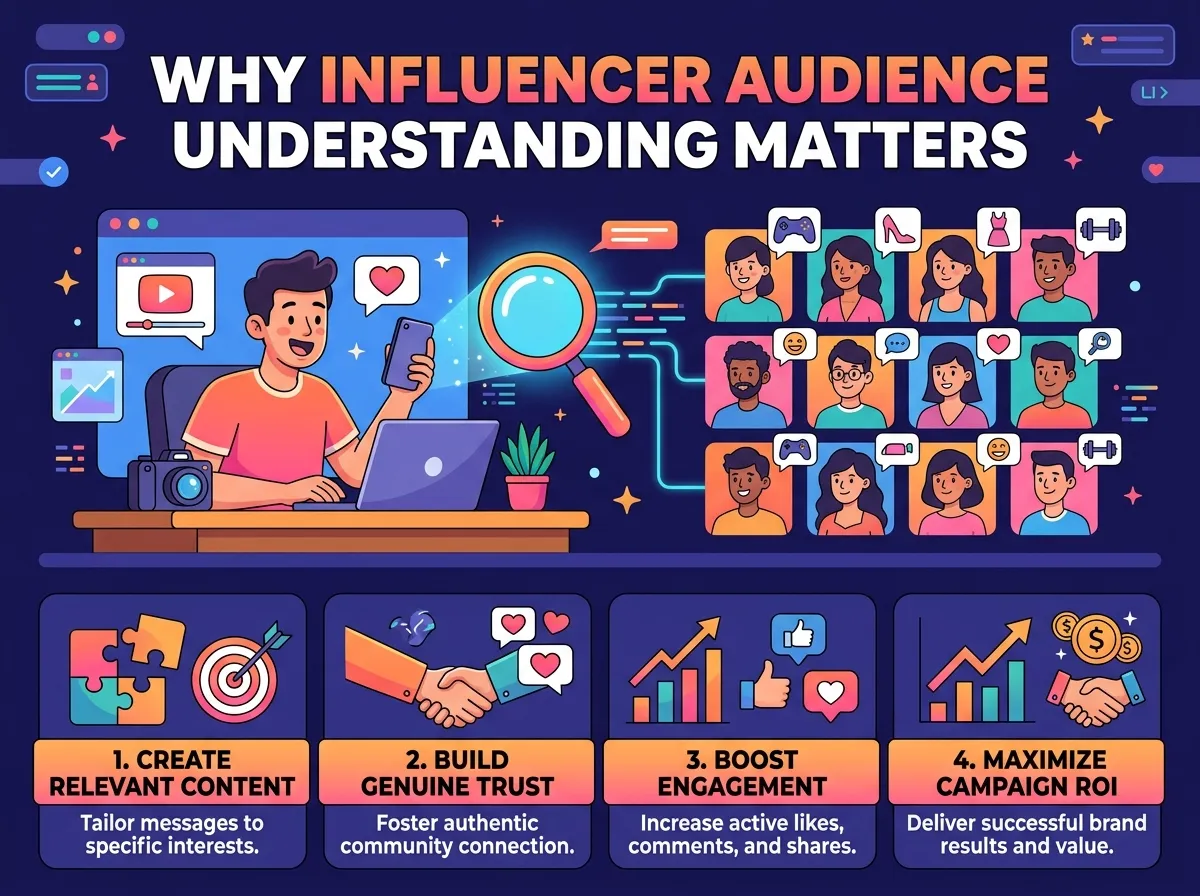
An influencer’s value comes from more than the number of people who follow their account. Their influence depends partly on the relationship they have developed with their audience, the relevance of their content, and the extent to which followers trust their recommendations.
For example, a creator with a smaller audience focused on sustainable fashion may be more relevant to an eco-conscious clothing brand than a general lifestyle influencer with millions of followers. Although the larger creator offers broader exposure, the niche creator may attract people who already care about the brand’s products and are more likely to consider a purchase.
Understanding the audience helps brands evaluate this difference before committing marketing budgets. It also reduces the risk of partnering with creators whose followers do not match the intended customer profile.
Audience insights can influence many aspects of campaign planning, including influencer selection, content development, messaging, platform choice, and performance evaluation. When brands understand what followers value, they can collaborate with creators in ways that feel natural and useful rather than overly promotional.
This approach also supports long-term partnerships. Instead of choosing influencers solely for temporary exposure, businesses can identify creators whose audiences consistently align with their brand identity and commercial goals.
Exploring Influencer Audience Demographics
Influencer audience demographics provide a basic understanding of the people who follow a creator. These insights may include age ranges, geographic locations, languages, gender distribution, and other aggregated audience characteristics available through platform analytics or authorized reporting tools.
Demographic information helps businesses determine whether an influencer reaches the intended market. A brand targeting young professionals in a particular country, for example, needs to understand whether a creator’s audience is concentrated in that market and includes people within the relevant age range.
Geography can be especially important for local and regional campaigns. An influencer may have an impressive international following, but a business serving customers in one city needs meaningful exposure among people who can realistically purchase its products or access its services.
Demographics should not be interpreted in isolation. Two influencers may reach audiences with similar ages and locations but produce very different campaign results because their followers have different interests, spending priorities, and relationships with the creator.
Brands should therefore combine demographic data with behavioral insights and campaign objectives. This creates a more complete picture of audience suitability and helps businesses avoid choosing creators based on superficial similarities alone.
Measuring Influencer Audience Engagement
Influencer audience engagement reveals how followers interact with a creator’s content. Likes, comments, shares, saves, story responses, video views, and meaningful discussions can all provide information about the relationship between an influencer and their audience.
High engagement may suggest that content resonates with followers, but the numbers require careful interpretation. A large number of likes does not necessarily indicate purchase intent, while a smaller number of detailed comments may reveal stronger interest in a product or topic.
Engagement rates can help compare creators with different audience sizes. However, calculations vary depending on the platform and measurement method. Some use followers as the denominator, while others measure engagement against reach or impressions. Brands should use consistent definitions when comparing potential partners.
The quality of engagement matters as much as its volume. Comments that ask relevant questions, share personal experiences, or discuss product benefits may provide stronger evidence of audience interest than generic reactions. Businesses should also review whether engagement appears consistent across recent posts rather than relying on one unusually successful publication.
Understanding these patterns helps brands identify creators who maintain active relationships with their followers. It also supports better content planning because marketers can learn which formats, topics, and communication styles encourage meaningful interaction.
Using Target Audience Analysis to Select Suitable Influencers
Target audience analysis connects a brand’s intended customers with the people an influencer can realistically reach. It begins with understanding the needs, interests, challenges, and preferences of the customers the business wants to attract.
A company selling professional software may want to reach business owners, marketing managers, or technology decision-makers. A beauty brand may focus on people interested in skincare routines, makeup techniques, and product recommendations. These audiences require different content approaches and may respond to different types of creators.
Once the target audience is defined, marketers can compare it with available influencer insights. Relevant factors include follower demographics, recurring content themes, audience interests, geographic distribution, and engagement patterns. The goal is to identify meaningful alignment between the brand’s offering and the creator’s community.
Target audience analysis also helps establish campaign expectations. If the primary objective is brand awareness, broad but relevant exposure may be valuable. If the objective is generating qualified leads or sales, the brand may need stronger evidence that followers are interested in the product category and likely to take action.
A clear understanding of the target audience reduces guesswork and creates a stronger foundation for influencer partnerships.
Understanding Influencer Follower Insights
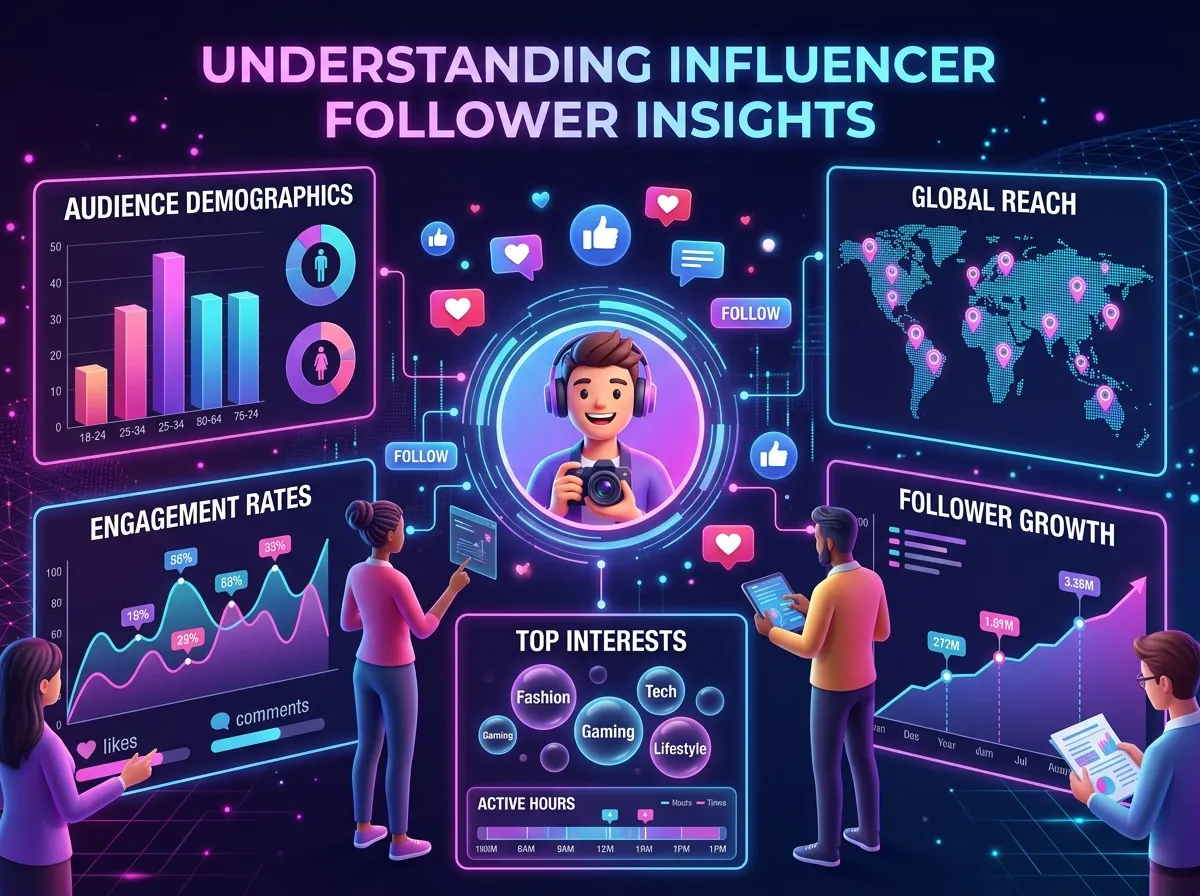
Influencer follower insights provide information about the characteristics, interests, and interactions of a creator’s community. These insights help marketers understand not only who follows an influencer but also what motivates those followers to engage with their content.
Audience insights may be available through native social media analytics, creator media kits, campaign reports, or authorized third-party measurement tools. Depending on the platform and access permissions, these sources may reveal aggregated information about follower locations, content performance, audience activity, and engagement trends.
Brands should examine these insights over time rather than relying on a single report. A creator’s audience may change as their content evolves, new followers join, or the account attracts attention from different communities. Recent information is generally more useful for evaluating a current campaign than outdated statistics.
It is also important to distinguish between follower totals and actual audience exposure. Some followers may rarely see a creator’s posts, while individual pieces of content may reach people who do not follow the account. Reviewing reach, impressions, views, and engagement together provides a more balanced understanding of performance.
These insights become more valuable when combined with the brand’s campaign objectives. A creator may offer excellent visibility but limited relevance to the intended market, while another may reach fewer people who are much more closely aligned with the product.
Evaluating Audience Behavior Analysis
Audience behavior analysis examines how followers respond to content, what subjects attract their attention, and which interactions may indicate stronger interest. It helps brands understand the relationship between content exposure and audience response.
Behavioral signals can include repeated engagement with a particular topic, questions about products, participation in discussions, sharing educational resources, or responding to product demonstrations. These patterns may reveal what followers find useful and which topics encourage them to take a closer look.
For example, followers of a fitness creator may respond differently to workout demonstrations, nutrition discussions, equipment reviews, and personal progress stories. A sportswear brand can use these observations to explore content ideas that match the audience’s existing interests rather than introducing a message that feels disconnected from the creator’s usual content.
However, observed behavior does not provide a complete explanation of an individual’s motivations. A comment or video view may indicate curiosity rather than purchase intent. Brands should treat behavioral data as evidence for campaign planning, not as proof that every follower will become a customer.
Analyzing audience behavior also helps marketers identify the content formats that support different objectives. Educational videos may encourage saves and shares, while product demonstrations may generate questions about features and availability. These insights can guide creative decisions and improve the relevance of future collaborations.
Improving Campaign Relevance Through Influencer Audience Segmentation
Influencer audience segmentation involves understanding the different groups within a creator’s broader community. Followers may share an interest in the creator’s content while differing in location, experience, purchasing priorities, or specific product needs.
For example, a travel influencer may attract budget travelers, luxury travelers, families, solo adventurers, and people interested in particular destinations. A campaign promoting affordable travel accessories may resonate more strongly with some of these groups than others.
Segmentation helps brands identify which parts of an audience are most relevant to their objectives. It can also support the development of tailored messages, product selections, and content formats. Rather than creating one generic campaign for every follower, businesses can focus on the audience groups most likely to benefit from the offering.
The level of segmentation depends on the information available. Public comments and content themes can provide broad clues, while authorized aggregate analytics may offer more detailed insights. Brands should avoid assuming that an audience segment exists without sufficient evidence.
Effective segmentation improves campaign relevance without requiring intrusive collection of personal information. By working with aggregated insights and respecting privacy expectations, businesses can create more focused collaborations while maintaining audience trust.
Finding Opportunities Through Niche Audience Identification
Niche audience identification helps businesses discover creators whose followers share a specific interest, need, profession, or lifestyle. These communities can be especially valuable when a product serves a defined market rather than a broad consumer audience.
Niche influencers often build their reputations around consistent subject matter. Their content may focus on home gardening, specialized technology, independent travel, personal finance education, sustainable living, or other clearly defined interests. Followers choose to engage because the creator regularly addresses topics that matter to them.
This focus can make niche creators attractive partners for brands with specialized offerings. A company selling gardening equipment, for example, may benefit from collaborating with a creator whose followers actively discuss growing techniques, plant care, and garden products. The creator’s audience may be smaller than that of a general lifestyle account, but its interests can be more closely aligned with the brand.
Niche audience identification should consider more than the influencer’s profile description. Marketers should review recent content, comment quality, recurring audience questions, and the consistency of the creator’s subject matter. These details help establish whether the audience genuinely engages with the niche.
Brands should also consider the size and commercial relevance of the available audience. A narrowly focused community may be highly engaged but too small to support a campaign that requires extensive reach. The right choice depends on whether the primary objective is specialized awareness, community trust, lead generation, or direct sales.
Assessing Influencer Audience Authenticity
Influencer audience authenticity refers to the credibility of the relationship between a creator and their followers, as well as the reliability of the engagement and audience information used to evaluate a partnership.
An account with rapidly increasing followers and unusually low interaction may deserve closer examination. Other warning signs can include repetitive comments, engagement patterns that change dramatically without an obvious reason, or audience statistics that do not align with the creator’s content and market.
These signals are not definitive proof of manipulation. Viral posts, changes in content direction, platform recommendations, and seasonal trends can all affect audience growth and engagement. Brands should therefore look for multiple indicators and request additional information when something appears inconsistent.
Authenticity also depends on the creator’s relationship with their community. Influencers who communicate naturally, respond thoughtfully to relevant questions, and maintain a consistent content identity may be better positioned to introduce products in a credible way. Their recommendations are more likely to feel connected to the interests that attracted followers in the first place.
Transparency in sponsored content is equally important. Clear disclosures help audiences understand when a creator is being compensated or receiving benefits for a promotion. Businesses should establish expectations for appropriate disclosure and ensure that campaigns follow applicable advertising rules.
Brands can also protect the integrity of their collaborations by defining appropriate content permissions and usage conditions. A clear understanding of influencer usage rights helps businesses and creators establish how sponsored materials may be reused, where they can appear, and what restrictions apply. These arrangements support more transparent partnerships and help prevent misunderstandings after content is published.
Exploring Follower Interest Analysis
Follower interest analysis focuses on the subjects, products, and experiences that attract attention within an influencer’s community. It helps brands assess whether a creator’s content naturally overlaps with their offering and whether the partnership can provide genuine value to followers.
Interest signals may appear in recurring discussions, audience questions, comments on product reviews, content shares, and responses to specific topics. A creator who frequently discusses home organization, for example, may attract followers interested in storage products, cleaning solutions, and practical household improvements.
The connection should be relevant rather than forced. A brand may have a large marketing budget, but its partnership can feel unnatural if the promoted product does not fit the creator’s established content or audience interests. When a collaboration addresses a genuine audience need, the creator can explain the product in a way that feels consistent with their usual communication style.
Interest analysis can also reveal useful creative opportunities. If followers regularly ask about product comparisons, a detailed comparison video may be more valuable than a conventional promotional post. If they frequently seek practical advice, an educational demonstration may offer a more natural way to introduce a product.
Businesses should validate these observations with available audience data and, where possible, campaign results. This helps distinguish recurring interest from isolated reactions and supports more confident content planning.
Measuring Influencer Audience Reach and Marketing Impact
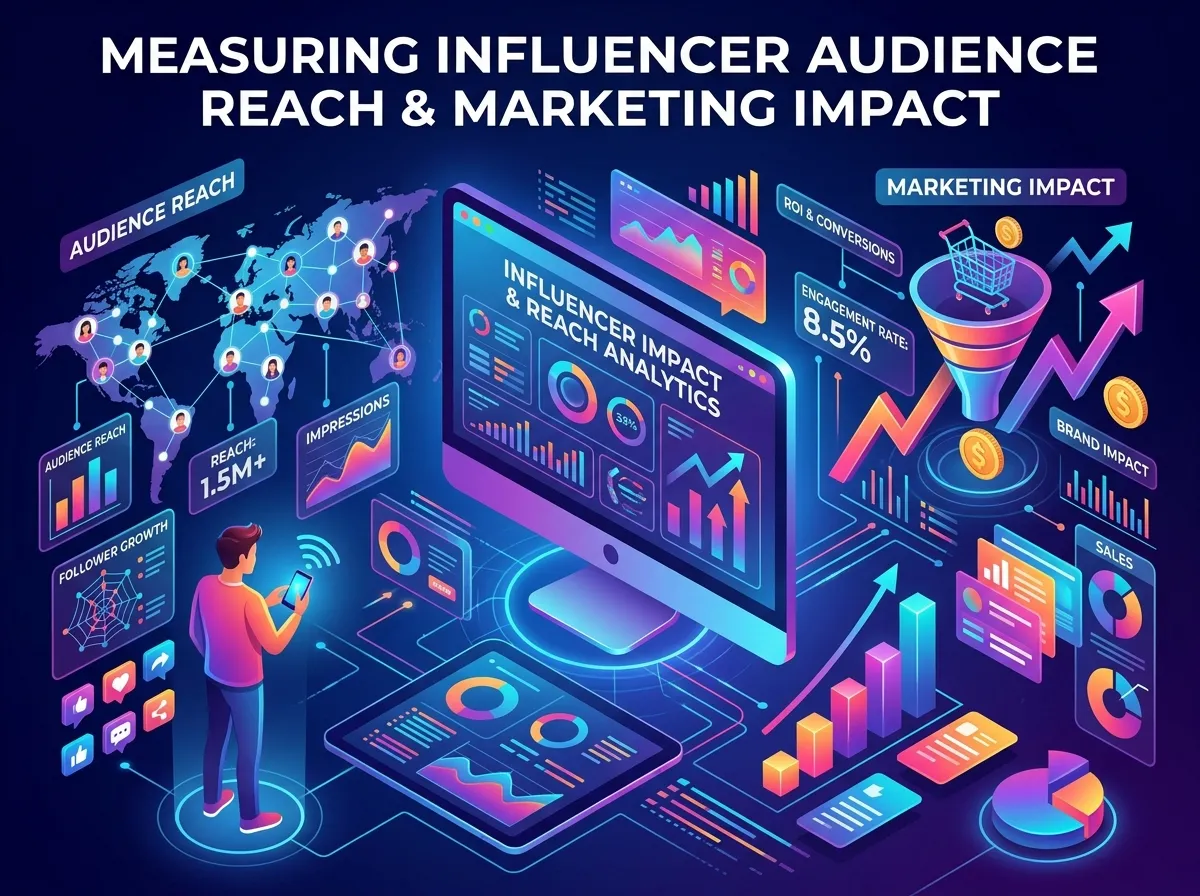
Influencer audience reach describes the number of unique people who see a creator’s content, while impressions represent the total number of times content is displayed. These measures provide useful information about campaign exposure, but they do not tell the complete story of audience relevance or business impact.
A campaign with broad reach can increase brand visibility, introduce a product to new audiences, and support awareness objectives. However, if the people reached have little interest in the product category, that exposure may not produce meaningful engagement or conversions.
Brands should therefore evaluate reach alongside engagement, audience fit, website visits, inquiries, sales, or other outcomes connected to their objectives. A campaign intended to increase awareness may place greater emphasis on unique reach and relevant video views. A campaign focused on sales may require more attention to referral traffic, tracked conversions, and cost per acquisition.
Performance measurement becomes more reliable when campaigns use consistent tracking methods. Unique landing pages, campaign-specific links, promotional codes, and suitable analytics tools can help businesses understand which partnerships generate meaningful activity. These methods should be implemented with appropriate privacy safeguards and transparent communication.
The relationship between reach and results can also inform future influencer selection. If a creator consistently reaches the intended audience and contributes to campaign objectives, the business may consider extending the partnership. If exposure is high but meaningful outcomes remain weak, marketers can investigate audience alignment, creative relevance, and the clarity of the campaign message.
Building Better Partnerships With Influencer Audience Insights
Audience analysis is most valuable when it informs an ongoing relationship rather than serving only as a one-time selection exercise. Influencers understand the content styles, language, and topics that resonate with their communities. Brands bring product knowledge, customer insights, and commercial objectives. Combining these perspectives can produce more relevant campaigns.
Clear communication helps both parties establish expectations around campaign objectives, target audiences, deliverables, disclosures, measurement, and content approvals. At the same time, creators should retain enough creative freedom to communicate naturally with their followers.
Strong collaboration also depends on trust and continuity. Businesses that repeatedly work with suitable creators can develop a deeper understanding of audience preferences and improve their campaign planning over time. Effective influencer relationship management helps organize communication, track partnership history, and maintain consistent expectations throughout these collaborations.
Understanding the broader principles behind how influencer marketing works can further help businesses connect audience selection with content development, campaign execution, and performance evaluation.
Ultimately, audience insights should support decisions throughout the campaign lifecycle. Before a collaboration, they help identify suitable creators. During the campaign, they guide messaging and engagement analysis. After publication, they help businesses assess results and determine what to improve.
When audience relevance, authentic communication, and clear measurement work together, influencer marketing can become a more reliable part of a brand’s broader growth strategy. Connecting campaign engagement with marketing conversion strategy also helps businesses evaluate how audience interest can translate into meaningful actions, from website visits and inquiries to purchases and long-term customer relationships.
Frequently Asked Questions
1. What is an influencer audience?
An influencer audience is the community of people who follow, view, or engage with a creator’s content on social media or other digital platforms. These people may share particular interests, preferences, demographics, or lifestyle characteristics that make the audience relevant to certain brands.
2. Why is influencer audience analysis important?
Influencer audience analysis helps brands determine whether a creator reaches the right people for a campaign. It reduces the risk of investing in irrelevant exposure and supports better decisions about influencer selection, messaging, content formats, and performance measurement.
3. What are influencer audience demographics?
Influencer audience demographics describe aggregated characteristics of a creator’s followers, such as age ranges, locations, languages, and gender distribution where available. Brands use this information to evaluate whether the audience matches their target market.
4. How can brands measure influencer audience engagement?
Brands can review likes, comments, shares, saves, video views, story responses, and other platform-specific interactions. Engagement should be evaluated consistently and alongside audience relevance, content quality, and campaign objectives.
5. What is the difference between influencer reach and follower count?
Follower count represents the number of accounts following an influencer, while reach measures the number of unique people who see specific content. Reach may include non-followers, and not every follower necessarily sees every post.
6. How can businesses identify a niche influencer audience?
Businesses can examine the creator’s recurring topics, follower discussions, content themes, audience interests, and available analytics. A suitable niche audience demonstrates consistent interest in subjects closely related to the brand’s products or services.
7. How can brands evaluate influencer audience authenticity?
Brands can review audience growth patterns, engagement quality, comment relevance, content consistency, and available analytics. Multiple indicators should be considered together because unusual metrics can have legitimate explanations and do not automatically prove manipulation.
8. What is influencer audience segmentation?
Influencer audience segmentation involves identifying meaningful groups within a creator’s wider audience based on relevant characteristics or interests. It helps brands develop more targeted messaging and select content that appeals to the most suitable audience groups.
9. How does follower interest analysis help influencer campaigns?
Follower interest analysis identifies the subjects, products, and experiences that attract an influencer’s community. This helps brands choose relevant creators and develop content that aligns naturally with audience needs, improving the potential for meaningful engagement.
10. How can businesses measure the success of an influencer audience campaign?
Businesses can evaluate relevant reach, engagement, website traffic, referral activity, leads, sales, and campaign costs. The most useful metrics depend on the objective, so brands should establish clear performance indicators before a campaign begins.