Influencer Relationship Management: Building Strong Creator Partnerships

Influencer relationship management helps brands build and maintain strong partnerships with creators through effective outreach, collaboration, communication, campaign management, and performance tracking. By focusing on relevance, trust, and long-term relationships, brands can create more authentic campaigns and achieve better influencer marketing results.
Influencer relationship management has become an important part of modern digital marketing as brands increasingly work with creators to reach specific audiences. While a single sponsored post can create short-term exposure, long-term relationships can provide more consistent communication, stronger brand familiarity, and better opportunities for collaboration.
Managing these relationships involves much more than finding influencers and sending partnership requests. Brands need to understand creator audiences, communicate expectations, coordinate campaigns, measure results, and maintain professional relationships after campaigns are completed.
The most effective approach treats influencers as strategic partners rather than simply advertising channels. When creators genuinely understand a brand and its products, they can often communicate messages in a way that feels more natural to their audiences.
What Is Influencer Relationship Management?
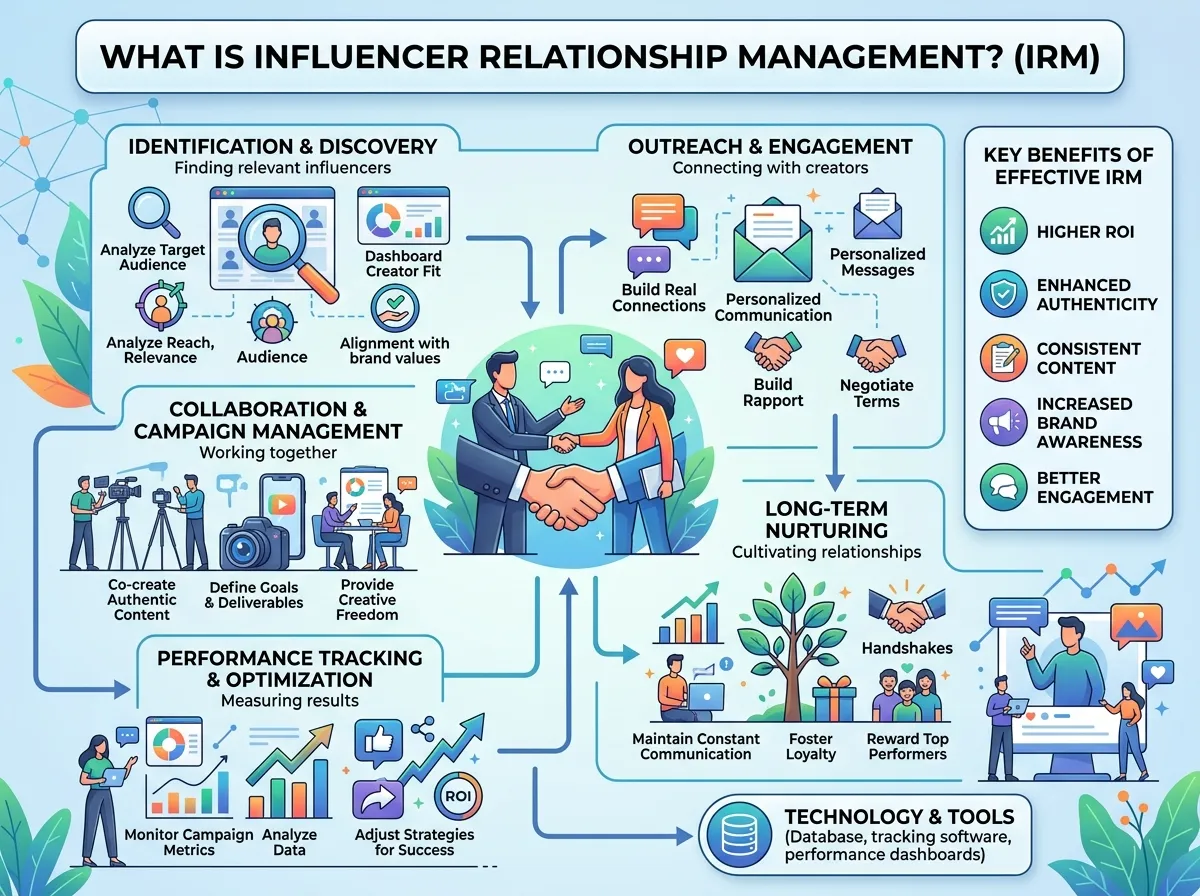
Influencer relationship management is the process of developing and maintaining professional relationships between brands and influencers or content creators. It covers the complete relationship, from initial discovery and outreach to collaboration, campaign management, performance evaluation, and future partnerships.
A strong relationship can benefit both sides. Brands gain access to relevant audiences and creator expertise, while influencers receive opportunities that fit their content, interests, and audience.
This makes relationship management an ongoing process rather than something that only happens when a campaign is active.
The Role of an Influencer Marketing Strategy
An effective influencer marketing strategy provides direction for how a brand works with creators. Before contacting influencers, a business should understand what it wants to achieve and which audiences it needs to reach.
Some campaigns focus on brand awareness, while others aim to generate website traffic, leads, sales, or engagement. The objective influences the type of creator a brand should select and the kind of content they should produce.
Audience relevance is particularly important. A creator with millions of followers may not be the best choice if their audience has little interest in the brand. A smaller creator with a highly relevant community may offer greater value for a specific campaign.
The strategy should also consider whether the brand wants short-term exposure or ongoing relationships. Long-term partnerships can allow creators to become more familiar with the brand and develop content that fits naturally with their existing style.
Building an Influencer Relationship Strategy
An influencer relationship strategy focuses on developing meaningful professional connections with creators.
Research is an important part of this process. Brands should look at a creator’s content, audience, engagement, previous partnerships, communication style, and overall fit before starting a conversation.
Once potential creators have been identified, relationship information should be organized. Keeping records of previous conversations, campaign history, content preferences, deliverables, and performance can help marketing teams communicate more effectively.
The relationship should not disappear after a campaign ends. Brands can maintain connections by following creator work, sharing relevant opportunities, providing feedback, and considering creators for future campaigns.
This long-term perspective can turn successful collaborations into recurring partnerships.
Improving Influencer Outreach Management
Influencer outreach management involves finding potential creators, contacting them, following up, and moving suitable relationships toward collaboration.
Personalization can make outreach more effective. Influencers regularly receive partnership requests, so a generic message may not communicate why a particular collaboration is relevant.
A strong outreach message should demonstrate that the brand understands the creator’s content and audience. It should also explain the campaign’s purpose and provide enough information for the creator to evaluate the opportunity.
Once a creator shows interest, the conversation can move toward practical details such as deliverables, timelines, compensation, content requirements, approval processes, and campaign expectations.
Professional communication at this stage establishes the foundation for the entire partnership.
Creating an Influencer Collaboration Strategy
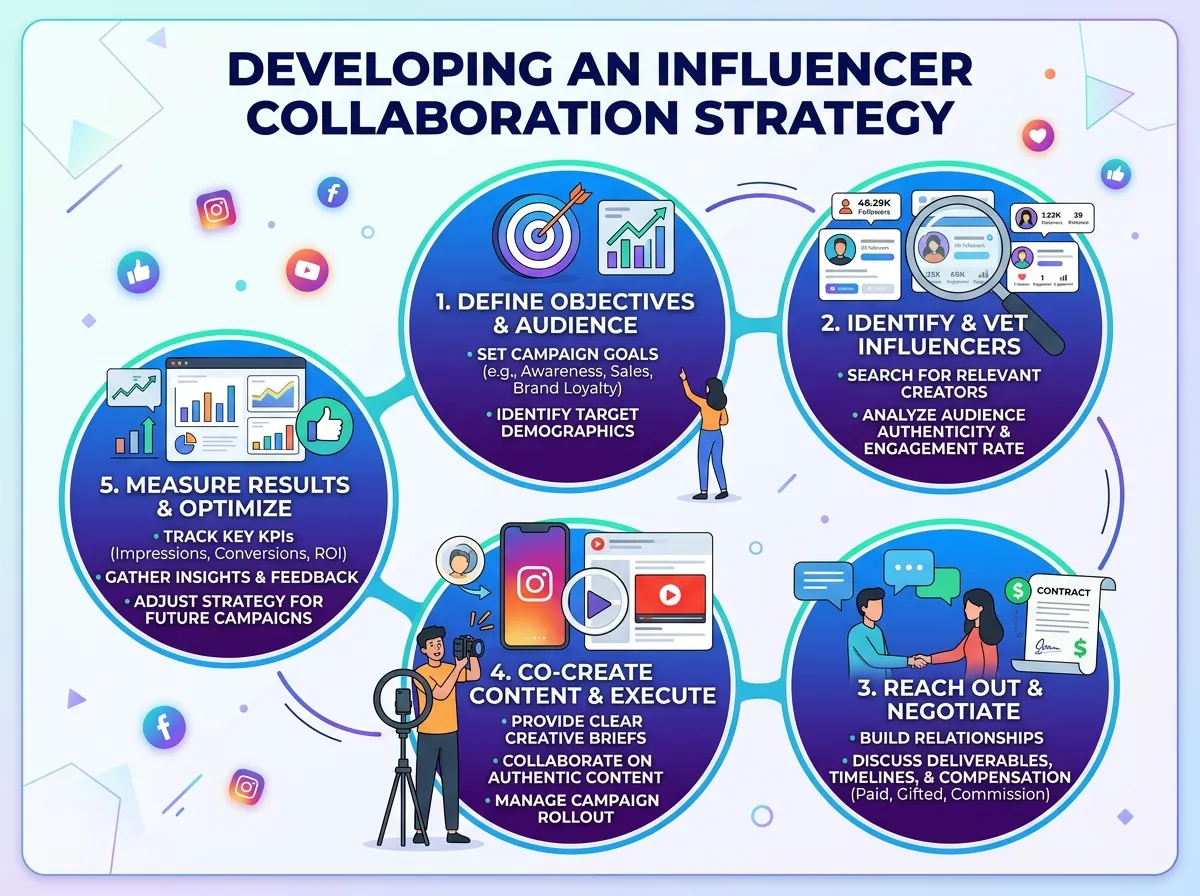
An influencer collaboration strategy should give creators clear direction while allowing room for their expertise and creativity.
Brands need to communicate important campaign requirements, including key messages, deadlines, legal disclosures, and content expectations. However, creators generally understand their audiences better than the brand does, so they should have reasonable freedom to determine how the message is presented.
This balance can help sponsored content feel more consistent with the creator’s normal communication style.
A clear creative brief can establish boundaries without dictating every sentence, image, or video. When expectations are agreed upon before production begins, content approval can also become easier.
Managing Influencer Partnerships
Influencer partnership management involves keeping the operational and relationship aspects of a collaboration organized.
Contracts, deliverables, deadlines, payments, content approvals, revisions, and campaign results should be clearly documented. This gives both the brand and creator a shared understanding of what has been agreed.
Communication is especially important when something changes. Product delays, revised deadlines, creative changes, or unexpected campaign issues can occur. Addressing these situations professionally helps protect the relationship.
Brands should also recognize the creator’s contribution. Fair compensation, timely payments, respectful communication, and useful feedback can encourage creators to consider future opportunities.
The Importance of Influencer Campaign Management
Influencer campaign management brings the entire campaign together, from creator selection to final reporting.
The process should remain connected to the original marketing objective. If the campaign is designed to increase awareness, reach and engagement may be important indicators. If the goal is generating leads, clicks and qualified prospects may be more relevant. Sales-focused campaigns may need to measure conversions and revenue.
Looking only at follower numbers or impressions can provide an incomplete picture.
A creator with a smaller audience may generate highly relevant traffic or strong conversions, while a larger creator may produce significant reach without generating meaningful business results.
The most useful evaluation is therefore based on the campaign’s specific goals.
Creator Relationship Management and Long-Term Value
Creator relationship management focuses on the long-term professional connection between a brand and its creators.
Instead of contacting creators only when promotional opportunities are available, brands can maintain relationships throughout the year. This might involve sharing product updates, inviting creators to relevant events, requesting feedback, or offering early access to new products.
These interactions can help creators understand a brand more deeply.
Over time, a creator who has genuine familiarity with a product may be able to communicate its benefits more naturally. Long-term relationships can also reduce the need to repeatedly search for new creators for every campaign.
Developing an Influencer Engagement Strategy
An influencer engagement strategy extends beyond formal campaign communication.
Brands can engage creators by interacting with their content, acknowledging their work, sharing relevant opportunities, and maintaining professional communication between campaigns.
The objective is not to constantly contact influencers. Instead, it is to establish a relationship where communication feels useful and respectful.
Creators are more likely to develop positive relationships with brands that recognize their expertise and treat them as professional collaborators.
Influencer Marketing Automation
As an influencer program grows, managing relationships manually can become time-consuming. Influencer marketing automation can help reduce repetitive administrative tasks.
Depending on the technology being used, automation can support creator discovery, outreach workflows, reminders, campaign tracking, reporting, and relationship records.
Automation can make large programs easier to organize, but it should not eliminate personalization. Important conversations such as negotiations, feedback, creative discussions, and relationship development are usually better handled personally.
The most effective approach combines automation for efficiency with human communication for relationship building.
Developing an Influencer Partnership Strategy
An influencer partnership strategy focuses on identifying creators who can provide value over an extended period.
Instead of measuring success only by how many influencers participate in a campaign, brands can consider which creators have the potential to become reliable partners.
Long-term partnerships can create consistency in messaging and give creators more opportunities to understand the products they promote.
Depending on the business, these relationships can include recurring sponsored content, ambassador programs, affiliate partnerships, product collaborations, event participation, and exclusive creator initiatives.
For businesses interested in professional audiences, B2B Influencer Marketing offers additional insight into influencer partnerships within B2B marketing.
The Growing Role of Digital Influencers
The creator economy continues to expand, and influencers now operate across many different types of digital communities. Digital influencers can include social media creators, industry experts, niche content producers, entertainers, and other individuals who have developed trusted online audiences.
For brands, the important consideration is not simply whether someone has a large following. The quality and relevance of their audience, their credibility, and their ability to communicate effectively can be more valuable.
Learn more about this category through Digital Influencers.
Virtual creators are also becoming part of the evolving influencer ecosystem. Brands exploring emerging creator models can learn more through The Rise of Virtual Influencers.
Measuring Influencer Relationship Management
Measuring influencer relationships requires looking at both campaign performance and long-term partnership value.
Brands can evaluate reach, engagement, website traffic, clicks, leads, conversions, sales, and audience response. They can also assess whether creators consistently meet deadlines, produce quality content, communicate effectively, and become repeat partners.
Clicks are often an important part of influencer campaign measurement. Understanding What is a Click in Digital Marketing can help marketing teams better interpret traffic and engagement data.
Over time, these insights can help brands identify their strongest creator relationships and make better partnership decisions.
Best Practices for Influencer Relationship Management
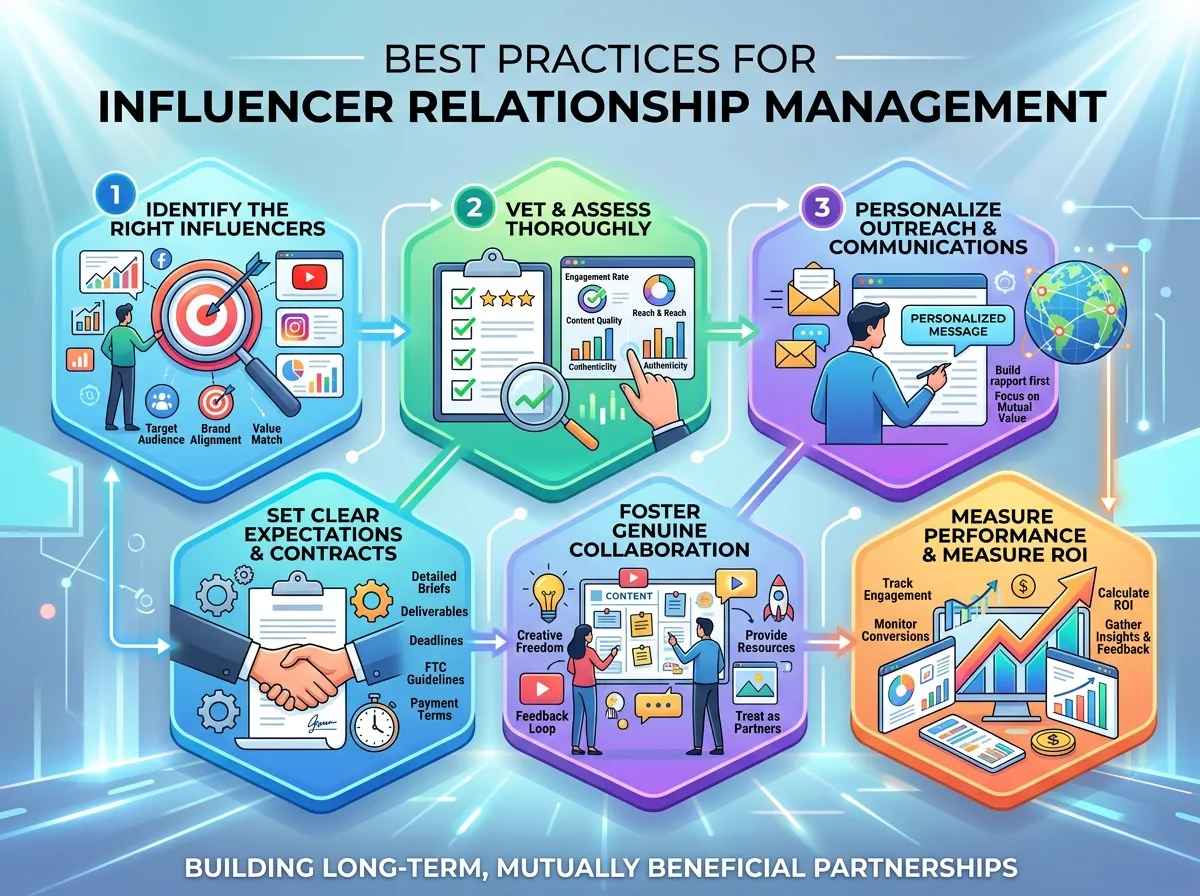
Strong influencer relationships depend on clear communication, mutual respect, transparency, and consistency. Brands should establish expectations before campaigns begin and ensure creators understand the objectives and deliverables.
Creators should also be given appropriate creative freedom. Their knowledge of their audience is one of the reasons the partnership is valuable in the first place.
Professionalism matters throughout the relationship. Clear contracts, fair compensation, timely communication, and constructive feedback can contribute to stronger partnerships.
Most importantly, brands should continue building relationships after campaigns end. A creator who feels respected and valued is more likely to consider future opportunities and develop a deeper understanding of the brand.
Final Thoughts
Influencer relationship management allows brands to move beyond one-time sponsored content and develop lasting creator partnerships. From influencer outreach management and collaboration to campaign coordination, engagement, automation, and performance measurement, each part of the relationship contributes to the overall success of an influencer program.
A strong relationship is built on more than audience size. Relevance, trust, communication, creative alignment, and mutual value are equally important. By treating influencers as professional partners and investing in long-term relationships, brands can create more consistent campaigns and stronger connections with their target audiences.
10 Frequently Asked Questions
1. What is influencer relationship management?
Influencer relationship management is the process of managing professional relationships between brands and influencers throughout the entire partnership lifecycle. It includes finding suitable creators, conducting outreach, negotiating collaborations, managing campaigns, coordinating content, tracking results, and maintaining relationships after campaigns. The goal is to develop partnerships that provide value to both the brand and the creator.
2. Why is influencer relationship management important?
It helps brands create more organized and sustainable influencer programs. Instead of repeatedly searching for new creators, businesses can develop relationships with influencers who already understand their products and audiences. Strong relationships can improve communication, simplify future campaigns, and create opportunities for recurring collaborations.
3. How do brands find the right influencers?
Brands should evaluate influencers based on audience relevance, engagement quality, content style, credibility, industry expertise, and previous collaborations. Follower count can be considered, but it should not determine the decision by itself. The most suitable creator is usually one whose audience closely matches the brand’s target customers and whose content naturally fits the campaign.
4. How can brands improve influencer outreach management?
Personalized communication is one of the most important ways to improve outreach. Brands should research creators before contacting them and explain why the partnership is relevant. The outreach should also provide clear information about the campaign, expectations, timing, and compensation. Respectful follow-up is important, but excessive messages should be avoided.
5. What makes an influencer collaboration successful?
Successful collaborations usually have clear objectives, realistic expectations, strong communication, and creative alignment. Creators should understand the brand’s requirements while having enough freedom to communicate the message in their own style. When the partnership feels relevant to both the creator and their audience, the resulting content can be more natural and effective.
6. How can brands maintain long-term influencer relationships?
Brands can maintain relationships by communicating professionally between campaigns, recognizing creators’ work, providing timely payments and feedback, and offering relevant future opportunities. Inviting creators to product launches, events, or early-access programs can also strengthen the relationship. The important factor is creating genuine mutual value rather than contacting creators only when promotional content is needed.
7. Is influencer marketing automation useful?
Influencer marketing automation can be useful for managing large numbers of creators and repetitive administrative activities. It can help organize creator information, manage outreach workflows, send reminders, track deliverables, and generate reports. However, automation should complement rather than replace personal communication, particularly for negotiations and relationship-building.
8. Should brands focus on follower count when selecting influencers?
Follower count is only one factor and should not be the primary measurement of an influencer’s value. Audience relevance, engagement, credibility, content quality, and campaign performance can provide more meaningful information. A niche creator with a highly relevant audience may produce stronger results for a specific campaign than a large influencer with a less relevant audience.
9. How should influencer campaign performance be measured?
Performance should be measured according to the campaign objective. Awareness campaigns can focus on reach and engagement, traffic campaigns can measure clicks and website visits, and lead-generation campaigns can evaluate qualified leads. Sales campaigns should examine conversions and revenue. Looking at multiple relevant metrics provides a clearer understanding of the creator’s contribution.
10. What is the future of influencer relationship management?
Influencer relationship management is likely to become increasingly supported by technology while continuing to depend on genuine human relationships. Automation and analytics can make creator discovery, communication, campaign tracking, and reporting more efficient. At the same time, authenticity, trust, relevance, and strong communication will remain essential as audiences become more selective about brand partnerships.