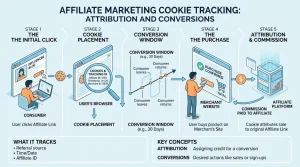
Affiliate Attribution: Track Conversions and Improve Marketing Performance

Affiliate Attribution helps businesses identify how affiliate partners contribute to clicks, leads, and sales. By using attribution models, conversion tracking, referral analysis, and customer journey data, marketers can evaluate partner performance, improve commission accuracy, and make informed decisions. A transparent attribution process supports fair affiliate relationships, reliable reporting, and more effective marketing investment.
Affiliate Attribution helps businesses understand which affiliate marketing activities contribute to clicks, leads, and sales. When customers interact with multiple publishers, creators, comparison websites, and promotional channels before making a purchase, identifying the contribution of each interaction becomes essential. A reliable attribution approach gives businesses a clearer picture of how affiliate partnerships influence customer decisions and how marketing budgets can be allocated more effectively.
Affiliate marketing often involves several touchpoints across the customer journey. Someone may discover a product through an influencer, read a review on an affiliate website, click a promotional link in a newsletter, and purchase the product days later. Without a consistent attribution process, the business may credit the wrong interaction, overlook valuable partners, or make commission decisions based on incomplete information.
By combining accurate tracking, suitable attribution models, and performance analysis, businesses can better understand affiliate contributions, maintain fair commission structures, and develop stronger partnerships. The goal is not simply to record sales, but to understand how affiliate marketing supports customer acquisition and long-term business growth.
Understanding Affiliate Attribution

Affiliate attribution is the process of identifying and assigning credit to affiliate interactions that contribute to a desired outcome, such as a purchase, lead submission, or subscription. It connects promotional activity with measurable results so businesses can evaluate which partnerships and marketing efforts are contributing value.
Traditional affiliate programs often rely on last-click attribution, where the final eligible affiliate link clicked before a conversion receives credit. This approach is straightforward and relatively easy to implement, but it does not always reflect the full customer journey. An affiliate that introduces a customer to a product may play an important role even when another publisher receives the final click.
A more comprehensive approach considers the purpose of each interaction and the attribution rules established by the business. Depending on the program, attribution may account for first discovery, multiple touchpoints, coupon usage, referral activity, or other documented signals. The right approach depends on the business model, sales cycle, available data, and commission policies.
Clear attribution rules also help prevent confusion between affiliates and advertisers. When partners understand how referrals are recorded, how conversions are validated, and how credit is assigned, they can make better decisions about the promotional activities they invest in.
Affiliate Marketing Attribution Models
Affiliate Marketing Attribution Models determine how credit is assigned when several interactions contribute to a conversion. Each model offers a different perspective, so businesses should select one that aligns with their customer journey and reporting objectives.
Last-click attribution assigns credit to the last eligible affiliate interaction before the conversion. It is useful when a program needs a simple, consistent method for calculating commissions, but it can undervalue partners that introduce products or help customers during earlier research.
First-click attribution gives credit to the first recorded affiliate interaction. This model can help identify publishers and creators that introduce new audiences to a business. However, it may overlook other affiliates that provide useful comparisons, product education, or purchase incentives later in the journey.
Linear attribution distributes credit evenly across the eligible touchpoints included in the model. This offers a broader view of the customer journey, although equal credit does not necessarily mean every interaction contributed equally.
Position-based and time-decay models assign different weights to interactions according to their place in the journey or how recently they occurred. These approaches may offer useful perspectives for businesses with longer purchase cycles, but they depend on reliable tracking and transparent rules.
There is no universally correct model for every affiliate program. A business with a short purchase cycle may prefer a simpler approach, while a company with multiple research and comparison stages may benefit from examining several models before changing commission policies.
Affiliate Conversion Tracking and Reliable Measurement
Affiliate Conversion Tracking records the actions that occur after a user engages with an affiliate promotion. These actions can include completed purchases, qualified leads, trial registrations, paid subscriptions, or other outcomes defined by the program.
Tracking typically connects an affiliate identifier or referral parameter with a conversion event. When a customer completes the desired action, the system records the event and applies the program’s attribution rules. Depending on the setup, this may involve tracking links, browser cookies, server-side events, unique promotional codes, or integrations with ecommerce and analytics systems.
Accuracy is essential because tracking errors can affect both performance reporting and affiliate payments. Duplicate events may inflate conversion totals, while blocked cookies, missing identifiers, cross-device behavior, or incomplete integrations may cause legitimate referrals to go unrecognized.
Businesses should test their tracking setup regularly and establish consistent definitions for conversions. For example, a completed checkout may initially be recorded as a pending sale until payment is confirmed and the return or cancellation period has passed. Clear validation procedures help prevent incorrect commissions and make reports more trustworthy.
Privacy requirements also matter. Affiliate tracking should follow applicable laws, platform policies, and consent requirements. Businesses should explain relevant tracking practices and avoid collecting information that is unnecessary for measuring the affiliate program.
Affiliate Sales Attribution Across the Customer Journey
Affiliate Sales Attribution connects completed sales to the affiliate interactions that influenced them. Understanding this process helps businesses distinguish between partners that generate initial awareness, those that support product evaluation, and those that encourage customers to complete a purchase.
Consider a customer who discovers a product through an influencer’s review. A few days later, the customer reads a comparison article published by an affiliate website and eventually uses a partner’s discount code to complete the purchase. Under a last-click model, the final eligible referral may receive all the commission credit. A multi-touch model could recognize the earlier interactions as well, depending on its rules.
This distinction is important because different affiliates may contribute in different ways. Educational publishers can help customers understand a product, review websites can support comparisons, and deal-focused partners can provide the final incentive to buy. Evaluating only completed sales or the final click may not reveal the full value of these contributions.
Sales attribution can also help businesses identify weaknesses in the purchase journey. If affiliate referrals generate substantial product interest but few completed orders, the issue may involve pricing, checkout usability, product availability, or a mismatch between promotional claims and the landing page.
Attribution provides evidence for further investigation, rather than proving that one affiliate interaction alone caused a sale. Combining referral data with conversion rates, customer feedback, and broader sales performance leads to more balanced decisions.
Affiliate Referral Tracking and Partner Visibility

Affiliate Referral Tracking helps businesses identify which affiliate partners send visitors and generate meaningful actions. Each partner typically receives a unique referral identifier or tracking link that allows the program to associate eligible activity with the appropriate source.
Reliable referral tracking makes it easier to compare publishers, creators, content websites, and other partners. Businesses can evaluate referral volume alongside conversion rate, average order value, lead quality, and revenue to understand how different sources perform.
Referral data can also reveal the context behind results. A partner that sends fewer visitors may generate higher-value customers, while a publisher that drives substantial traffic may attract users who are still researching. Both partners may be valuable, but their contributions should be evaluated according to the program’s objectives.
Promotional methods can affect tracking as well. Social media links, mobile applications, email campaigns, coupon codes, and redirects may behave differently across platforms. Businesses should test common referral paths and document how the program handles missing identifiers, code-based attribution, and overlapping affiliate claims.
Transparent reporting supports healthier partnerships. Affiliates should understand which performance indicators are available, how attribution decisions are made, and how disputes can be reviewed. This reduces uncertainty and helps partners improve their promotional efforts with greater confidence.
Affiliate Performance Attribution and Program Evaluation
Affiliate Performance Attribution connects referral and conversion data with broader program objectives. Rather than judging partners only by the number of sales they generate, businesses can assess the quality, value, and consistency of the results associated with their activities.
Important measures may include conversion rate, revenue per click, average order value, approved sales, refund rates, customer acquisition cost, and the proportion of new customers acquired through affiliate channels. The most useful measures depend on the business model. A subscription company may focus on paid conversions and retention, while an ecommerce business may prioritize approved revenue and order value.
Performance attribution can also reveal differences between partner types. A content publisher may attract customers who spend time researching before purchasing, while a coupon partner may contribute to conversions close to checkout. A creator may generate strong interest in a product even if some purchases happen after the original promotional interaction.
These differences should influence how businesses interpret results. A high conversion rate does not always mean a partner generates the greatest total value, and high revenue does not necessarily indicate strong profitability. Commission costs, returns, customer quality, and the role of other marketing channels should be considered together.
Regular reviews help businesses recognize effective partnerships, identify tracking problems, and make informed decisions about commission structures. A balanced assessment supports sustainable growth instead of rewarding only the most visible last-stage interactions.
Multi-Touch Affiliate Attribution for Complex Buying Journeys
Multi-Touch Affiliate Attribution considers multiple eligible interactions that occur before a conversion. It is particularly useful when customers need time to research a purchase or encounter several affiliate sources before making a decision.
A business may use a multi-touch approach to understand whether product reviews, educational content, influencer recommendations, and comparison pages contribute at different stages. Depending on the model, credit may be distributed evenly, weighted toward selected positions, or adjusted according to recency.
This approach provides a more detailed view than relying exclusively on the final click. It can help identify affiliates that introduce customers to products and partners that assist with evaluation. It may also reveal that certain publishers influence the journey even when their direct conversion totals appear modest.
However, multi-touch attribution requires careful implementation. The business needs reasonably consistent touchpoint data, a defined attribution window, clear rules for duplicate or invalid interactions, and a reliable method for linking eligible events. Cross-device activity and privacy restrictions can make complete journey reconstruction difficult.
Multi-touch results should therefore be treated as an analytical perspective rather than a perfect record of influence. Businesses can compare multiple models and examine whether their conclusions remain consistent before making major commission or partner-allocation decisions.
Affiliate Link Tracking and Attribution Accuracy
Affiliate Link Tracking enables businesses to associate clicks and subsequent actions with specific partners or promotional placements. Tracking links may include an affiliate identifier, campaign parameters, and other non-sensitive information needed to understand referral sources.
Consistent link management is important when affiliates promote products across different websites, social platforms, email campaigns, and content formats. Distinct campaign parameters can help a business identify which placements generate engagement and conversions without relying on vague source labels.
Businesses should also ensure that tracking links redirect correctly, lead to relevant landing pages, and preserve the necessary referral information throughout the customer journey. Unnecessary redirects, broken links, inconsistent parameter handling, and poorly configured analytics can create gaps in reporting.
Link tracking should not be confused with proof of a completed sale. A click shows that someone interacted with a referral link, but the visitor may leave without purchasing, return later through another channel, or encounter a technical issue. Connecting click events to validated conversion events provides a more useful view of performance.
Regular testing across desktop and mobile experiences helps reveal tracking problems before they significantly affect reporting. Maintaining consistent naming conventions and clear partner identifiers also makes it easier to investigate discrepancies and compare results over time.
Affiliate Commission Attribution and Fair Partner Payments
Affiliate Commission Attribution determines which partner receives commission credit for an eligible conversion and how the payment is calculated. Because commissions directly affect affiliate earnings, the rules should be documented and applied consistently.
A program should define how long a referral remains eligible, what happens when several affiliate links are clicked, whether approved coupon codes receive special treatment, and how cancellations or refunds affect commissions. These policies should be communicated before partners invest heavily in promotional activity.
For example, if a customer clicks two affiliate links before completing a purchase, the program needs a clear rule for deciding which interaction receives credit. A last-click arrangement may award the commission to the second eligible affiliate, while a multi-touch arrangement may distribute credit according to a defined formula. Neither approach should be applied inconsistently or changed without suitable communication.
Commission attribution should also account for fraud prevention and conversion validation. Repeated clicks, suspicious traffic, misleading promotional claims, or invalid transactions may require investigation. At the same time, unusual activity should be reviewed fairly rather than automatically treated as misconduct.
Transparent commission reporting helps businesses maintain trust with their partners. When affiliates can understand the basis for approved, pending, rejected, or adjusted commissions, they are better equipped to resolve discrepancies and plan their promotional efforts.
Data-Driven Affiliate Marketing Attribution
Data-Driven Affiliate Marketing Attribution uses measurable evidence to evaluate affiliate activity and improve program decisions. Instead of relying on assumptions about which partners are most valuable, businesses can compare conversion data, revenue, customer behavior, and commission costs across different attribution models.
For instance, a company might find that a review publisher contributes to early product discovery while another affiliate frequently appears just before checkout. This pattern does not automatically mean one partner is more valuable than the other. It indicates that they may serve different roles and deserve evaluation against different objectives.
Businesses can also compare attribution results over time. Changes in conversion rates, promotional methods, traffic sources, and customer preferences may affect how partners contribute. Regular analysis helps identify these shifts and provides a basis for testing different commission arrangements or promotional strategies.
Attribution data becomes more useful when connected to broader marketing insights. Understanding how creators communicate with audiences, how promotional content is used, and how customers move between devices and channels can help businesses assess affiliate activity more responsibly. Clear Influencer Guidelines can support consistent expectations for promotional disclosures, brand representation, and partner conduct.
Content permissions also matter when affiliate campaigns involve creator-produced material. Businesses that reuse reviews, images, or videos should understand the relevant Influencer Usage Rights and confirm that promotional assets are used within the agreed permissions. Clear usage terms help prevent attribution initiatives from creating avoidable content or partnership disputes.
Strengthening Affiliate Relationships Through Better Attribution

Accurate attribution is not only a measurement issue; it also affects the quality of relationships between businesses and affiliate partners. Affiliates are more likely to invest in a program when they understand how their performance is evaluated and believe that conversions are credited fairly.
Regular communication allows businesses to explain reporting changes, clarify commission policies, and share insights that help partners improve their content. This is particularly important when an affiliate’s contribution is not fully represented by last-click reporting or when tracking limitations affect recorded results.
Strong Influencer Relationship Management can help businesses maintain clear communication, manage expectations, and develop longer-term partnerships. Combined with reliable attribution, relationship management supports collaboration based on shared objectives rather than isolated conversion numbers.
Businesses should also recognize that affiliate activity often overlaps with other marketing channels. Mobile experiences, email campaigns, paid advertising, and direct website visits may all influence the customer journey. A coordinated Mobile Marketing Strategy can help organizations understand how mobile interactions fit into the wider path to conversion, while keeping affiliate tracking and channel reporting consistent.
Conclusion
Affiliate Attribution helps businesses understand how affiliate partners contribute to referrals, conversions, and revenue. Through appropriate attribution models, accurate conversion tracking, customer journey analysis, and transparent commission policies, organizations can evaluate partner performance and make better-informed marketing decisions.
The most effective attribution approach reflects the actual buying journey, the limitations of available data, and the objectives of the affiliate program. By combining reliable measurement with fair partner treatment, responsible tracking, and regular performance reviews, businesses can build more transparent affiliate programs and support sustainable growth.
Frequently Asked Questions
1. What is affiliate attribution?
Affiliate attribution is the process of assigning credit to affiliate interactions that contribute to a conversion, such as a sale, lead, or subscription. It helps businesses understand which affiliate activities support customer acquisition and evaluate the performance of their partnerships.
2. What are the main affiliate marketing attribution models?
Common models include last-click, first-click, linear, position-based, and time-decay attribution. Each model assigns conversion credit differently, so businesses should choose one that fits their sales cycle, tracking capabilities, and program objectives.
3. How does affiliate conversion tracking work?
Affiliate conversion tracking connects a referral interaction with a later action, such as a purchase or registration. Tracking identifiers, cookies, server-side events, and analytics integrations may help associate the conversion with an affiliate, subject to the program’s rules and applicable privacy requirements.
4. Why is affiliate sales attribution important?
Affiliate sales attribution helps businesses understand which affiliate interactions are associated with completed purchases. It supports performance evaluation, commission calculations, partner optimization, and the identification of potential issues in the customer journey.
5. What is multi-touch affiliate attribution?
Multi-touch affiliate attribution considers multiple eligible interactions before a conversion instead of assigning all credit to a single touchpoint. It can help businesses understand how different affiliate partners contribute to customer discovery, research, and purchasing decisions.
6. How can businesses improve affiliate link tracking?
Businesses can use consistent tracking parameters, unique partner identifiers, reliable redirects, and tested conversion events. Regularly checking links across devices and reviewing discrepancies helps reduce missing referrals and inaccurate reports.
7. How does affiliate attribution affect commission payments?
Attribution rules determine which affiliate receives credit for an eligible conversion and how the associated commission is calculated. Clear policies should explain referral windows, overlapping clicks, coupon codes, refunds, and conversion validation.
8. What is the difference between affiliate referral tracking and conversion tracking?
Affiliate referral tracking records where visitors come from and which affiliate referred them. Conversion tracking measures whether those visitors complete a desired action. Connecting both provides a clearer view of how referrals contribute to measurable outcomes.
9. What challenges can affect affiliate attribution accuracy?
Common challenges include blocked cookies, cross-device journeys, missing tracking identifiers, duplicate conversion events, overlapping affiliate referrals, and incomplete integrations. Consistent measurement, regular testing, and transparent attribution rules help reduce these problems.
10. How can data-driven affiliate attribution improve marketing performance?
Data-driven attribution helps businesses compare partner contributions, identify valuable traffic sources, evaluate commission costs, and understand customer journeys. Using these insights alongside conversion quality and revenue data supports better decisions about affiliate partnerships and marketing investment.