Influencer Marketing Budget: A Complete Guide to Planning Campaign Costs
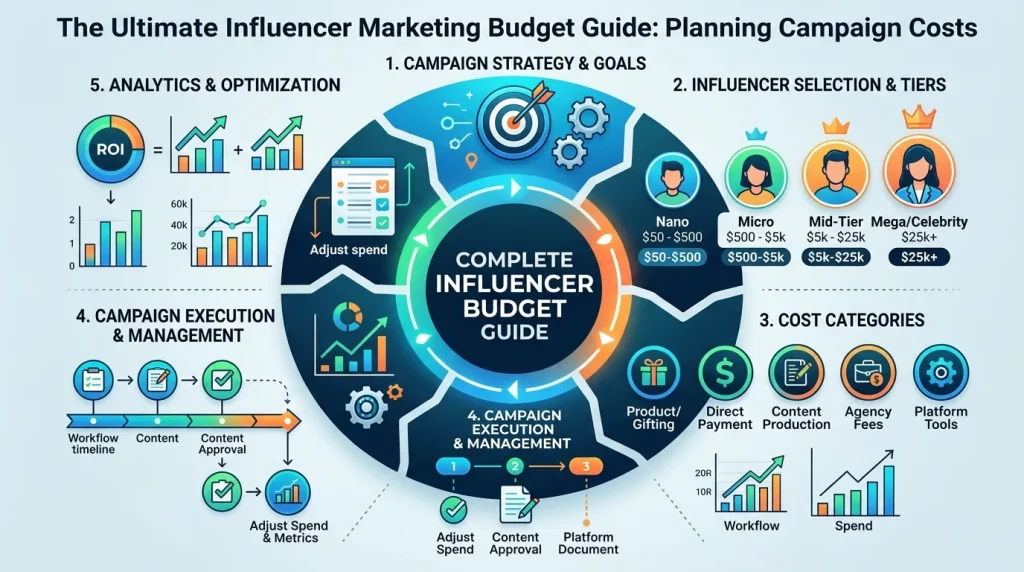
An influencer marketing budget is an important part of planning a successful creator campaign. Influencer marketing can help businesses reach targeted audiences through people they already follow and trust. However, campaign costs can vary significantly, making it important for businesses to understand where their money will go before starting a collaboration.
Some campaigns may involve a small creator producing a single social media post, while others may involve several influencers creating videos, product demonstrations, stories, livestreams, or long-term promotional content. The total investment depends on the campaign’s objectives, the creators involved, the platforms selected, and the amount of work required.
A carefully planned budget helps businesses avoid overspending while ensuring creators receive fair compensation for their work. It also makes it easier to evaluate whether the campaign generated enough value to justify the investment.
What Is an Influencer Marketing Budget?
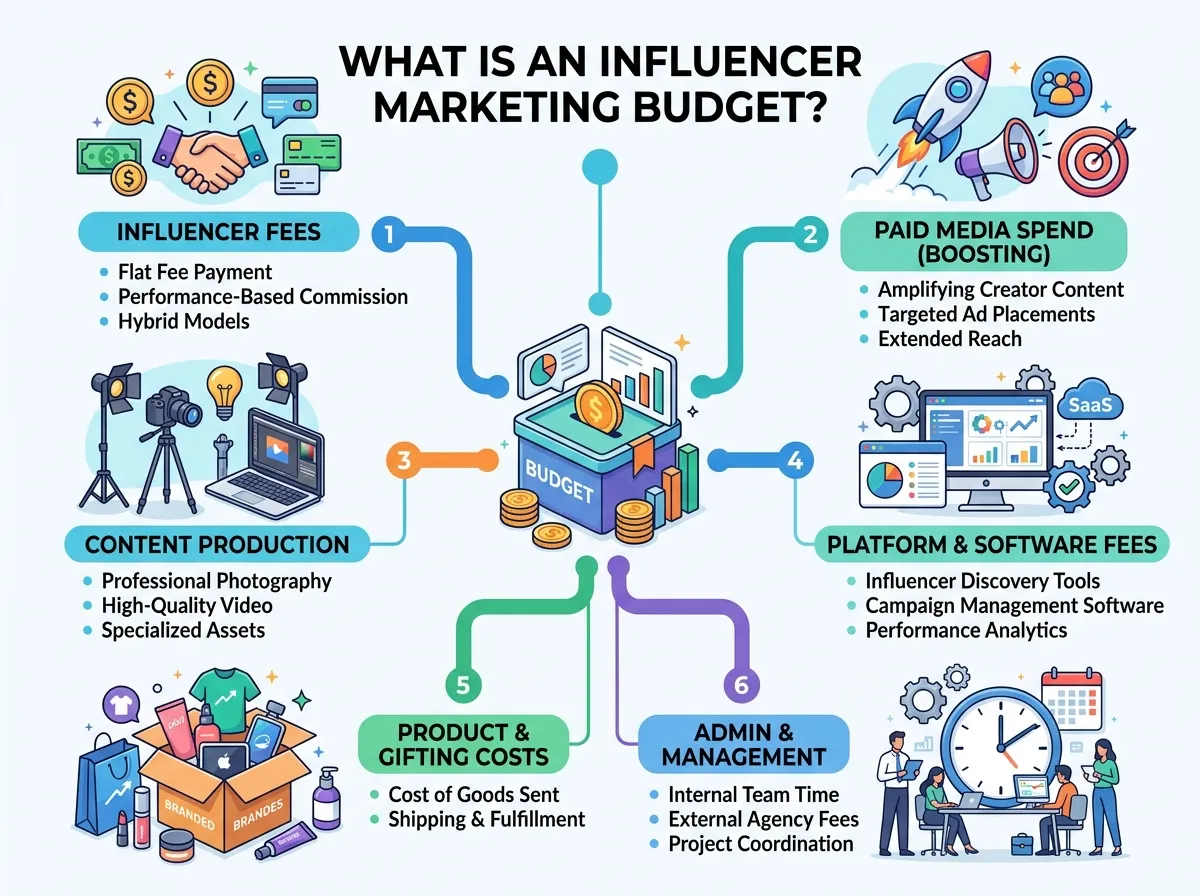
An influencer marketing budget is the total amount a business plans to spend on an influencer campaign. It can include payments to influencers as well as other expenses related to creating, managing, promoting, and measuring the campaign.
The budget should be based on the campaign’s goals rather than simply the number of influencers involved. A brand focused on awareness may prioritize reach and content production, while a company focused on sales may allocate more resources toward creators who have strong audience engagement and purchasing influence.
The budget should also consider the type of content required. A simple social media post may require less work than a professionally produced video, product tutorial, or series of branded videos.
Understanding Influencer Marketing Costs
Influencer marketing costs can differ widely because influencers offer different levels of reach, engagement, expertise, and content production. Audience size is one factor, but it is not the only consideration.
A creator with a smaller but highly engaged audience may provide more value for a particular campaign than a larger creator whose audience has little connection with the product.
The platform can also influence costs. Video content, for example, may require more time and production effort than a simple image or text-based post. Campaign requirements such as scripting, editing, product demonstrations, usage rights, and exclusivity can also affect the final price.
Businesses should therefore avoid choosing an influencer based only on follower count. Audience relevance, engagement quality, content quality, and campaign objectives are equally important. Careful influencer marketing campaign planning can help businesses evaluate these factors before committing their budget.
Influencer Marketing Pricing
Influencer marketing pricing is not standardized. Creators may charge different amounts depending on their experience, audience, niche, platform, content format, and relationship with the brand.
Some creators work with fixed rates for particular content formats, while others negotiate pricing based on the campaign requirements. A creator may also offer a package that includes several posts, stories, videos, or other deliverables.
When discussing pricing, brands should clearly define what is included. A quoted fee might cover content creation and publication, but it may not automatically include advertising rights, long-term usage rights, exclusivity, or additional revisions.
Understanding these details before signing an agreement can prevent unexpected expenses later. Businesses should also consider sponsored content marketing requirements when calculating the full cost of a paid creator partnership.
Creating an Influencer Campaign Budget
An influencer campaign budget should begin with a clear objective. Businesses should determine what they want the campaign to accomplish before deciding how much to spend.
If the goal is brand awareness, the budget may focus on reaching a relevant audience and producing engaging content. If the goal is lead generation, the campaign may require creators to direct followers to a landing page, signup form, or promotional offer.
For ecommerce campaigns, businesses may focus more closely on sales, affiliate conversions, promotional codes, or tracked links.
Once the goal is defined, the business can determine which creators and content formats are most appropriate. This makes the budget more strategic because spending is connected to a measurable outcome.
Influencer Collaboration Costs
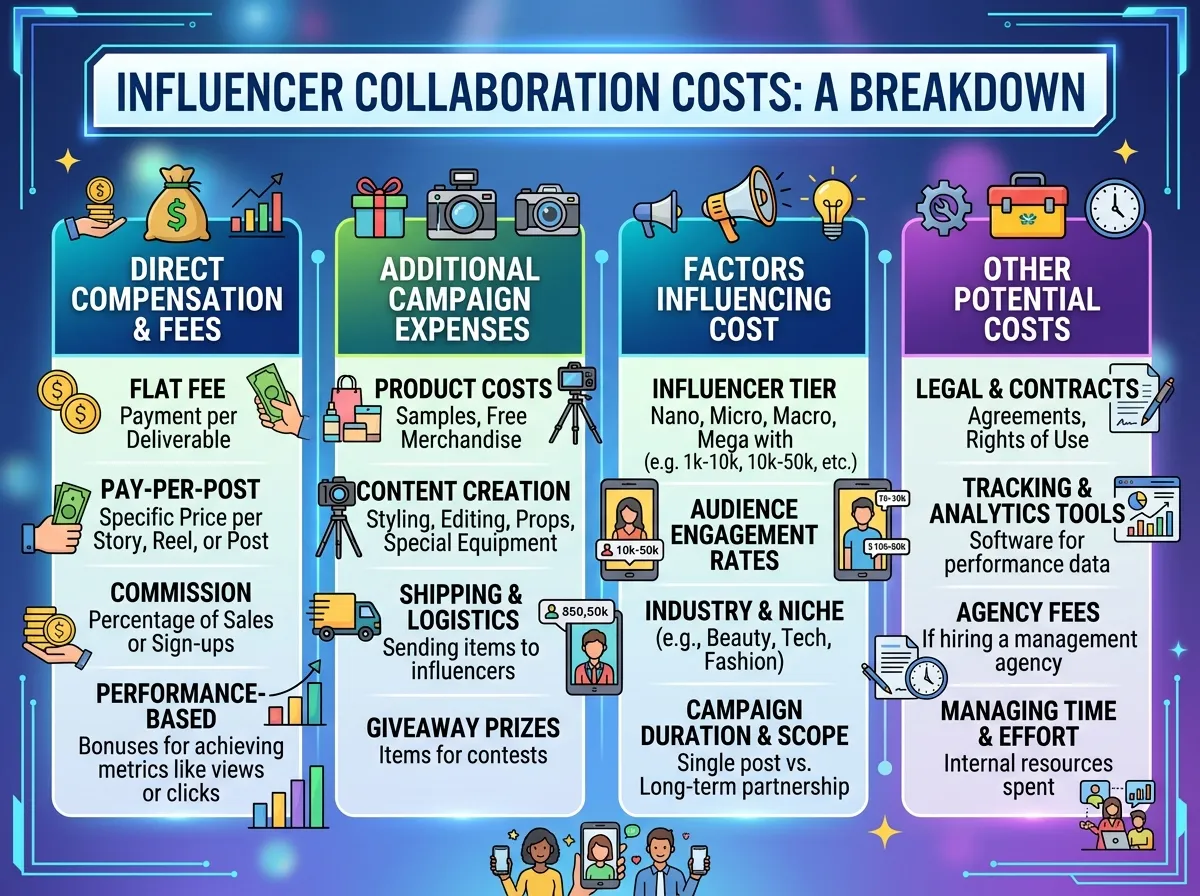
Influencer collaboration costs can include much more than the creator’s basic fee. Businesses may need to account for products, shipping, content production, travel, editing, agency fees, paid promotion, and other campaign expenses.
Content usage rights can be particularly important. If a brand wants to reuse an influencer’s content on its own website, advertisements, email campaigns, or social media accounts, the creator may charge an additional fee.
Exclusivity can also increase costs. If a brand asks a creator not to promote competing products for a specific period, the creator may charge more because they are giving up opportunities to work with other brands.
Businesses should discuss these requirements before agreeing to a price so that the total cost is clear.
Influencer Marketing Rates
Influencer marketing rates can vary substantially between creators and platforms. Instead of assuming that a specific follower count always corresponds to a specific price, brands should evaluate the complete value of the collaboration.
Engagement can provide useful context. A creator with a smaller audience may have strong interaction and trust within a particular niche. This can make their content highly relevant for campaigns targeting specific customer groups.
The quality of the audience is also important. A large audience does not necessarily mean a large number of potential customers. Brands should look at whether the creator’s audience matches their target market.
Content complexity should also be considered. A highly produced video may require considerably more time and resources than a simple post, which can affect the creator’s rate.
For larger campaigns, businesses can use influencer marketing automation to streamline creator discovery, communication, campaign management, and performance tracking, making it easier to manage collaborations efficiently.
Social Media Influencer Budget
A social media influencer budget should take into account the platforms where the target audience is most active. Different platforms may require different content formats and campaign approaches.
For example, a brand targeting an audience that enjoys short-form video may prioritize creators who specialize in that format. Another brand may benefit more from educational content, product reviews, long-form videos, or visual demonstrations.
Businesses should avoid spreading a limited budget across too many platforms. Concentrating resources on the platforms where the target audience is most engaged can make campaign management easier and improve the ability to measure results.
The budget can also be divided between different creator types. A business might combine smaller niche creators with a few larger creators to balance targeted engagement and broader reach.
Influencer Advertising Costs
Influencer advertising costs can increase when brands want to use creator content in paid advertising. Organic creator posts and paid advertisements are different forms of exposure, and advertising usage may require additional permissions or compensation.
For example, a creator might produce a product video for their own social media account. If the brand also wants to use that video in paid advertising, the agreement should specify how the content can be used and for how long.
Businesses should clarify whether they have permission to edit, resize, repurpose, or promote the content through paid media.
Planning these requirements in advance helps brands avoid unexpected costs and ensures that creators understand how their work will be used.
Influencer Campaign Pricing
Influencer campaign pricing should be evaluated according to the total deliverables rather than simply the influencer’s individual post rate.
A campaign might include several creators, multiple pieces of content, product samples, paid promotion, usage rights, and performance tracking. Looking only at the cost of a single post may therefore provide an incomplete picture.
Brands should create a clear campaign brief describing the required content, publishing schedule, key messages, creative expectations, approval process, usage rights, and reporting requirements.
Once these details are defined, it becomes easier to compare proposals and determine which collaborations provide the strongest potential value.
Influencer Marketing Cost Breakdown
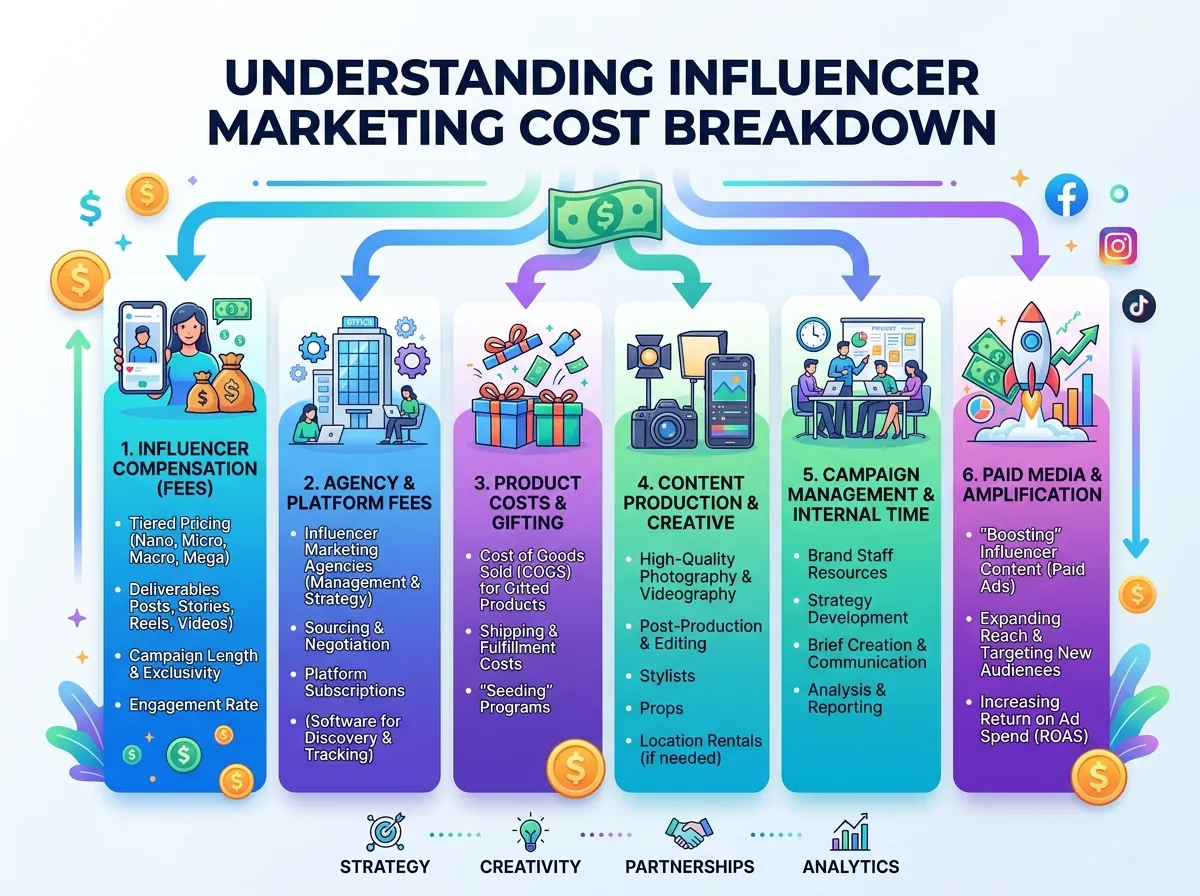
An influencer marketing cost breakdown helps businesses understand exactly where their campaign budget is being spent.
The largest expense is often creator compensation, but other costs may include products, shipping, content production, agency or management fees, paid amplification, usage rights, travel, and campaign measurement.
For example, a business may allocate most of its budget to creator fees while reserving part of the budget for promoting the strongest-performing content. Another company may invest more heavily in content production because it wants to reuse influencer-created assets across several marketing channels.
Breaking the budget into categories makes it easier to control spending and identify which areas are generating value.
How to Set the Right Influencer Marketing Budget
The right budget depends on the business’s objectives, available resources, customer value, and expected campaign performance.
Businesses should first determine how much they can comfortably invest without putting pressure on other essential marketing activities. They should then estimate what outcomes would make the campaign worthwhile.
For example, a campaign designed to generate sales should have clear conversion tracking. A campaign focused on awareness may instead measure reach, impressions, engagement, audience growth, and branded search interest.
Businesses should also consider testing before committing a large budget. Working with a smaller group of relevant creators can provide useful performance data. If the campaign produces strong results, the business can scale the strategy.
Choosing Influencers Based on Value
Follower count should not be the only factor used when selecting creators. Audience relevance can be more important than total audience size.
A creator who specializes in a specific topic may have a strong relationship with an audience that closely matches the brand’s target customers. Their recommendations may therefore generate meaningful engagement and conversions.
Brands should review the creator’s previous content, audience demographics where available, engagement patterns, communication style, and previous brand collaborations.
It is also useful to consider content quality. An influencer may have an excellent audience but produce content that does not match the brand’s image or expectations.
The best partnership is one where the creator, audience, content, and brand naturally fit together.
Measuring Influencer Marketing ROI
Influencer marketing ROI helps businesses determine whether their campaign generated enough value to justify its investment.
For sales-focused campaigns, businesses can use tracked links, unique promotional codes, ecommerce analytics, or other attribution methods to measure conversions.
For awareness campaigns, performance may be evaluated through reach, impressions, engagement, mentions, audience growth, website traffic, and other relevant indicators.
A simple way to think about financial return is to compare the value generated by the campaign with the total campaign investment. However, businesses should recognize that not every benefit can be measured immediately.
Influencer content may continue generating engagement after the original campaign ends. It can also contribute to brand awareness and customer trust that eventually influence future purchases.
Reducing Influencer Marketing Costs
Businesses can control costs by selecting creators carefully and defining campaign requirements before negotiations begin.
Long-term partnerships may sometimes provide better value than repeatedly negotiating one-off collaborations. When a creator consistently produces strong results, maintaining the relationship can also create greater audience familiarity with the brand.
Repurposing creator content can provide additional value. With appropriate usage rights, a business may be able to use successful content on its website, social media, email campaigns, or paid advertisements.
Businesses can also test smaller campaigns before making larger investments. This approach allows marketers to identify effective creators, platforms, and content formats before scaling.
Common Influencer Budget Mistakes
One common mistake is focusing entirely on follower count. A large audience does not guarantee strong engagement or conversions.
Another mistake is failing to account for additional costs. Content rights, paid advertising, travel, products, agency fees, and other expenses can significantly affect the total campaign budget.
Businesses can also make the mistake of not defining success before launching a campaign. Without clear goals and tracking methods, it becomes difficult to determine whether the investment produced meaningful results.
Choosing influencers who do not fit the brand is another risk. Even a popular creator may not be effective if their audience or content style is unrelated to the product.
Finally, businesses should avoid expecting every campaign to produce immediate sales. Influencer marketing can support awareness, trust, consideration, and long-term customer relationships in addition to direct conversions.
A flexible budget allows businesses to adjust spending based on campaign performance. Instead of committing the entire budget at once, companies can reserve part of their investment for creators or content that performs particularly well.
For example, if one creator generates significantly higher engagement and conversions than others, the brand may decide to extend the partnership or increase paid promotion around that creator’s content.
This performance-based approach can make influencer marketing more efficient because future spending is influenced by actual campaign results rather than assumptions. Similar performance-focused principles can be applied to other growth initiatives, such as an employee referral program, where measurable results can help organizations evaluate the value of their investment.
Regular reporting can also help identify which creators, platforms, content formats, and audiences provide the strongest value.
Final Thoughts
An influencer marketing budget should be based on clear objectives, audience relevance, creator value, content requirements, and measurable outcomes. There is no universal price that applies to every influencer because campaign costs depend on many factors.
Businesses should consider creator fees, content production, usage rights, advertising expenses, products, management costs, and other requirements when planning their investment. They should also look beyond follower counts and evaluate audience quality, engagement, content quality, and brand alignment.
A well-planned campaign can provide more than immediate sales. Influencer partnerships can help businesses build awareness, create valuable content, establish trust, and reach audiences that may be difficult to access through traditional advertising.
By starting with realistic goals, tracking performance, testing different creators, and adjusting spending based on results, businesses can create influencer campaigns that are more efficient and easier to scale.
Frequently Asked Questions
1. What is an influencer marketing budget?
An influencer marketing budget is the amount a business plans to spend on an influencer campaign. It can include creator fees, products, content production, usage rights, advertising, management, and other campaign expenses.
2. How much does influencer marketing cost?
Influencer marketing costs vary based on the creator’s audience, engagement, platform, content format, industry, and campaign requirements. There is no single rate that applies to every influencer.
3. What affects influencer marketing pricing?
Influencer marketing pricing can be affected by audience size, engagement, content complexity, creator experience, platform, usage rights, exclusivity, campaign duration, and the number of deliverables required.
4. Should businesses focus on follower count when setting an influencer budget?
No. Follower count is only one factor. Audience relevance, engagement quality, content quality, and the creator’s ability to influence the target audience can be more important when determining campaign value.
5. What should an influencer campaign budget include?
A campaign budget may include creator compensation, products, shipping, content production, management fees, advertising, content usage rights, travel, and campaign measurement.
6. How can businesses reduce influencer marketing costs?
Businesses can control costs by selecting relevant creators, negotiating clear deliverables, testing smaller campaigns, developing long-term partnerships, and repurposing creator content when appropriate usage rights are available.
7. What is influencer marketing ROI?
Influencer marketing ROI measures the value generated by an influencer campaign compared with the amount invested. Depending on the campaign objective, businesses may measure sales, leads, traffic, engagement, awareness, or other outcomes.
8. Are smaller influencers cheaper and more effective?
Smaller influencers may have lower collaboration costs, but effectiveness depends on the campaign and audience. A smaller creator with a highly relevant and engaged audience can sometimes provide strong value compared with a much larger creator.
9. Do influencers charge extra for content usage rights?
They can. If a brand wants to reuse influencer-created content on its own channels or in paid advertising, the creator may charge an additional fee depending on the agreement and length of usage.
10. How should a business measure an influencer campaign?
Businesses should measure performance according to the campaign objective. Sales campaigns can track conversions and revenue, while awareness campaigns can evaluate reach, impressions, engagement, website traffic, and other relevant indicators.