Influencer Marketing Budget: Understanding Costs, Pricing, and ROI
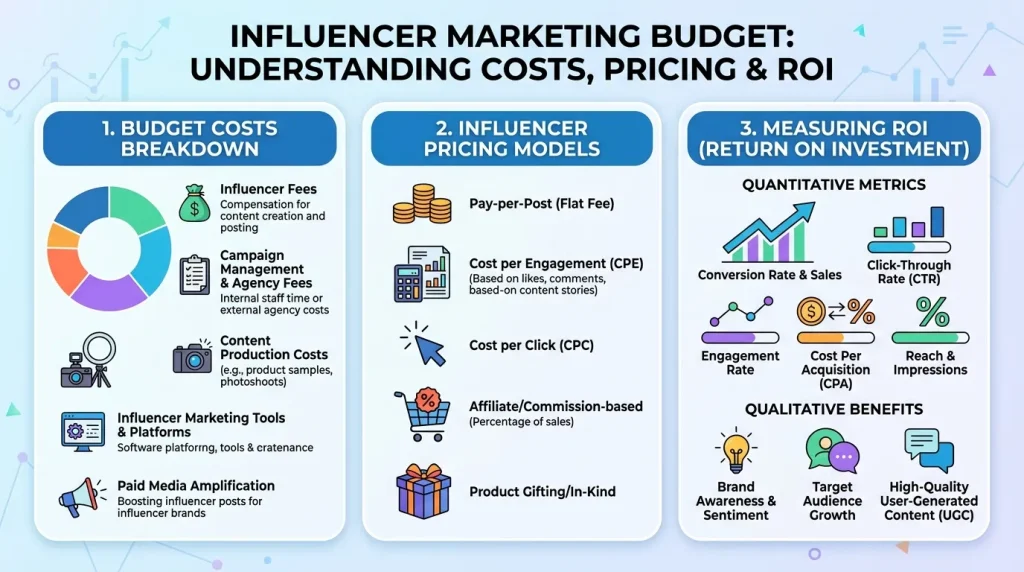
An influencer marketing budget helps businesses plan and manage spending on creator partnerships and campaigns. By considering audience size, engagement, platform, content requirements, and ROI, businesses can make smarter investments and reach relevant audiences effectively.
An influencer marketing budget determines how much a business can invest in creators to promote its products, services, or brand. As influencer marketing has become an important part of digital advertising, businesses of different sizes are allocating money to creator partnerships across platforms such as Instagram, TikTok, YouTube, Facebook, and other social networks.
However, deciding how much to spend is not always straightforward. Influencer marketing costs can vary significantly depending on the creator’s audience size, engagement, niche, platform, content format, campaign duration, and level of involvement. A single sponsored post may cost relatively little, while a long-term partnership involving multiple videos, usage rights, and exclusivity can require a much larger investment.
A well-planned influencer marketing budget is therefore about more than choosing a number. Businesses need to understand what they are paying for, how creator pricing works, what additional expenses may occur, and how the investment connects to marketing objectives. When these factors are considered together, influencer campaigns can become a measurable part of a broader marketing strategy.
What Is an Influencer Marketing Budget?

An influencer marketing budget is the amount of money a business sets aside for creator partnerships and related campaign activities. The budget can cover payments to influencers as well as other expenses associated with developing, managing, promoting, and measuring the campaign.
The size of the budget depends on the company’s goals and available resources. A small business may work with a few micro-influencers, while a larger company may collaborate with several creators across multiple platforms.
There is no universal amount that every business should spend. Influencer marketing works across many industries, and campaign requirements can differ dramatically. A niche B2B company, for example, may need only a few highly relevant creators, while a consumer brand launching a new product may want broad exposure across several social platforms.
The most effective budget is one that reflects the expected outcome rather than simply following a popular spending benchmark.
Understanding Influencer Marketing Costs
Influencer marketing costs are influenced by many factors. Audience size is one of the most visible factors, but it is not the only one that determines pricing.
A creator with a large audience may charge a premium because of their reach. However, a smaller creator with a highly engaged and relevant audience may provide stronger value for a particular campaign.
Engagement, content quality, niche expertise, audience demographics, platform, campaign requirements, and creator reputation can all affect pricing.
The content format also matters. A simple sponsored image may require less work than a professionally produced video. A YouTube integration may require scripting, filming, editing, and production time, while a short social media post may involve a different level of effort.
Campaign duration can also influence total cost. A single collaboration has a different pricing structure from a six-month partnership involving multiple pieces of content.
Influencer Campaign Budget and Campaign Objectives
An influencer campaign budget should be connected to the campaign’s objectives. Businesses may use influencers to increase brand awareness, introduce a new product, generate website traffic, collect leads, drive sales, or build credibility within a specific community.
An awareness campaign may focus heavily on reach and impressions. A performance-oriented campaign may place greater emphasis on clicks, conversions, affiliate sales, or revenue. How to Measure Influencer Marketing ROI can help businesses determine which metrics are most useful for evaluating these campaign outcomes.
These differences influence how the budget should be distributed.
For example, a company focused on product sales may prefer creators who have a strong history of influencing purchasing decisions rather than simply choosing creators with the largest follower counts.
The campaign objective can also determine the appropriate content format. A product demonstration may be more valuable for a complex product, while a visually appealing lifestyle post may work better for a consumer brand.
How Influencer Marketing Pricing Works
Influencer marketing pricing does not follow one standardized system. Creators and agencies may use different pricing models depending on the platform and campaign.
Some creators charge a fixed fee for individual content pieces. Others may offer packages that include several posts, stories, videos, or other deliverables.
Performance-based arrangements can also be used. In these situations, creators may receive commissions based on sales, leads, clicks, or other measurable outcomes.
Long-term partnerships may involve monthly retainers or negotiated campaign rates. Businesses may also negotiate additional costs for content usage, exclusivity, whitelisting, paid amplification, or additional revisions.
Understanding what is included in a quoted price is therefore essential. Two creators may offer similar-looking prices while providing very different levels of service and usage rights.
Influencer Collaboration Rates
Influencer collaboration rates can vary widely because creators operate as independent businesses with different audiences, expertise, production capabilities, and commercial demand.
Follower count is often used as a general reference point, but it should not be treated as a complete pricing formula.
A creator with 20,000 highly engaged followers in a specialized niche may be more valuable to a business than a creator with several hundred thousand followers whose audience has little connection to the product.
Engagement quality matters because the goal is not simply to expose a product to people. Businesses want the right people to notice, consider, and potentially act on the promotion.
Content quality also affects collaboration rates. Creators who invest heavily in production, editing, photography, research, or storytelling may charge more because the brand is receiving more than access to an audience.
Social Media Influencer Budget
A social media influencer budget should consider the platforms where the target audience is most active. Different platforms have different content formats, audience behaviors, and creator ecosystems.
Instagram campaigns may focus on images, short-form videos, stories, and product demonstrations. TikTok campaigns often emphasize short, entertaining videos and creator-led storytelling. YouTube can support longer product reviews, tutorials, integrations, and educational content.
The same creator may also have audiences across multiple platforms. A campaign that includes several platforms can increase reach, but it may also increase production and collaboration costs.
Businesses should therefore consider platform fit before expanding their social media influencer budget. Spending across every platform does not necessarily create better results. Brands can also explore sponsored content marketing when planning paid creator collaborations and evaluating how sponsored content fits into their wider marketing strategy.
A focused campaign on one or two relevant platforms can sometimes be more effective than spreading a limited budget across many channels.
Influencer Marketing Expenses Beyond Creator Fees
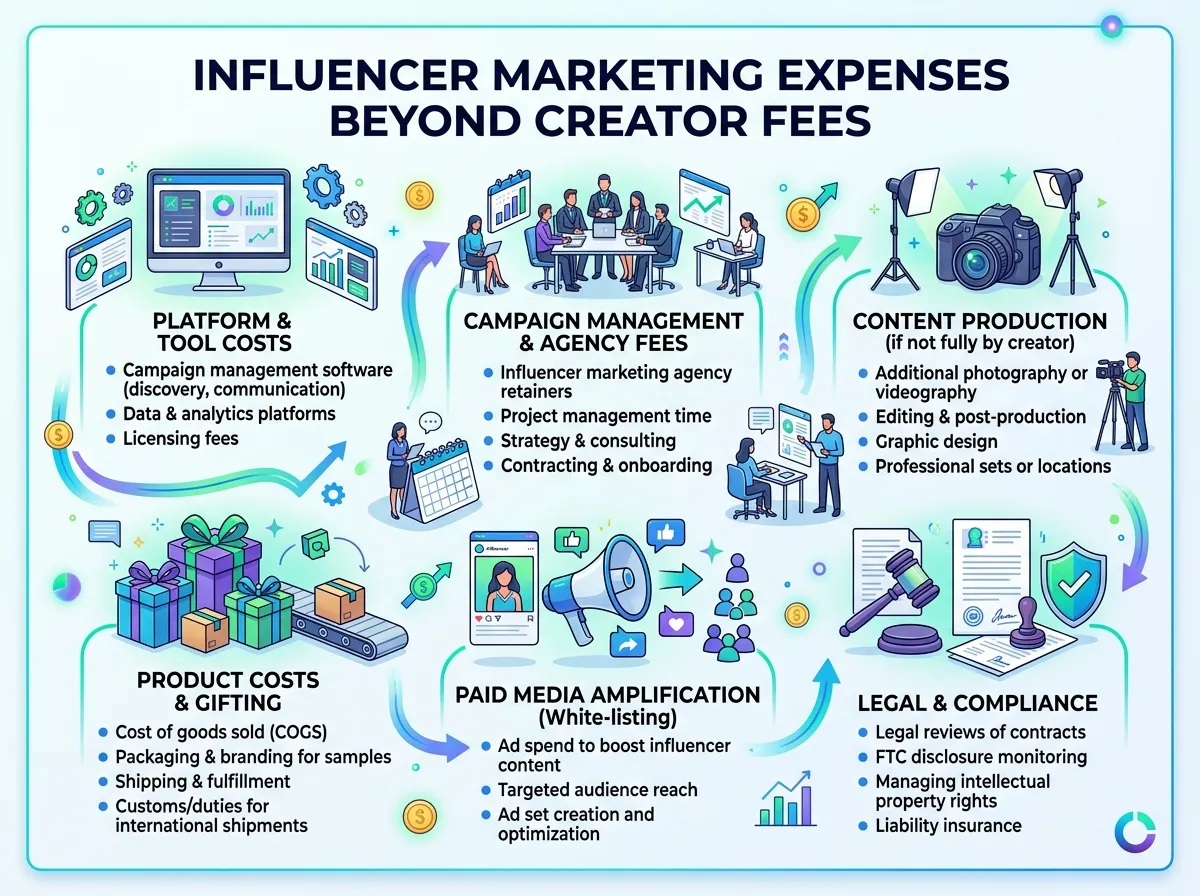
Creator payments are often the largest part of an influencer campaign, but they are not necessarily the only expenses.
Businesses may need to account for product samples, shipping, creative production, agency fees, campaign management, photography, video editing, paid advertising, platform costs, legal review, and tracking technology.
Some campaigns also require travel, event attendance, studio production, or specialized equipment.
Content licensing is another important consideration. A creator may charge an additional fee if the brand wants to use their content on its own website, social channels, advertisements, or other marketing materials.
Paid amplification can also increase costs. A brand may want to promote a creator’s organic post through paid advertising to reach a larger or more targeted audience.
These additional influencer marketing expenses should be considered when calculating the true cost of a campaign. For larger campaigns, influencer marketing automation can help businesses streamline campaign management, communication, tracking, and reporting.
Influencer Campaign Cost and Content Requirements
The influencer campaign cost often increases as the scope of work becomes more complex.
A campaign involving one piece of content has a relatively simple production structure. A campaign involving multiple videos, revisions, product demonstrations, platform-specific versions, and ongoing community engagement requires more time and coordination.
Brands should clearly define deliverables before agreeing to a campaign price.
Content requirements can include the number of posts, videos, stories, mentions, links, hashtags, calls to action, publication dates, and other expectations.
Clear agreements can reduce misunderstandings and help businesses compare creator proposals more effectively.
The cost should be evaluated against the expected value of those deliverables rather than viewed as a standalone number.
The Importance of Influencer Budget Planning
Influencer budget planning allows businesses to allocate resources before negotiations and campaign execution begin.
A campaign budget can include a creator allocation as well as a separate amount for production, management, paid promotion, and measurement.
Planning also creates flexibility. Not every creator will produce the same results, and campaign performance may change as content is published.
Businesses may want to reserve part of the budget for creators or content that performs particularly well. Strong-performing collaborations can potentially be expanded through additional content or paid promotion.
Budget planning also helps prevent unexpected costs from disrupting the campaign.
Influencer Marketing ROI
Influencer marketing ROI measures the value generated by influencer activity compared with the investment.
For sales-focused campaigns, ROI may be calculated using revenue generated through creator links, discount codes, affiliate tracking, or attributed purchases.
For awareness campaigns, businesses may examine reach, impressions, engagement, branded search activity, website traffic, or other indicators of increased visibility.
The most valuable measurement depends on the original campaign objective.
A campaign that generates substantial awareness but few direct sales may still be successful if awareness was the primary goal. Similarly, a campaign with limited reach may be highly successful if it generates a large number of qualified purchases.
Influencer marketing ROI should therefore be evaluated within the context of the campaign’s purpose.
Measuring the Value of Influencer Partnerships
The value of an influencer partnership extends beyond immediate campaign results. Successful collaborations can help brands build credibility and establish relationships with audiences that may be difficult to reach through traditional advertising.
Creators often have strong relationships with their communities. Their recommendations can feel more personal and authentic than standard advertisements.
Long-term partnerships can strengthen this effect because audiences become familiar with the relationship between the creator and brand.
Businesses can also reuse successful creator content across other marketing channels, provided the appropriate usage rights have been negotiated. Inbound marketing automation can help businesses manage and coordinate these marketing activities more efficiently across different channels.
This can increase the value of the original investment.
Influencer Marketing Strategy and Budget Allocation
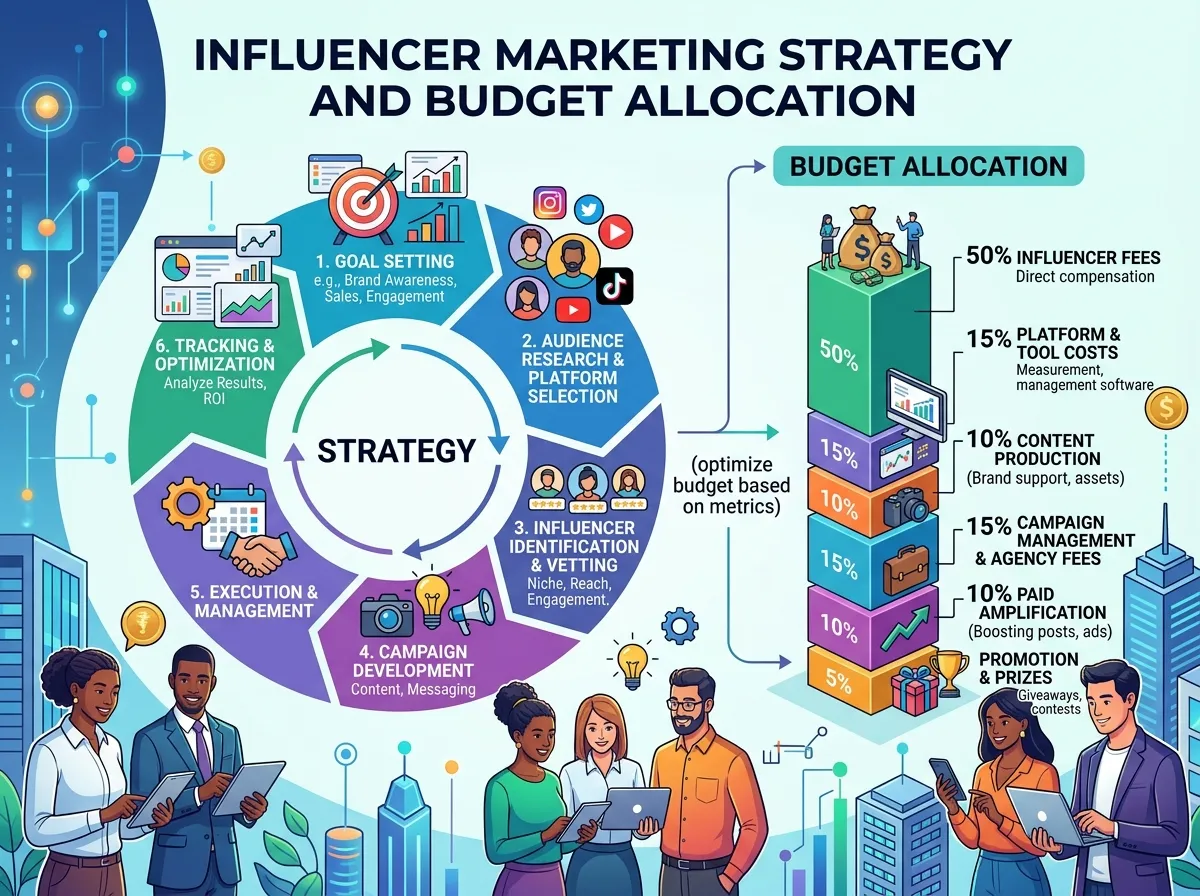
An effective influencer marketing strategy connects creator selection, campaign objectives, content requirements, distribution, and measurement.
Budget allocation should reflect the relative importance of these components.
Some businesses may prioritize several smaller creators because they want to reach multiple niche communities. Others may invest more heavily in a smaller number of established creators to create broader awareness.
Neither approach is automatically better.
The appropriate strategy depends on audience, product, campaign objective, platform, industry, and available resources.
Creator relevance should remain central. An influencer whose audience closely matches the target customer can potentially provide more value than a creator selected solely because of follower count.
Micro-Influencers and Larger Creators
Micro-influencers can be attractive to businesses with limited budgets because they often operate within specific niches and maintain close relationships with their audiences.
Their smaller audiences can also allow brands to work with several creators instead of putting the entire campaign budget into one partnership.
Larger creators can provide substantial reach and may be particularly useful for awareness campaigns or major product launches.
However, larger audiences generally come with higher costs, and reach does not guarantee engagement or conversions.
The best choice depends on the campaign’s goals. A balanced influencer marketing budget may combine different creator sizes to achieve both targeted engagement and broader visibility.
Long-Term Influencer Partnerships
One-time collaborations can generate useful exposure, but long-term relationships can create deeper brand associations.
When a creator repeatedly features a product, their audience may become more familiar with the brand and its value proposition.
Long-term partnerships may also make budgeting easier because businesses can negotiate broader agreements instead of purchasing individual content pieces.
However, long-term partnerships should be based on evidence that the creator and audience are a strong fit.
A poorly matched partnership can become expensive if the brand commits to a long contract before understanding the creator’s effectiveness.
Influencer Marketing and Authenticity
Authenticity is one of the major reasons influencer marketing can be effective. Audiences often follow creators because they value their opinions, personality, expertise, or content style.
If sponsored content feels completely disconnected from a creator’s usual content, audience trust may suffer.
Businesses should therefore consider creative compatibility when selecting influencers. Giving creators reasonable creative freedom can help sponsored content feel more natural while still meeting campaign requirements.
At the same time, brand messaging and legal disclosure requirements need to be respected.
The strongest collaborations typically balance commercial objectives with the creator’s established relationship with their audience.
How Influencer Campaigns Fit Into Broader Marketing
Influencer campaigns rarely need to operate in isolation. They can complement search marketing, paid advertising, social media, email marketing, public relations, content marketing, and other channels.
A creator’s video may introduce a product, while paid advertising retargets people who visited the website. Creator content can also be shared through brand social accounts or incorporated into product pages.
This integrated approach can increase the value of influencer marketing expenses because content and audience attention can support multiple marketing activities.
The influencer campaign can become one component of a broader customer journey rather than a standalone promotion.
Conclusion
An effective influencer marketing budget requires more than choosing a creator fee. Businesses need to understand influencer marketing costs, collaboration rates, campaign requirements, additional expenses, platform differences, and expected returns.
The right budget depends on the campaign’s objectives, target audience, creator selection, content requirements, and overall marketing strategy. A smaller investment with highly relevant creators can sometimes produce greater value than a larger investment focused only on audience size.
Influencer marketing ROI should also be evaluated using metrics that reflect the campaign’s purpose. Sales, leads, engagement, reach, traffic, and brand awareness can all provide useful information when measured appropriately.
As influencer marketing continues to develop, businesses that approach creator partnerships strategically can build stronger relationships with audiences while making more informed decisions about their marketing investments. The goal is not simply to spend more on influencers but to create partnerships where the cost, content, audience, and expected value work together.
Frequently Asked Questions About Influencer Marketing Budget
What is an influencer marketing budget?
An influencer marketing budget is the amount a business allocates for influencer collaborations and related campaign expenses. It can include creator fees, production costs, management, product samples, advertising, content licensing, and measurement.
How much does influencer marketing cost?
Influencer marketing costs vary based on audience size, engagement, platform, content format, niche, creator experience, campaign duration, and usage rights. There is no single price that applies to every influencer campaign.
What affects influencer marketing pricing?
Influencer marketing pricing can be affected by follower count, engagement, audience quality, content production requirements, platform, creator reputation, campaign duration, exclusivity, and the rights a brand receives to use the content.
Are influencer collaboration rates based only on followers?
No. Followers are only one factor. Engagement, audience relevance, content quality, niche expertise, platform, and campaign requirements can all influence influencer collaboration rates.
How should a business create a social media influencer budget?
A business should connect its social media influencer budget with its campaign objectives, target audience, preferred platforms, creator requirements, content needs, and expected return. Additional expenses should also be included.
What expenses should an influencer campaign budget include?
An influencer campaign budget can include creator payments, product costs, shipping, production, agency or management fees, content licensing, paid promotion, travel, technology, and other campaign-related expenses.
How can businesses measure influencer marketing ROI?
Influencer marketing ROI can be evaluated through sales, leads, affiliate revenue, conversions, website traffic, engagement, reach, impressions, and other metrics depending on the campaign objective.
Are micro-influencers cheaper than larger influencers?
Micro-influencers often have lower absolute fees than larger creators, although pricing varies considerably. Their smaller but potentially highly relevant audiences can make them valuable for niche campaigns.
Is a long-term influencer partnership worth the investment?
A long-term partnership can be valuable when a creator has strong audience alignment and consistently delivers good results. Repeated exposure can build familiarity and trust, but businesses should evaluate performance before making significant long-term commitments.
How can businesses improve influencer budget planning?
Businesses can improve influencer budget planning by defining objectives, researching creator pricing, accounting for additional expenses, comparing creators based on audience relevance and engagement, and establishing clear performance measurement before launching a campaign.