Influencer Compliance: Building Trust Through Responsible Marketing

Influencer compliance helps brands, creators, and agencies follow advertising laws, platform policies, and ethical standards when promoting products or services. Clear disclosures, accurate claims, transparent partnerships, and proper contracts reduce legal risks and protect audience trust. By understanding influencer marketing regulations and reviewing sponsored content before publication, businesses can create responsible campaigns that maintain credibility and align with brand values.
Influencer marketing has become an important way for businesses to introduce products, communicate brand values, and reach audiences through trusted creators. Influencers often develop strong relationships with their followers, which makes their recommendations valuable to brands. However, when promotional content does not clearly explain a commercial relationship, audiences may struggle to distinguish genuine opinions from paid endorsements.
Influencer compliance refers to the practices brands, creators, and agencies use to ensure that influencer campaigns follow applicable laws, advertising standards, platform requirements, and ethical principles. These responsibilities can cover sponsored posts, gifted products, affiliate links, discount codes, product claims, contract terms, and the use of copyrighted material.
Compliance is important because an influencer campaign involves more than publishing attractive content. A business may need to confirm that sponsorships are disclosed clearly, promotional claims are supported by evidence, and creators understand the conditions of their agreements. Requirements can differ depending on the country, platform, product category, and type of commercial relationship.
A responsible approach makes compliance part of campaign planning rather than a last-minute review. When brands communicate expectations clearly and give creators the information they need, campaigns are more likely to meet regulatory requirements while preserving the authenticity that makes influencer marketing effective.
Understanding Influencer Marketing Regulations
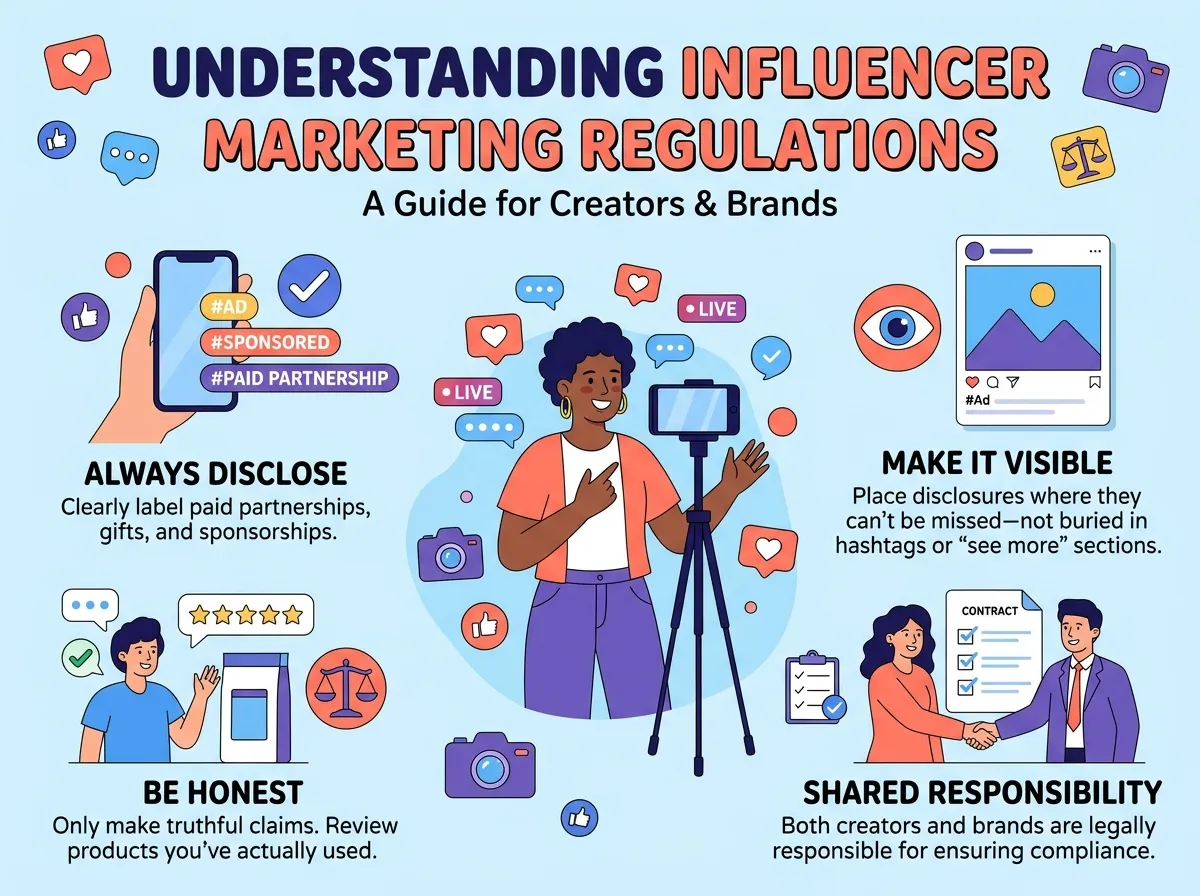
Influencer Marketing Regulations establish requirements for how businesses and creators promote products and services to audiences. Depending on the market, these rules may address advertising disclosures, misleading claims, consumer protection, privacy, endorsements, and restricted product categories.
One of the central principles is transparency. When an influencer receives payment, a free product, a commission, or another benefit in exchange for promoting a brand, that relationship may need to be disclosed. The exact requirement depends on the applicable rules and the circumstances of the promotion. A creator should not assume that a product recommendation is exempt simply because no direct payment was made.
Regulations may also govern the accuracy of promotional statements. Influencers should not make unsupported claims about a product’s performance, safety, effectiveness, or benefits. Brands need to provide accurate information and establish a review process that helps creators understand which claims they can reasonably make.
International campaigns require additional care. A brand working with creators in several countries may need to consider different disclosure standards, consumer protection rules, and platform policies. Compliance in one market does not automatically guarantee compliance elsewhere.
Businesses should identify the jurisdictions relevant to their campaigns and consult current guidance from the appropriate regulatory authorities when necessary. Legal review may be especially important for industries such as finance, healthcare, supplements, and other categories subject to additional restrictions.
By understanding the applicable regulations before a campaign begins, brands can reduce avoidable risks and help creators produce content that communicates promotional relationships honestly.
Influencer Disclosure Requirements and Advertising Transparency
Influencer Disclosure Requirements are among the most important elements of compliant influencer marketing. They help audiences recognize when content includes a commercial relationship rather than an entirely independent recommendation.
A disclosure may be necessary when an influencer receives money, free products, discounts, travel, commissions, or other benefits connected to a promotion. The relevant rules depend on the circumstances and jurisdiction, so brands should establish a clear policy covering the different types of partnerships they use.
Disclosures should be easy to notice and understand. Vague wording, obscure hashtags, or statements placed where audiences are unlikely to see them may fail to communicate the relationship effectively. Simple language that directly explains the commercial connection is generally more useful than ambiguous promotional wording.
Placement also matters. A disclosure should be visible in the context where the endorsement appears. For example, a creator may need to include disclosure wording within a social media caption or make it clearly noticeable in a video. For content that disappears after a short period, such as stories, the disclosure should remain visible while the endorsement is being communicated.
Brands should not assume that a platform’s paid partnership label automatically satisfies every legal requirement. Platform tools can support transparency, but businesses and creators remain responsible for understanding the rules that apply to their content.
Clear disclosure does not necessarily weaken an endorsement. Instead, it helps audiences evaluate recommendations with the relevant information. When creators explain their relationships openly, they support a more trustworthy environment for both their followers and the brands they work with.
Social Media Compliance Guidelines Across Platforms
Social Media Compliance Guidelines help brands and influencers maintain consistent standards when publishing promotional content on different platforms. Each platform may have its own rules regarding branded content, advertising labels, prohibited products, music, copyrighted material, and audience targeting.
A campaign that works on one platform may require adjustments before being published elsewhere. Video length, caption placement, disclosure tools, and content restrictions can vary, making it important for marketing teams to review the requirements of each channel.
Brands should create practical policies that explain how creators are expected to communicate partnerships, use approved claims, protect confidential information, and respond to questions about sponsored products. These policies should be clear enough for creators to apply during everyday content production.
Compliance also extends to comments, live streams, and other interactive formats. Influencers may receive questions about product performance or make additional statements while responding to followers. They should understand which information is approved, when they should avoid making unsupported claims, and how to direct complex questions to the appropriate brand representative.
Account security and privacy are also important. Creators should avoid publishing confidential campaign information, exposing customer details, or sharing private communications without permission. Brands should use appropriate access controls when working with agencies and external partners.
A consistent compliance process helps teams manage these responsibilities without unnecessarily restricting creative expression. By combining clear expectations with platform-specific checks, businesses can maintain responsible campaigns across multiple social media channels.
Sponsored Content Regulations and Honest Endorsements
Sponsored Content Regulations help ensure that audiences can identify advertising and receive accurate information about the products or services being promoted. Sponsored content may appear as an Instagram post, short-form video, blog article, podcast segment, livestream, product review, or other creator-produced material.
The promotional nature of the content should be communicated clearly whenever required. A creator should not disguise an advertisement as an independent review in a way that misleads audiences about the relationship with the brand. Similarly, a business should not require an influencer to present a scripted claim as a personal experience if that experience did not occur.
Honest endorsements are particularly important when creators discuss product results or personal opinions. If a creator has not used a product, the content should not falsely suggest otherwise. If an endorsement describes a particular result, brands should ensure that the statement is accurate and does not create an unsupported impression about what other customers can expect.
The content should also reflect the actual terms of the offer. Promotional discounts, giveaways, availability claims, and product limitations need to be communicated accurately. Misleading information can create consumer complaints and damage both the creator’s credibility and the brand’s reputation.
Businesses can support compliant sponsored content by providing factual product information, approved claims, and clear instructions about required disclosures. Creators should retain enough freedom to express genuine opinions while following the relevant legal and contractual requirements.
When sponsored content is transparent and accurate, it can achieve its marketing purpose without undermining the audience’s ability to make informed decisions.
Influencer Advertising Standards and Responsible Claims
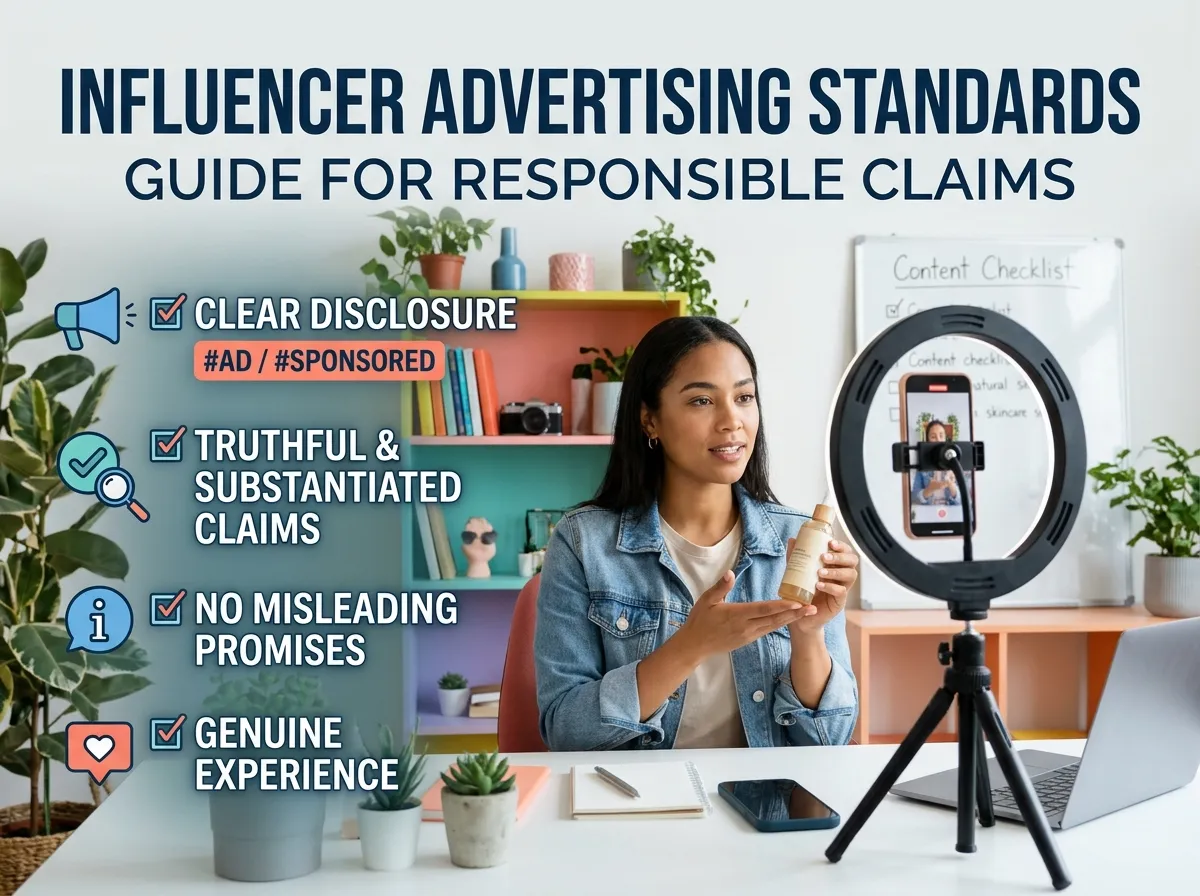
Influencer Advertising Standards provide expectations for advertising that is truthful, supportable, and not misleading. Although specific requirements vary by market and product category, brands should ensure that promotional statements accurately represent the product and the evidence supporting its benefits.
An influencer may be asked to describe a product’s quality, convenience, effectiveness, or value. These claims should be based on reliable information rather than assumptions or exaggerated language. Statements about health outcomes, financial returns, environmental benefits, or guaranteed results may require particular care because they can significantly affect consumer decisions.
Brands should provide creators with current product specifications and clear information about which statements are approved. If evidence supports a limited claim, the content should not expand it into a broader promise. A disclaimer cannot necessarily correct a misleading headline or a strong claim that lacks adequate support.
Advertising standards also apply to visual content. Edited photographs, demonstrations, before-and-after images, and video effects should not create a false impression of a product’s performance. Any material limitations should be communicated when necessary to prevent the audience from being misled.
A practical review process can help detect problems before publication. Marketing teams should check product claims, pricing information, comparisons, disclosures, and relevant platform restrictions. For sensitive or regulated products, qualified legal or compliance professionals may need to review the campaign.
Responsible advertising helps protect customers and supports sustainable brand credibility. When promotional messages are accurate and appropriately supported, creators can communicate product benefits without relying on unrealistic promises.
Brand Partnership Compliance and Shared Responsibilities
Brand Partnership Compliance involves ensuring that a collaboration between a brand and an influencer meets the legal, contractual, and operational requirements of the campaign. Partnerships can involve sponsored content, affiliate marketing, product gifting, event appearances, long-term ambassadorships, or collaborative product launches.
Both parties need a clear understanding of their responsibilities. Brands typically provide accurate product information, define campaign objectives, explain required disclosures, and communicate content restrictions. Influencers are responsible for producing content that reflects their genuine experiences, follows applicable requirements, and meets the terms of the agreement.
Campaigns may also involve agencies, talent managers, production teams, and external suppliers. When several parties participate, responsibilities can become unclear unless ownership is documented. A clear approval process helps everyone understand who reviews claims, who confirms disclosures, and who is responsible for addressing concerns.
Brands should also consider whether a creator’s existing commitments create conflicts of interest. Competitor restrictions, exclusivity clauses, and category limitations may affect what the influencer can promote during or after the partnership. These conditions should be reasonable, clearly written, and consistent with applicable law.
A structured approach to influencer marketing for brands can help organizations align campaign objectives with creator selection, communication, and performance expectations. Compliance should be included in that process from the beginning.
Strong partnerships depend on transparency and mutual understanding. When both parties know what is expected, they can work more efficiently, reduce disputes, and focus on creating content that provides value to audiences.
Influencer Contract Requirements and Documentation
Influencer Contract Requirements help establish the terms of a partnership and provide a reference point when questions or disagreements arise. A well-prepared agreement should explain what each party has agreed to deliver, how the collaboration will operate, and which requirements apply to the published content.
Contracts commonly address deliverables, publication dates, payment terms, disclosure obligations, content approvals, revision limits, and campaign duration. Depending on the arrangement, they may also cover exclusivity, usage rights, content ownership, cancellation, confidentiality, and the process for handling non-compliant material.
Disclosure responsibilities should be explicit. The agreement can explain the required disclosure language, where it should appear, and which formats require additional attention. However, contractual wording does not remove the need to follow applicable legal and platform requirements.
Content rights deserve particular attention. A brand may want to reuse an influencer’s photographs or videos in advertisements, on its website, or across other marketing channels. Those permissions should be agreed upon clearly, including the permitted channels, duration, territory, and any relevant payment arrangements.
Contracts should also define the approval process without creating unnecessary delays. Influencers need to know which claims or elements require approval, how feedback will be delivered, and who can authorize the final content. Clear procedures reduce confusion and make campaign management more efficient.
For complex or high-value partnerships, businesses should seek legal advice when preparing or reviewing agreements. A carefully drafted contract helps both parties understand their obligations and creates a more reliable foundation for the relationship.
FTC Influencer Disclosure Rules and US Campaigns
FTC Influencer Disclosure Rules are especially relevant to influencer campaigns involving audiences in the United States. The Federal Trade Commission provides guidance on endorsements, testimonials, advertising disclosures, and deceptive marketing practices.
A central principle of FTC guidance is that material connections between an endorser and a brand should be disclosed clearly and conspicuously when consumers would not otherwise reasonably expect the relationship. Material connections can include payments, free products, discounts, employment relationships, or other benefits that may affect how an endorsement is understood.
The disclosure should use straightforward language and appear where consumers can readily notice it. Brands and creators should not rely on ambiguous expressions or assume that audiences understand the meaning of every abbreviation or hashtag. In video content, the format and placement of the disclosure matter, and an appropriate visual or spoken disclosure may be necessary depending on how the endorsement is presented.
FTC guidance also emphasizes that endorsements must not be deceptive. Influencers should not make claims they cannot substantiate or describe experiences they did not genuinely have. Brands can face risk when they encourage misleading statements or fail to take reasonable steps to manage their endorsement campaigns.
Compliance responsibilities may apply to both advertisers and endorsers, depending on the facts and applicable law. Businesses should therefore provide clear instructions, monitor campaigns appropriately, and address problems when they arise.
Because guidance and legal requirements can change, organizations running US campaigns should consult current official FTC resources and seek qualified legal advice for uncertain or high-risk situations. FTC rules are not a substitute for reviewing the requirements of other jurisdictions where the campaign may reach consumers.
Influencer Marketing Ethics and Audience Trust
Influencer Marketing Ethics concerns the principles that guide responsible relationships between creators, brands, and audiences. Legal compliance establishes important requirements, but ethical marketing also considers whether content respects audience autonomy, communicates honestly, and avoids taking advantage of trust.
Authenticity is a key part of ethical influencer marketing. Followers often value creators because of their personal perspectives and distinctive communication styles. If a brand pressures an influencer to make exaggerated claims or conceal important limitations, the partnership can undermine the credibility that made the creator attractive in the first place.
Ethical campaigns also consider audience vulnerability. Content aimed at children or other audiences that may have difficulty recognizing advertising can require additional safeguards. Similarly, promotions involving health, financial services, or other consequential decisions should be handled with particular care.
Privacy is another important consideration. Brands and creators should be cautious about collecting personal information through giveaways, direct messages, campaign forms, or audience research. Information should be handled transparently and in accordance with applicable privacy requirements.
Fair treatment of creators matters as well. Clear payment terms, realistic deadlines, reasonable revision requests, and respect for agreed usage rights help create healthier professional relationships. Ethical partnerships recognize that compliance is a shared responsibility rather than a burden placed entirely on the influencer.
When brands consistently prioritize honesty, fairness, and audience welfare, they strengthen the credibility of their campaigns. Ethical behavior can also support long-term relationships with creators who value transparent communication and responsible collaboration.
Influencer Content Guidelines and the Approval Process
Influencer Content Guidelines explain how creators can produce content that reflects a brand’s identity while meeting campaign and compliance requirements. These guidelines help prevent misunderstandings and provide a consistent reference throughout content development.
A useful brief should explain the campaign’s purpose, target audience, key messages, product facts, mandatory disclosures, and any restrictions on claims or imagery. It should also clarify whether specific links, discount codes, hashtags, or calls to action are required.
Guidelines should distinguish between factual requirements and creative preferences. For example, a product claim may need to remain accurate, while the creator’s storytelling style can remain flexible. This distinction protects compliance without making every piece of content sound identical.
The content creation process should include enough time for appropriate review. Influencers can submit drafts when required, allowing the brand to check disclosures, factual claims, links, and contractual deliverables before publication. The review process should be clear about who provides feedback and how quickly decisions will be made.
Businesses can improve this workflow by using a consistent influencer content creation strategy that connects creative planning with brand requirements and publishing schedules.
Guidelines should also address changes after approval. If a creator modifies a caption, adds a new claim, or republishes content in another format, the updated material may need another review. Published content should be monitored appropriately, and identified compliance issues should be corrected promptly.
Clear guidelines support both creative quality and responsible advertising. They help influencers understand the campaign’s boundaries while allowing them to communicate in a style that feels natural to their audience.
Managing Influencer Relationships and Ongoing Compliance
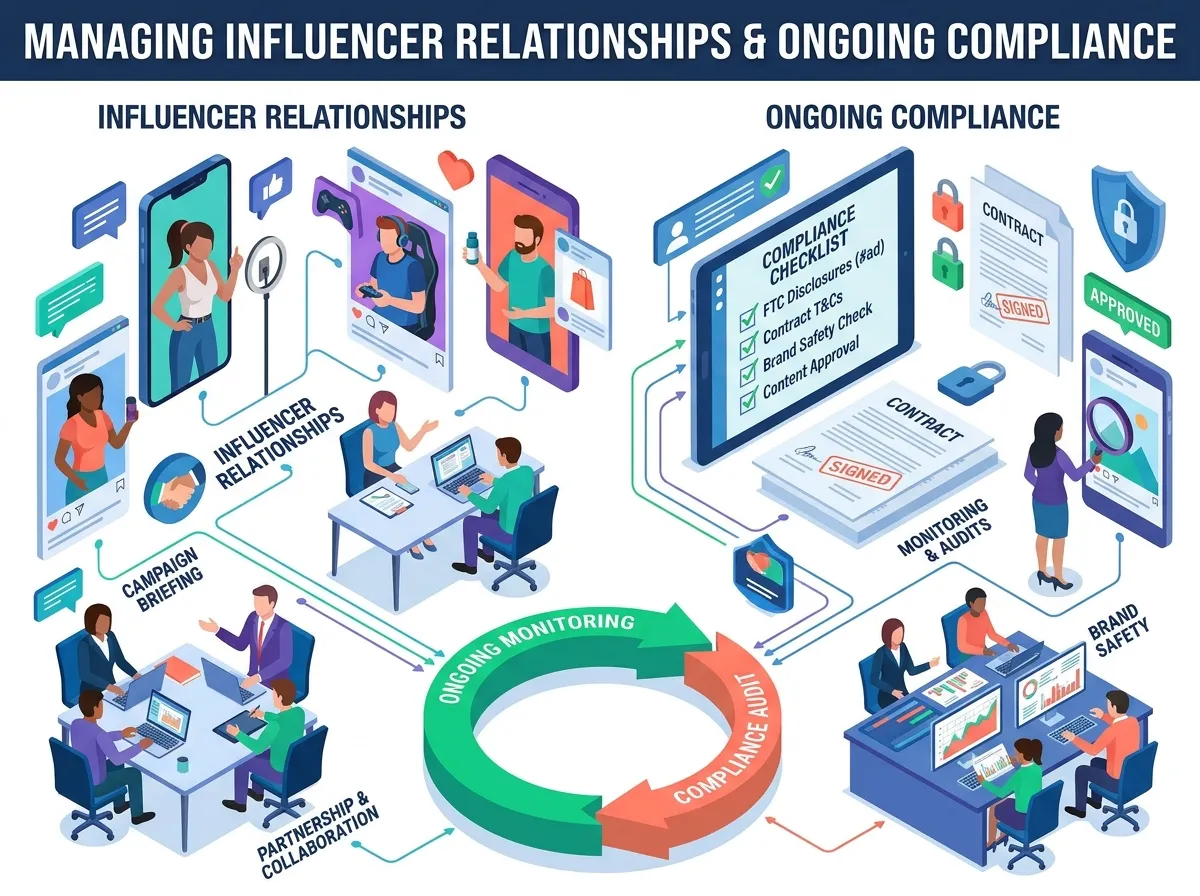
Influencer compliance does not end when a contract is signed or a sponsored post is published. Long-term partnerships require ongoing communication, clear documentation, and regular review of how campaigns are executed.
Brands should maintain records of agreements, approved content, disclosure instructions, product claims, and any relevant communications about compliance. These records can help resolve questions and provide evidence of the processes used to manage a campaign.
Ongoing communication is equally important. Creators should have a clear contact for questions about claims, disclosure requirements, product changes, or unexpected audience responses. When creators can raise concerns early, businesses are more likely to identify problems before they escalate.
An organized influencer relationship management process can help brands maintain communication, document commitments, coordinate deliverables, and review partnership performance. Compliance expectations should be incorporated into these routines rather than treated as a separate administrative task.
Brands should also monitor relevant changes in advertising regulations and platform policies. A disclosure method or campaign practice that was acceptable under one set of requirements may need to be reviewed when guidance changes or a campaign expands into a new market.
If a compliance issue arises, the response should be proportionate and timely. Depending on the circumstances, the parties may need to correct a disclosure, edit a claim, remove content, notify relevant stakeholders, or obtain legal advice.
Consistent management helps brands build stronger working relationships with creators while protecting audience trust and reducing avoidable risks.
Conclusion
Influencer compliance is an essential part of responsible influencer marketing. Clear disclosures, accurate advertising claims, well-defined contracts, platform-specific guidelines, and ethical partnerships help brands and creators communicate with audiences transparently. Businesses managing international campaigns should also understand the potential legal challenges associated with global sponsorship deals, including contractual obligations, regulatory differences, and reputational risks across markets.
Effective compliance requires planning, collaboration, and ongoing attention. Businesses should establish clear responsibilities, provide reliable product information, review content appropriately, and maintain records of important campaign decisions. Influencers should understand their obligations and communicate commercial relationships honestly.
By making compliance part of everyday campaign management, businesses can reduce legal and reputational risks without sacrificing creativity. More importantly, they can develop partnerships that respect audiences, protect creator credibility, and support long-term brand trust.
Frequently Asked Questions
1. What is influencer compliance?
Influencer compliance is the process of ensuring that influencer campaigns follow applicable advertising laws, disclosure requirements, platform policies, contractual obligations, and ethical standards. It helps protect consumers and reduces legal and reputational risks for brands and creators.
2. Why is influencer compliance important?
It helps audiences recognize sponsored content, supports accurate advertising, and protects trust between creators and followers. It also helps businesses reduce the risk of complaints, regulatory action, and damage to their reputation.
3. When do influencers need to disclose a brand partnership?
Disclosure may be required when an influencer receives payment, free products, discounts, commissions, or another benefit connected to an endorsement. The exact requirements depend on the jurisdiction and circumstances, so creators and brands should consult the rules that apply to their campaigns.
4. What are FTC influencer disclosure rules?
FTC guidance generally requires clear and conspicuous disclosure of material connections between endorsers and brands when those connections would not otherwise be obvious to consumers. Endorsements must also be truthful and not misleading. Businesses should consult current official FTC guidance for specific requirements.
5. What should an influencer contract include?
An influencer contract may include deliverables, deadlines, compensation, disclosure responsibilities, content approvals, usage rights, exclusivity, confidentiality, cancellation terms, and procedures for handling non-compliant content. The agreement should reflect the actual partnership and applicable law.
6. Who is responsible for influencer marketing compliance?
Responsibility can depend on the applicable law and the circumstances of the campaign. Brands, influencers, agencies, and other participants may each have obligations. Clear contracts, training, and communication help everyone understand their responsibilities.
7. How can brands ensure sponsored content is compliant?
Brands can provide clear briefs, accurate product information, disclosure instructions, approved claims, and an appropriate review process. They should also monitor relevant content and address compliance issues promptly.
8. Do social media platform disclosure tools replace legal disclosure requirements?
Not necessarily. Platform tools can help communicate a commercial relationship, but they may not satisfy every applicable legal requirement in every situation. Brands and creators should evaluate the platform’s policies alongside the relevant advertising regulations.
9. How does influencer compliance support brand reputation?
Transparent disclosures and accurate claims help audiences make informed decisions. Responsible partnerships can strengthen credibility, reduce misleading promotions, and demonstrate that a brand values honesty and consumer trust.
10. How often should brands review influencer compliance practices?
Brands should review compliance during campaign planning, before publication where appropriate, and throughout ongoing partnerships. They should also revisit their procedures when regulations, platform policies, product claims, or campaign markets change.