Influencer Payments: Understanding Compensation, Rates and Payment Management
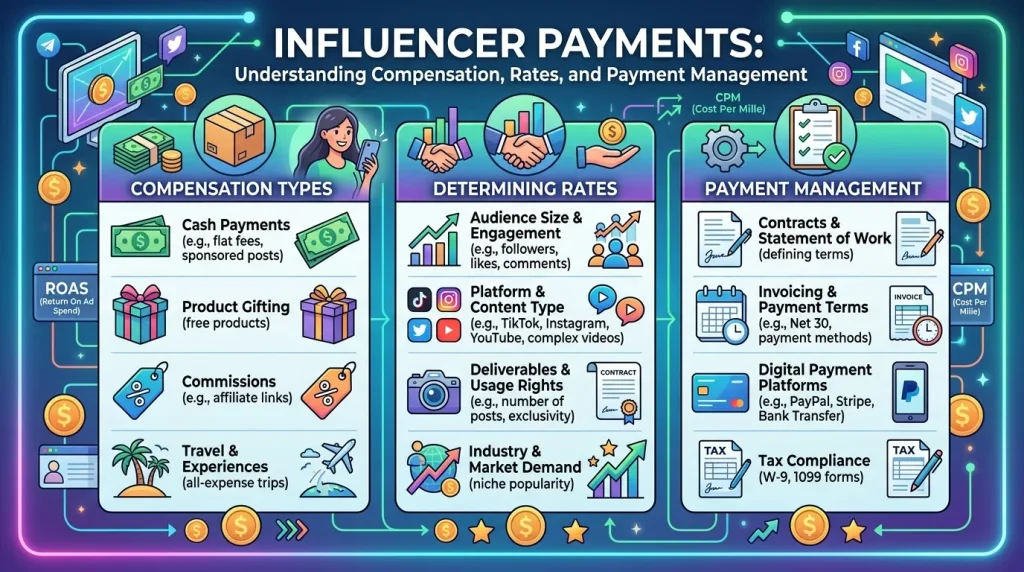
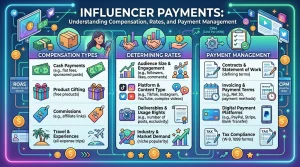
Influencer Payments are an important part of managing successful influencer marketing campaigns. Brands need clear payment methods, reasonable compensation models, defined payment terms, accurate contracts, and reliable payment processes to maintain strong relationships with creators. Influencer payment rates can vary based on audience size, engagement, content format, campaign requirements, usage rights, and creator experience. A well-organized compensation strategy helps brands manage campaign costs while providing influencers with clear expectations and timely compensation.
Understanding Influencer Payments
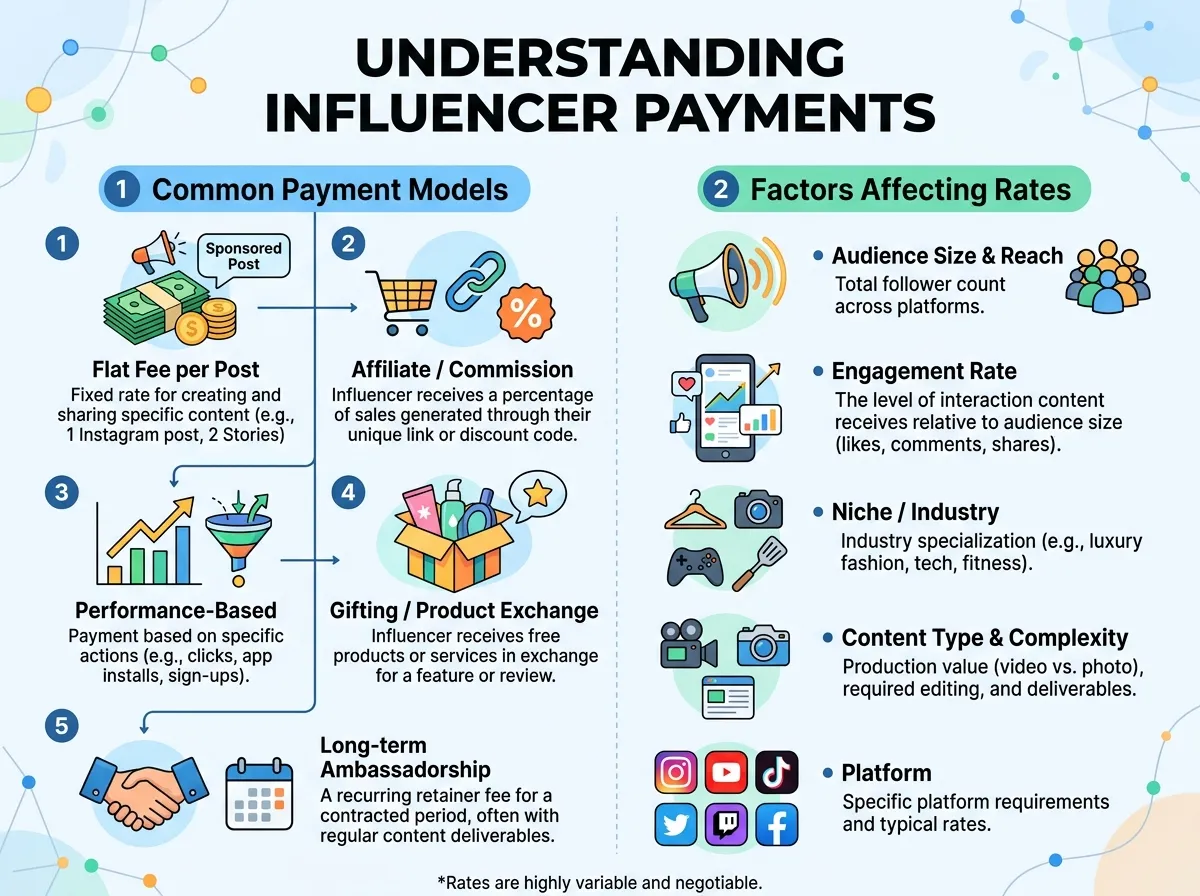
Influencer marketing has become an established part of digital marketing, giving brands opportunities to collaborate with creators who have established relationships with specific audiences. While content quality, audience relevance, and campaign objectives receive significant attention, Influencer Payments are equally important to the overall campaign relationship.
Payment is more than simply transferring money to a creator after content is published. It involves deciding how an influencer will be compensated, establishing payment terms, agreeing on deliverables, documenting the arrangement, managing invoices, and ensuring that both parties understand their financial responsibilities.
Influencer compensation can differ considerably between campaigns. A creator producing a short social media post may have different requirements from someone creating a series of videos, long-form content, live streams, or multiple pieces of branded content. Audience size can influence rates, but it is not the only factor.
Engagement, niche expertise, content quality, campaign complexity, exclusivity, licensing, usage rights, and expected deliverables can all affect the final compensation arrangement.
Influencer Payment Methods
Influencer Payment Methods describe the different ways brands can compensate creators for their work. Direct monetary payments are one of the most common approaches, but campaigns can involve several forms of compensation depending on the partnership.
Flat fees are widely used when the brand and influencer agree on a fixed amount for specific deliverables. This approach can make campaign budgeting easier because the expected cost is established before the collaboration begins.
Performance-based compensation can connect payment to measurable results such as sales, conversions, clicks, or affiliate activity. Some campaigns may combine a base payment with performance incentives, creating a compensation structure that includes both guaranteed and variable elements.
Product compensation can also appear in influencer campaigns, particularly when creators receive products or services in exchange for content. However, the value and expectations should be clearly established so both parties understand whether the arrangement represents full or partial compensation.
The payment method should reflect the campaign’s objectives, deliverables, creator expectations, and commercial value.
Influencer Payment Terms
Clear Influencer Payment Terms help prevent confusion during a campaign. Payment terms define when and how compensation will be provided and can also explain the conditions associated with payment.
Some agreements may require an upfront payment, while others may divide compensation into stages. For example, a brand and influencer could agree to one payment when the contract is signed and another after the agreed content has been delivered.
Payment terms can also address invoicing requirements, payment deadlines, taxes, cancellation conditions, revisions, late submissions, and other financial considerations.
Clear terms are particularly important for campaigns involving multiple deliverables. When several posts, videos, or promotional activities are included, documenting the payment schedule makes it easier for both the brand and creator to track financial obligations.
Influencer Compensation Strategy
An effective Influencer Compensation Strategy connects creator payments with the overall objectives and value of the campaign. Instead of treating every influencer collaboration in the same way, brands can consider the characteristics of each partnership.
Audience relevance is one important consideration. A creator with a highly relevant audience may provide substantial marketing value even if the audience is smaller than that of a general-interest creator.
Content requirements can also affect compensation. A simple mention may require less work than professionally produced video content involving scripting, filming, editing, multiple revisions, and product integration.
Campaign duration is another consideration. A single sponsored post and a long-term ambassador relationship can involve very different financial arrangements.
A strong compensation strategy should therefore consider the complete scope of the partnership rather than relying exclusively on follower counts.
Brands developing broader influencer initiatives can benefit from understanding how payments fit into their overall influencer marketing strategy. Payment decisions are closely connected with campaign goals, creator selection, deliverables, and relationship management.
Influencer Payment Rates
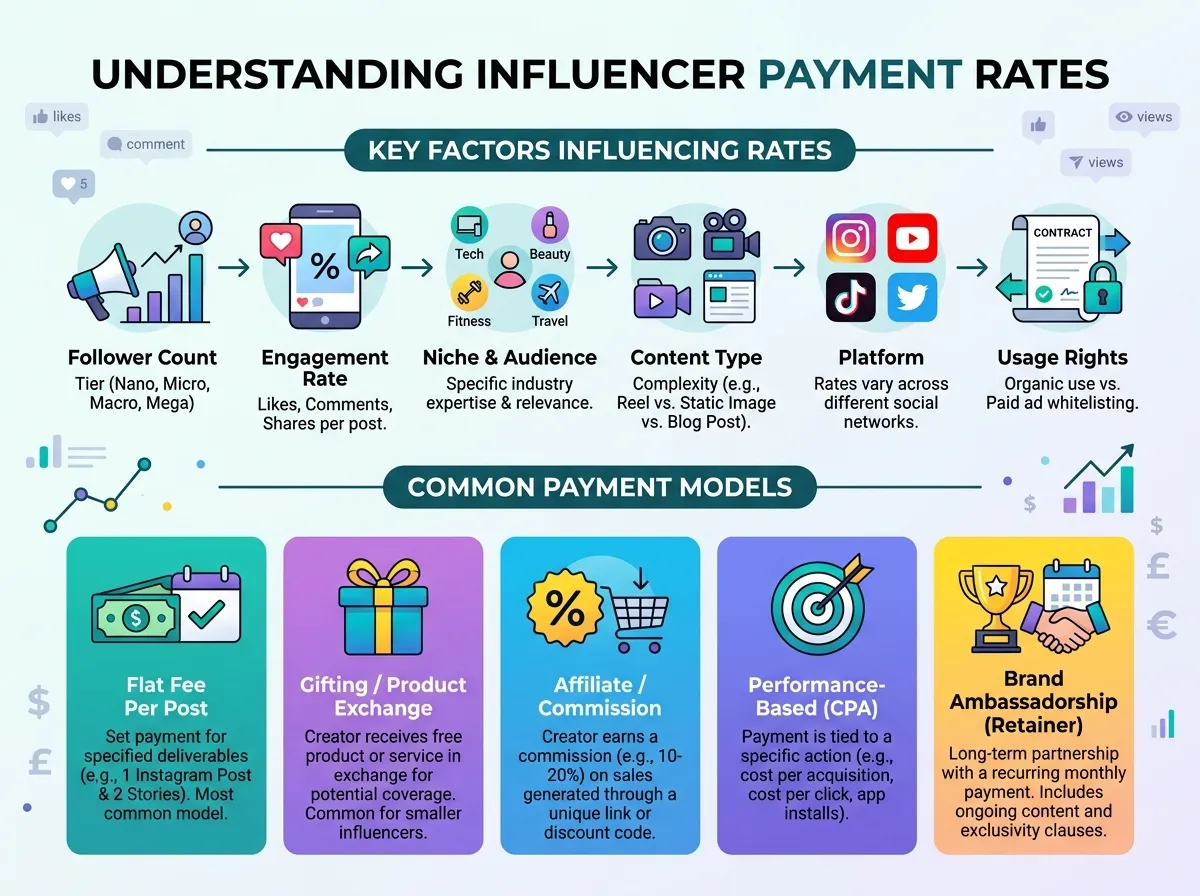
Influencer Payment Rates vary widely because creator partnerships differ in scope, audience, platform, content format, and commercial requirements. There is no universal rate that applies to every influencer or campaign.
Audience size can be one factor, but engagement and audience relevance can also influence compensation. A creator with a highly engaged niche audience may have a different commercial value from a creator with a larger but less targeted audience.
The content format also matters. Video content can require considerably more production time than a static social media post. Similarly, live appearances, event participation, product demonstrations, or multi-platform campaigns may involve additional preparation and production requirements.
Usage rights can affect payment as well. If a brand wants to reuse influencer-created content in paid advertising, on its website, or across other marketing channels, the commercial arrangement may need to account for that additional usage.
Because of these variables, payment rates are best considered within the specific context of each campaign.
Influencer Payment Process
The Influencer Payment Process typically connects campaign agreements with financial administration. Once the scope and compensation have been agreed, both parties need clarity about how payment will move from the brand to the creator.
The process may involve contract approval, invoice submission, payment verification, tax documentation, content delivery confirmation, and payment processing. Larger organizations may have separate marketing, procurement, finance, and legal teams involved.
A well-organized process reduces administrative friction. Influencers know when to expect payment, while brands can maintain better records of campaign spending.
Payment processes become especially important when a brand works with many creators simultaneously. Without centralized tracking, invoices can be overlooked, duplicate payments can occur, or campaign costs can become difficult to reconcile.
Influencer Payment Contracts
Influencer Payment Contracts provide formal documentation of the commercial relationship between a brand and creator. They can cover compensation, deliverables, deadlines, content requirements, usage rights, exclusivity, revisions, cancellation provisions, and payment conditions.
A clear contract gives both parties a shared reference point. It can help prevent disagreements about what was promised and when compensation is due.
Payment-related contract language can specify the total compensation, payment schedule, accepted payment method, invoicing requirements, applicable taxes, and circumstances that may affect payment.
Contracts can also clarify whether additional work carries additional compensation. This is particularly relevant when campaign requirements change after the original agreement has been established.
A written agreement does not eliminate every potential issue, but it creates greater clarity around expectations and responsibilities.
Influencer Compensation Models
Different Influencer Compensation Models can be used depending on campaign objectives and creator relationships.
Flat-fee compensation provides a predetermined payment for defined deliverables. It can be straightforward for campaigns where the brand knows exactly what content it wants and how much it is prepared to spend.
Performance-based compensation connects payment with measurable outcomes. This model can be useful when sales, clicks, registrations, or other measurable actions are central to the campaign.
Affiliate compensation provides creators with a percentage or fixed amount for qualifying sales or conversions generated through their referral activity.
Hybrid compensation combines different approaches. For example, an influencer might receive a fixed base fee plus performance incentives.
Long-term partnerships can also involve recurring compensation arrangements. These relationships may include multiple campaigns, ongoing content production, ambassador activities, or broader promotional responsibilities.
The appropriate model depends on the campaign structure, measurable objectives, content requirements, and relationship between the brand and creator.
Influencer Payment Negotiation
Influencer Payment Negotiation is often part of establishing a creator partnership. Both parties may have different expectations regarding compensation, deliverables, content rights, timelines, and campaign scope.
Negotiation does not necessarily mean focusing only on reducing costs. It can involve adjusting the overall structure of the partnership so that compensation reflects the work and commercial requirements involved.
For example, a creator may offer a different rate for a larger package of content, while a brand may request specific deliverables in exchange for a higher overall commitment.
Usage rights are another important area of negotiation. A creator may charge differently depending on whether the brand can use the content only on the creator’s social profile or can also repurpose it for advertisements, websites, email campaigns, and other channels.
Clear communication during negotiation can help establish expectations before the campaign begins.
Influencer Payment Management
Influencer Payment Management becomes increasingly important as influencer programs grow. Managing one creator may require only a few financial records, while a large campaign involving dozens or hundreds of creators can create substantial administrative complexity.
Payment management can include tracking contracts, agreed rates, invoices, deliverables, payment dates, campaign budgets, and completed transactions.
Centralized records can help marketing and finance teams understand how much has been committed and how much has actually been paid. This information can also support campaign reporting and future budget planning.
Technology can simplify parts of this process. Influencer marketing platforms and automation systems may provide tools for creator management, campaign tracking, contracts, invoices, and payments.
The broader role of technology in creator campaigns is discussed in Influencer Marketing Automation, particularly in relation to managing campaign activities at greater scale.
Influencer Campaign Payments
Influencer Campaign Payments should reflect the complete scope of the campaign rather than only the number of posts published. Campaign compensation can be influenced by the number of deliverables, production requirements, audience reach, engagement, content rights, exclusivity, campaign duration, and creator responsibilities.
For campaigns involving several influencers, standardized payment structures can simplify budgeting. However, completely identical rates may not always reflect differences between creators and their deliverables.
A campaign may include a combination of fixed payments, performance incentives, affiliate commissions, or other compensation arrangements. Keeping these structures clearly documented helps brands understand the total financial commitment associated with the campaign.
Campaign reporting should also connect spending with measurable outcomes. Comparing payment costs with impressions, engagement, clicks, conversions, sales, or other campaign objectives can provide useful insight into overall performance.
Sponsored Content and Influencer Compensation
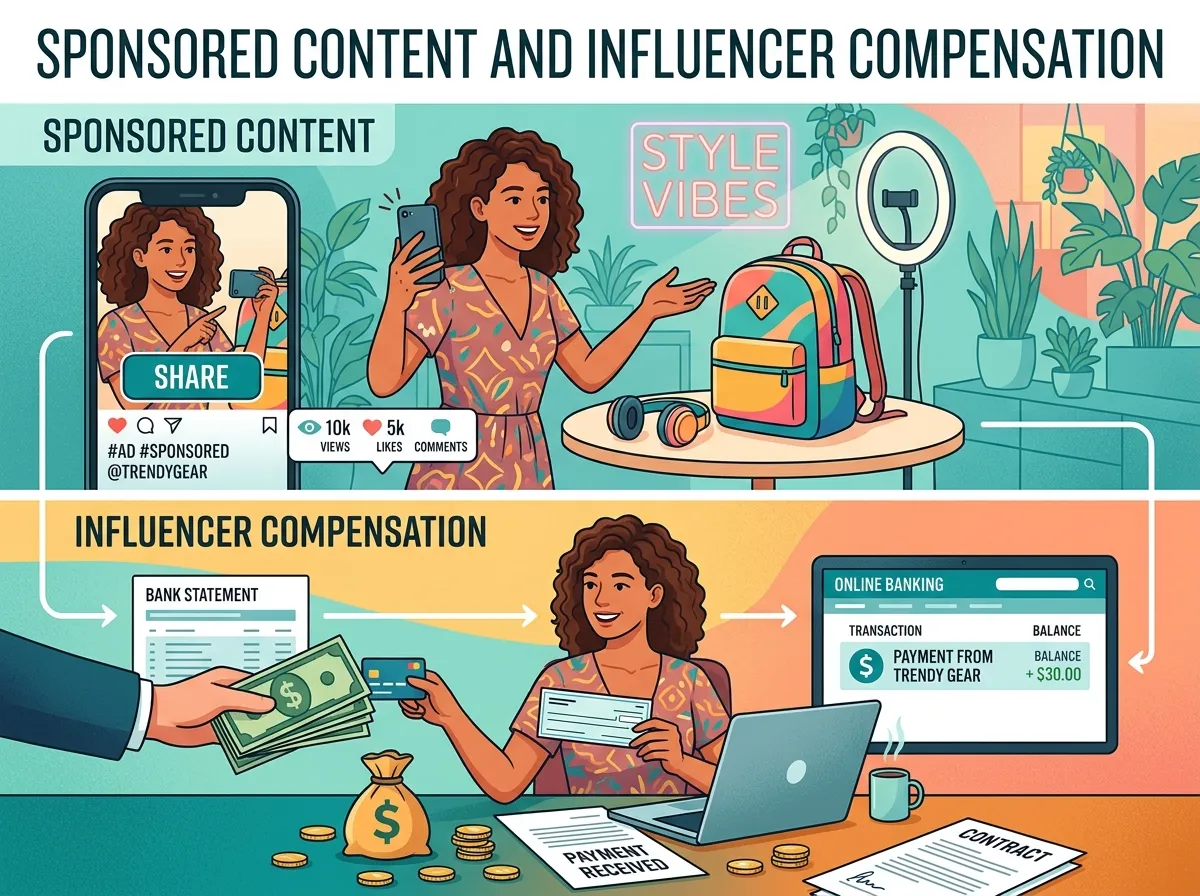
Sponsored content involves a commercial relationship between a brand and creator, making compensation an important component of the partnership. The content itself may take many forms, including social media posts, videos, articles, product demonstrations, podcasts, or other creator-led formats.
Payment arrangements should correspond with the amount of work involved in producing the content. A sponsored campaign may involve creative development, product testing, filming, editing, revisions, publishing, and audience engagement.
Brands exploring Sponsored Content Marketing can also consider how compensation fits within the broader campaign structure. Payment is one component of a sponsored partnership alongside audience selection, content quality, disclosure, performance measurement, and campaign objectives.
Influencer Payments and Community Marketing
Influencer partnerships can also extend beyond online campaigns. Creators may participate in local events, community activities, product launches, workshops, or brand experiences.
In these situations, compensation may include payment for content creation as well as attendance, production, travel, event participation, or additional promotional responsibilities.
Community-based campaigns can involve different expectations from traditional social media partnerships. A creator may help attract attention before an event, participate during the event, and produce follow-up content afterward.
This makes it important to define compensation around the complete scope of work. Businesses exploring community-focused promotional activity can also consider community events for local marketing as part of a broader approach to connecting brands with relevant audiences.
Managing Payment Relationships Over Time
Influencer relationships can become more valuable when they develop beyond individual campaigns. Long-term creator partnerships may involve recurring content, seasonal promotions, product launches, affiliate activities, or ongoing brand representation.
Consistent and transparent payment management can contribute to a more professional working relationship. Creators are more likely to understand the commercial expectations when rates, deliverables, deadlines, and payment schedules are clearly documented.
Long-term relationships can also involve compensation reviews. As campaign responsibilities change or creators develop new audiences and content capabilities, the commercial arrangement may need to be revisited.
This does not mean every long-term partnership requires higher compensation. Rather, the financial structure should remain aligned with the actual scope and terms of the relationship.
Measuring the Financial Side of Influencer Marketing
Influencer payments should ultimately be connected with campaign objectives and measurable outcomes. Financial analysis can consider total creator spending alongside reach, engagement, website traffic, leads, conversions, sales, content value, and other relevant indicators.
For example, a campaign focused on brand awareness may prioritize reach and engagement, while a conversion-focused campaign may place greater emphasis on sales or qualified leads.
The purpose of measuring these outcomes is not simply to compare creators based on one number. Different creators may serve different campaign roles, and the value of their contributions can extend beyond immediate conversions.
A comprehensive view of influencer payments therefore combines financial records with campaign performance data and the strategic purpose of the partnership.
Final Thoughts
Influencer Payments are a fundamental part of professional creator partnerships. Successful payment management requires more than choosing a rate. Brands need clear Influencer Payment Methods, transparent Influencer Payment Terms, appropriate Influencer Compensation Models, well-defined contracts, and organized financial processes.
Payment rates can vary according to audience relevance, content requirements, engagement, production effort, campaign duration, usage rights, exclusivity, and other commercial factors. For this reason, compensation is most effective when it reflects the actual scope and objectives of the partnership.
As influencer marketing continues to develop, structured payment management can help brands maintain clearer relationships with creators while keeping campaign finances organized. When compensation, contracts, deliverables, and performance measurement work together, influencer campaigns can operate with greater transparency and consistency.
Frequently Asked Questions
What are Influencer Payments?
Influencer Payments are the compensation provided to creators for participating in branded marketing activities. Payments may be structured as flat fees, performance-based compensation, affiliate commissions, product compensation, or combinations of different models.
What factors affect Influencer Payment Rates?
Influencer Payment Rates can be influenced by audience size, engagement, audience relevance, content format, production requirements, creator experience, campaign duration, exclusivity, usage rights, and the number of required deliverables.
What are common Influencer Payment Methods?
Common methods include fixed payments, performance-based compensation, affiliate commissions, product or service compensation, and hybrid arrangements that combine a guaranteed fee with performance incentives.
Why are Influencer Payment Terms important?
Influencer Payment Terms establish when and how compensation will be provided. Clear terms can reduce confusion about invoices, payment deadlines, deliverables, payment schedules, and other financial responsibilities.
What should an Influencer Payment Contract include?
An Influencer Payment Contract can include compensation, payment schedules, deliverables, deadlines, content requirements, usage rights, exclusivity, revisions, cancellation terms, invoicing requirements, and other relevant commercial conditions.
What is an Influencer Compensation Strategy?
An Influencer Compensation Strategy determines how a brand structures creator payments based on campaign objectives, content requirements, audience relevance, creator responsibilities, and the commercial scope of the partnership.
What are Influencer Compensation Models?
Influencer Compensation Models are different structures used to pay creators. They can include flat fees, performance-based payments, affiliate commissions, hybrid arrangements, product compensation, and recurring payments for long-term partnerships.
How does Influencer Payment Negotiation work?
Influencer Payment Negotiation involves discussing compensation and related campaign terms such as deliverables, content formats, usage rights, exclusivity, deadlines, and payment schedules until both parties agree on the commercial arrangement.
Why is Influencer Payment Management important?
Influencer Payment Management helps brands track creator rates, contracts, invoices, payment dates, campaign budgets, and completed transactions. It becomes particularly important when a brand works with multiple creators.
How can brands evaluate Influencer Campaign Payments?
Brands can evaluate campaign payments by comparing total spending with relevant campaign outcomes such as reach, engagement, traffic, leads, conversions, sales, and content usage. The appropriate measurements depend on the objectives of the campaign.