Influencer Brand Safety: Protect Your Brand and Reputation
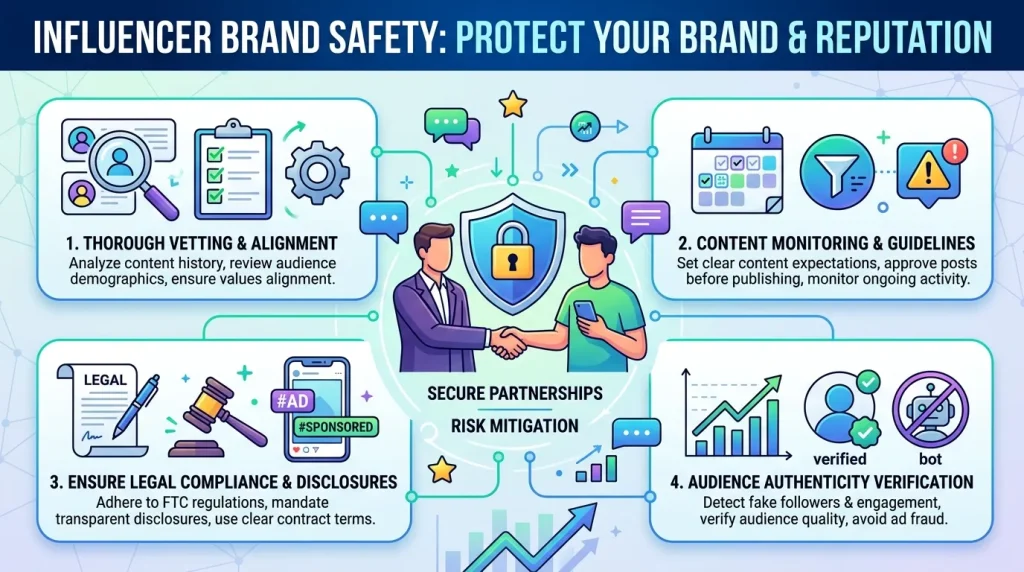
Influencer brand safety helps businesses protect their reputation while working with creators. By combining careful vetting, clear content expectations, risk assessment, compliance management, and ongoing reputation monitoring, brands can build influencer partnerships that support marketing goals while reducing avoidable risks.
Influencer marketing has become an important part of how brands connect with audiences online. Creators can introduce products, explain services, share personal experiences, and build conversations around brands in ways that often feel more personal than traditional advertising. However, the visibility associated with influencer marketing also creates potential risks. A single post, comment, partnership, or controversy can affect how audiences perceive both the influencer and the brand connected to them.
This makes Influencer Brand Safety an important consideration for modern influencer marketing programs. Brand safety is not simply about avoiding controversial creators. It involves understanding potential risks, evaluating whether an influencer aligns with a brand’s values and audience, establishing clear expectations, and monitoring partnerships over time.
A strong approach can help brands create partnerships that are commercially useful while reducing unnecessary reputational, legal, compliance, and communication risks. It also creates greater clarity for influencers, who can better understand what a brand expects from sponsored content.
What Is Influencer Brand Safety?
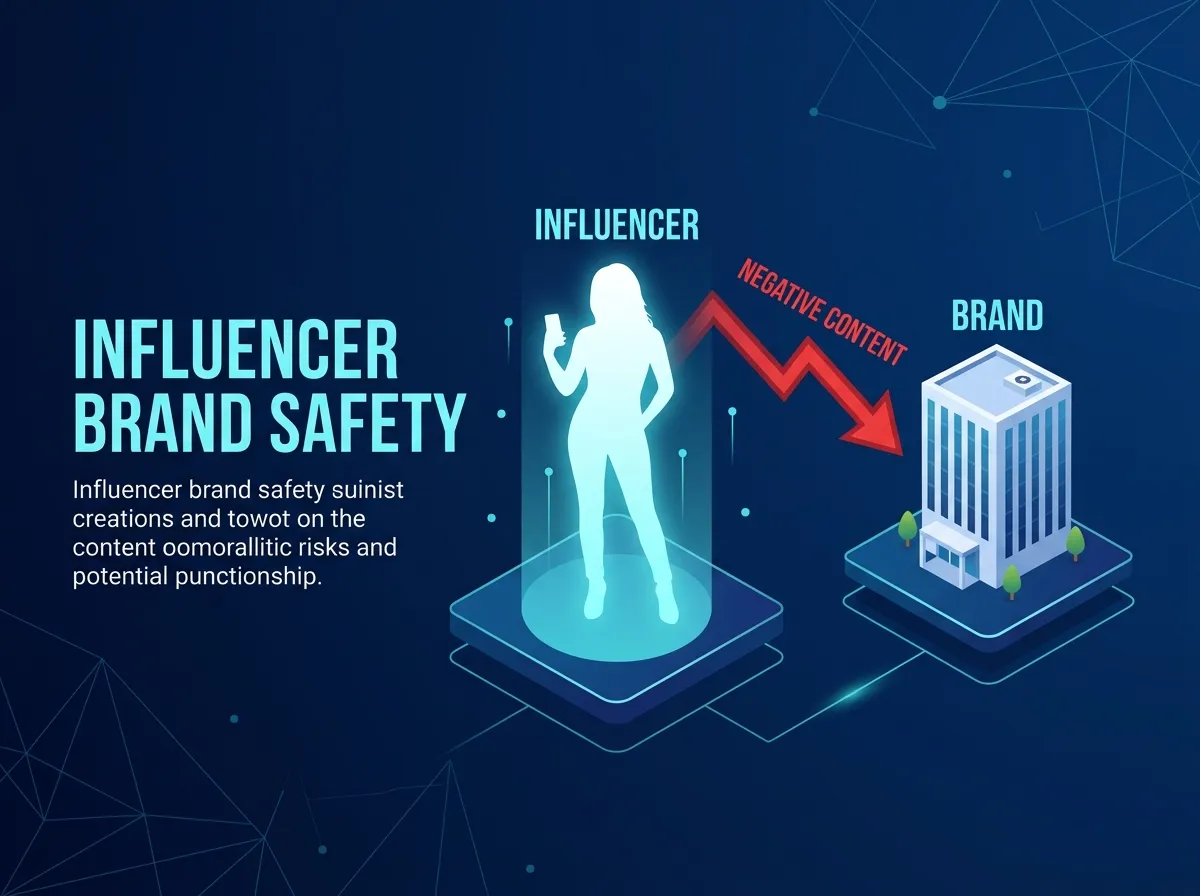
Influencer Brand Safety refers to the practices businesses use to protect their reputation, values, audience relationships, and marketing investments when collaborating with influencers. It covers the process of identifying potential risks before a partnership begins and managing those risks throughout the relationship.
Influencer brand safety can involve reviewing an influencer’s previous content, audience, engagement patterns, public behavior, disclosures, partnerships, and overall reputation. It can also involve establishing clear expectations for sponsored content and determining how potential issues should be handled if circumstances change.
The need for brand safety becomes more important as influencer campaigns become larger and more visible. A creator may have millions of followers, but audience size alone does not determine whether the partnership is appropriate for a particular brand.
A smaller creator with a highly relevant audience may have a better strategic fit than a much larger creator whose public image or content style conflicts with the brand. This is why safety and suitability need to be considered alongside reach and engagement.
Why Brand Safety Matters in Influencer Marketing
Influencers have their own personalities, opinions, communication styles, and online histories. These characteristics are part of what makes creator marketing effective, but they can also create uncertainty for brands.
Brand Safety in Influencer Marketing helps businesses consider what could happen if an influencer’s content conflicts with their brand positioning or audience expectations. Potential concerns can include inappropriate content, undisclosed sponsorships, misleading claims, offensive statements, questionable business practices, or sudden controversies.
These issues do not always arise from content created for the brand itself. An influencer’s older public posts or unrelated activities can also become relevant when audiences associate that creator with a sponsoring business.
This does not mean brands need to eliminate every creator who has ever made a mistake. Instead, businesses can assess context, relevance, severity, recency, and potential impact before making partnership decisions.
Brand safety is therefore closely connected with thoughtful decision-making. The objective is to understand potential exposure before a campaign goes live rather than discovering an issue after significant money and attention have already been invested.
Building an Influencer Brand Safety Strategy
An Influencer Brand Safety Strategy creates a consistent framework for evaluating and managing creator relationships. Without a clear approach, different marketing teams may evaluate influencers according to completely different standards.
A strategy can establish the types of content, behaviors, claims, partnerships, and situations that require additional review. It can also define the brand’s expectations regarding disclosures, intellectual property, audience interactions, and communication.
The strategy should reflect the identity of the brand. A financial services company may have different compliance considerations from a fashion company, while a healthcare-related business may face different requirements from a consumer technology brand.
This means there is no universal brand safety framework that works identically for every organization. The most useful approach is one that connects safety expectations with the brand’s industry, audience, regulatory environment, values, and marketing objectives.
Brand safety should also be considered before campaign planning is finalized. When expectations are established early, brands and creators can enter partnerships with a clearer understanding of what is acceptable.
Influencer Risk Management
Influencer Risk Management involves identifying, evaluating, and managing risks associated with creator partnerships. These risks can involve reputation, compliance, audience authenticity, content quality, contractual obligations, and public behavior.
Risk management begins before the partnership but should not end once a contract is signed. Influencers remain public figures within their communities, and their circumstances can change during a campaign.
For example, an influencer may become involved in an unexpected controversy after a campaign has started. A brand that has already considered response procedures and contractual responsibilities can respond more systematically than a business that has no process for unexpected situations.
Risk management can also involve diversification. Depending on the campaign, working with multiple creators rather than relying entirely on one personality may reduce dependence on a single public figure. However, each partnership still requires appropriate evaluation.
The objective is not to eliminate every possible risk, because that is rarely realistic in public-facing marketing. Instead, businesses can understand potential risks and establish reasonable measures for managing them.
The Influencer Vetting Process
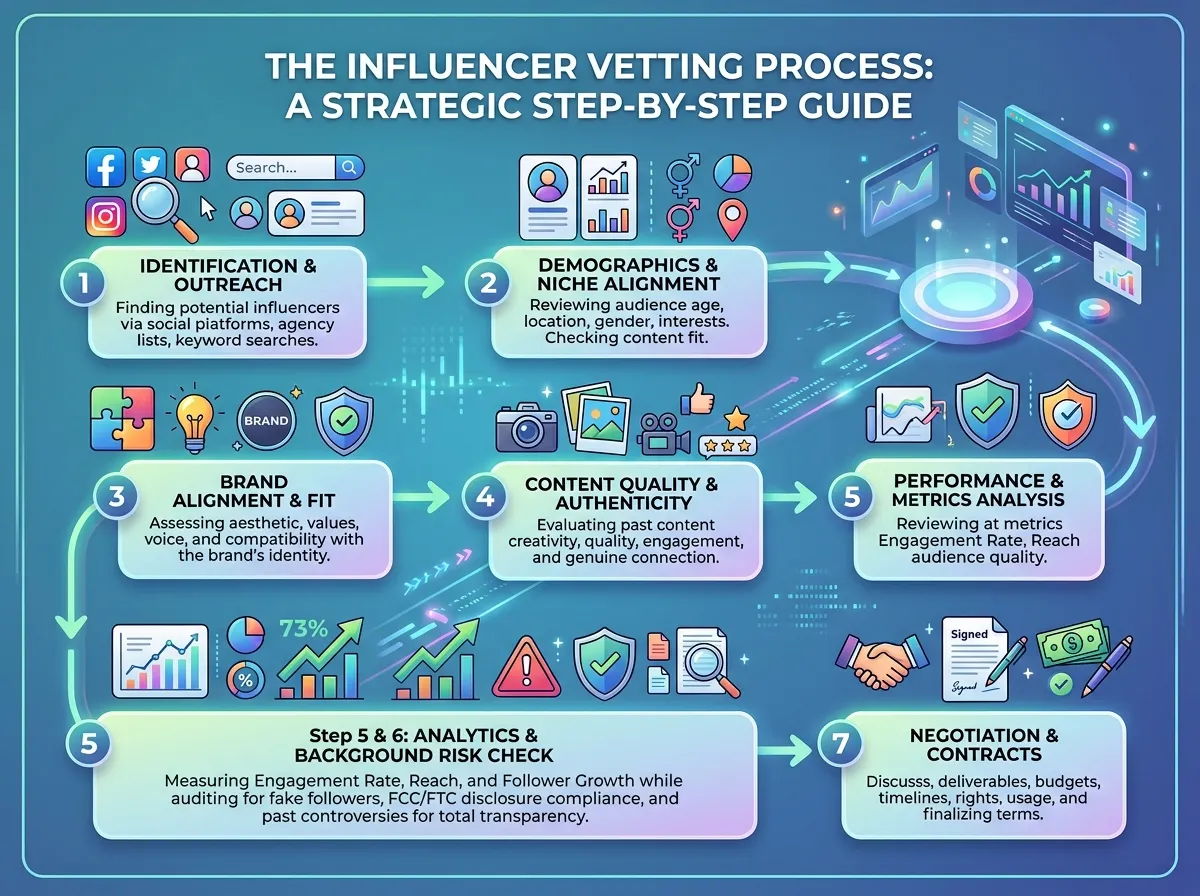
The Influencer Vetting Process is one of the most important components of brand safety. Vetting involves evaluating a creator before entering into a formal partnership.
A review can include previous posts, captions, videos, comments, collaborations, audience characteristics, engagement quality, and publicly available information relevant to the partnership. It can also examine whether the creator’s communication style is consistent with the brand’s expectations.
Historical content deserves particular attention because an influencer’s current profile may not provide a complete picture of their online presence. Older posts can sometimes reveal patterns that are not immediately visible from recent campaign content.
Audience quality is another consideration. High follower counts do not necessarily indicate an authentic or relevant audience. Brands may review engagement patterns and audience relevance to determine whether a creator can realistically connect with the intended market.
The vetting process should be proportionate to the campaign. A high-value, long-term partnership may require deeper evaluation than a limited collaboration, particularly when the influencer will become strongly associated with the brand.
Influencer Content Guidelines
Clear Influencer Content Guidelines help creators understand what the brand expects from sponsored content. These guidelines can cover tone, messaging, product claims, visual requirements, prohibited topics, disclosure expectations, and other campaign-specific requirements.
Good guidelines should provide clarity without making every creator’s content sound identical. Influencer marketing often works because creators communicate in their own authentic style. Excessive restrictions can make sponsored content feel disconnected from the creator’s normal communication.
The most important expectations should therefore be clear and practical. Creators should understand which claims require evidence, what information must be disclosed, which brand assets can be used, and what types of content may create compliance or reputational concerns.
Clear expectations can protect both sides of the partnership. The brand receives greater consistency and protection, while the influencer has a clearer understanding of the boundaries within which they can create.
Brand Safety Guidelines and Creator Relationships
Brand Safety Guidelines provide a foundation for maintaining consistency across influencer campaigns. They can establish standards around content, communication, disclosures, product representation, and public conduct relevant to the partnership.
However, guidelines are most effective when they are communicated before content is created rather than introduced after a problem occurs. Influencers should know what the brand expects before agreeing to campaign deliverables.
The guidelines can also distinguish between mandatory requirements and preferred creative direction. This allows brands to protect important standards while leaving room for creators to produce content that fits their established voice.
Clear communication is especially important for long-term relationships. When expectations remain consistent across multiple campaigns, influencers can become more familiar with the brand’s requirements, reducing misunderstandings over time.
A well-managed partnership also benefits from a strong understanding of personal reputation. Resources such as Personal Branding demonstrate why a creator’s public identity can become an important part of how audiences perceive professional relationships and collaborations.
Influencer Reputation Management
Influencer Reputation Management involves monitoring and protecting the reputation associated with a creator partnership. Reputation is influenced by more than individual sponsored posts. It can also be shaped by audience conversations, media coverage, public statements, and activity across different platforms.
For brands, reputation management means paying attention to relevant developments throughout the relationship. Monitoring does not necessarily mean attempting to control an influencer’s personal identity. Instead, it allows a business to understand circumstances that could affect an active campaign or brand association.
The response to a reputational issue should depend on the situation. Some issues may require clarification, while others may require pausing campaign activity or reviewing contractual options. The appropriate response depends on factors such as the seriousness of the issue, available evidence, contractual terms, and potential impact on the brand.
This is why reputation management should be connected with broader risk management rather than treated as an isolated activity.
Influencer Compliance Management
Influencer Compliance Management is another important part of safe creator partnerships. Sponsored relationships generally require transparency so audiences can understand when content involves a commercial relationship.
Brands should establish clear expectations around sponsorship disclosures and other applicable advertising requirements. The exact requirements can vary depending on the jurisdiction, platform, industry, campaign, and nature of the relationship.
Compliance can also involve product claims. Influencers should not make unsupported statements about products or services simply because those statements might make content more persuasive.
Clear contracts and campaign documentation can help establish responsibilities. Brands should also ensure that creators understand relevant requirements before publishing sponsored content.
Compliance should be considered a shared responsibility between the brand and influencer, with appropriate legal or regulatory review when the campaign involves higher-risk claims or regulated industries.
Influencer Marketing Risk Assessment
An Influencer Marketing Risk Assessment brings the different elements of risk together before and during a campaign. Rather than focusing on one issue, it considers the overall suitability of the partnership.
The assessment may consider the influencer’s content history, audience, engagement, reputation, previous partnerships, industry relevance, compliance record, and alignment with the brand.
It can also consider campaign-specific risks. A campaign involving sensitive subjects or highly regulated products may require more careful assessment than a general lifestyle promotion.
Risk assessment becomes particularly valuable when a business works with many influencers. A consistent evaluation framework makes it easier for marketing teams to document decisions and maintain similar standards across campaigns.
The goal is not to assign a simplistic label to every creator. Risk exists on a spectrum and can change depending on the campaign, audience, platform, and circumstances. A thoughtful assessment provides context rather than reducing the decision to a single metric.
Creating Safe Influencer Partnerships
Safe Influencer Partnerships depend on more than choosing creators with clean public profiles. They require communication, appropriate contracts, clear expectations, ongoing monitoring, and mutual understanding.
A strong partnership begins with alignment. The influencer should understand the brand, its audience, products, and campaign objectives, while the brand should understand the creator’s audience and communication style.
The commercial relationship should also be documented clearly. Contracts can define deliverables, disclosure responsibilities, approval processes, intellectual property, confidentiality, cancellation conditions, and other relevant terms.
At the same time, brands should avoid treating creators as simply distribution channels. Influencer relationships often work best when creators have enough freedom to communicate naturally within agreed boundaries.
A resource such as an Influencer Marketing Partnership Guide can provide additional context on how effective creator relationships can be structured around shared expectations and objectives.
Measuring Brand Safety Alongside Campaign Performance

Brand safety should not exist separately from campaign measurement. Businesses can consider safety-related factors alongside standard marketing metrics to understand the overall quality of a partnership.
Influencer Marketing KPI Tracking can help marketers evaluate campaign performance through metrics such as engagement, reach, conversions, traffic, and other relevant outcomes. These measurements can be considered alongside compliance, content quality, audience relevance, and reputational considerations.
This broader approach helps businesses avoid evaluating influencer partnerships solely through follower counts or engagement rates.
For example, a creator may generate strong engagement but consistently require significant content corrections. Another creator may have a smaller audience but produce highly relevant content with strong compliance and reliable collaboration. Looking at several dimensions provides more context about how a partnership is functioning.
Understanding How Influencer Marketing Works can also help businesses connect creator activity with broader campaign objectives rather than viewing individual posts in isolation.
The Role of Ongoing Monitoring
Brand safety does not end when an influencer passes an initial review. Online reputations can change, audience expectations can shift, and new content can introduce new considerations.
Ongoing monitoring allows businesses to stay aware of developments that could affect active partnerships. This is particularly relevant for long-term collaborations where the relationship continues across multiple campaigns.
Monitoring should remain proportionate and focused on legitimate business concerns. It should not become an attempt to control every aspect of an influencer’s personal life.
The most useful approach is to focus on information that is genuinely relevant to the partnership, brand reputation, campaign commitments, and applicable compliance requirements.
Final Thoughts
Influencer Brand Safety is an important part of building responsible and sustainable creator marketing programs. As influencer partnerships become more closely connected with brand identity, businesses need to consider more than reach, engagement, and audience size.
A thoughtful approach combines influencer vetting, risk assessment, content expectations, compliance management, reputation awareness, and ongoing communication. These elements can help brands understand potential risks while creating clearer and more professional relationships with influencers.
Brand safety does not require removing the personality that makes influencer marketing valuable. Instead, it creates a framework in which brands and creators understand their responsibilities while maintaining room for authentic communication.
When safety considerations are integrated into the wider influencer marketing strategy, businesses can build partnerships that are clearer, more accountable, and better aligned with both audience expectations and marketing objectives.
Frequently Asked Questions
What is influencer brand safety?
Influencer brand safety refers to the practices businesses use to protect their reputation and reduce potential risks when working with influencers. It can include creator vetting, content guidelines, compliance requirements, risk assessment, reputation monitoring, and clear partnership agreements.
Why is influencer brand safety important?
Influencer content can directly affect how audiences perceive a sponsoring brand. Brand safety helps businesses identify potential concerns before and during campaigns while establishing clearer expectations for creators.
What is included in an influencer vetting process?
An influencer vetting process can include reviewing previous content, audience characteristics, engagement patterns, public statements, previous partnerships, disclosure practices, and other information relevant to the proposed campaign.
How can brands manage influencer-related risks?
Brands can manage risks through appropriate vetting, clear contracts, content guidelines, compliance expectations, ongoing monitoring, and defined procedures for addressing potential issues.
What are influencer content guidelines?
Influencer content guidelines explain what a creator should understand before producing sponsored content. They may address messaging, product claims, disclosures, brand assets, tone, prohibited content, and campaign-specific requirements.
What is influencer compliance management?
Influencer compliance management involves establishing and monitoring requirements related to advertising disclosures, sponsored content, product claims, contracts, and other applicable rules or standards.
Should brands monitor influencers after hiring them?
For ongoing partnerships, continued awareness can help brands identify developments that may affect an active campaign or brand association. Monitoring should remain relevant and proportionate to legitimate campaign and business concerns.
How does influencer reputation affect brand safety?
An influencer’s public reputation can influence how audiences perceive a brand associated with that creator. Reviewing relevant reputation factors before and during a partnership can help businesses understand potential exposure.
Can small influencers create brand safety risks?
Yes. Brand safety considerations apply regardless of audience size. Smaller creators can still create reputational, compliance, content, or audience-related risks, which is why suitability should be evaluated rather than determined solely by follower count.
How does brand safety affect influencer marketing performance?
Brand safety can support more consistent partnerships by establishing clear expectations around content, compliance, communication, and reputation. These factors can be considered alongside campaign metrics such as engagement, traffic, conversions, and reach.