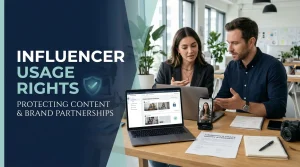
Influencer Usage Rights: Protecting Content and Brand Partnerships
Influencer usage rights determine how brands can use, adapt, and distribute creator content. Clear agreements covering licensing, copyright, platforms, duration, paid advertising, and renewals help protect both parties, prevent disputes, and support more effective influencer marketing campaigns.
Influencer usage rights define how brands can use, distribute, modify, and promote content created by influencers. As influencer marketing becomes an important part of digital communication, businesses need clear agreements that explain who owns the content, where it can appear, how long it can be used, and whether it can support paid advertising or other commercial activities.
A creator may produce photographs, videos, product reviews, tutorials, or social media posts for a campaign. Although a brand may pay for this work, payment alone does not automatically grant unlimited permission to reuse every asset. Without clearly established rights, a business could face disputes, unexpected licensing costs, content removal requests, or legal complications when repurposing influencer material.
Effective influencer usage rights management protects the interests of both creators and brands. It allows businesses to make better use of campaign assets while respecting copyright ownership, creator agreements, platform requirements, and applicable advertising regulations. By establishing permissions before content production begins, organizations can develop stronger partnerships and use influencer content with greater confidence.
Understanding Influencer Usage Rights
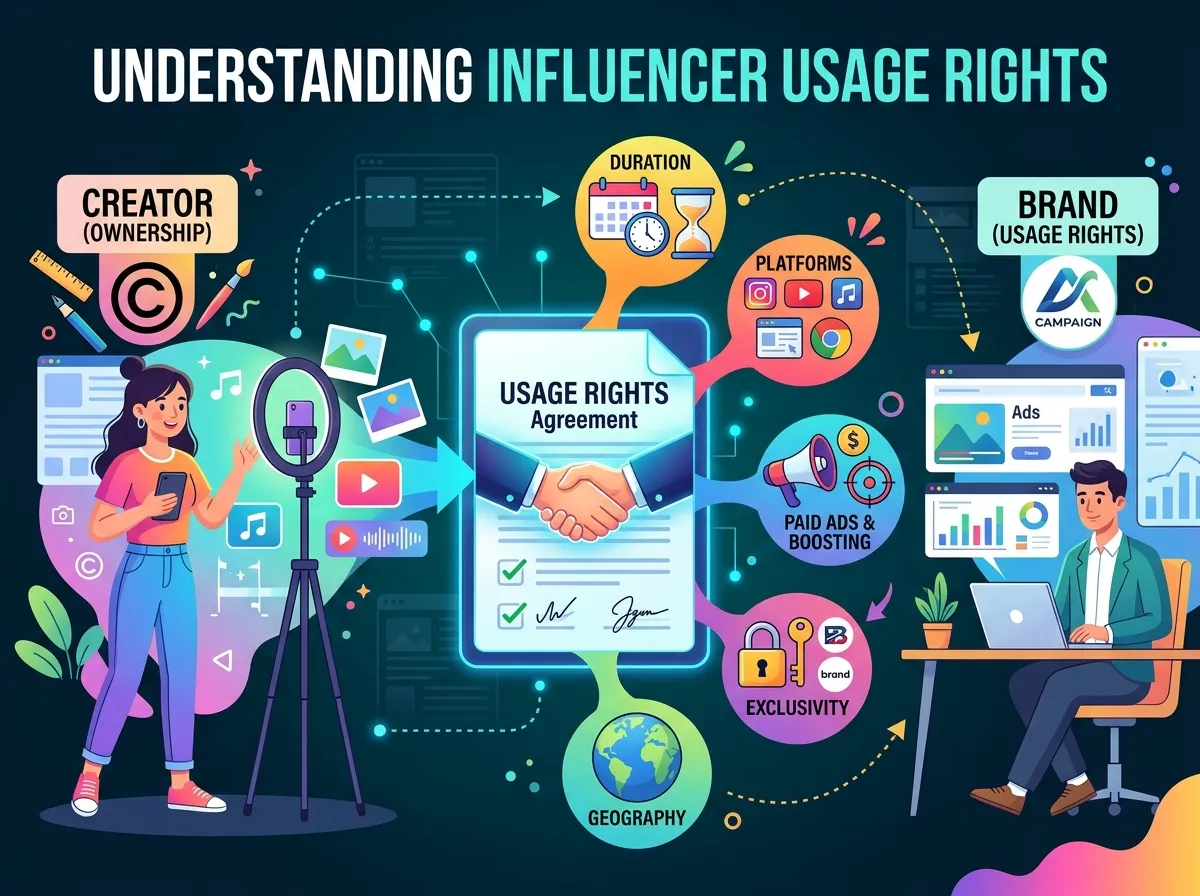
Influencer usage rights refer to the permissions that determine how a brand or another authorized party may use content produced by an influencer. These permissions can cover photographs, videos, audio recordings, captions, graphics, testimonials, and other creative materials associated with a campaign.
The scope of those rights depends on the agreement between the parties and the applicable law. In some arrangements, the creator retains copyright while granting the brand a license to use specific assets. In other cases, the parties may negotiate a transfer of ownership or a broader commercial license. The exact arrangement should be documented rather than assumed.
Usage rights can also differ by channel. Permission to publish a sponsored post on an influencer’s social media profile does not necessarily authorize the brand to place the same video in paid advertisements, feature it on its website, include it in an email campaign, or distribute it through retail partners.
Duration is another important consideration. A license might permit use for a few months, a single campaign, or a longer period. Geographic limits, editing permissions, exclusivity, and restrictions on third-party distribution can also affect the value and scope of the rights.
Understanding these distinctions helps businesses avoid treating influencer content as an unrestricted marketing asset. It also allows creators to understand how their work will be used and negotiate compensation that reflects the intended commercial value.
Why Influencer Content Usage Rights Matter
Influencer campaigns often generate valuable creative assets that can continue to support marketing activities after the original post is published. A product demonstration may work well on a brand’s website, while a creator’s short video may provide useful material for a paid social campaign. Clear usage rights allow businesses to plan these opportunities before the content is produced.
Without defined permissions, brands may discover that they cannot reuse an asset in the way they intended. A creator might have agreed to publish a video on a personal account but never authorized the brand to run it as an advertisement. The business may then need to negotiate additional permissions, pay a new fee, or develop replacement content.
Clear agreements also protect the influencer. Creators invest time, skills, equipment, and creative judgment into their work. They should understand whether their content will be used only for an original post or may appear in advertising, sales materials, websites, and other channels. Transparent terms help creators maintain control over their work and make informed decisions about commercial partnerships.
Usage rights are especially important when content includes recognizable people, music, artwork, locations, or other third-party materials. A creator’s permission to use their own video may not automatically cover every element within it. Brands should identify relevant rights and obtain any additional permissions needed for the intended use.
When handled properly, usage rights create a shared understanding of responsibilities. They reduce uncertainty, support more efficient campaign planning, and make it easier for both parties to build long-term working relationships.
Influencer Image Licensing and Copyright Ownership
Influencer image licensing determines how photographs and visual assets may be used commercially. These assets can include product photography, portraits, lifestyle images, short-form videos, thumbnails, and behind-the-scenes content.
Copyright ownership and usage permission are related but different concepts. Copyright generally identifies the person or entity that holds the relevant rights in a creative work, subject to applicable law and any valid transfer or other legal arrangement. A license grants permission to use the work under specified conditions without necessarily transferring ownership.
For example, a creator may retain ownership of a product photograph while allowing a brand to publish it on its website and social media accounts for a defined period. If the brand later wants to use the photograph in a national advertising campaign, that additional use may fall outside the original license.
Brands should therefore specify the assets covered by the agreement and the activities the license permits. They should also clarify whether the content can be cropped, resized, subtitled, translated, combined with other materials, or adapted into different formats. Some changes may be acceptable for routine marketing, while others could affect the creator’s intended message or the integrity of the work.
The agreement should also address whether a license is exclusive or non-exclusive. Exclusive rights may limit how a creator can license the same material to other parties, depending on the wording. Non-exclusive rights generally allow the creator to continue using or licensing the work, subject to the agreement.
Clear licensing terms help brands understand what they have purchased and help creators retain control over rights that were not included in the arrangement.
Defining Social Media Content Rights Across Platforms
Social media content rights can become complicated when the same asset is distributed across multiple platforms. A video created for Instagram may later be adapted for TikTok, YouTube, Pinterest, or a brand’s own website. Although the underlying content may remain the same, the platform, audience, advertising format, and commercial purpose can change.
Agreements should identify which platforms are covered and whether the brand can publish content through its own accounts, the creator’s account, or both. If the campaign includes paid promotion, the agreement should state whether the brand may use the content in advertisements and whether any platform-specific creator authorization is required.
Some advertising formats require creators to grant account-level permissions or authorize a brand to promote content through a platform’s tools. These technical permissions are not always identical to the underlying legal license. A brand should confirm both that the agreement permits the intended use and that the relevant platform permissions have been configured correctly.
Cross-platform adaptation also requires attention to format and context. A vertical video may need different dimensions, subtitles, or a shortened edit for another channel. The agreement should explain which adjustments are permitted and whether the creator must approve significant changes.
Brands should avoid assuming that publicly accessible content is free to reuse. Viewing or sharing a public post through a platform’s built-in features does not necessarily grant permission to download the asset, modify it, or use it in external advertising. Understanding platform rules and the creator’s agreement is essential before expanding distribution.
Establishing Brand Content Usage Permissions
Brand content usage permissions should be negotiated before the influencer begins producing campaign assets. Early discussions give both parties time to agree on the intended channels, campaign schedule, licensing period, compensation, and approval requirements.
The first step is to define the business objective. A brand that only needs an influencer to publish one sponsored post may require a narrower license than a business planning to use the creator’s video across advertising, email marketing, product pages, and retail promotions.
Once the objective is clear, the parties can document the permitted uses. The agreement should identify the relevant assets, authorized channels, duration, territory, editing rights, exclusivity, and any restrictions on sublicensing. It should also explain whether the brand can share the content with agencies, media buyers, distributors, or other service providers working on the campaign.
Compensation should reflect the scope of the permission. Broader usage, extended licensing periods, paid advertising, or exclusivity may require additional fees. A transparent pricing structure helps creators understand the value of their work and allows brands to budget accurately.
The agreement should also address renewal and expiration. If the brand wants to continue using the material after the license ends, it should understand the process for requesting an extension. The parties should determine whether existing posts must be removed, whether paid campaigns must stop, and how archived materials will be handled.
Clear permissions make content reuse more predictable and reduce the need for urgent negotiations after a campaign has already launched.
Managing Influencer Agreements and Licensing Terms
Influencer agreements provide the foundation for effective usage rights management. They should be written in clear language and explain the responsibilities of both parties, including content delivery, review procedures, publishing requirements, compensation, and licensing conditions.
One of the most important provisions identifies exactly what content is covered. Broad wording that refers to all content created during a partnership can create confusion if the creator produces additional materials independently. Listing the relevant deliverables or defining the licensed assets clearly can help prevent disagreements.
The agreement should also distinguish organic publishing from paid advertising. Organic use generally involves publishing content without paying to distribute it as an advertisement, although the exact meaning depends on the agreement. Paid usage can involve advertising through the brand’s accounts, creator-authorized advertising formats, or other promotional placements. Each use should be covered explicitly where appropriate.
Approval and revision requirements deserve similar attention. Brands may need the right to review content for factual accuracy, brand alignment, and regulatory compliance. Creators should understand how many revision rounds are included, how quickly feedback will be provided, and whether major changes require additional approval.
Termination provisions should explain what happens when the relationship ends or a material breach occurs. Depending on the agreement, the parties may need to stop new usage, remove certain content, or resolve outstanding payments. Existing licenses may or may not continue after termination, so the relevant terms should be clear.
Businesses should have agreements reviewed by qualified legal professionals when campaigns involve substantial licensing value, exclusivity, sensitive categories, complex rights, or multiple jurisdictions. A well-written agreement reduces ambiguity and gives both parties a more dependable basis for collaboration.
Protecting Influencer Copyright and Third-Party Rights
Influencer copyright protection involves respecting the rights associated with creative materials and ensuring that campaign content can be used lawfully. A creator may own the original video but include music, photographs, graphics, fonts, or footage licensed from another source. Those additional elements may have separate restrictions.
For instance, a song available for use in an ordinary social media post may not be cleared for paid advertising or use on a brand website. If the brand repurposes the video outside the original platform or context, it may need a different music license or an alternative soundtrack.
Brands should ask creators to identify any third-party assets included in the deliverables and confirm whether the necessary permissions cover the planned use. Agreements can allocate responsibilities for obtaining clearances, but contractual wording alone does not replace a license that is legally required from a rights holder.
Content may also include other identifiable people, private locations, trademarks, or proprietary material. Depending on the circumstances and jurisdiction, additional consent or permission may be necessary. Businesses should establish review procedures that identify these issues before publication or paid distribution.
Proper records are essential. Brands should retain copies of signed agreements, asset lists, license terms, creator approvals, and relevant third-party permissions. Organized documentation makes it easier to confirm whether a planned use is authorized and to respond to questions about a campaign asset later.
These practices reduce the risk of copyright disputes and support responsible content management as influencer materials move across marketing channels.
User-Generated Content Licensing and Reuse
User-generated content licensing is relevant when brands want to reuse material that customers or followers create about their products. This may include customer photographs, testimonials, product demonstrations, reviews, or videos inspired by an influencer campaign.
A person posting content publicly does not automatically give a brand unlimited permission to use it in advertising. Brands should obtain clear authorization before reproducing customer-created material in their own marketing channels, especially when the content is used commercially or modified.
The permission process should explain how the content will be used, where it may appear, and whether it can be edited. If the business intends to use a customer’s photograph in paid advertising, the request should say so rather than relying on a general request to repost the content.
When content involves minors, sensitive circumstances, personal information, or identifiable third parties, additional care may be necessary. Businesses should follow applicable privacy and consent requirements and avoid using material in ways that misrepresent the creator’s original message.
Influencer campaigns can generate a large volume of user responses, making it tempting to collect and reuse content informally. A structured licensing workflow helps the marketing team record permissions and identify any restrictions before publication.
The same principles apply when a brand wants to turn an influencer’s post into a broader customer story or testimonial. The business should verify that the proposed use is covered by the relevant agreement and that any claims remain accurate and properly contextualized.
Influencer Usage Rights in Paid Advertising
Paid advertising often requires more extensive permissions than publishing a sponsored post on a creator’s own account. A brand may want to use an influencer’s video in social advertisements, retargeting campaigns, landing pages, or other paid placements. These uses can expose the content to new audiences and extend its commercial life.
The agreement should state whether paid usage is permitted, which platforms are included, and how long the advertising license lasts. It should also identify who is responsible for uploading the content, managing account permissions, approving edits, and monitoring the campaign.
Creator-authorized advertising formats may require technical access or explicit authorization through the relevant platform. Brands should confirm that these arrangements align with the contractual license and that access is limited to the necessary accounts and activities.
Advertising edits should preserve the accuracy and intended meaning of the creator’s message. Removing context, changing a testimonial, or combining statements in a misleading way can create reputational and compliance concerns. Any material edits should follow the agreed approval process and applicable advertising rules.
Performance can also influence future licensing decisions. If a video performs well, a business may want to extend the license or expand distribution. Rather than assuming the original agreement covers every future campaign, the brand should check the existing terms and negotiate additional permissions where needed.
Planning paid usage before production helps businesses secure the necessary rights at an appropriate cost and prevents successful content from becoming unavailable just when it proves most valuable.
Connecting Usage Rights With Influencer Approvals
Usage rights and content approval processes should work together. Even when a brand has permission to use an asset, it may still need to ensure that the material follows campaign guidelines, reflects accurate product information, and meets relevant advertising requirements.
A documented influencer approvals process helps teams review content before it is published or repurposed. The workflow can identify who reviews the material, which changes require creator approval, and how final authorization is recorded.
Rights management should be included in this workflow rather than handled as a separate administrative task. Before an asset is approved for a particular channel, the team should confirm that the relevant license covers that use. A video approved for organic social publishing should not automatically be treated as cleared for paid advertising.
Approval records should identify the final asset version, the relevant agreement, the intended channels, and any conditions attached to the permission. This becomes especially important when a campaign includes several creators, multiple formats, and a mix of organic and paid placements.
Businesses can also use influencer marketing automation to organize deliverables, approval notifications, licensing dates, and renewal reminders. Automation can reduce administrative work, but teams should ensure that the system reflects the actual agreement and does not grant permissions beyond the approved scope.
Combining approvals with rights management gives marketing teams a more reliable process for publishing content confidently and maintaining clear records.
Budgeting for Influencer Usage Rights
Influencer usage rights can affect the overall cost of a campaign. The fee for creating and publishing content may differ from the fee for licensing that content for additional commercial use. Businesses that plan to reuse influencer assets should account for these costs before finalizing campaign budgets.
Several factors can influence licensing fees, including the length of the license, the number of platforms, the size and nature of the intended audience, paid media usage, exclusivity, and the extent of permitted editing. The creator’s profile, production effort, and demand for their work may also affect pricing.
Brands should discuss licensing scope alongside influencer marketing pricing so that the total agreement reflects both content creation and intended usage. Comparing offers fairly requires examining the permissions included, not just the headline price.
A lower initial fee may cover only a limited organic post, while a higher quote may include extended usage or paid advertising. Without comparing the scope of each offer, businesses may underestimate the true cost of obtaining the rights they need.
It can be useful to plan several possible uses during negotiations. If the brand expects to use content across a website, email campaigns, and paid social media, those needs should be discussed before the creator produces the asset. Bundled or extended licensing may be available, but terms should be confirmed rather than assumed.
Clear budgeting helps brands avoid unexpected renewal costs and gives creators a fairer basis for pricing their work. It also allows businesses to assess whether the expected value of repurposed content justifies the licensing investment.
Monitoring Usage Rights and License Expiration
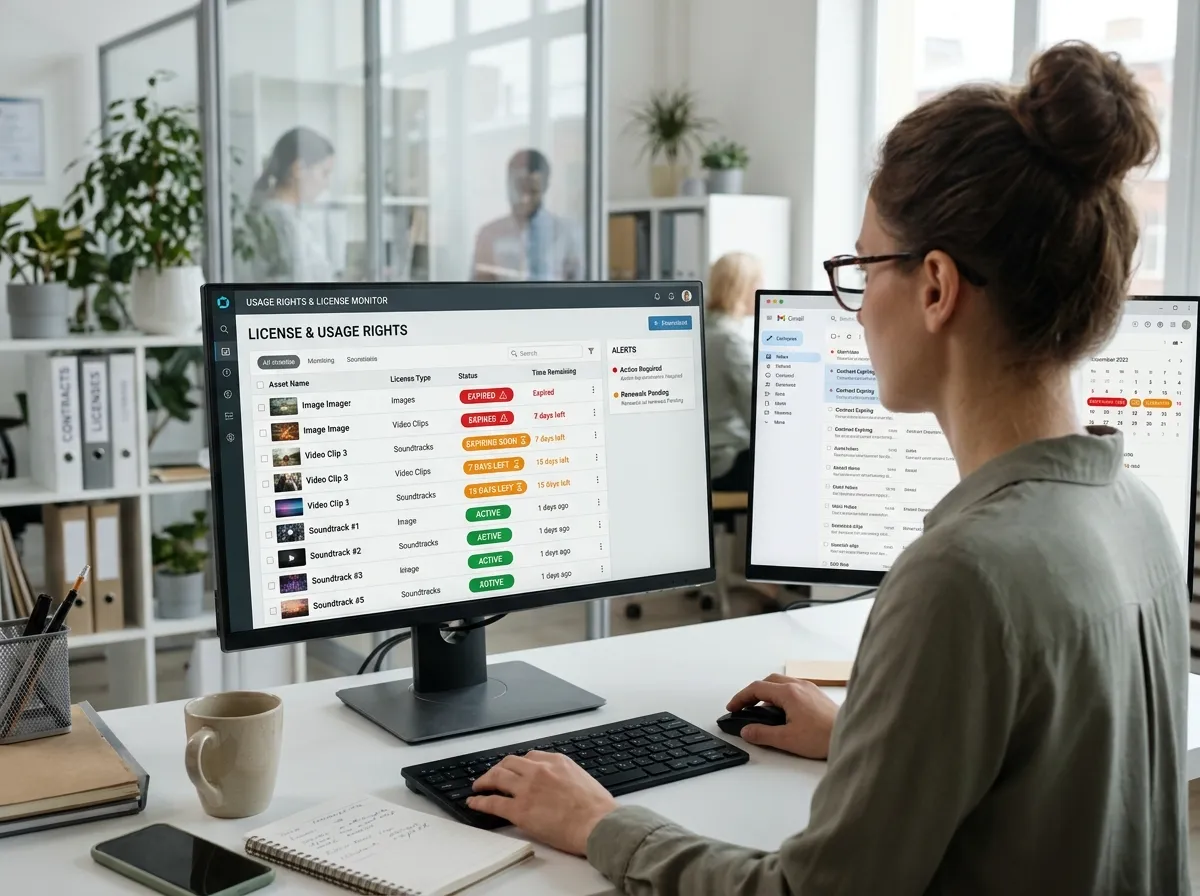
Usage rights management does not end when an agreement is signed. Businesses need a reliable way to track which assets are licensed, where they are being used, and when permissions expire.
A centralized asset register can record the creator’s name, campaign, asset location, ownership information, license scope, approved channels, start and end dates, and any restrictions. It can also include links to signed agreements and approval records, allowing authorized team members to verify permissions before launching a campaign.
Expiration reminders are particularly useful for paid advertisements and evergreen website content. If a license ends, the organization should review active placements and determine whether it must stop using the asset, remove it from certain channels, or negotiate an extension. The appropriate action depends on the agreement and applicable law.
Businesses should also account for content shared with external agencies or other partners. The brand may need to ensure that those parties follow the same usage restrictions and do not retain or reuse assets beyond the permitted scope.
Periodic audits can identify unapproved copies, outdated campaigns, or assets being used in channels that were not included in the original license. When an issue is found, the team should document it and take corrective action promptly.
A consistent monitoring process reduces the risk of accidental overuse and helps organizations make better use of their licensed creative assets throughout the campaign lifecycle.
Conclusion
Influencer usage rights are essential for managing the commercial value, ownership, and permitted use of creator content. Clear licensing terms help businesses understand where and how content can be published while protecting creators from unauthorized reuse and unclear expectations.
A strong approach defines the licensed assets, platforms, duration, paid advertising permissions, editing rights, exclusivity, and renewal conditions before content production begins. It also considers copyright ownership, third-party materials, user-generated content, privacy, and applicable advertising requirements.
When usage rights are integrated with content approvals, campaign budgeting, automation, and asset tracking, brands can reduce uncertainty and make more effective use of influencer partnerships. Combining these practices with a well-planned Influencer Affiliate Marketing approach can also help businesses connect creator content with affiliate promotions while maintaining clear permissions and transparent partnership terms. The goal is to create a fair framework that allows creators and businesses to work together confidently while respecting the rights associated with every asset.
Frequently Asked Questions
1. What are influencer usage rights?
Influencer usage rights are permissions that determine how a brand may use content created by an influencer, including where it can appear, how long it can be used, and whether it can support paid promotion.
2. Does paying an influencer give a brand ownership of the content?
Not automatically. Ownership and usage permissions depend on the agreement and applicable law. A creator may retain copyright while granting the brand a license for specified uses.
3. What should an influencer usage rights agreement include?
It should identify the assets covered, permitted platforms, licensing duration, geographic scope, paid advertising rights, editing permissions, exclusivity, compensation, renewal conditions, and relevant responsibilities.
4. Can a brand reuse influencer content in paid advertisements?
Only when the necessary permissions and applicable platform authorizations allow that use. Brands should confirm paid advertising rights before launching campaigns.
5. How long should influencer content usage rights last?
The appropriate duration depends on campaign objectives, budget, and intended use. Agreements may cover a short campaign or a longer period, but the license period should be clearly documented.
6. Who owns copyright in influencer content?
Ownership depends on applicable law and the specific arrangement. In many cases, creators retain copyright while granting brands permission to use their work under a license.
7. Can brands edit influencer content after receiving permission?
That depends on the license. Agreements should explain whether cropping, resizing, subtitling, translation, or more substantial edits are allowed and when creator approval is required.
8. Do brands need permission to reuse user-generated content?
Generally, brands should obtain appropriate permission before reproducing user-generated content in their own marketing, particularly for commercial use. Public availability alone does not provide unlimited reuse rights.
9. How can brands track influencer usage rights?
Brands can maintain a centralized asset register with licensing terms, approved channels, expiration dates, contracts, and approval records. Automated reminders and periodic audits can help prevent unauthorized use.
10. Why should influencer usage rights be discussed before a campaign starts?
Early discussions clarify expectations, help creators price their work fairly, allow brands to budget for planned usage, and reduce the risk of licensing disputes after content has been produced.