Influencer Usage Rights: Protecting Content and Brand Partnerships
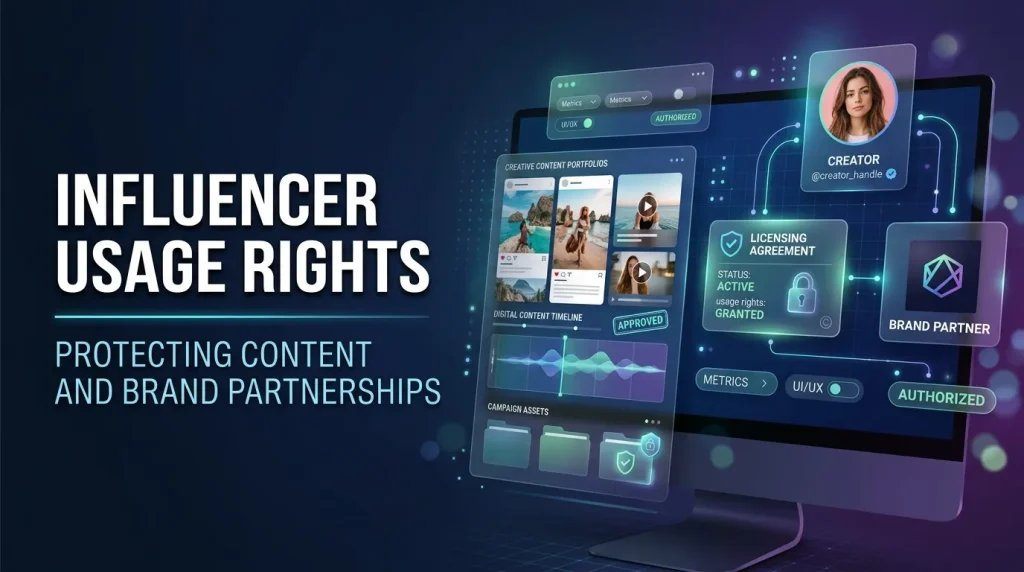
Influencer Usage Rights determine how brands can use influencer-created content across social media, websites, email campaigns, and paid advertising. Clear licensing agreements establish the permitted platforms, usage periods, modification rights, exclusivity conditions, and compensation. By defining these terms before a campaign begins, brands can avoid misunderstandings, manage content permissions effectively, and maximize the value of influencer partnerships while respecting creators’ rights.
Influencer Usage Rights define how brands can use, share, modify, distribute, and promote content created by influencers. These rights are an essential part of influencer marketing because a brand’s permission to publish a sponsored post does not automatically mean it can reuse the same image, video, or caption in advertisements, on its website, or across other marketing channels. Clear agreements help brands protect their investments, respect creator ownership, and establish professional, long-lasting partnerships.
Understanding Influencer Usage Rights
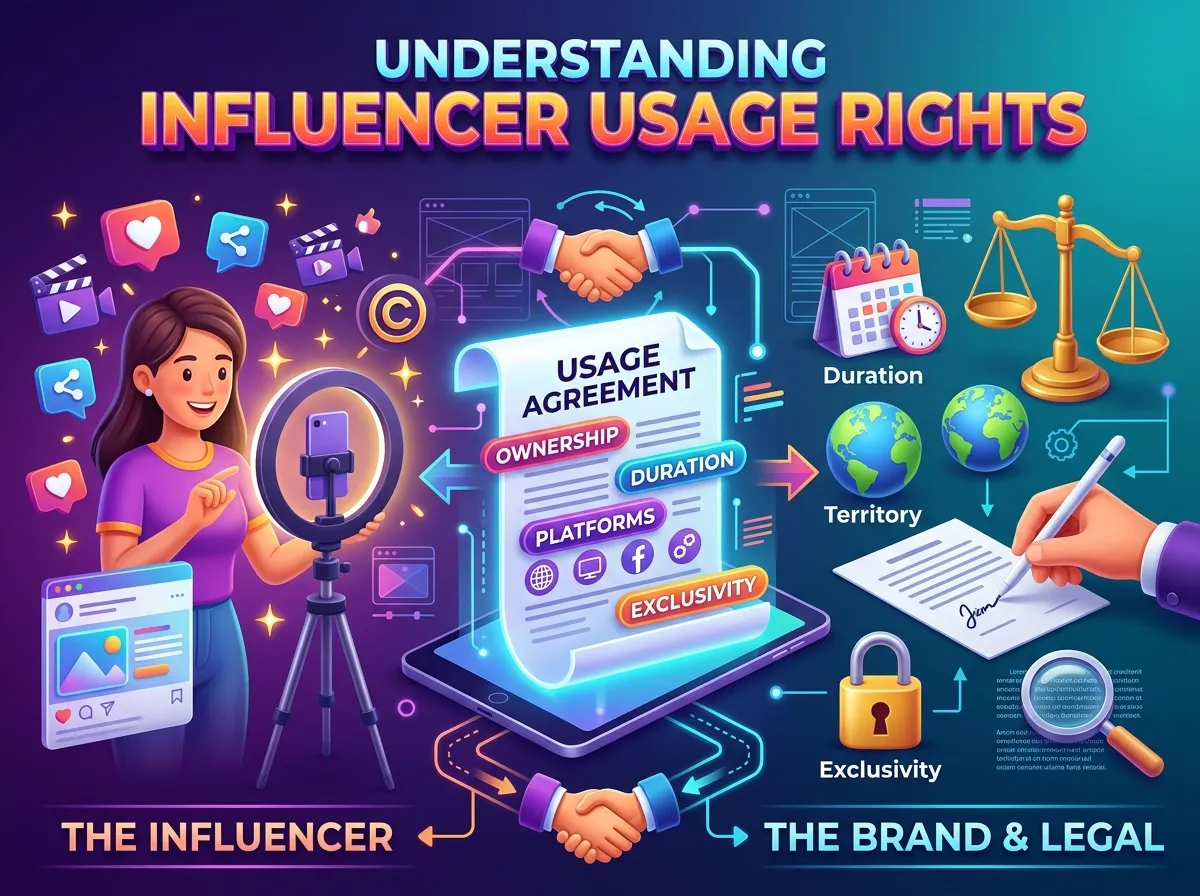
Influencer marketing often produces valuable assets, including photographs, videos, product demonstrations, testimonials, unboxing clips, and short-form social media content. Although these assets may be created for a brand partnership, the business does not necessarily receive unrestricted permission to use them.
Influencer Usage Rights establish the boundaries of that permission. They explain what a brand can do with a creator’s content, where it can appear, how long it can remain in use, and whether it can be adapted for different marketing purposes.
For example, an influencer may agree to publish a sponsored video on their Instagram account. That agreement may cover the original post but not automatically permit the brand to download the video, run it as a paid advertisement, add it to a product landing page, or distribute it through email marketing.
These distinctions matter because content can continue delivering value long after the original campaign ends. A successful video might become part of a brand’s advertising library, while an authentic product demonstration could support future sales campaigns. However, each additional use should fall within the permissions established with the creator.
Clear rights arrangements protect both parties. Brands gain confidence that their content can be used appropriately, while influencers retain control over how their creative work, image, voice, and reputation are represented.
Influencer Content Usage Rights and Creator Ownership
Influencer Content Usage Rights are closely related to ownership, but the two concepts are not interchangeable. Ownership generally concerns who holds the relevant intellectual property rights, while usage rights describe the activities another party is authorized to perform.
Depending on the agreement and applicable law, an influencer may retain ownership of original photographs and videos while granting a brand a license to use them for specified purposes. Alternatively, a contract may provide for a transfer of certain rights or ownership, subject to applicable legal requirements.
The distinction should be addressed before content production begins. If a brand expects to use a video in paid campaigns, website banners, product pages, and promotional emails, those intended uses should be discussed and documented in advance.
It is also important to consider the rights of other people or materials appearing in the content. A creator may not independently control the copyright in background music, stock footage, third-party photographs, or other licensed assets. Permission from the influencer alone may therefore be insufficient for every proposed use.
Brands should confirm that the content is cleared for its intended distribution channels. Influencers should likewise understand the scope of the permissions they grant and whether the agreement limits their ability to reuse or license the same material elsewhere.
A clearly defined arrangement reduces uncertainty and gives both sides a better understanding of their responsibilities.
Influencer Licensing Agreements and Content Permissions
Influencer Licensing Agreements provide the contractual foundation for using creator-produced content. Rather than relying on general statements such as permission to use content for marketing, an effective agreement identifies the specific rights granted to the brand.
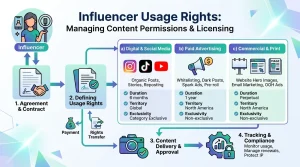
The agreement should explain which assets are covered, the permitted uses, the approved platforms, the duration of the license, and any geographic restrictions. It should also address whether the brand can edit the content, create shorter versions, add subtitles, or combine the material with other creative assets.
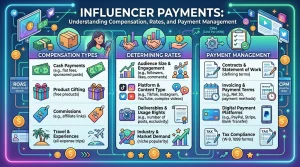
Compensation is another important consideration. Some agreements include limited organic social media usage within the original collaboration fee, while broader licenses for paid advertising, extended usage, or exclusive access may require additional payment.
For example, a brand might negotiate a six-month license to use a creator’s product demonstration on its website and social channels. Paid advertising, use by retail partners, or continued use after the six-month period could require separate permission or an extension.
Brands should also clarify whether the license is exclusive or non-exclusive. A non-exclusive license generally allows the creator to grant similar permissions to other parties, subject to any contractual restrictions. An exclusive arrangement may restrict certain competing uses and should specify the relevant category, territory, and duration.
Detailed licensing terms make expectations easier to manage and help prevent disagreements when content becomes more valuable than initially anticipated.
Social Media Content Usage Rights Across Platforms
Social Media Content Usage Rights determine how influencer-created material can be used on different social networks and digital channels. A creator’s permission to publish content on one platform does not necessarily cover reposting it on another platform or using it in a separate advertising campaign.
For instance, a sponsored TikTok video may be created specifically for the creator’s audience and the platform’s format. A brand that wants to share the same video on Instagram Reels, YouTube Shorts, or its own website should verify that those uses are covered by the agreement.
Each platform may have different technical requirements, advertising policies, music restrictions, and content formats. A video that works well as an organic post may need adjustments before it can be used in a paid campaign.
Brands should also distinguish between reposting an original post through platform-native features and downloading, editing, and uploading a separate copy. These actions can involve different permissions and platform rules.
A practical agreement identifies the approved channels and explains whether the brand can publish content through its own accounts, distribute it through partner accounts, or use it in external promotional materials.
This clarity is especially important for campaigns that span several platforms. When permissions are established early, marketing teams can reuse content more efficiently without assuming that every form of distribution is automatically authorized.
Influencer Image and Video Rights
Influencer Image and Video Rights cover the use of photographs, recordings, and other visual materials featuring a creator. These rights can be particularly important when content includes the influencer’s face, voice, name, personal experiences, or recognizable identity.
A brand may receive permission to use a photograph in an organic social media post without receiving unlimited permission to place the same image in advertisements or promotional materials. The creator’s likeness, copyright ownership, and other applicable rights may require separate consideration depending on the jurisdiction and circumstances.
Video agreements should also address editing and presentation. Cropping a clip to fit a new format may be acceptable under the license, while changing the creator’s statements, removing important context, or presenting an endorsement that was never made may exceed the agreed permission or create other legal concerns.
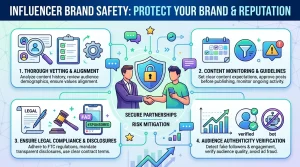
Brands should be especially careful when using testimonials. The final advertisement should accurately represent the creator’s genuine experience and comply with applicable advertising and endorsement requirements.
When an image or video includes other identifiable people, music, artwork, or third-party footage, additional clearances may be necessary. These requirements should be considered during production rather than discovered after a campaign is ready to launch.
By defining image and video permissions clearly, brands can use visual content more confidently while respecting creators and other rights holders.
Influencer Content Repurposing Rights
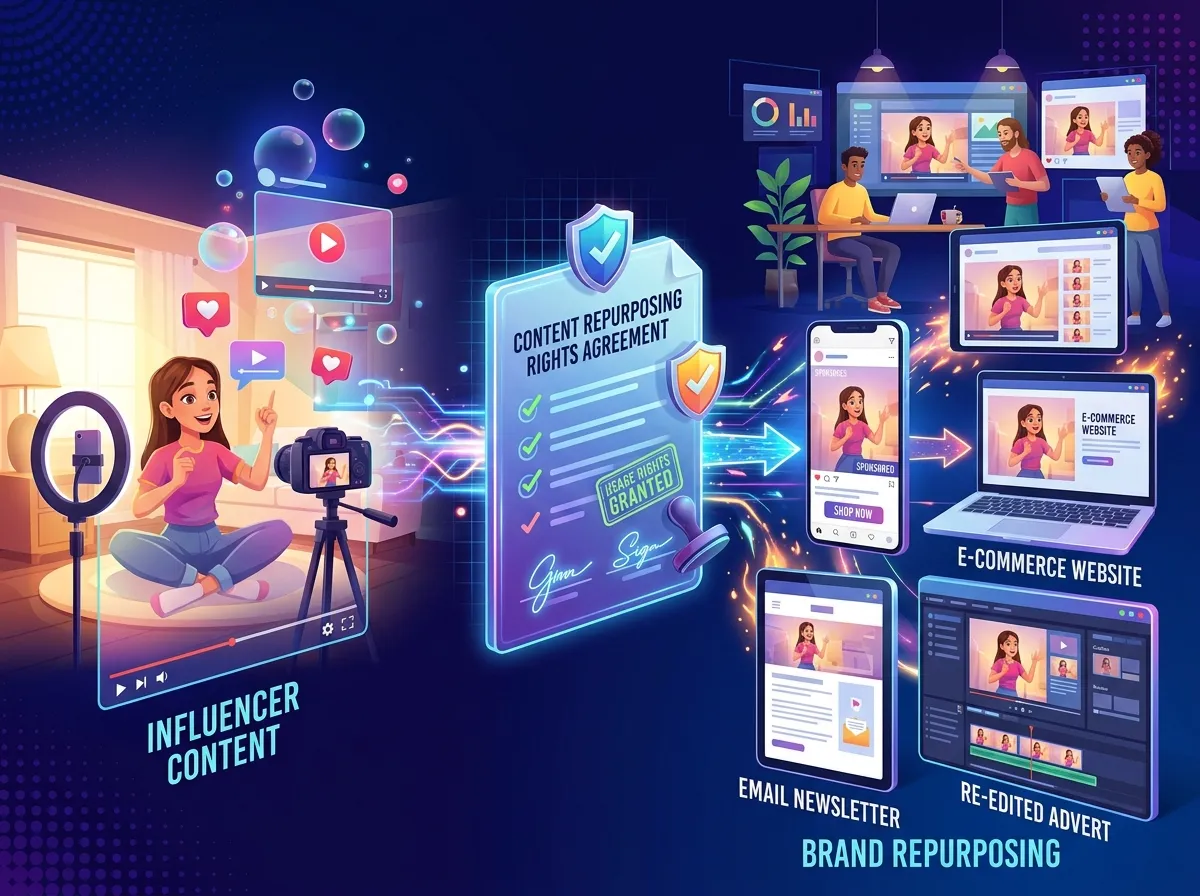
Influencer Content Repurposing Rights determine whether a brand can adapt existing creator content for additional marketing purposes. Repurposing can extend the value of a campaign by allowing one original asset to support several relevant customer touchpoints.
A product demonstration, for example, could be shortened into several clips, included in a website product page, adapted for an email campaign, or incorporated into a digital presentation. These uses can save production time and provide audiences with consistent, recognizable creative material.
However, permission to publish an original post does not necessarily include permission to create unlimited derivative versions. Brands should establish whether the agreement allows editing, resizing, translation, captioning, combining footage, adding graphics, or creating new advertisements from the original asset.
The agreement should also distinguish between routine formatting changes and substantial creative alterations. Minor adjustments may be needed for platform compatibility, while extensive edits could change the meaning or context of the influencer’s message.
Creators should know how their content may be repurposed and whether they will have an opportunity to review substantial modifications. Brands, in turn, should ensure that all adapted versions remain consistent with the original message and the agreed campaign requirements.
A clear repurposing license makes it easier to develop a coordinated marketing campaign using modern event technology trends without creating uncertainty about which adaptations are permitted.
Influencer Whitelisting Permissions and Paid Advertising
Influencer Whitelisting Permissions allow brands to run advertisements through or in association with a creator’s social media identity, where the relevant platform supports that arrangement. Depending on the platform, this may involve creator authorization, account permissions, or branded content advertising tools.
Whitelisting can help brands distribute creator content to audiences beyond the influencer’s existing followers. It can also combine the creator’s recognizable identity with paid media targeting and campaign optimization.
However, permission to reuse a creator’s video in a brand-owned advertisement is not necessarily the same as permission to run an advertisement from the creator’s account or identity. These activities should be covered explicitly in the agreement.
The parties should determine which advertising accounts can access the content, what permissions are required, how long access will remain active, and who is responsible for campaign management. They should also clarify whether the brand can use the creator’s name, profile image, or other identifying elements in advertisements.
Access should be limited to the permissions necessary for the campaign. Creators should understand the scope of any account authorization and how it can be revoked when the agreement ends.
For paid campaigns, brands should also discuss creative approval, advertising disclosures, budget responsibilities, and performance reporting. Platform-specific requirements may change, so both parties should verify the current rules before launching advertisements.
When these arrangements are documented clearly, whitelisting can support paid media performance while preserving transparency and creator control.
Influencer Usage Rights Contracts and Essential Terms
Influencer Usage Rights Contracts should describe the agreement in practical, unambiguous language. The goal is to ensure that everyone understands the permitted use of the content and the responsibilities associated with that permission.
A well-drafted contract generally identifies the parties, the assets covered, the license type, the permitted platforms, and the length of time the brand can use the material. It should also explain whether the license applies worldwide or only within specified territories.
Compensation and renewal terms deserve equal attention. If a brand wants to continue using a successful video after the original license expires, the contract should explain how an extension can be negotiated and whether additional fees apply.
Other important considerations include exclusivity, attribution, editing permissions, approval processes, confidentiality where relevant, termination, and the handling of content after the license expires. The agreement should clarify whether previously published content must be removed or whether certain uses may continue under an agreed arrangement.
Brands should also consider warranties and responsibilities concerning third-party materials, disclosure requirements, and compliance with applicable laws. Because legal rules differ across jurisdictions, contract language should be reviewed for the relevant market and campaign.
A clear agreement does not need to be unnecessarily complicated. It should address the actual uses anticipated by the business and avoid vague wording that creates conflicting expectations.
Paid Media Rights for Influencer Content
Paid Media Rights for Influencer Content determine whether creator-produced assets can be used in advertising campaigns on platforms such as Instagram, TikTok, YouTube, search networks, or other digital advertising channels.
These rights often have greater commercial value than limited organic reposting because paid distribution can expose content to a much larger audience and generate measurable business results. For that reason, paid usage should be considered separately when negotiating a creator partnership.
A brand may initially commission a creator to produce content for an organic campaign. If the video performs particularly well, the marketing team may later want to use it in paid social advertising. Without the necessary permissions, the brand may need to negotiate an extension or a separate license before launching the campaign.
Paid media agreements should establish the duration of the license, the permitted platforms, any audience or geographic restrictions, and whether the creator’s identity can appear in advertisements. They should also clarify whether editing and testing multiple creative variations are permitted.
Compensation may reflect the length and scope of the license, the creator’s audience and reputation, the type of content, and the commercial value of the proposed use.
Understanding Influencer Marketing Pricing can help brands evaluate creator fees as part of the broader campaign budget. Content licensing should be considered alongside production costs, distribution expenses, and other partnership terms rather than treated as an unlimited benefit automatically included in every collaboration.
Influencer Content Ownership and Permissions in Long-Term Partnerships
Influencer Content Ownership and Permissions become especially important when brands build long-term relationships with creators. Repeated collaborations may produce a substantial library of photographs, videos, testimonials, and campaign assets, each with its own licensing conditions.
Without a reliable record of those conditions, marketing teams may struggle to determine which content remains available for use, which licenses are approaching expiration, and which assets require additional approval.
A centralized rights management process can record the creator’s details, the assets delivered, the approved channels, the licensing period, the compensation terms, and any restrictions. The record should also identify relevant contracts and document extensions or changes to the original permissions.
This information helps marketing, advertising, and creative teams avoid accidental use beyond the agreed scope. It also supports faster campaign planning because staff can identify cleared assets before building new creative materials.
Long-term partnerships benefit from regular communication about changes in business priorities. A brand that wants to expand from organic social content into paid advertising should discuss the additional permissions rather than assume the original agreement covers every future use.
Strong relationships also require respect for the creator’s reputation and creative contribution. Clear permissions, fair compensation, and transparent communication help both parties understand the commercial value of the work and create opportunities for future collaboration.
For brands developing Influencer Collaboration Marketing programs, consistent rights management can make partnerships easier to scale while preserving trust and accountability.
How Influencer Usage Rights Support Brand Awareness
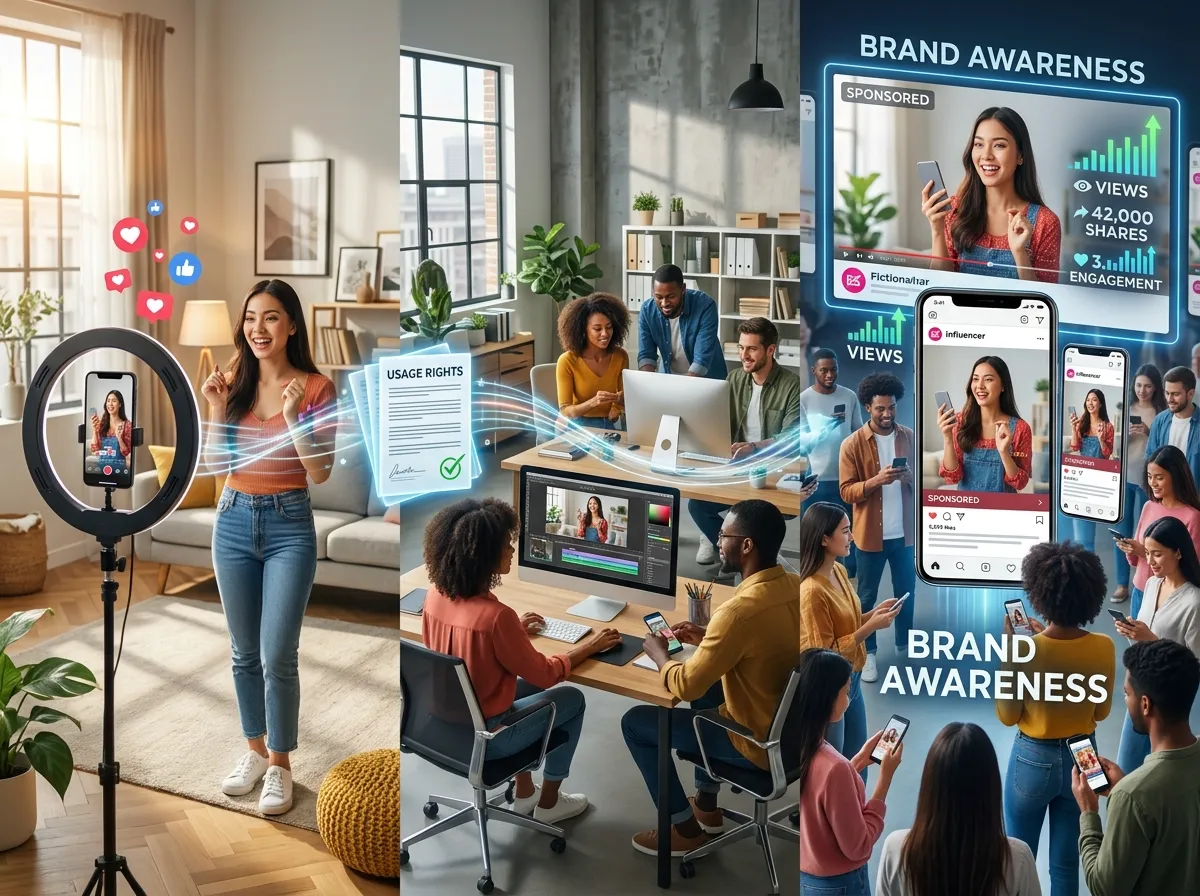
Influencer content can introduce products and services to audiences through recognizable voices, relatable demonstrations, and creator-led storytelling. When the appropriate permissions are in place, brands can extend the reach of that content beyond the original sponsored publication.
For example, a creator’s product review may initially reach their existing followers. If the agreement permits further distribution, the brand might feature the review on a relevant landing page, share it through its social accounts, or use an approved version in paid advertising.
These additional placements can help audiences encounter a consistent message at different stages of the customer journey. They may also give a successful asset a longer useful life, reducing the need to produce entirely new content for every campaign.
However, broader distribution should remain aligned with the creator’s original message, the intended audience, and the terms of the license. Brands should not assume that a popular post can be used indefinitely or in every market without reviewing the relevant permissions.
The effectiveness of this approach can be evaluated through metrics such as reach, impressions, engagement, video completion, referral traffic, and conversions, depending on the campaign objective.
A well-managed content license allows businesses to explore these opportunities while maintaining a clear understanding of their rights and responsibilities.
Conclusion
Influencer Usage Rights are an important part of professional influencer marketing because they determine how creator-produced content can be used beyond its original publication. Clear agreements help brands understand their permissions while protecting creators’ ownership, identity, and creative contributions.
By addressing licensing terms, platform restrictions, repurposing, whitelisting, paid advertising, and usage periods before a campaign begins, both parties can avoid unnecessary disputes and make better use of their marketing assets.
A consistent approach to rights management also supports long-term collaboration. When permissions are documented, licenses are monitored, and additional uses are negotiated transparently, brands can extend the value of influencer content while building stronger relationships with creators.
Frequently Asked Questions About Influencer Usage Rights
1. What are Influencer Usage Rights?
Influencer Usage Rights define how a brand can use content created by an influencer. They may cover social media posts, photographs, videos, testimonials, paid advertisements, and website content. The agreement specifies permitted uses, platforms, duration, and any applicable restrictions.
2. Do brands automatically own influencer-created content?
No. Payment for an influencer collaboration does not automatically transfer copyright ownership in every situation. Ownership and usage permissions depend on the agreement and applicable law. Brands should clarify whether they are receiving a license or a transfer of rights.
3. What is an influencer content licensing agreement?
An influencer content licensing agreement is a contract that grants a brand permission to use specified creator content under defined conditions. It commonly addresses the permitted platforms, usage period, geographic scope, editing rights, exclusivity, and compensation.
4. Can brands reuse influencer content in paid advertisements?
Yes, if the brand has obtained the necessary permissions for the intended advertising use. Organic posting rights do not necessarily include paid media rights or permission to advertise through a creator’s account. The relevant licensing and platform requirements should be confirmed before launch.
5. How long do influencer usage rights last?
The duration depends on the agreement. Some licenses cover a limited campaign period, while others allow longer use. Brands should record expiration dates and obtain any necessary extensions before continuing to use content beyond the authorized period.
6. What is influencer whitelisting?
Influencer whitelisting is an advertising arrangement that allows a brand to run paid promotions through or in association with a creator’s social media identity, depending on the platform. It requires appropriate authorization and should specify access permissions, campaign duration, and account responsibilities.
7. Can brands edit or repurpose influencer content?
Brands can edit or repurpose influencer content when the relevant permissions allow it. Agreements should clarify whether cropping, resizing, captioning, translation, shortening videos, or creating new advertising variations is permitted. Significant changes should not misrepresent the creator’s original message.
8. How are influencer usage rights priced?
Pricing can depend on the license duration, platforms, audience reach, content format, exclusivity, and whether the content will be used in paid advertising. Some creators include limited usage in their initial fees, while broader or extended rights may require additional compensation.
9. What happens when influencer usage rights expire?
The brand should follow the contract’s expiration terms. Depending on the agreement, it may need to stop using the content, remove certain placements, or negotiate an extension. Businesses should monitor license dates to prevent unauthorized continued use.
10. Why are influencer usage rights important for long-term partnerships?
Clear usage rights establish expectations, reduce disputes, and help both parties understand how content can be used over time. They also make it easier for brands to organize content libraries, plan future campaigns, and negotiate additional permissions while respecting creators’ interests.