Affiliate Link Tracking: Measure Clicks and Conversions

Affiliate link tracking helps businesses, publishers, and affiliate marketers understand how links perform across websites, campaigns, and traffic sources. By monitoring clicks, conversions, sales, commissions, and other important metrics, marketers can identify which affiliates and campaigns generate the best results. Effective tracking also makes it easier to optimize affiliate strategies, improve marketing performance, and make better decisions based on reliable data.
Affiliate marketing can become a powerful source of traffic, leads, and revenue when marketers understand where their results are coming from. Simply placing affiliate links across websites, social media platforms, emails, or other channels is not enough to determine whether a campaign is actually successful. Businesses need accurate data about how users interact with those links and what happens after the click.
This is where affiliate link tracking becomes important. It provides a way to monitor affiliate links throughout the customer journey, from the initial click to a completed purchase or conversion. With the right tracking process, marketers can see which affiliates, campaigns, content pieces, and traffic sources are contributing to business results.
Effective tracking is particularly valuable as an affiliate program grows. Managing a few links manually may be possible, but larger programs can quickly become difficult to monitor without a structured system. Tracking technology can bring clicks, conversions, sales, commissions, and performance data together so marketers can make informed decisions.
What Is Affiliate Link Tracking?
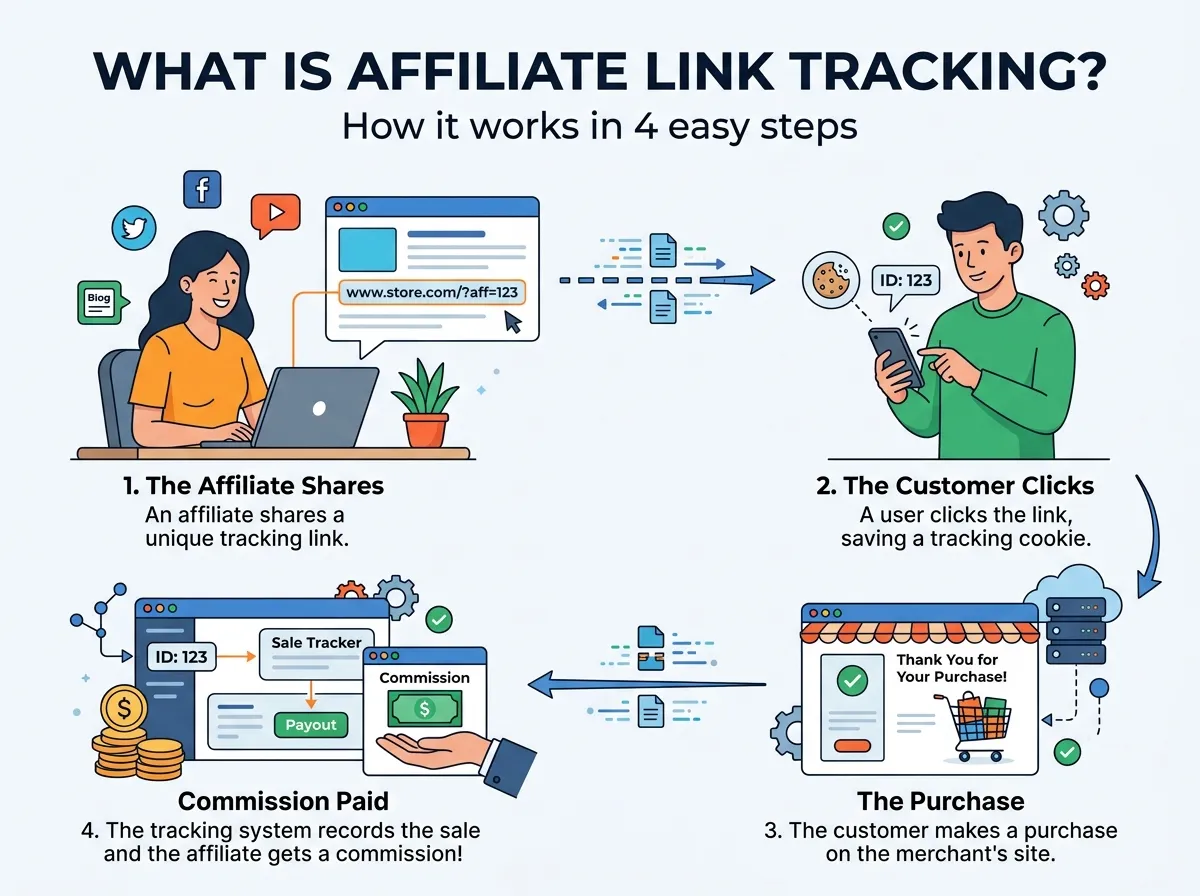
Affiliate link tracking is the process of monitoring affiliate URLs to understand how users interact with them and whether those interactions result in desired actions. These actions can include purchases, registrations, form submissions, app installations, subscriptions, or other conversions.
Affiliate links usually contain tracking parameters or unique identifiers that associate a visitor with a particular affiliate. When someone clicks the link and later completes a qualifying action, the tracking system can attribute that conversion to the appropriate affiliate.
This creates a connection between traffic and results. Instead of simply knowing that a sale happened, marketers can determine which affiliate referred the customer, which campaign generated the visit, and sometimes which content or promotional channel influenced the conversion.
Accurate tracking is therefore essential for calculating commissions, evaluating campaigns, identifying valuable partners, and understanding the overall effectiveness of an affiliate program.
Why Affiliate Link Tracking Matters
Affiliate programs involve multiple partners, traffic sources, campaigns, and promotional channels. Without reliable tracking, it becomes difficult to determine which activities are producing meaningful results.
For example, an affiliate may generate thousands of clicks but very few sales, while another affiliate may generate fewer visitors but a much higher conversion rate. Looking only at traffic volume could make the first affiliate appear more successful. Tracking conversions and revenue provides a much clearer picture.
Tracking also helps businesses identify trends over time. They can determine whether performance is improving, which campaigns are gaining traction, and where potential problems exist. This information can then support decisions about commission structures, promotional resources, affiliate relationships, and campaign optimization.
For affiliates, accurate tracking is equally important because it shows which content and promotional methods generate commissions. This allows publishers to focus their efforts on the strategies that deliver the strongest results.
Affiliate Link Tracking Software
Affiliate link tracking software is designed to automate the process of monitoring affiliate traffic and conversions. Instead of manually analyzing individual URLs, marketers can use software to organize links, collect performance information, and connect affiliate activity with conversions.
Depending on the platform, software may provide dashboards for clicks, conversions, revenue, commissions, conversion rates, and traffic sources. Some solutions also support campaign management, reporting, fraud detection, attribution, and integrations with ecommerce or analytics platforms.
The right software depends on the size and complexity of the affiliate program. A small publisher may need simple click and conversion reporting, while a large business may require more advanced attribution, partner management, and real-time analytics.
Businesses should focus on selecting a solution that provides reliable tracking and useful reporting rather than choosing a platform simply because it offers a large number of features.
Affiliate Link Tracking Tools
Affiliate link tracking tools help marketers monitor individual links and understand how users interact with them. These tools can be especially useful when affiliate links are distributed across multiple websites, articles, social media channels, newsletters, or paid campaigns.
A useful tracking tool can make it easier to identify the source of traffic and compare performance between campaigns. Some tools also provide link organization and management features, which can reduce the amount of manual work involved in maintaining affiliate URLs.
Tracking tools become particularly valuable when marketers are testing different promotional approaches. For example, they may use separate tracking links for a blog article, an email campaign, and a social media promotion. Comparing the resulting data can reveal which channel produces the most valuable traffic.
Affiliate marketers can also combine dedicated tracking tools with broader resources and platforms. A useful overview of Affiliate Marketing Tools can provide additional context on the types of tools available for managing and improving affiliate campaigns.
Affiliate Tracking System

An affiliate tracking system connects affiliate activity with measurable outcomes. It typically records information about clicks, referrals, conversions, commissions, and sales while associating those actions with individual affiliates.
The system acts as a central source of information for an affiliate program. Instead of relying on separate spreadsheets or disconnected analytics reports, businesses can use the system to understand how partners are performing.
A well-structured tracking system also supports transparency. Affiliates can receive accurate information about their conversions and commissions, while businesses can maintain better control over program performance.
As affiliate programs grow, a reliable tracking system becomes increasingly important because manual processes can introduce errors and make reporting more difficult.
Affiliate Link Management
Affiliate link management focuses on organizing, maintaining, and monitoring the links used throughout an affiliate program. Managing links effectively is important because affiliate URLs can become difficult to maintain when a business has hundreds or thousands of partners and promotional placements.
A centralized management process can help marketers identify where links are being used and ensure that they point to the appropriate destination. It can also make updating campaigns easier when products, landing pages, promotions, or affiliate terms change.
Link management is especially useful for content publishers who have affiliate links embedded throughout older articles. Without an organized process, outdated or broken links can remain unnoticed and result in lost revenue or a poor user experience.
Good management also supports better reporting because marketers can associate links with specific campaigns, pages, affiliates, or promotional channels.
Affiliate Click Tracking
Affiliate click tracking measures how many people interact with affiliate links and provides information about the traffic generated by different promotional activities.
Click data can reveal which affiliates attract attention and which content placements encourage users to take action. However, clicks should not be treated as the final measure of success.
A high click volume can be valuable for awareness and traffic generation, but it does not necessarily mean an affiliate campaign is profitable. Marketers should compare clicks with conversions, sales, and revenue to understand the quality of the traffic.
For example, if one affiliate generates 10,000 clicks and another generates 2,000 clicks, the first may initially appear more valuable. But if the second affiliate generates significantly more purchases from those clicks, the smaller traffic source may actually deliver better commercial performance.
Affiliate Conversion Tracking
Affiliate conversion tracking connects affiliate referrals with specific actions taken by users. These actions might include purchases, subscriptions, registrations, downloads, or lead submissions.
Conversion tracking is one of the most important parts of affiliate marketing because it moves analysis beyond traffic. It helps marketers determine whether affiliate visitors are actually taking valuable actions.
Conversion rates can also help identify differences in traffic quality. If an affiliate consistently generates visitors who convert at a high rate, that affiliate may be reaching a highly relevant audience.
Businesses can use conversion information to evaluate partnerships, optimize campaigns, improve landing pages, and understand which promotional approaches are most effective.
Affiliate Sales Tracking
Affiliate sales tracking focuses specifically on purchases generated through affiliate referrals. It allows businesses to associate sales with affiliates and determine how much revenue each partner contributes.
Sales tracking is particularly important for ecommerce businesses and companies that compensate affiliates based on completed transactions. Accurate sales attribution helps ensure that commissions are calculated correctly.
It can also reveal which products perform best through affiliate channels. If certain products consistently generate strong affiliate sales, businesses may choose to provide affiliates with additional promotional materials or prioritize those products in future campaigns.
Sales data can also be compared with commissions and acquisition costs to determine whether the affiliate program is producing sustainable financial returns.
Affiliate Performance Tracking
Affiliate performance tracking provides a broader view of how individual affiliates and campaigns are performing. Rather than focusing on a single metric, marketers can examine clicks, conversions, conversion rates, sales, commissions, and revenue together.
This broader perspective is useful because affiliate performance can vary significantly. Some partners may specialize in high-volume traffic, while others may generate highly targeted customers with stronger purchasing intent.
Performance tracking can also help businesses identify their strongest partnerships. Affiliates that consistently deliver qualified traffic and profitable customers may deserve greater attention, better promotional support, or stronger long-term relationships.
For affiliate marketers, performance data can reveal which content formats and channels are most effective. This can help them prioritize high-performing campaigns instead of relying on assumptions.
Affiliate Tracking Analytics
Affiliate tracking analytics turns raw tracking information into useful insights. Analytics can help marketers identify patterns in traffic, conversions, sales, and revenue while comparing performance across affiliates and campaigns.
Useful analytics may include click-through rates, conversion rates, average order value, earnings per click, revenue per affiliate, and customer acquisition metrics. These measurements provide more context than simple click counts.
Affiliate tracking analytics can also support experimentation. Marketers can compare different landing pages, promotional messages, content formats, and traffic sources to determine which combinations produce stronger results.
Affiliate campaigns can also benefit from broader marketing measurement practices. For businesses working with creators or influencers, Influencer Marketing KPI Tracking provides useful insight into measuring marketing performance through relevant KPIs.
Connecting Affiliate Tracking With Influencer Marketing
Affiliate marketing and influencer marketing increasingly overlap because creators can promote products through trackable links and receive commissions from resulting sales. This creates an opportunity for businesses to measure influencer activity using actual performance data.
For example, a creator may introduce a product to a highly relevant audience and use a unique affiliate link to direct followers to the company’s website. The business can then monitor clicks, purchases, and revenue generated through that relationship.
This model can be particularly useful for brands that want to move beyond awareness-based influencer campaigns and evaluate direct business outcomes.
B2B companies can also use partnerships strategically. Content creators and industry experts may influence professional audiences through educational content, reviews, webinars, or thought leadership. Businesses interested in this area can explore B2B Influencer Marketing to understand how influencer relationships can support business-focused marketing.
The growing use of digital creators also introduces new possibilities for affiliate campaigns. Even emerging formats such as virtual influencers can participate in branded promotions, making accurate tracking increasingly important. The Rise of Virtual Influencers explores how virtual influencers are becoming part of modern digital branding.
Track Affiliate Links and Conversions
The ability to track affiliate links and conversions gives marketers a clearer understanding of the entire path from referral to result. Instead of treating each click as an isolated event, tracking connects the visitor’s initial interaction with the eventual conversion.
This makes it possible to evaluate the real contribution of an affiliate campaign. Marketers can determine which links attract visitors, which affiliates generate conversions, and which campaigns produce revenue.
Tracking also supports more informed optimization. If a campaign generates strong clicks but weak conversions, marketers can investigate the landing page, offer, audience relevance, or promotional message. If conversions are strong but traffic is limited, the focus may shift toward expanding reach.
The combination of click and conversion information creates a much more complete picture of affiliate performance.
Improving Affiliate Marketing With Better Tracking

Tracking should not be viewed simply as a reporting requirement. The data can actively improve affiliate marketing strategy. When businesses understand which affiliates, links, products, and campaigns perform best, they can make better decisions about where to invest time and resources.
Tracking can also improve communication with affiliates. Clear performance data gives both sides a shared understanding of campaign results. Businesses can identify successful partners, while affiliates can see which promotional activities are producing the strongest outcomes.
Data quality is equally important. Incorrect tracking parameters, broken links, duplicate attribution, or incomplete conversion data can create misleading reports. Regular monitoring can help businesses identify these issues before they significantly affect campaign decisions.
As programs become more complex, businesses should aim for a tracking structure that is accurate, scalable, and easy to interpret.
Conclusion
Affiliate link tracking is an essential part of managing successful affiliate marketing campaigns. It provides visibility into clicks, conversions, sales, commissions, and overall performance, helping businesses understand which partners and campaigns are generating meaningful results.
From affiliate link management and click tracking to conversion attribution and sales analysis, every stage of tracking contributes to a clearer understanding of affiliate performance. Using reliable software and tracking tools can reduce manual work while providing marketers with valuable insights.
The real value of tracking comes from using the data to improve decisions. Businesses can strengthen successful partnerships, optimize underperforming campaigns, improve conversion opportunities, and allocate resources toward the activities that generate the greatest value.
As affiliate marketing continues to expand across content marketing, influencer partnerships, ecommerce, and other digital channels, accurate measurement will become even more important. A well-designed tracking system gives marketers the visibility they need to turn affiliate activity into a more measurable and sustainable source of growth.
Frequently Asked Questions
1. What is affiliate link tracking?
Affiliate link tracking is the process of monitoring affiliate URLs to determine where clicks, conversions, sales, and other actions originate. It allows businesses to attribute results to specific affiliates and campaigns.
2. Why is affiliate link tracking important?
Affiliate link tracking helps businesses understand which affiliates and promotional campaigns generate valuable traffic, leads, and sales. It also supports accurate commission calculations and better campaign optimization.
3. What is affiliate link tracking software?
Affiliate link tracking software is a platform that automates the monitoring and reporting of affiliate activity. Depending on the solution, it can track clicks, conversions, sales, commissions, traffic sources, and other performance metrics.
4. How does affiliate conversion tracking work?
Affiliate conversion tracking associates a user’s conversion with the affiliate responsible for the referral. Tracking identifiers within affiliate links help the system recognize the referral and attribute the resulting action.
5. What is the difference between click tracking and conversion tracking?
Click tracking measures interactions with affiliate links, while conversion tracking measures valuable actions that occur after those clicks. Conversion tracking provides deeper insight into whether affiliate traffic produces actual results.
6. What metrics should be monitored in affiliate marketing?
Important metrics can include clicks, conversion rate, sales, revenue, commissions, earnings per click, average order value, and customer acquisition performance. The most useful metrics depend on the goals of the affiliate program.
7. Can affiliate tracking measure sales?
Yes. Affiliate sales tracking can associate purchases with the affiliate that referred the customer. This allows businesses to calculate affiliate-generated revenue and determine appropriate commissions.
8. How can affiliate tracking improve marketing performance?
Tracking identifies which affiliates, campaigns, links, and traffic sources generate the strongest results. Businesses can use this information to optimize campaigns, strengthen successful partnerships, and improve conversion opportunities.
9. Can influencer campaigns use affiliate link tracking?
Yes. Influencers can use unique affiliate links to promote products and generate trackable referrals. Businesses can then measure clicks, conversions, sales, and revenue associated with individual creators.
10. What makes a good affiliate tracking system?
A good affiliate tracking system should provide accurate attribution, reliable click and conversion tracking, useful analytics, easy link management, clear reporting, and scalability. The system should also fit the size and needs of the affiliate program.