Affiliate Program Management: Build & Grow Successful Programs

Affiliate program management involves planning, organizing, tracking, and improving an affiliate program so businesses can build productive partnerships and generate consistent sales. Effective management covers partner recruitment, commission structures, tracking, communication, performance analysis, compliance, and ongoing optimization. With the right strategy and technology, businesses can create stronger affiliate relationships and support sustainable program growth.
Affiliate marketing can become a powerful customer acquisition channel when it is managed with a clear structure and consistent oversight. Businesses can work with publishers, creators, influencers, industry websites, and other partners who promote products or services in exchange for commissions. However, simply launching an affiliate program is not enough to generate sustainable results. The program needs continuous attention to partner relationships, tracking, commissions, content, performance, and business objectives.
This is where affiliate program management becomes essential. Effective management helps businesses create an environment where affiliates understand what they are promoting, have the resources they need, receive accurate commissions, and remain motivated to generate results.
A well-managed program can also provide valuable information about customer behavior. Businesses can identify which partners generate quality traffic, which promotional channels lead to conversions, and which products perform best through affiliate partnerships. These insights can then be used to improve the wider marketing strategy.
What Is Affiliate Program Management?
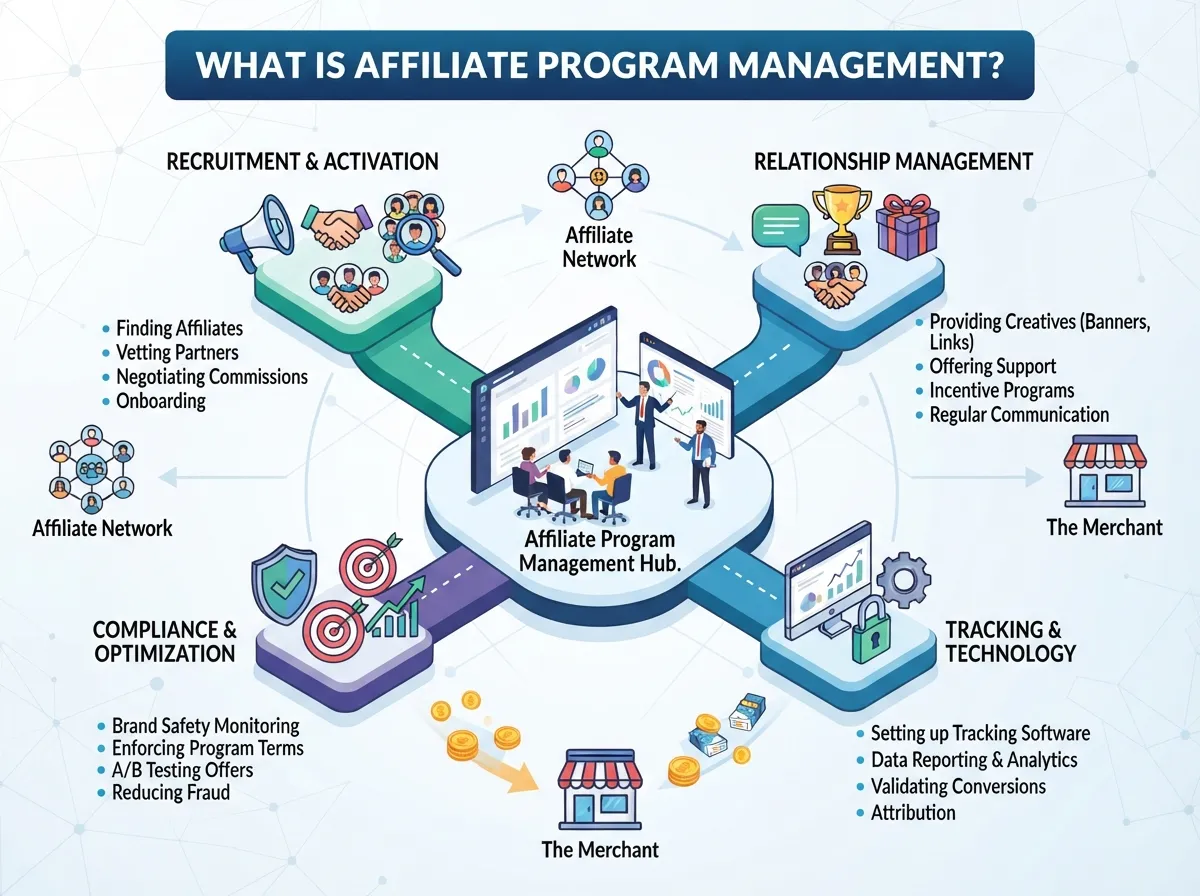
Affiliate program management is the process of overseeing an affiliate marketing program from recruitment and onboarding through tracking, optimization, communication, payment, and performance analysis.
It combines strategic planning with daily affiliate marketing management. A company may need to identify suitable partners, establish commission structures, provide promotional resources, monitor transactions, answer affiliate questions, review performance, and ensure that promotional activities follow company policies.
Good management also requires businesses to think beyond short-term sales. The strongest affiliate programs are built around long-term partnerships. Affiliates who understand a brand and trust its products are more likely to create authentic promotions and continue investing time in the relationship.
Why Affiliate Program Management Matters
An affiliate program can include dozens, hundreds, or even thousands of partners. Without a structured management process, it can become difficult to identify active affiliates, monitor performance, prevent tracking issues, or maintain strong communication.
Effective management creates consistency across the program. Affiliates know how commissions work, where to find promotional resources, how conversions are tracked, and who to contact when they need support.
It also allows businesses to distinguish between activity and actual performance. An affiliate may generate substantial clicks but very few conversions, while another partner may generate less traffic but consistently produce high-value customers. Strong management focuses on the quality and business value of affiliate activity rather than relying only on traffic volume.
Developing an Affiliate Program Management Strategy
An effective affiliate program management strategy should begin with clear business goals. A company might want to increase ecommerce sales, expand into new markets, generate leads, promote specific products, or acquire customers through niche publishers.
Once the goal is defined, the company can establish appropriate commission structures, partner requirements, promotional guidelines, and performance expectations.
Partner selection should also align with the target audience. An affiliate with a large audience is not automatically a valuable partner. Relevance, trust, audience quality, engagement, content quality, and conversion potential can be more important than follower or traffic numbers alone.
Businesses should also create a clear onboarding process. New partners should understand the products, brand positioning, commission rules, tracking system, content guidelines, and available marketing materials. A smooth onboarding experience can help affiliates become productive more quickly.
Businesses looking to expand their B2B partnerships can also explore B2B Affiliate Marketing for additional ideas around building business-focused affiliate relationships.
Choosing Affiliate Program Management Software
Affiliate program management software can simplify many of the operational responsibilities associated with running an affiliate program. Depending on the platform, businesses can use software to manage affiliate accounts, generate tracking links, monitor clicks, record conversions, calculate commissions, and provide performance reports.
The right software should match the size and complexity of the program. A small business may need basic tracking and commission functionality, while a larger organization may require advanced attribution, fraud monitoring, multiple commission structures, automated communications, integrations, and detailed reporting.
Integration is another important consideration. Connecting affiliate software with ecommerce platforms, CRM systems, payment systems, analytics platforms, and other marketing technologies can reduce manual work and create a more consistent flow of data.
Technology should support management rather than replace it. Even the best software cannot build strong relationships with affiliates or determine whether a partner is a good fit for a brand.
Affiliate Partner Management and Relationship Building

Affiliate partner management focuses on maintaining productive relationships with affiliates throughout the life of the program. Communication plays a major role because affiliates need regular information about products, promotions, seasonal campaigns, commission opportunities, and program changes.
Businesses should avoid treating affiliates simply as sources of clicks. High-performing partners often behave more like strategic marketing partners. They may understand a specific audience better than the brand itself and can provide useful feedback about customer preferences, objections, and purchasing behavior.
Recognizing strong partners can also improve retention. Exclusive offers, higher commission tiers, early access to new products, personalized campaigns, and additional promotional resources can encourage valuable affiliates to increase their efforts.
Personalization can be especially useful when managing different types of partners. For example, content publishers may need detailed product information, while influencers may benefit from creative assets and campaign concepts. A broader technology-driven approach to personalized partnerships can be explored through AI-Powered Influencer Marketing Strategy Guide.
Affiliate Program Tracking
Accurate affiliate program tracking is one of the most important parts of program management. Businesses need to know which partner generated a visitor, lead, or purchase and ensure that the appropriate affiliate receives credit.
Tracking can involve unique affiliate links, cookies, referral codes, pixels, server-side tracking, or other attribution technologies. The exact approach depends on the business model and technical environment.
Tracking accuracy matters because affiliate relationships depend heavily on trust. If conversions are missed or commissions are incorrectly assigned, affiliates may become frustrated and reduce their promotional activity.
Businesses should also regularly test their tracking systems. Changes to websites, checkout processes, analytics configurations, privacy settings, or third-party platforms can sometimes affect attribution. Ongoing monitoring helps identify potential problems before they become major issues.
For a deeper look at this area, Affiliate Link Tracking provides additional information about tracking clicks and conversions through affiliate links.
Affiliate Program Administration
Affiliate program administration covers many of the operational tasks required to keep the program functioning smoothly. These responsibilities can include reviewing applications, approving partners, maintaining affiliate profiles, managing commission structures, processing payments, updating promotional materials, and resolving disputes.
Clear policies can make administration easier. Businesses should define requirements around promotional methods, trademark usage, paid advertising, coupon codes, content standards, disclosure, and prohibited activities.
Payment administration is equally important. Affiliates should understand payment schedules, minimum thresholds, commission approval rules, refunds, and other relevant conditions before participating.
A transparent administrative process reduces confusion and allows affiliate managers to spend more time developing strategic partnerships rather than repeatedly resolving avoidable operational issues.
Affiliate Network Management
Businesses that work through affiliate networks also need effective affiliate network management. Networks can provide access to large numbers of potential partners, but having access to many affiliates does not guarantee strong performance.
Program managers should evaluate which network partners are relevant to their business and identify those producing meaningful results. Network data can help businesses compare traffic, conversions, commission costs, and customer quality.
It is also important to maintain direct relationships with valuable affiliates where appropriate. A network can provide the infrastructure for tracking and payments, but relationship building remains an important part of successful affiliate marketing.
Affiliate Performance Management
Affiliate performance management involves evaluating partner activity against business objectives. This means looking beyond clicks and examining conversions, revenue, average order value, customer quality, conversion rates, and profitability.
Performance analysis can reveal different affiliate segments. Some partners may be strong at introducing new customers, while others may perform particularly well with repeat buyers. Some may generate high-value sales, while others contribute large amounts of traffic without significant revenue.
Businesses can use these insights to develop more relevant incentives. High-performing affiliates may qualify for increased commissions or exclusive promotions, while inactive partners may benefit from reactivation campaigns or improved resources.
Performance should also be evaluated over appropriate periods. Seasonal businesses may see major fluctuations throughout the year, so comparing short periods without considering seasonality can produce misleading conclusions.
Measuring Affiliate Program Success
A successful program should have clear KPIs. Revenue is naturally important, but other measurements can provide insight into program health.
Conversion rate shows how effectively affiliate traffic becomes customers. Average order value can reveal the quality of transactions. Customer acquisition cost helps determine whether affiliate sales are economically attractive. New-customer percentage can indicate whether affiliates are expanding the customer base or mainly reaching existing buyers.
Businesses can also examine affiliate activation rates, active affiliate numbers, revenue per affiliate, repeat purchase behavior, and commission-to-revenue ratios.
A data-driven approach makes it easier to identify trends and improve decision-making. Businesses interested in broader measurement principles can also explore Data-Driven Inbound Marketing to understand how data can support marketing performance analysis.
Affiliate Program Optimization
Affiliate program optimization is an ongoing process rather than a one-time task. Even a successful program can become more effective when businesses continually review its commission structure, partner mix, promotional materials, landing pages, and customer journey.
Landing page performance can have a major effect on affiliate results. Affiliates may generate excellent traffic, but if visitors encounter confusing messaging, slow pages, weak product information, or a difficult checkout experience, conversions can suffer.
Commission structures should also be reviewed periodically. A commission that is attractive during an early growth stage may not remain profitable as the business scales. At the same time, overly restrictive commissions can make it difficult to attract strong partners.
Optimization should therefore balance affiliate motivation with business profitability.
Creating an Affiliate Program Growth Strategy
An affiliate program growth strategy should focus on increasing both the number and quality of productive partnerships. Simply recruiting more affiliates may create a larger database without improving revenue.
Growth becomes more sustainable when businesses identify the characteristics of their best partners and use those insights to recruit similar affiliates. For example, if niche publishers consistently generate high-quality customers, the company can prioritize outreach to publishers serving similar audiences.
Expanding into new geographic or product markets can also create opportunities. Existing affiliates may be able to promote additional products, while new partners can introduce the brand to audiences that have not previously been reached.
Exclusive campaigns can further support growth. Giving selected affiliates unique promotions or product bundles can make their offers more compelling while allowing businesses to track campaign performance more clearly.
Improving Communication With Affiliates
Communication should be consistent without becoming excessive. Affiliates need timely updates when products change, promotions launch, commissions are modified, or important policies are introduced.
A strong communication strategy can also include performance insights. Telling affiliates which products are performing well or which promotional materials are converting can help them improve their campaigns.
Educational resources can be particularly valuable for new partners. Product guides, content ideas, creative assets, FAQs, and promotional recommendations can reduce the amount of research affiliates need to perform themselves.
When affiliates feel supported, they are more likely to remain engaged with the program and invest in creating quality promotional content.
Managing Risks and Maintaining Program Quality
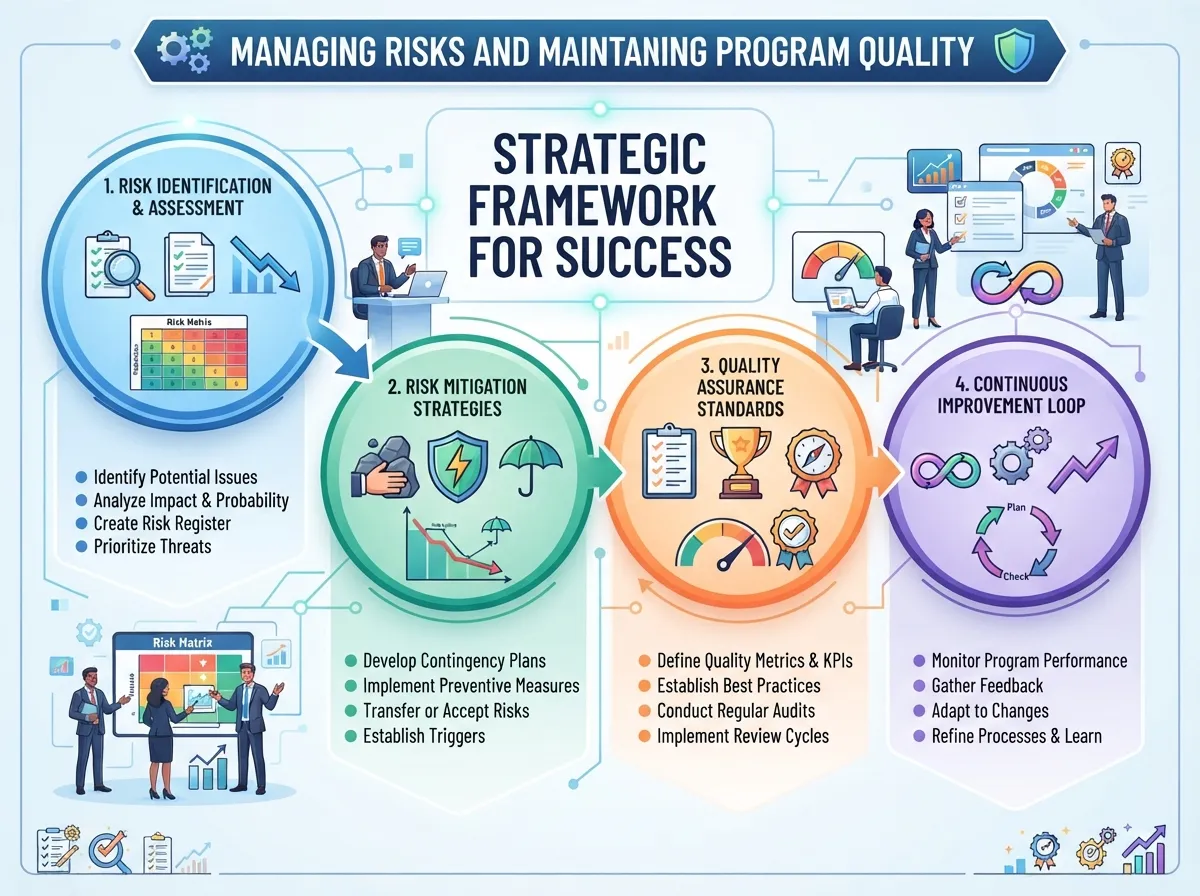
Affiliate programs can create risks when promotional activity is not monitored. Issues may include misleading claims, unauthorized brand bidding, inappropriate advertising methods, fraudulent transactions, cookie manipulation, or promotional content that does not match brand standards.
Clear terms and ongoing monitoring can reduce these risks. Businesses should establish acceptable promotional practices before affiliates begin promoting products and should review unusual activity when necessary.
Quality control is especially important as a program expands. A business may be able to manually review a small number of partners, but larger programs require systematic monitoring and clear processes.
Technology can help identify unusual patterns, but human review remains important when determining whether activity violates program policies.
The Role of Data in Affiliate Program Management
Data gives affiliate managers a clearer understanding of what is working and where opportunities exist. Rather than treating every partner equally, businesses can segment affiliates according to performance, audience type, promotional method, product focus, or geographic market.
Data can also help identify changes in performance. A sudden decline in conversions may indicate a tracking issue, landing page problem, product availability issue, or change in audience behavior.
Over time, these insights can improve strategic decisions about recruitment, commission structures, campaign planning, and resource allocation.
Conclusion
Affiliate program management is essential for turning affiliate marketing from a simple referral arrangement into a structured and scalable acquisition channel. Successful management combines strategic planning, reliable tracking, strong partner relationships, effective administration, performance analysis, and continuous optimization.
The most successful programs focus on quality rather than simply increasing affiliate numbers. Businesses that recruit relevant partners, provide useful resources, maintain accurate tracking, communicate consistently, and reward strong performance can create relationships that generate long-term value.
As affiliate marketing becomes increasingly connected with data, automation, influencer marketing, and broader digital strategies, program managers have more opportunities to improve efficiency and identify profitable partnerships. With a thoughtful affiliate program growth strategy, businesses can build a program that supports both partner success and sustainable business growth.
Frequently Asked Questions
1. What is affiliate program management?
Affiliate program management is the process of overseeing an affiliate marketing program, including partner recruitment, onboarding, communication, tracking, commission management, performance analysis, compliance, and optimization.
2. Why is affiliate program management important?
It helps businesses maintain accurate tracking, develop strong affiliate relationships, control costs, improve partner performance, and identify opportunities for growth. Without effective management, an affiliate program can become difficult to monitor and optimize.
3. What does affiliate program management software do?
Affiliate program management software can help businesses manage affiliate accounts, tracking links, clicks, conversions, commissions, payments, reports, and partner performance. More advanced platforms may also provide automation and integrations with other business systems.
4. How can businesses improve affiliate partner management?
Businesses can improve affiliate partner management through clear communication, useful promotional resources, competitive commissions, personalized support, timely payments, performance incentives, and regular engagement with valuable partners.
5. What should businesses track in an affiliate program?
Important measurements include clicks, conversion rate, sales, revenue, average order value, commission costs, new customers, customer lifetime value, active affiliates, and revenue per partner. The exact KPIs should reflect the program’s business objectives.
6. How does affiliate program tracking work?
Affiliate tracking generally uses unique links, referral codes, cookies, pixels, or other technologies to associate a visitor or conversion with a specific affiliate. The system then records the transaction and determines the appropriate commission.
7. How can affiliate programs be optimized?
Programs can be optimized by improving partner recruitment, commission structures, landing pages, promotional materials, tracking accuracy, communication, and conversion experiences. Regular performance analysis helps identify which areas require attention.
8. What is the difference between affiliate program management and affiliate marketing management?
Affiliate program management focuses specifically on operating and improving the affiliate program, while affiliate marketing management can be broader and include campaign planning, promotional strategies, partner marketing, content, and other affiliate-related activities.
9. How can a business grow its affiliate program?
A business can grow its affiliate program by recruiting relevant partners, developing stronger relationships with existing affiliates, creating competitive incentives, expanding product opportunities, entering new markets, and using performance data to identify successful partner profiles.
10. How can businesses ensure affiliate program profitability?
Businesses can protect profitability by monitoring revenue against commissions and operating costs, evaluating customer quality, optimizing commission structures, improving conversion rates, monitoring promotional activity, and regularly reviewing the performance of individual affiliates and the overall program.