How to Create an Influencer Marketing Strategy That Drives Real Business Growth

A strong Influencer Marketing Strategy helps brands choose the right creators, build trust, shape campaign goals, and turn attention into measurable business growth through consistent execution.
An Influencer Marketing Strategy works best when it is built for people, not platforms. The brands that win do not simply chase reach. They design a clear system that matches the right creator with the right audience, message, and business goal. That is the difference between noise and results. A smart Influencer Marketing Strategy gives your brand structure, direction, and measurable outcomes.
At its core, this work is about trust. People are more likely to listen to a creator they already follow than a brand speaking for itself. That is why an Influencer Marketing Strategy should never begin with posting schedules or vanity metrics. It should begin with audience psychology, brand fit, and the kind of relationship you want to build over time. When those pieces are aligned, your campaign becomes more persuasive and more profitable.
The best campaigns are simple to understand and difficult to forget. They use clear goals, honest storytelling, and a creator voice that feels natural to the audience. This article breaks down the entire process in a practical way so you can build an Influencer Marketing Strategy that supports awareness, engagement, and conversion without wasting budget.
Why Influencer Marketing Works
People do not just buy products. They buy confidence, familiarity, and social proof. That is why an Influencer Marketing Strategy can be so effective. A creator can explain a product in a way that feels personal, useful, and believable. Instead of interrupting the audience, the message arrives inside a relationship they already trust.
This creates a different kind of attention. A brand ad may be seen quickly and forgotten quickly. A creator recommendation can be remembered, discussed, saved, or shared. That is why an Influencer Marketing Strategy often feels more human than traditional media. It moves through conversation rather than interruption.
A strong Influencer Marketing Strategy also helps the brand borrow context from the creator. If the audience already sees the influencer as credible in a specific niche, the brand can enter that trust circle more easily. That makes the message warmer and more persuasive, especially when the creator genuinely understands the product.
Set Clear Goals Before You Spend Money

Every Influencer Marketing Strategy should start with one question: what business result do you want? Without that answer, you may gain attention but miss impact. Goals shape the creators you choose, the content you approve, the timeline you use, and the metrics you track.
Some brands need awareness. Others need traffic, leads, sign-ups, store visits, or direct sales. A good Influencer Marketing Strategy connects each campaign action to a real business objective. If the objective is brand awareness, then reach, impressions, and engagement matter more. If the objective is conversion, then click-through rate, promo-code usage, and purchase data matter more.
The clearest way to build an Influencer Marketing Strategy is to turn broad intentions into measurable outcomes. Do not simply say you want growth. Decide whether growth means more followers, more email subscribers, more qualified traffic, or more customers. That level of clarity makes every later decision easier.
Understand the Audience Before Choosing a Creator
A campaign can only work when the audience feels seen. This is where many brands fail. They choose a popular creator before understanding who they actually need to reach. A thoughtful Influencer Marketing Strategy begins with audience research, not creator excitement.
Study the audience’s age, interests, buying behavior, content preferences, and pain points. Learn what language they use, what problems they are trying to solve, and what kind of proof they trust. When you know that, your Influencer Marketing Strategy becomes easier to shape because you can choose creators who already speak that language naturally.
The best results often come when the creator’s followers overlap with the brand’s ideal customer profile, but the match is deeper than demographics. You want alignment in mindset, values, and content style. That is why the best Influencer Marketing Strategy feels relevant rather than forced.
Build Your Campaign Framework
Before you contact creators, organize the campaign into a simple structure. A solid Influencer Marketing Strategy usually includes four parts: objective, audience, creator selection, and content delivery. Once those are clear, everything else becomes easier to manage.
Here is a simple framework:
| Campaign Stage | Main Purpose | Key Decision |
|---|---|---|
| Objective | Define the business result | Awareness, traffic, leads, or sales |
| Audience | Understand who you want to reach | Pain points, interests, and behavior |
| Creator Fit | Select the right voice | Niche, tone, and audience overlap |
| Content Plan | Decide what will be published | Format, message, and CTA |
| Measurement | Track performance | Reach, clicks, conversions, and retention |
This structure helps turn an Influencer Marketing Strategy into something repeatable. Instead of building each campaign from scratch, you create a process that can scale.
Choose Creators Based on Fit, Not Just Size
A large audience does not automatically mean a good result. One of the most important parts of an Influencer Marketing Strategy is choosing creators who truly fit your brand. Fit matters because it affects trust, message clarity, and conversion potential.
Look at the creator’s niche, tone, engagement pattern, and audience behavior. A smaller creator with a highly relevant community can outperform a larger creator with weak interest. The best Influencer Marketing Strategy evaluates creators through both numbers and intuition. Numbers show reach potential. Intuition shows whether the partnership will feel authentic.
Trust is usually stronger when the creator already talks about related topics or solves similar problems for their followers. That is why a well-matched partnership often feels like a recommendation rather than an ad. The more natural the fit, the stronger the response.
Use a Step-by-Step Outreach Process
Many brands rush the outreach stage and lose momentum before the campaign even begins. A better approach is to build a step-by-step influencer marketing guide inside your workflow. That way, every creator gets a professional, consistent experience.
Start with a short introduction that explains who you are, what you like about their content, and why the partnership makes sense. Then follow with the campaign goal, the expected content format, and the value for the creator. A structured process protects the quality of your Influencer Marketing Strategy and makes it easier for creators to say yes.
When creators feel respected, they are more likely to collaborate seriously. A thoughtful outreach message is part of your brand experience. If your first contact feels generic, the partnership may feel generic too. The strongest campaigns begin with clarity and care.
Select the Right Content Format
Content format shapes how the audience experiences the message. A strong Influencer Marketing Strategy uses the format that best supports the objective. If you want education, long-form video or carousel content may work best. If you want discovery, short-form video may be more powerful. If you want trust, a product demo or honest review may perform well.
Your Influencer Marketing Strategy should not force every creator into the same box. Different creators tell stories differently. Some are strong on storytelling, others on tutorials, others on entertainment. Let the format match the creator’s natural strength. That keeps the content credible.
A good Influencer Marketing Strategy also considers where the audience is most likely to act. If the call to action is immediate, the content should be easy to understand in one sitting. If the campaign is about education, the content should have enough depth to answer questions without feeling too long or too thin.
Match the Message to the Buying Stage
Not every audience member is ready to buy. Some are discovering the brand for the first time. Others are comparing options. Others are nearly ready to purchase. A smart Influencer Marketing Strategy recognizes those stages and tailors the message accordingly.
For awareness, focus on curiosity and relevance. For consideration, focus on proof and usefulness. For conversion, focus on confidence and urgency. This layered approach makes your Influencer Marketing Strategy feel more intelligent because it speaks to people where they are, not where you wish they were.
Creators can help move audiences through the funnel by shaping the message in a way that feels natural. One post may introduce the brand. Another may show the product in use. Another may answer objections. Together, these moments create a journey rather than a single exposure.
Create a Measurement System That Matters
Many campaigns fail because they track the wrong numbers. A strong Influencer Marketing Strategy should measure outcomes that connect directly to the business objective. If the campaign is awareness-focused, look at reach, impressions, saves, and engagement quality. If the campaign is performance-focused, look at clicks, conversions, cost per acquisition, and revenue.
Do not treat every metric equally. Some numbers look impressive but do not translate into business growth. A large number of views means little if nobody clicks, remembers, or buys. A good Influencer Marketing Strategy focuses on meaningful results, not empty visibility.
It also helps to compare creators against one another over time. Some partners may deliver stronger engagement. Others may drive stronger conversion. When you study the differences, your Influencer Marketing Strategy becomes smarter with every campaign.
Keep the Brand Voice Consistent
Creators should sound like themselves, but the brand message still needs consistency. That balance is one of the most important parts of an Influencer Marketing Strategy. The audience should feel the creator’s authenticity without losing the clarity of the brand.
Consistency helps the audience recognize the offer, understand the value, and remember the campaign. If every creator says something different, the message becomes blurry. A good Influencer Marketing Strategy gives creators a clear direction while leaving room for their own style.
This is also where your brand influencer strategy matters. The brand should define what must remain fixed and what can be flexible. Key message points, product benefits, and call-to-action language may need consistency. Tone, humor, pacing, and story style can often remain flexible. That balance preserves both authenticity and clarity.
Build a Relationship, Not a One-Time Post
The most effective campaigns do not treat creators like temporary ad space. They build ongoing partnerships. A long-term Influencer Marketing Strategy is often stronger than a one-off campaign because the audience sees repeated exposure over time.
When a creator talks about a brand more than once, the recommendation feels more believable. It feels like experience rather than promotion. That repetition strengthens recall and trust. Over time, your Influencer Marketing Strategy can evolve from a single campaign into a deeper creator relationship that supports launches, seasonal offers, and community growth.
Long-term partnerships also make planning easier. The creator already understands the brand, the audience, and the product. That reduces friction and improves content quality. The more familiar the partnership becomes, the easier it is to produce content that feels natural and effective.
Use a Smart Content Approval Process
An approval process protects quality, but it should not kill creativity. A practical Influencer Marketing Strategy gives creators enough structure to stay on message while leaving room for expression. Over-controlling the content can make it feel stiff. Under-directing it can make the message unclear.
Start with a brief that covers campaign goals, audience, key messages, do’s and don’ts, deadlines, and required disclosures. Then review the draft or concept with a focus on clarity and alignment. A well-managed Influencer Marketing Strategy does not micromanage every word. It ensures the core message stays true to the plan.
Creators often know how to present a message in a way their audience will respond to. That is why the approval process should support, not replace, their judgment. The strongest Influencer Marketing Strategy respects both the brand’s standards and the creator’s instincts.
Plan the Funnel Around Behavior
A successful campaign should guide people toward a specific action. That action might be visiting a website, joining a mailing list, downloading a guide, or buying a product. A strong Influencer Marketing Strategy makes that path easy to follow.
The best Influencer Marketing Strategy uses clear links, simple offers, and minimal friction. If the audience has to work too hard, they may stop halfway. Every extra click or unclear instruction lowers the chance of conversion. Make the action obvious and the value immediate.
It also helps to align the offer with the creator’s audience behavior. Some audiences respond to discount codes. Others respond to early access, educational value, or community belonging. A strong Influencer Marketing Strategy understands what the audience wants and removes unnecessary resistance.
Use Social Proof at Every Stage
Influencer campaigns work because people trust people. That is social proof in action. A strong Influencer Marketing Strategy should use that principle across every stage of the campaign.
Before the campaign, show why the creator is a good fit. During the campaign, let the creator explain their real experience. After the campaign, share results, testimonials, or user-generated responses. This creates a feedback loop that makes the brand feel more credible. The audience sees that real people have tried, tested, and valued the offer.
This also supports future campaigns. When previous content performs well, it becomes part of the proof that your Influencer Marketing Strategy can work again. Strong proof reduces hesitation and strengthens conversion across the funnel.
Avoid Common Mistakes
One of the biggest mistakes is starting with the creator instead of the strategy. That can lead to mismatched partnerships and weak outcomes. Another common problem is vague goals. If no one knows what success looks like, no one knows whether the campaign worked. A disciplined Influencer Marketing Strategy avoids both.
Another mistake is focusing only on follower count. Audience quality matters more than audience size. A creator with the right niche and strong trust can outperform a much larger but less aligned account. A smart Influencer Marketing Strategy values relevance over vanity.
Teams also make the mistake of asking for too much content too quickly. That can weaken quality and damage the relationship. A good Influencer Marketing Strategy balances ambition with realism. It protects both the creator experience and the brand result.
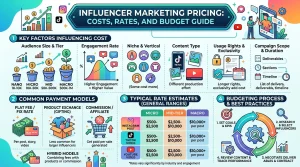
Align Budget With Expected Return
Budget is not just a cost. It is a signal of what you expect to get back. A realistic Influencer Marketing Strategy should match spend with the type of creator, the scope of content, and the size of the objective. A broad awareness campaign may need a different budget structure than a direct-response campaign.
Think in terms of value, not just price. A more expensive creator can still be a better choice if the audience is highly relevant and the content performs well. The best Influencer Marketing Strategy weighs expected reach, audience fit, production quality, and conversion potential together.
It is also smart to reserve part of the budget for testing. Not every partnership will perform the same way. A flexible Influencer Marketing Strategy leaves room to learn, adjust, and invest more in the creators who show stronger results.
Build a Repeatable Influencer Marketing Framework
Once you have tested a few campaigns, capture the process in a repeatable Influencer Marketing framework. This makes future launches faster and more reliable. A framework also helps different team members work from the same system.
Your framework might include creator discovery, outreach templates, briefing documents, content approvals, posting schedules, tracking sheets, and post-campaign analysis. A repeatable Influencer Marketing Strategy reduces guesswork and improves consistency.
The real benefit of a framework is that it turns experience into advantage. Each campaign teaches you something about audience response, creator behavior, and message design. When you document those lessons, your next campaign becomes stronger automatically.
Table of Core Campaign Elements
| Element | What to Decide | Why It Matters |
| Goal | Awareness, traffic, leads, or sales | Keeps the campaign focused |
| Audience | Who you want to reach | Guides creator selection |
| Creator Type | Nano, micro, mid-tier, or macro | Affects trust and reach |
| Content Style | Video, post, story, live, review | Shapes audience response |
| CTA | What action should happen next | Drives conversion |
| Tracking | Links, codes, UTM, analytics | Measures business impact |
This table can help you organize an Influencer Marketing Strategy before launch. When the campaign moves through these decisions in order, execution becomes smoother and results become easier to interpret.
Make Space for Testing and Learning

No campaign is perfect on the first try. The best teams treat each Influencer Marketing Strategy as a learning system. They test creator types, message angles, formats, offers, and calls to action. Then they compare performance and refine the next round.
Testing is important because audiences change. What worked last quarter may not work this quarter. A flexible Influencer Marketing Strategy keeps learning alive by analyzing which content created action and which content only created noise. That insight saves money and improves the next campaign.
Testing also helps uncover hidden opportunities. A creator type you did not expect may outperform the obvious choice. A message you thought was secondary may become the strongest angle. A thoughtful Influencer Marketing Strategy welcomes those discoveries.
Long-Term Success Comes From Consistency
Short-term spikes are useful, but long-term growth comes from repetition, trust, and refinement. A brand that uses the same thoughtful Influencer Marketing Strategy over time will usually see stronger outcomes than one that jumps from trend to trend. Consistency creates memory, and memory creates preference.
This does not mean repeating the same campaign forever. It means keeping a stable system while improving the details. The offer can change, the creators can change, and the formats can change. The underlying Influencer Marketing Strategy should remain clear, measurable, and audience-centered.
When your brand becomes known for thoughtful creator partnerships, people notice. That reputation builds over time and makes every new campaign easier to launch.
Conclusion
A successful Influencer Marketing Strategy is built on clarity, trust, and consistent execution. It starts with real business goals, not hype. It grows through audience understanding, creator fit, strong messaging, and a measurement system that values outcomes over vanity. When brands treat creator partnerships as strategic relationships instead of one-off promotions, they create more than temporary attention. They create meaningful influence that can drive awareness, engagement, and revenue. The best results come from planning carefully, testing honestly, and improving continuously. If your brand wants lasting growth, a well-built Influencer Marketing Strategy is one of the most practical ways to get there.
FAQs
1. What is an Influencer Marketing Strategy?
An Influencer Marketing Strategy is a planned approach for working with creators to reach a target audience, build trust, and achieve a business goal.
2. Why is an Influencer Marketing Strategy important?
It helps brands avoid random posting, choose the right creators, and measure results in a way that supports real business growth.
3. How do I choose the right influencers?
Choose creators whose audience, tone, and niche match your brand goals, product, and customer profile.
4. What makes an Influencer Marketing Strategy effective?
Clear goals, audience fit, authentic content, strong messaging, and accurate measurement make it more effective.
5. How do I measure success?
Track metrics that match your goal, such as reach, clicks, sign-ups, sales, engagement, or return on ad spend.
6. Is a small creator better than a large one?
Not always, but smaller creators often have stronger trust and higher relevance within a specific niche.
7. How do I build an influencer campaign?
Start with a goal, define the audience, choose creators, create a content brief, approve the content, and track results.
8. What should be in an influencer brief?
Include the campaign goal, audience, key message, content format, deadlines, do’s and don’ts, and disclosure requirements.
9. How often should I run campaigns?
That depends on your goals and budget, but many brands do better with consistent campaigns rather than occasional one-time posts.
10. Can Influencer Marketing Strategy work for small businesses?
Yes. Small businesses can benefit a lot by partnering with relevant creators, especially in niche communities where trust matters.