High-Impact Influencer Marketing Customer Acquisition Strategies for Modern Business Growth

Influencer Marketing Customer Acquisition is no longer about chasing attention. It is about building a reliable path from awareness to trust to action. When a brand uses Influencer Marketing Customer Acquisition correctly, it creates a system that attracts the right audience, nurtures interest, and turns that interest into measurable business results.
The strongest programs combine creator credibility, audience fit, clear offers, and a smooth conversion journey. They are guided by intent, not vanity metrics. That is why Influencer Marketing Customer Acquisition works best when the brand understands buyer psychology, picks the right creators, and measures every step from first view to final purchase. In practice, Influencer Marketing Customer Acquisition becomes a long-term growth engine rather than a one-time campaign.
Why this approach works
Modern buyers do not trust broad ads as quickly as they trust recommendations from voices they already follow. A creator can explain a problem in a relatable way, make a product feel less risky, and shorten the time between curiosity and decision. That is the core reason Influencer Marketing Customer Acquisition is so effective.
At the same time, the model respects how people actually buy. Most customers need repeated exposure before they act. They want proof, context, and reassurance. Influencer Marketing Customer Acquisition gives them all three in a format that feels native to the platform instead of forced. This is one of the clearest advantages of Influencer Marketing Customer Acquisition over many traditional acquisition tactics.
Build the foundation first
Before any campaign goes live, the brand must define the audience, the offer, and the conversion goal. Without that foundation, even strong creators can produce weak results. Influencer Marketing Customer Acquisition should always start with a clear customer profile, a specific pain point, and a single desired action.
A helpful question is simple: what should the viewer do after seeing the content? Buy, sign up, book, or request a demo? Once that answer is clear, Influencer Marketing Customer Acquisition becomes easier to shape because the message, content style, and call to action all move in the same direction.
This is also where positioning matters. A premium product needs different proof than an entry-level product. A fast-moving consumer item needs a different story than a service. When the message matches the buyer’s stage, Influencer Marketing Customer Acquisition feels natural instead of promotional.
Choose creators with strategic intent
 The best results do not always come from the biggest accounts. Often, smaller creators generate stronger trust because their audiences are more engaged and more aligned. That is why influencer marketing customer acquisition often performs better when brands evaluate relevance before reach.
A creator should be selected based on audience match, content quality, engagement depth, and brand fit. These influencer marketing strategies help reduce wasted spend and improve response quality. The goal is not just exposure; the goal is customer movement. When creators genuinely understand the niche, customer acquisition through influencers becomes much more efficient.
Brands should also look at how a creator explains products. Do they educate clearly? Do they show use cases? Do they sound believable? Those signals matter because they shape conversion. In many cases, Influencer Marketing Customer Acquisition improves simply by shifting from broad influencers to specialists who speak directly to the target buyer.
Design content around buyer psychology
People act when they feel clarity, relevance, and confidence. That means the content itself must reduce uncertainty. Strong influencer marketing lead generation content often starts with a problem, shows the impact of the problem, and then introduces the product as a practical solution.
The message should not only praise the brand. It should show why the product matters now. Short demonstrations, before-and-after comparisons, and honest reactions all support that process. Well-planned influencer marketing conversion strategies make the audience feel that the decision is simple, timely, and low risk.
This is where human psychology matters. People tend to follow social proof, familiarity, and emotional ease. Influencer Marketing Customer Acquisition works because it taps into those instincts without making the buyer feel pressured. The creator acts as a guide, not just a seller.
Match content format to platform behavior
Different platforms reward different behavior. Short-form video can trigger discovery, while longer captions, live sessions, and carousel posts can drive deeper consideration. A smart creator plan should respect those differences. Influencer Marketing Customer Acquisition becomes stronger when content is shaped for how people already consume media.
For example, educational reels may work well for initial awareness, while story sequences can drive urgency and response. A YouTube integration may help with detailed product understanding. In each case, the objective stays the same, but the path changes. That flexibility is what makes Influencer Marketing Customer Acquisition scalable across multiple channels.
When brands think in platform-native terms, the message feels less like an ad and more like useful content. That feeling matters because it lowers resistance. It also supports more consistent social media customer acquisition by meeting people where they already spend their attention.
Build trust before asking for action
Trust is the bridge between content and conversion. If the audience does not trust the creator, the brand, or the offer, the campaign stalls. That is why every strong Influencer Marketing Customer Acquisition plan includes trust-building assets such as testimonials, demos, comparisons, and transparent explanations.
People want to know what the product does, how it helps, and whether it suits their situation. The best campaigns answer those questions early. They avoid jargon and keep the promise clear. When trust increases, the audience becomes more open to the next step, and Influencer Marketing Customer Acquisition gains momentum.
This is also where timing matters. A soft introduction may work best at first, followed by a stronger offer later. The objective is to guide interest into confidence, then confidence into action. That sequence makes Influencer Marketing Customer Acquisition feel much more natural to the buyer.
Create offers that convert
Even excellent content can underperform if the offer is weak. The landing page, discount, lead magnet, or consultation must align with the creator’s message. The transition from content to offer should feel seamless. This is why Influencer Marketing Customer Acquisition should be planned as a funnel, not as a single post.
A useful approach is to keep the offer simple and the next step obvious. Too many choices slow the buyer down. A focused CTA can dramatically improve outcomes. In many campaigns, the highest returns come from one good offer matched to one highly relevant audience segment.
This is also where the brand can test different pathways. Some audiences respond to a free trial, while others prefer a bundle, a demo, or social proof plus urgency. By testing these paths, Influencer Marketing Customer Acquisition becomes more efficient over time and easier to optimize for revenue.
Use the right partnership model
Not every collaboration needs to be a one-off sponsored post. Long-term relationships often produce better recall and stronger authenticity. Good influencer partnership strategies allow creators to understand the brand well enough to communicate it naturally. That familiarity can lead to more believable content and better conversion outcomes.
A campaign may also benefit from layered partnerships. One creator can introduce the product, another can demonstrate it, and a third can reinforce credibility through a review or tutorial. This combination supports a more complete buying journey. In that sense, Influencer Marketing Customer Acquisition grows stronger when the partnership structure reflects the customer journey.
Brands that treat creators like performance partners rather than content vendors often gain more. The creator becomes invested in the outcome, not just the deliverable. That shift can improve consistency, messaging quality, and audience response.
Micro creators can outperform bigger names
Large followings may look impressive, but smaller communities can be more responsive. Micro influencer marketing tactics work well because these creators often enjoy closer relationships with their audiences. Their recommendations can feel personal, specific, and trustworthy.
For brands with tighter budgets, this can be a major advantage. A network of smaller creators can create diverse touchpoints across multiple segments. That gives the brand more data, more angles, and more opportunities to refine the message. In many industries, Influencer Marketing Customer Acquisition improves when the budget is distributed across several relevant voices instead of concentrated in one large account.
This approach also reduces dependency risk. If one creator underperforms, others may still deliver. The campaign becomes more resilient, and the learning curve becomes faster. That makes Influencer Marketing Customer Acquisition easier to scale with discipline.
Measure what actually matters
Attention is useful, but revenue is the real outcome. Brands should track saves, clicks, sign-ups, add-to-carts, demos, and purchases. These signals show whether the content is moving people forward. influencer marketing ROI should be judged by contribution to pipeline and sales, not by follower count alone.
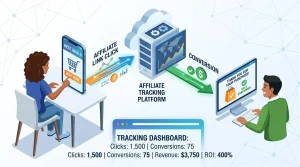
Attribution can be complex, so it helps to define the measurement model before launch. Use unique links, discount codes, landing pages, and UTM parameters where possible. These tools make it easier to see which creator, format, and message produced the best result. That level of clarity is essential for Influencer Marketing Customer Acquisition.
The more carefully a brand measures, the faster it learns. And the faster it learns, the more efficiently it can reallocate budget toward the creators and formats that truly perform. That is how Influencer Marketing Customer Acquisition matures into a dependable growth system.
Table: campaign building blocks
| Building block | Purpose | Why it matters |
|---|---|---|
| Audience fit | Relevance | Aligns the creator with the buyer |
| Message angle | Clarity | Makes the value easy to understand |
| Offer | Conversion | Gives the audience a clear next step |
| Landing page | Experience | Reduces friction after the click |
| Tracking | Optimization | Shows what is working |
Avoid common mistakes
One common mistake is focusing too much on reach and too little on relevance. A second mistake is asking creators to sound robotic. A third is failing to match the content with the offer. Any of these issues can weaken the outcome. Influencer Marketing Customer Acquisition only works well when the campaign feels authentic and focused.
Another mistake is stopping after one post. Most buyers need repeated exposure. They need to see the message more than once, sometimes in more than one format. That is why a sequence of posts usually outperforms a single activation. When brands think in sequences, Influencer Marketing Customer Acquisition becomes more realistic and more effective.
A final mistake is ignoring the post-click experience. If the landing page is slow, confusing, or misaligned with the creator’s promise, conversion drops. Strong campaigns remove that friction. They keep the promise consistent from content to checkout.
A practical action plan
A strong launch plan should begin with one audience, one offer, and a small group of creators. Start by testing different hooks and messages. Then compare engagement quality and conversion quality, not just impressions. Influencer Marketing Customer Acquisition is easier to improve when each variable is isolated.
The next step is refinement. Keep the top-performing creator formats and remove the weak ones. Improve the offer, strengthen the landing page, and sharpen the call to action. Over time, the program becomes more predictable. That predictability is what turns Influencer Marketing Customer Acquisition into a real business asset.
Brands should also document what they learn. Which creator tone worked best? Which pain point got the most response? Which platform produced the highest intent? Those insights will help future campaigns, and they will make the next round of Influencer Marketing Customer Acquisition even stronger.
Additional optimization notes

Influencer marketing ROI becomes easier to justify when every creator has a defined role in the funnel. One creator may be best for awareness, another for proof, and another for conversion. That layered approach keeps the campaign balanced and makes reporting clearer. When the brand looks at performance this way, Influencer Marketing Customer Acquisition no longer feels abstract; it becomes a visible, testable process. In practical terms, Influencer Marketing Customer Acquisition improves fastest when the team learns which message types trigger action and which ones only create attention. That is why Influencer Marketing Customer Acquisition should always be reviewed alongside landing page behavior, offer strength, and audience fit. With that discipline, Influencer Marketing Customer Acquisition can support stable growth without depending on guesswork.
For brands building a wider content engine, micro influencer marketing tactics can be combined with paid amplification, retargeting, and email follow-up. This combination strengthens recall and makes the journey smoother after the first touch.
Conclusion
The brands that win with Influencer Marketing Customer Acquisition are the ones that think beyond promotion. They think in terms of trust, timing, and buyer behavior. They choose creators who can communicate value clearly, and they design campaigns that move people from interest to action without friction.
If the goal is sustainable growth, the best path is to treat Influencer Marketing Customer Acquisition as a repeatable system. Test carefully, measure honestly, and improve continuously. That mindset creates stronger results than chasing trends, and it turns content into customers in a way that feels natural to the audience.
FAQ
1. What makes this approach effective?
It works because it uses trusted voices to create relevance, reduce doubt, and guide the audience toward a clear decision. Influencer Marketing Customer Acquisition is effective when the creator, message, and offer all fit together.
2. Which creators are best for this strategy?
The best creators are usually the ones whose audience matches the brand’s ideal buyer. In many cases, niche creators and specialist voices outperform broad entertainment accounts.
3. How can brands improve results?
Brands can improve results by refining the offer, testing different content angles, improving the landing page, and tracking conversions carefully.
4. Is this only for large companies?
No. Small brands can use it too. In fact, smaller teams often benefit from starting with micro creators, focused messaging, and simple offers.
5. What should be measured first?
Clicks, sign-ups, add-to-carts, demo requests, and purchases are the most useful early indicators. Those metrics show whether attention is turning into action.