Influencer Approvals: Manage Reviews and Brand Consistency

Influencer approvals help brands review creator content, maintain consistent messaging, and address compliance concerns before publication. A clear approval process defines responsibilities, supports effective collaboration, and reduces unnecessary revisions. By combining brand guidelines, structured content reviews, and reliable campaign tracking, businesses can protect brand integrity while preserving the authenticity that makes influencer marketing effective.
Influencer marketing allows brands to connect with audiences through creators who have established trust, credibility, and strong relationships with their followers. However, successful influencer partnerships require more than selecting the right creator and publishing engaging content. Brands also need a reliable approval process to ensure that sponsored posts, videos, captions, and other promotional materials meet campaign expectations before they go live.
Influencer approvals play an important role in maintaining brand consistency, protecting reputation, and ensuring that marketing content communicates the intended message. Without a clear process, brands may encounter inaccurate product claims, inconsistent messaging, missing sponsorship disclosures, or content that does not align with campaign objectives.
An effective approval system creates a shared understanding between brands, influencers, agencies, and other stakeholders. It gives creators the information they need to produce relevant content while allowing brands to review important details before publication. When managed properly, this process supports smoother collaboration, fewer revisions, and more consistent campaign execution.
Understanding Influencer Approvals in Modern Marketing
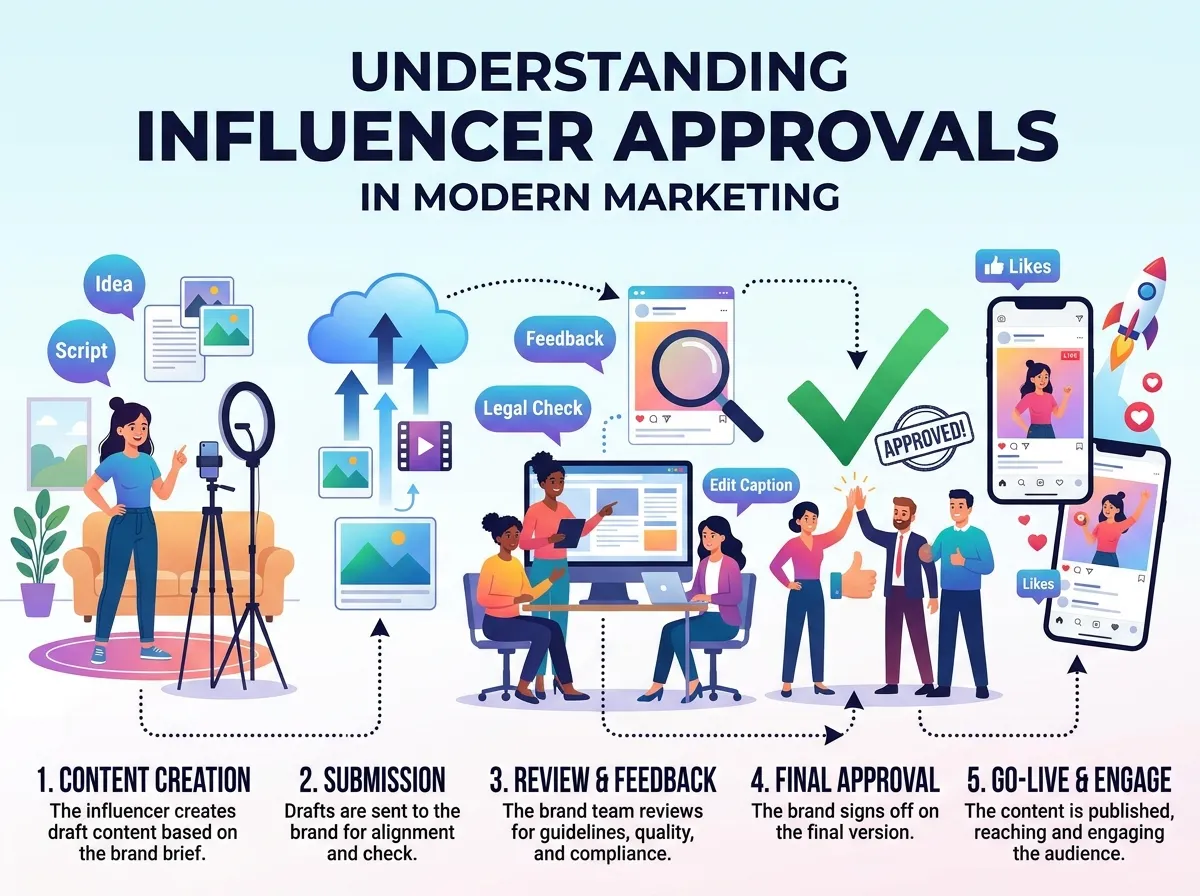
Influencer approvals refer to the process of reviewing and authorizing creator-produced content before it is published as part of a marketing campaign. This may include social media posts, short-form videos, product demonstrations, stories, livestream promotions, captions, hashtags, and sponsored reviews.
The approval process helps brands confirm that content accurately represents their products or services and follows the agreed campaign requirements. It also provides an opportunity to check visual presentation, promotional messages, required disclosures, and any contractual obligations.
However, influencer approvals should not mean controlling every aspect of a creator’s communication. Influencers often build their audiences through a distinctive personality, presentation style, and relationship with their followers. Excessive restrictions can make promotional content feel unnatural and reduce the authenticity that makes influencer marketing effective.
A balanced process establishes clear boundaries while allowing creators to communicate in their own voices. Brands define the essential requirements, and influencers use their experience to produce content that resonates with their audiences.
Understanding the intended influencer audience helps establish this balance. When brands understand the audience’s interests, expectations, and preferred content formats, they can provide more relevant feedback and approve creative work that supports both campaign objectives and audience trust.
Why an Influencer Content Approval Process Matters
A well-organized influencer content approval process helps prevent misunderstandings before they affect a campaign. When expectations are unclear, creators may produce content that overlooks key messages, uses outdated product information, or presents an offer incorrectly. These issues can lead to repeated revisions, delayed publication, and additional costs.
A defined approval process reduces these risks by making responsibilities and expectations clear from the beginning. Influencers understand what they need to deliver, reviewers know what to evaluate, and campaign managers can track the status of each asset.
Brand consistency is another important benefit. Businesses often work with multiple influencers across different platforms, each with a unique communication style. Without shared expectations, promotional content can vary significantly in its descriptions, visual identity, and presentation of the brand.
Approval procedures help maintain consistency without requiring every creator to produce identical content. Brands can protect essential elements, such as product accuracy, logos, key messages, and legal disclosures, while allowing flexibility in storytelling.
The process also supports accountability. Documented feedback and final approvals create a record of what was reviewed and authorized. This can be particularly useful when campaigns involve several departments, external agencies, or multiple rounds of content revisions.
Building an Effective Influencer Campaign Approval Process
An effective influencer campaign approval process begins before content production. Brands should establish the campaign’s purpose, intended audience, key messages, deliverables, publication schedule, and review responsibilities before creators begin developing promotional materials.
Clear expectations reduce the likelihood of major changes late in the campaign. Influencers can understand the required content format, campaign deadlines, product information, and essential brand requirements before investing time in production.
Once the creator submits a draft, the designated reviewer evaluates whether it meets the agreed requirements. The review may cover the caption, video script, visual presentation, product claims, disclosure language, and any required links or promotional codes.
Feedback should be specific and actionable. Rather than asking an influencer to make content more professional, a reviewer can explain which statement is inaccurate, which brand element is missing, or which section needs clarification. This approach helps creators understand exactly what needs to change.
Revisions should then be reviewed against the original requirements. When the necessary changes are complete, the authorized reviewer confirms that the content is approved for publication.
The process should also distinguish between approval and publication. A draft that has received preliminary feedback is not necessarily ready to go live. Final approval should be clearly communicated so that creators do not mistake an informal comment for authorization.
Brands can improve efficiency by using a centralized tracking system to record submissions, reviewer comments, revision status, approval dates, and scheduled publication times. This creates visibility across the campaign and helps prevent content from being published before final authorization.
Influencer Content Review: What Brands Should Evaluate
Influencer content review should focus on the elements that affect accuracy, brand reputation, campaign performance, and compliance. Reviewing every creative detail equally can slow production and unnecessarily limit the creator’s freedom.
The first consideration is message accuracy. Product descriptions, service information, prices, promotional offers, and performance claims should reflect verified information. If a creator is discussing product benefits, the content should not promise results that the brand cannot reasonably substantiate.
Visual consistency is also important. Images and videos should represent the product correctly and follow any agreed requirements involving logos, packaging, colors, or other recognizable brand assets. However, the creator’s own aesthetic does not necessarily need to match every element of the brand’s standard advertising.
Reviewers should also examine tone and audience relevance. Content should communicate the campaign message in a way that suits the platform and the creator’s established audience. A caption written for a professional business audience may require a different approach from a short-form video aimed at entertainment-focused viewers.
Finally, the review should consider required disclosures, usage permissions, and platform-specific requirements. A post can look polished and communicate the right message while still containing an important compliance issue.
A consistent review process helps brands distinguish between essential corrections and subjective preferences. This keeps revisions focused and allows campaigns to move forward without unnecessary delays.
Brand Approval Guidelines and Creative Freedom
Brand approval guidelines establish the standards that influencers should follow when creating promotional content. These guidelines provide a reference point for creative decisions and help ensure that different campaign assets communicate a coherent brand identity.
Effective guidelines generally explain the brand’s preferred tone, visual identity, product terminology, key messages, and restrictions on unsupported claims. They may also specify how creators should handle promotional codes, links, hashtags, and sponsorship disclosures.
The most useful guidelines distinguish between mandatory requirements and creative recommendations. Mandatory requirements may include accurate product information, legal disclosures, or contractual restrictions. Recommendations may cover storytelling approaches, preferred imagery, or optional ways to introduce the product.
This distinction prevents small creative differences from becoming unnecessary approval barriers. Influencers understand which elements cannot be changed and where they have room to experiment.
Guidelines should also reflect the actual campaign rather than relying exclusively on a generic brand document. A product launch, long-term partnership, and seasonal promotion may have different objectives and communication needs.
When brands establish these expectations during influencer marketing campaign planning, creators can incorporate them into their concepts from the beginning. This makes the review process more predictable and reduces the chance of extensive revisions after production.
Influencer Marketing Compliance and Sponsored Content Approval
Influencer marketing compliance is an essential part of the approval process. Sponsored content can create legal and reputational risks when audiences cannot clearly understand that a creator has a commercial relationship with a brand or when promotional claims are misleading.
Depending on the applicable laws, platform rules, and campaign arrangements, influencers may need to disclose payments, gifted products, affiliate relationships, or other material connections. Disclosures should be clear, noticeable, and appropriate for the content format.
Brands should not assume that an influencer will automatically understand every applicable requirement. They should communicate the relevant disclosure expectations, review the proposed content, and confirm that the final published version meets the agreed requirements.
Product claims require similar attention. Statements about health benefits, financial outcomes, product effectiveness, or other consequential matters may be subject to specific advertising rules. Reviewers should ensure that claims are accurate and supported by appropriate evidence rather than relying solely on promotional language supplied by a creator.
Platform requirements can also vary. A disclosure approach suitable for a caption may not be sufficient for a video in which viewers can easily miss the description. The placement and presentation of disclosures should match the format and applicable requirements.
For campaigns operating across multiple countries, brands may need additional review to account for differences in advertising regulations and consumer protection standards. When a campaign involves complex or high-risk claims, qualified legal or compliance professionals should review the relevant content.
A strong approval process does not eliminate every possible risk, but it provides a structured way to identify and address issues before publication.
Influencer Partnership Guidelines for Clear Expectations
Influencer partnership guidelines help establish how brands and creators will work together throughout a campaign. These expectations should be agreed upon before production begins, particularly when partnerships involve multiple deliverables, paid promotions, exclusivity, or extended content usage.
The agreement should clarify the content being produced, submission deadlines, review periods, expected publication dates, and the number of revisions included in the arrangement. It should also identify the people authorized to approve content and explain how changes will be communicated.
Usage rights deserve particular attention. Permission to publish content on an influencer’s own account does not automatically mean that a brand can reuse it in advertisements, on its website, or across other marketing channels. The agreement should specify the permitted uses, duration, platforms, and any additional authorization required.
Partnership guidelines should also explain how unexpected changes will be handled. Product availability, campaign timing, promotional offers, and platform requirements may change while content is being prepared. A documented process helps both parties respond without confusion.
Clear expectations encourage more productive relationships because creators know what the brand needs and brands understand the scope of the influencer’s responsibilities.
A collaborative approach is especially valuable in influencer collaboration marketing, where both parties contribute ideas and creative expertise. When communication is clear, approval becomes a shared quality-control process rather than a source of friction.
Social Media Content Approval Across Different Platforms

Social media content approval requires attention to the characteristics of each platform. A single campaign may include Instagram posts, TikTok videos, YouTube integrations, Facebook content, or other formats, each with different presentation styles and publishing requirements.
Short-form video often relies on quick openings, concise messages, and visual demonstrations. Reviewers should therefore evaluate whether the essential campaign information is communicated naturally within the available time. Long explanations that work in a written article may be less effective in a short video.
Image-based posts may require closer attention to visual composition, captions, product visibility, and text included in the creative. Stories and temporary content may need a different review process because they can be published in a sequence and disappear after a limited period.
Platform-specific disclosure tools and advertising policies should also be considered. Brands and creators should confirm that required labels, disclosures, links, and other promotional elements are correctly included.
When the same campaign runs across several channels, the approval process should preserve the core message while allowing suitable adaptations. Requiring identical creative assets everywhere can reduce relevance and make content feel disconnected from the platform’s audience.
The goal is to maintain accuracy and brand consistency without ignoring the format, user experience, and audience expectations associated with each channel.
Influencer Campaign Management and Approval Tracking
Influencer campaign management becomes more complicated as the number of creators and content assets increases. Tracking approvals through scattered emails and direct messages can make it difficult to determine which drafts are current, who has reviewed them, and which assets are ready to publish.
A centralized workflow provides a clearer view of campaign progress. Each content asset can have a defined status, such as awaiting submission, under review, revisions requested, approved, or published. These labels make it easier for campaign managers to identify delays and communicate next steps.
A shared dashboard or project management platform can record submission dates, assigned reviewers, feedback, final approval, and publication links. This creates a consistent record without requiring every stakeholder to search through previous conversations.
Approval deadlines should be realistic and agreed upon in advance. When reviewers take too long to respond, influencers may struggle to meet publication dates. When creators submit content late, reviewers may not have enough time to identify important issues.
Brands should also establish a process for urgent corrections. If a published post contains inaccurate information or a missing disclosure, the team should know who will contact the creator, what correction is required, and how quickly the issue must be addressed.
Effective tracking supports a smoother campaign experience and makes it easier to evaluate recurring problems, such as unclear briefs, repeated revisions, or approval bottlenecks.
Measuring the Effectiveness of Influencer Approvals
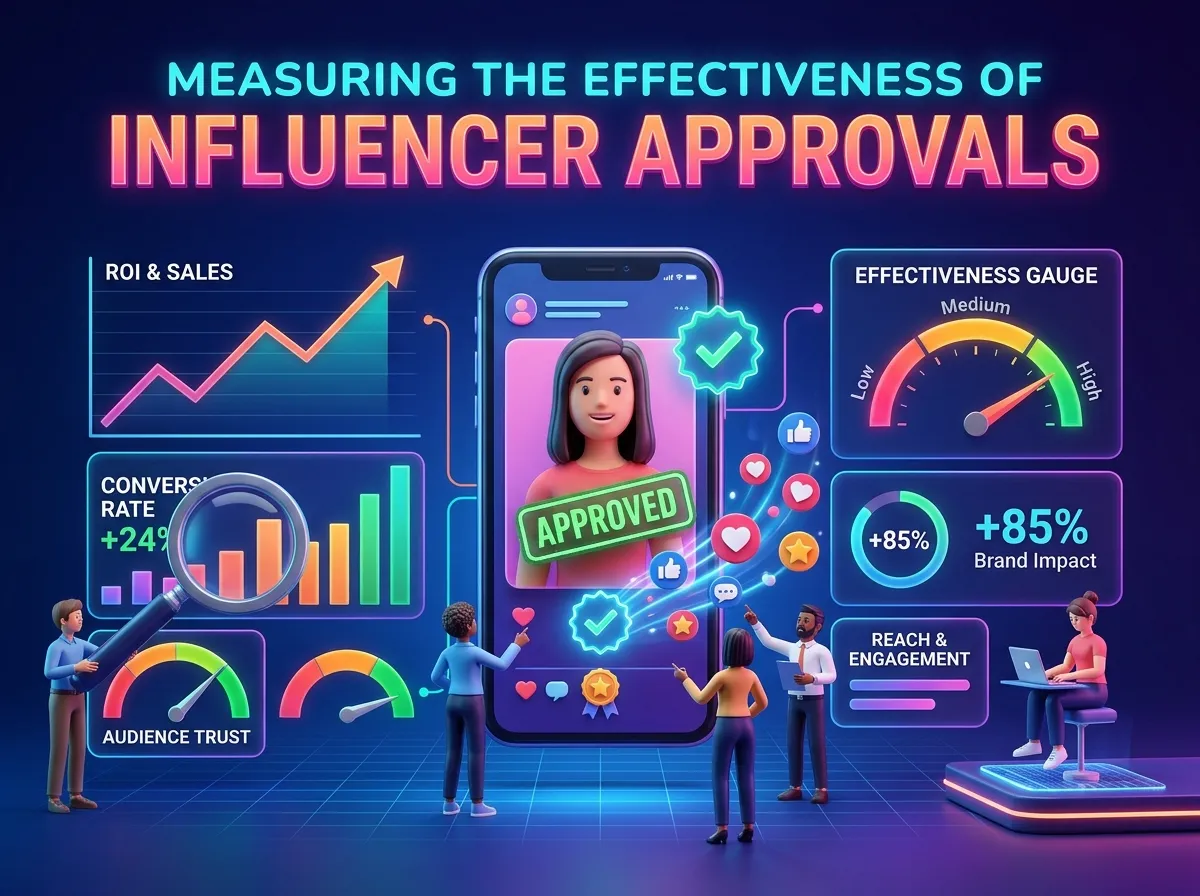
The effectiveness of an influencer approval process can be evaluated through both operational and campaign-level measurements. The objective is not simply to approve content faster, but to maintain quality while allowing creators to deliver on schedule.
Approval turnaround time is one useful indicator. It measures how long reviewers take to respond to submitted content and can reveal delays that affect publication schedules.
Revision frequency provides another perspective. If most assets require multiple rounds of substantial changes, the campaign brief or brand guidelines may not be sufficiently clear. However, a small number of revisions is not automatically a sign of success if important problems are being overlooked.
On-time publication rates can help determine whether the approval workflow supports campaign schedules. Teams can also monitor the frequency of post-publication corrections, disclosure issues, and other avoidable errors.
Campaign performance should be evaluated separately. Engagement, reach, clicks, conversions, and other relevant outcomes help establish whether approved content contributes to the campaign’s objectives. Strong approval performance does not guarantee strong marketing results, but an organized process creates better conditions for consistent execution.
Audience response also deserves attention. Content that feels natural and relevant may encourage stronger participation than material that appears overly scripted. Businesses can use audience engagement strategies to understand how useful, relevant communication can encourage meaningful interactions with their target audiences.
By reviewing these indicators together, brands can improve their approval workflow without sacrificing creative quality or audience trust.
Conclusion
Influencer approvals are an important part of successful influencer marketing because they help brands maintain accuracy, protect their reputation, and coordinate content production across multiple creators and platforms. A clear approval process defines expectations, supports compliance, and reduces avoidable delays before content reaches its audience.
The strongest systems combine practical brand guidelines with focused content reviews, clear partnership agreements, centralized tracking, and timely communication. They also respect the creator’s individual voice, allowing promotional content to remain authentic while meeting essential campaign requirements.
By treating approvals as part of the broader influencer campaign management process, businesses can build stronger partnerships, improve operational efficiency, and deliver more consistent marketing experiences. A thoughtful approach makes it easier to protect brand standards while creating content that genuinely connects with the intended audience.
Frequently Asked Questions
1. What are influencer approvals?
Influencer approvals are the processes brands use to review and authorize creator-produced content before it is published as part of a marketing campaign. They help confirm accuracy, brand alignment, and compliance with agreed requirements.
2. Why is an influencer content approval process important?
It reduces misunderstandings, prevents avoidable content errors, supports campaign consistency, and helps ensure that promotional materials meet the brand’s expectations before publication.
3. What should brands review in influencer content?
Brands should review factual accuracy, product claims, required disclosures, visual brand elements, campaign messages, relevant links, and contractual requirements. Feedback should focus on essential corrections rather than unnecessary creative restrictions.
4. How can brands speed up influencer campaign approval?
Brands can improve turnaround times by providing clear briefs, assigning specific reviewers, setting realistic deadlines, using centralized tracking, and giving specific feedback in a single coordinated review whenever possible.
5. What are brand approval guidelines?
Brand approval guidelines explain the requirements influencers should follow when creating promotional content. They may cover brand voice, visual identity, product descriptions, key messages, disclosures, and restrictions on unsupported claims.
6. Do all influencer posts need brand approval?
Not necessarily. Approval requirements depend on the partnership agreement, campaign objectives, content risks, and brand policies. Some campaigns require approval of every asset, while others allow creators greater independence within agreed boundaries.
7. How does influencer marketing compliance affect approvals?
Compliance reviews help identify missing sponsorship disclosures, misleading claims, and other potential violations of applicable advertising laws or platform policies before content is published.
8. What is sponsored content approval?
Sponsored content approval is the review and authorization of promotional material created in exchange for payment, products, services, or another commercial benefit. It helps ensure that the content meets campaign requirements and includes appropriate disclosures.
9. How can brands manage approvals for multiple influencers?
Brands can use a centralized dashboard or project management platform to track content submissions, reviewer feedback, revision status, approval dates, and publication schedules for each influencer.
10. How can businesses measure influencer approval effectiveness?
Businesses can monitor approval turnaround time, revision frequency, on-time publication, post-publication corrections, and compliance issues. Campaign metrics such as engagement and conversions should also be evaluated to understand the performance of the approved content.