Influencer Usage Rights: Managing Content Permissions & Licensing
Influencer Usage Rights determine how brands can use, reproduce, modify, distribute, and promote content created by influencers. A successful influencer campaign involves more than creating engaging posts; brands also need clear agreements covering content permissions, licensing periods, platforms, paid advertising, ownership, and copyright. Understanding these rights helps brands and creators establish clearer expectations, reduce disputes, and make better use of influencer-generated content across marketing channels.
What Are Influencer Usage Rights?
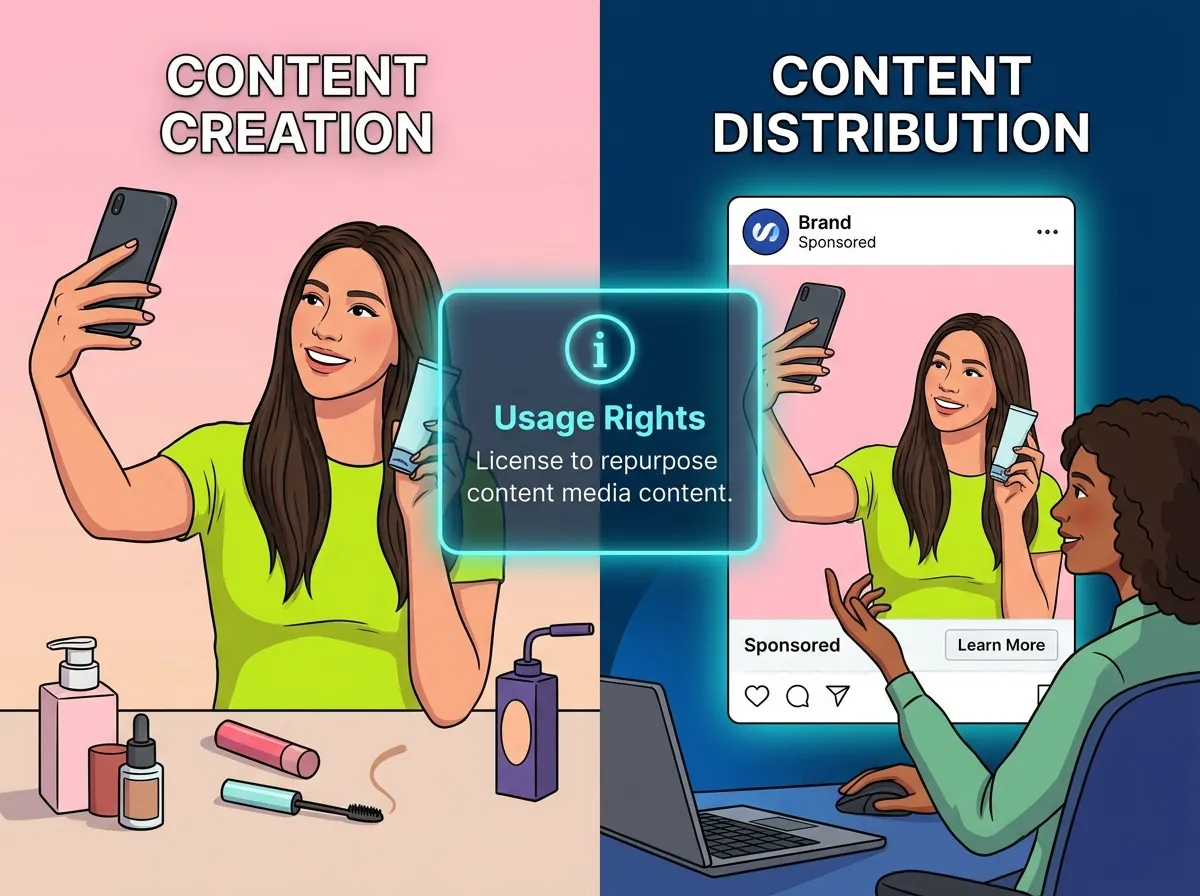
Influencer Usage Rights refer to the permissions that determine how a brand can use content created by an influencer. This can include photos, videos, reviews, testimonials, social media posts, short-form videos, livestream recordings, blog content, and other creative assets produced as part of a collaboration.
When an influencer creates content for a campaign, the brand may want to use that content beyond the influencer’s original social media post. For example, a brand might want to place a video on its website, use a photograph in an email campaign, include a creator’s video in paid advertising, or share the content across another social platform.
These activities may require specific permission depending on the agreement between the brand and influencer. Simply paying an influencer to create or publish content does not automatically mean the brand has unlimited rights to reuse everything they create.
Clear usage terms therefore form an important part of professional influencer marketing.
Why Influencer Content Usage Rights Matter
Influencer Content Usage Rights become especially important when a brand plans to reuse creator content across multiple channels. Influencer-generated content can have value long after the original campaign ends, making it attractive for websites, advertisements, social media campaigns, email marketing, product pages, and other promotional activities.
Without clear permissions, however, a brand may not know whether it can continue using the content after a campaign ends. Questions can arise around how long the content can be used, where it can appear, whether it can be edited, and whether it can be used for commercial advertising.
For influencers, usage rights are equally important. Creators invest time, creativity, equipment, production resources, and personal branding into their content. They need to understand how their work may be used and whether the agreed compensation reflects those permissions.
A clear agreement protects the expectations of both parties and creates a more transparent foundation for the collaboration.
Influencer Licensing Rights
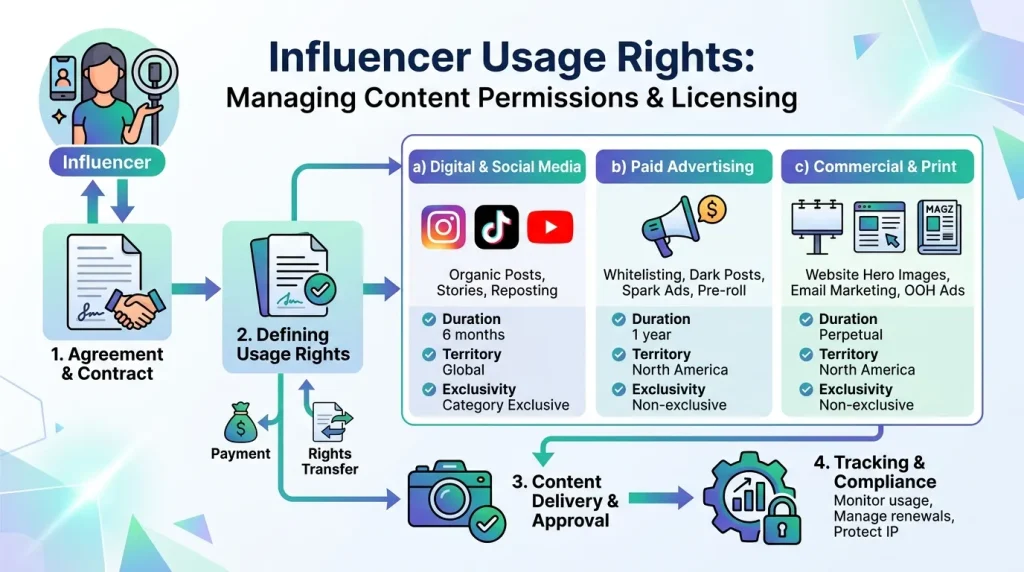
Influencer Licensing Rights determine the scope under which a brand receives permission to use influencer-created content. Licensing can be limited by time, geography, media channel, campaign purpose, or other conditions.
For example, a brand may receive permission to use a creator’s video for six months on social media but not for television advertising. Another agreement may allow the brand to use the content for paid social advertising within a particular market for a specified period.
These distinctions matter because content usage can expand significantly after publication. A single influencer video might initially be created for an organic social post but later become valuable as an advertising asset.
Licensing terms should therefore reflect the intended use of the content. The broader the usage, the more important it becomes to define the rights precisely.
Influencer Content Licensing and Campaign Value
Influencer Content Licensing allows brands to obtain permission to reuse creator content beyond its original publication. This can increase the value of influencer campaigns because high-performing content can continue contributing to marketing efforts.
For example, an influencer may create a product demonstration that performs well organically. The brand may then want to use that same video in paid social advertising. If paid advertising rights were included in the original agreement, the transition can be much easier.
Licensing can also cover content created specifically for a brand rather than content posted directly on the influencer’s account. In such cases, the agreement should explain where the brand can publish the material and how it can be adapted.
The licensing arrangement should match the campaign’s intended lifespan and marketing objectives rather than relying on vague statements about “content usage.”
Social Media Content Usage Rights
Social Media Content Usage Rights define how influencer content can be used across social platforms. This is increasingly important because content created for one platform may later be useful on another.
A creator might publish a short video on Instagram, for example, while the brand may want to reuse an edited version on TikTok, YouTube Shorts, Facebook, or another channel. Whether that reuse is permitted depends on the agreement.
The agreement can specify which platforms are included, whether cross-platform publishing is permitted, and whether the brand can make edits or create shorter versions of the original content.
It is also useful to distinguish between organic use and paid use. A brand may have permission to repost a creator’s content organically while requiring additional permission for paid advertising.
Clear definitions help prevent assumptions about what “social media usage” actually includes.
Influencer Agreement Usage Rights
Influencer Agreement Usage Rights should be clearly documented before campaign content is created or published. The agreement acts as the reference point for both parties if questions arise later.
A professional influencer agreement may address the duration of usage, approved platforms, geographic limitations, advertising rights, editing permissions, ownership, exclusivity, attribution, and other relevant conditions.
The agreement should also describe what happens when the usage period ends. Depending on the arrangement, the brand may need to remove the content, stop using it in advertising, or discontinue certain forms of distribution.
The more valuable or long-lasting the campaign is expected to be, the more carefully these terms should be defined.
Influencer Content Ownership

Influencer Content Ownership and usage rights are related but not necessarily identical. Ownership determines who holds rights to the underlying creative work, while usage rights determine what another party is permitted to do with that work.
An influencer may retain ownership while giving a brand a broad license to use the content. Alternatively, an agreement may transfer certain ownership rights to the brand.
The distinction is important because brands should not assume that receiving a content file means they automatically own all rights associated with it.
Ownership arrangements can vary depending on the campaign, content type, compensation, and negotiated terms. Both sides should understand whether the arrangement involves ownership transfer, licensing, or a combination of different permissions.
Brand Influencer Content Rights
Brand Influencer Content Rights become particularly important when brands want to build a reusable library of creator-generated assets. High-quality influencer content can become a valuable part of a brand’s broader marketing strategy.
A brand might use creator content on product pages, newsletters, social media profiles, landing pages, advertisements, presentations, or other promotional materials. Each use should fall within the rights granted under the agreement.
Brands should also consider whether the content includes third-party elements such as music, logos, locations, artwork, products, or other copyrighted materials. An influencer’s permission alone may not resolve every third-party rights issue.
This is one reason why content rights should be considered as part of campaign planning rather than treated as an issue after content has already been created.
Influencer Copyright Permissions
Influencer Copyright Permissions help determine whether a brand has the legal permission to reproduce, distribute, modify, or publicly display creator-generated material.
Copyright rules vary by jurisdiction, and specific legal outcomes depend on the agreement and circumstances. A contract should therefore clearly describe the permissions being granted rather than relying on assumptions about who owns the content.
Brands may also need to consider copyright issues involving background music, stock footage, photographs, graphics, or other third-party assets included in influencer content. A creator may have obtained permission to use an element on their own social media account without having the right to transfer broader commercial usage to a brand.
For larger campaigns, brands may benefit from having their agreements reviewed by qualified legal professionals, particularly when content will be distributed extensively or used for paid advertising.
Paid Media Influencer Content Rights
Paid Media Influencer Content Rights determine whether influencer-created content can be used in advertising campaigns. This area deserves particular attention because paid media can significantly expand the reach and commercial use of creator content.
A brand may want to promote an influencer’s original video as a sponsored advertisement, use the creator’s content in a paid social campaign, or incorporate the material into performance marketing campaigns.
These uses should be explicitly addressed in the agreement. The brand may need permission to edit the content, add advertising elements, resize the creative, use it across specific platforms, or run it for a particular period.
Paid usage can also involve platform-specific advertising systems and creator authorization processes. The agreement should distinguish between simply reposting content and using it as a paid advertising asset.
When the campaign involves paid amplification, usage rights should be discussed before the content is produced so that compensation and permissions can be aligned.
Influencer Content Rights Management
Influencer Content Rights Management involves organizing and monitoring the permissions associated with creator-generated assets throughout their lifecycle.
A brand working with multiple influencers may have hundreds of content assets, each with different usage periods and restrictions. One creator might allow six months of paid advertising, while another may grant twelve months of organic social usage.
Maintaining accurate records can help marketing teams avoid accidentally using content after its license has expired. Information such as creator name, content asset, agreement date, approved platforms, usage duration, geographic restrictions, paid media permissions, and expiration date can be useful for internal tracking.
Rights management also becomes important when campaigns are reused. A piece of content that was approved for one campaign may not automatically be cleared for a completely different campaign.
Organized rights information allows brands to make better decisions about which creator assets can safely be reused.
Influencer Usage Rights and Brand Awareness
Influencer content can contribute significantly to brand visibility when it reaches audiences that already trust or follow a creator. However, the long-term value of that content can increase when brands have appropriate permissions to reuse high-performing assets.
For example, an influencer campaign may initially generate awareness through the creator’s audience. The brand can potentially extend that exposure through approved website placements, organic social posts, email marketing, or paid media.
This creates a connection between influencer content and broader brand marketing. The effectiveness of such a strategy depends on factors such as audience relevance, content quality, campaign objectives, and the rights granted to the brand.
A broader understanding of Influencer Marketing Brand Awareness can help marketers see how creator partnerships fit into wider brand visibility efforts.
Usage Rights Within Influencer Collaboration Marketing
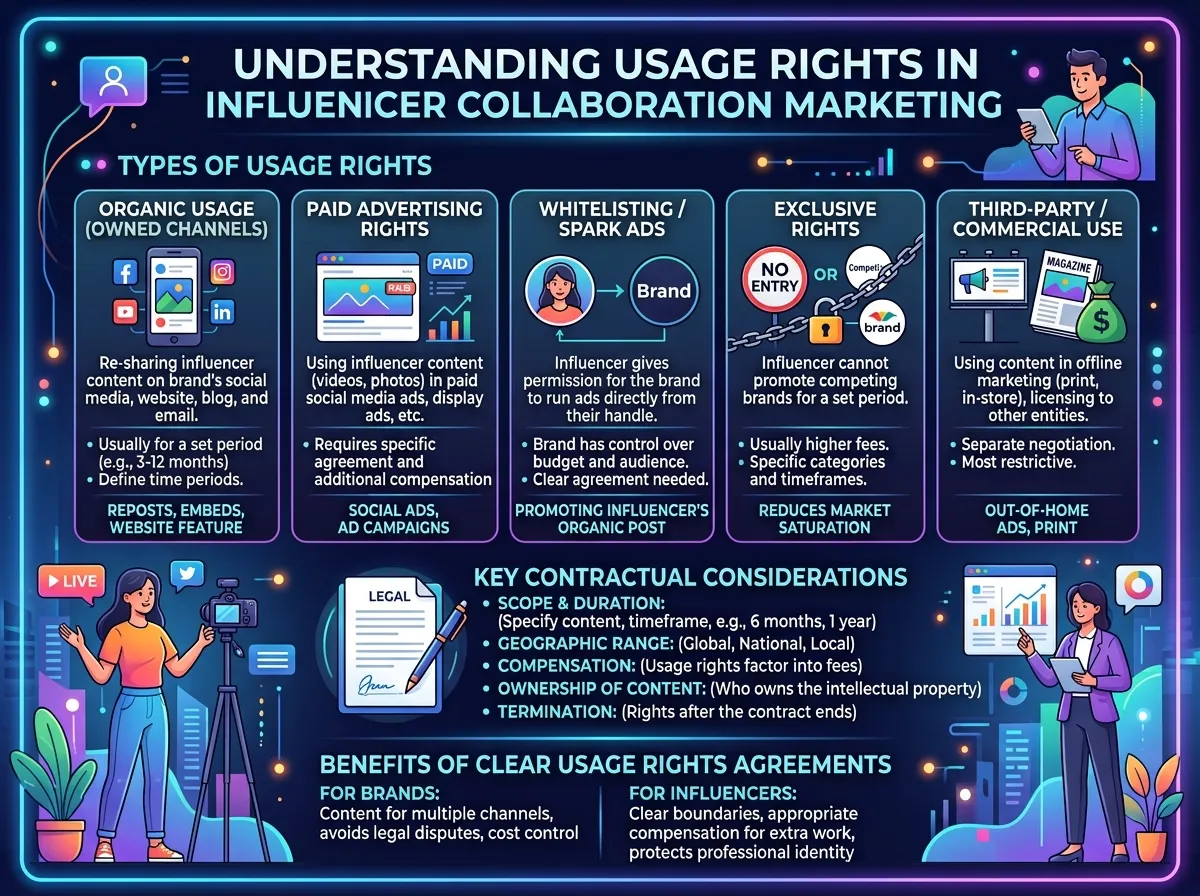
Influencer campaigns often involve more than a single sponsored post. Influencer Collaboration Marketing can include product launches, long-term ambassador relationships, content series, events, co-created products, and other collaborative activities.
As the relationship becomes more extensive, content rights can become more complex. A long-term collaboration may produce a large collection of photographs and videos that the brand wants to reuse throughout the year.
The agreement should therefore reflect the actual structure of the collaboration. A short campaign may require limited rights, while a long-term ambassador program may require a more comprehensive licensing arrangement.
Understanding how influencer partnerships work can also help marketers establish appropriate expectations from the beginning. How Influencer Marketing Works provides additional context about the broader influencer marketing process.
Content Rights and Campaign Repurposing
One of the major benefits of clearly defined usage rights is the ability to repurpose successful influencer content. A creator’s video may originally be developed for one social platform but later become useful in other marketing channels.
Repurposing can involve creating shorter versions, extracting images, using quotes, embedding videos on websites, or incorporating creator material into advertising. However, the brand should confirm that these activities fall within the agreed permissions.
Repurposing should also respect the original context of the content. Excessive editing or changes to the creator’s message can affect how the influencer is represented. If the agreement includes editing rights, brands should still consider maintaining consistency with the creator’s original communication.
Clear boundaries can help brands maximize content value without creating unnecessary friction with creators.
Influencer Usage Rights for Events and Promotions
Influencer-generated content can also play an important role in event marketing. Creators may produce promotional videos, event coverage, interviews, behind-the-scenes content, or attendee-focused social posts.
When such content is reused by an event organizer or sponsoring brand, usage rights become important. The parties should understand whether event footage can be reused after the event, whether it can be included in future promotions, and whether the content can be used in paid campaigns.
Influencer campaigns can work particularly well when integrated with broader event promotion activities. For example, Event Influencer Promotion explores how influencer activity can support event awareness and audience engagement.
The same rights principles apply: the intended content uses should be discussed before publication rather than assumed afterward.
Building Better Relationships Through Clear Content Rights
Clear usage rights can improve relationships between brands and influencers because both parties understand what is expected from the collaboration.
Creators are more likely to feel comfortable when brands clearly communicate how their work will be used. Brands also benefit because they can plan campaigns with greater certainty and avoid discovering limitations after investing in content production.
Transparency around licensing and compensation can be especially valuable when a brand wants extensive commercial rights. If the brand expects to use creator content across multiple platforms for an extended period, those requirements should be discussed openly.
A professional approach to usage rights therefore supports not only legal clarity but also better working relationships.
Conclusion
Influencer Usage Rights are an essential part of modern influencer marketing because creator content can have value far beyond its original publication. Brands may want to reuse influencer content across websites, social media, email campaigns, paid advertising, product pages, events, and other marketing channels.
Clear agreements covering Influencer Content Usage Rights, Influencer Licensing Rights, Influencer Content Licensing, Social Media Content Usage Rights, and Paid Media Influencer Content Rights can help both brands and creators understand how content may be used.
At the same time, businesses should distinguish between content ownership and licensing permissions, maintain organized rights information, and consider third-party copyright issues when relevant. A well-defined approach to Influencer Content Rights Management gives brands greater confidence when repurposing creator content while helping influencers maintain clear expectations around their creative work.
Frequently Asked Questions
1. What are Influencer Usage Rights?
Influencer Usage Rights are permissions that determine how a brand can use content created by an influencer. These permissions can cover platforms, advertising, duration, geographic areas, editing, distribution, and other forms of content use.
2. Does paying an influencer give a brand ownership of their content?
Not necessarily. Payment for an influencer campaign does not automatically mean the brand owns every piece of content created by the influencer. Ownership and licensing terms should be clearly addressed in the agreement.
3. What is the difference between ownership and usage rights?
Ownership generally concerns who holds rights to the creative work, while usage rights describe what another party is permitted to do with that work. An influencer can retain ownership while granting a brand a license to use the content.
4. What are Influencer Licensing Rights?
Influencer Licensing Rights define the conditions under which a brand can use influencer-created content. A license may specify duration, platforms, geographic markets, advertising use, editing permissions, and other limitations.
5. Can brands use influencer content in paid advertisements?
Brands can use influencer content in paid advertising when the relevant advertising or paid media rights have been granted. The agreement should clearly state whether paid usage is included and identify applicable platforms and time periods.
6. How long should influencer content usage rights last?
There is no single duration that applies to every campaign. The appropriate period depends on the campaign objectives, content value, advertising plans, and agreement between the brand and influencer.
7. Can a brand edit influencer content?
Editing rights depend on the agreement. If the brand has permission to modify the content, the permitted types of editing should ideally be understood by both parties. Significant changes may also affect how the creator is represented.
8. Why are copyright permissions important in influencer marketing?
Copyright permissions help establish whether content can legally be reproduced, distributed, modified, or commercially used. Brands should also consider third-party elements such as music, images, graphics, and footage included in creator content.
9. What is Influencer Content Rights Management?
Influencer Content Rights Management is the process of tracking and managing permissions associated with creator content. It can include recording usage periods, platforms, licensing terms, paid media rights, restrictions, and expiration dates.
10. Why should influencer usage rights be included in the contract?
Including usage rights in the contract creates clearer expectations for both parties. It helps the brand understand how it can use the content and helps the influencer understand the scope, duration, and commercial purpose of the permissions being granted.