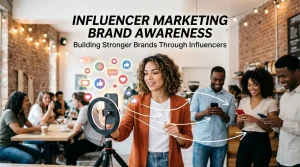
Influencer Marketing Brand Awareness: Building Stronger Brands Through Influencers
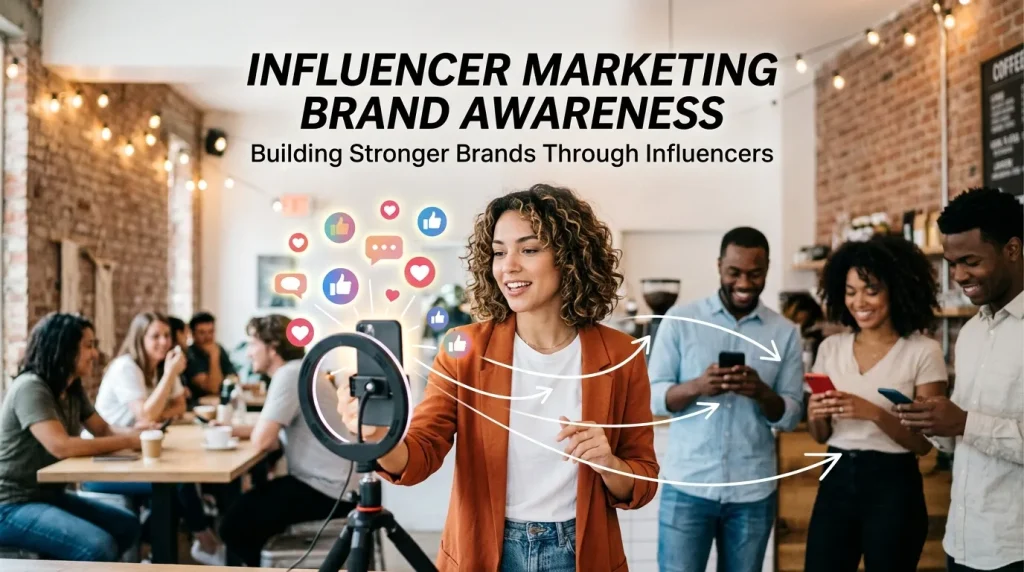
Influencer marketing brand awareness helps businesses increase visibility by connecting with trusted creators and relevant audiences. Through authentic content, strong partnerships, and audience engagement, brands can reach new customers and build lasting recognition.
Influencer marketing brand awareness has become an important part of how businesses introduce themselves to new audiences, strengthen their reputation, and remain visible on social media. People increasingly discover products, services, and brands through creators they already follow and trust. Instead of relying only on traditional advertising, businesses can work with influencers to communicate their message through authentic and relatable content.
The value of influencer marketing goes beyond short-term exposure. A well-planned influencer campaign can help a brand become familiar to a new audience, create meaningful conversations, encourage engagement, and establish stronger connections with potential customers. When the right influencer communicates a brand’s message in a natural way, followers may become more interested in learning about the business and exploring its products or services.
As social platforms continue to evolve, influencer marketing has also become more sophisticated. Brands are no longer focused only on follower counts. Audience relevance, engagement, credibility, content quality, and shared values have become increasingly important when developing influencer partnerships.
Understanding Influencer Marketing Brand Awareness

Influencer marketing brand awareness refers to using influential creators and their established audiences to increase recognition and familiarity with a brand. The objective is to make more people aware of a business and create positive associations around its products, services, or identity.
A consumer may not know a company when they first see an influencer discussing it. However, repeated exposure through trusted content can gradually make the brand more familiar. This familiarity can influence future purchasing decisions, especially when the consumer eventually needs a product or service in that category.
This is one reason brand awareness through influencers can be valuable for both new and established businesses. New brands can use influencers to introduce themselves to relevant audiences, while established companies can use creator partnerships to reach new demographics or reinforce their existing identity.
The effectiveness of influencer marketing depends heavily on relevance. An influencer with millions of followers is not automatically the right choice for every business. A smaller creator with a highly engaged audience that closely matches a brand’s target market may produce more meaningful results.
How Influencers Strengthen Brand Recognition
Influencers already have an established relationship with their audiences. Followers may regularly watch their videos, read their posts, follow their recommendations, and interact with their content. When a brand becomes part of that content, it can benefit from the attention and credibility the creator has developed over time.
This makes influencer brand promotion different from many traditional advertising formats. Instead of a company communicating directly through an advertisement, the message can be presented within the creator’s usual style and content environment.
For example, a beauty creator may demonstrate how a product fits into their daily routine. A business influencer may discuss a software platform while explaining how it helps solve a particular business problem. A travel creator may feature a hotel as part of a genuine travel experience.
These approaches make the brand part of a story rather than presenting it as an isolated advertisement. When the partnership feels natural, audiences may be more willing to pay attention and remember the brand.
The Role of Social Media Influencer Marketing
Social media influencer marketing gives businesses access to audiences across platforms such as Instagram, YouTube, TikTok, Facebook, LinkedIn, and other social networks. Each platform has its own audience behavior, content formats, and communication styles.
The best platform depends on the target audience and the nature of the product or service. Visual brands may benefit strongly from platforms built around photos and short-form videos, while professional services may find greater value in creator content focused on expertise, education, and industry discussions.
Influencer marketing can also work across multiple platforms. A creator might publish a short video, share additional content through stories, and discuss the brand in a longer-form video or post. This creates several opportunities for the audience to encounter the same brand.
Consistency is particularly useful for awareness campaigns. A single mention may introduce a brand, but continued exposure can help audiences remember it. The key is maintaining authentic communication rather than overwhelming followers with repetitive promotional content.
Creating Effective Influencer Marketing Campaigns
Successful influencer marketing campaigns begin with a clear understanding of what the brand wants to accomplish. Brand awareness campaigns are primarily concerned with increasing recognition, reach, familiarity, and positive associations.
This does not mean that conversions are irrelevant. However, awareness campaigns often operate earlier in the customer journey. Someone who sees an influencer mention a brand may not purchase immediately. Instead, they may visit the website, follow the company’s social account, search for reviews, or simply remember the brand for the future.
A strong campaign therefore considers what the audience should remember after seeing the content. The brand message needs to be clear without making the creator’s content feel unnatural.
Businesses can also benefit from understanding how influencer marketing works as a broader discipline. A deeper look at how influencer marketing works can help marketers understand the relationship between creators, audiences, brands, content, and campaign objectives.
Influencer Audience Engagement and Brand Trust
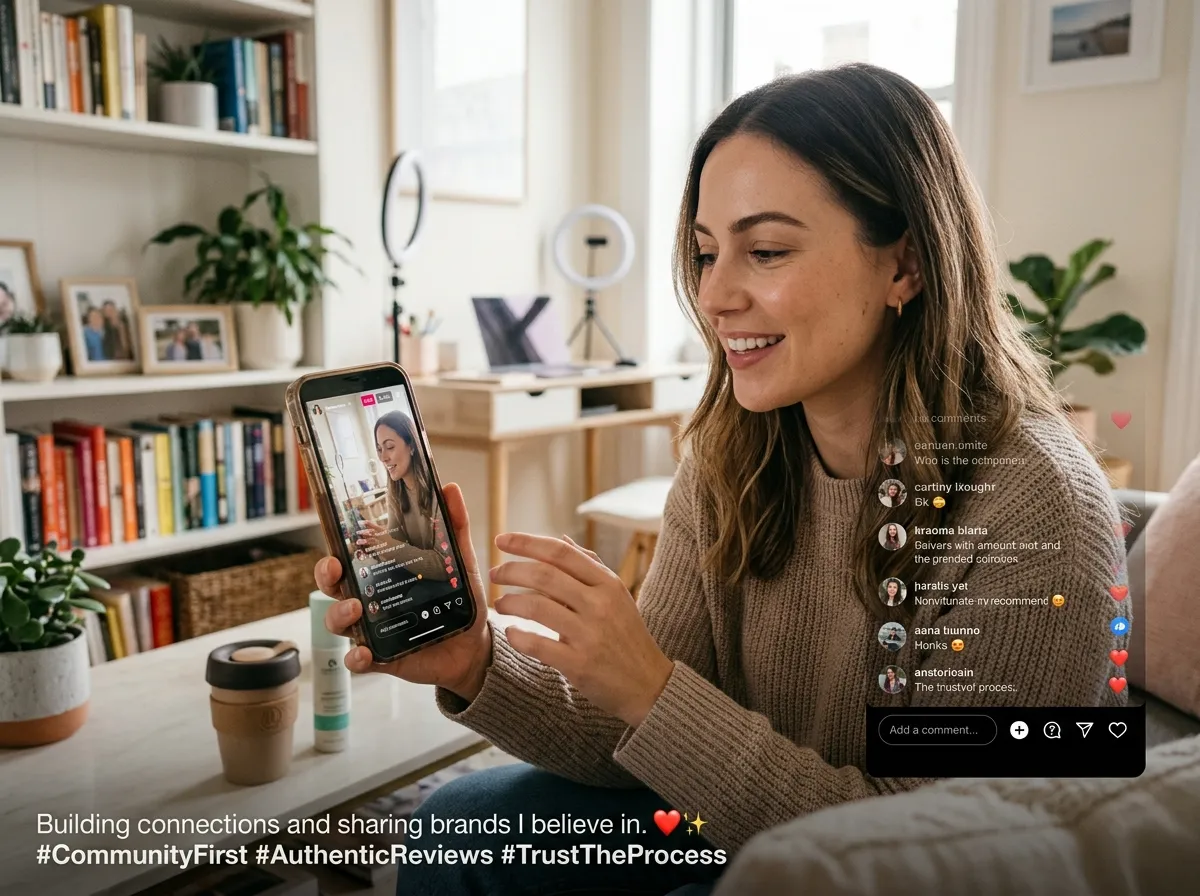
Reach is useful, but engagement can provide a stronger indication of how audiences respond to influencer content. Influencer audience engagement includes likes, comments, shares, saves, replies, views, and other interactions depending on the platform.
Engagement matters because awareness is more valuable when people actually notice and interact with the content. A creator may have a large audience, but if followers rarely interact with their posts, the campaign may have limited impact.
Trust is equally important. Influencers build relationships by consistently producing content that their audiences find useful, entertaining, informative, or relatable. A partnership that conflicts with the creator’s usual content may feel forced and reduce credibility.
Brands should therefore consider whether the influencer genuinely makes sense for the product. When the partnership is aligned with the creator’s interests and audience, promotional content is more likely to feel authentic.
Influencer Partnerships for Brands
Long-term influencer partnerships for brands can be particularly effective for building awareness because they allow audiences to see the same brand repeatedly through a familiar creator.
One-off campaigns can generate valuable exposure, but long-term relationships can create deeper associations. When an influencer regularly uses or discusses a brand, followers may begin to connect the creator’s identity with the company’s products.
Long-term partnerships can also make content creation easier. As the creator becomes more familiar with the brand, they can develop more natural ways to incorporate it into their content. The business can also gain a better understanding of what types of content generate the strongest audience response.
Influencer collaboration does not always have to be limited to sponsored posts. Brands can work with creators on product launches, educational content, interviews, live sessions, events, reviews, storytelling campaigns, and other creative formats.
The broader concept of influencer collaboration marketing shows how partnerships can become more valuable when creators and businesses work together rather than treating the relationship as a simple advertising transaction.
Increasing Brand Visibility Through Influencers
Brand visibility through influencers can be particularly valuable in competitive markets where businesses are competing for limited audience attention. Influencers can introduce brands to communities that may be difficult to reach through traditional marketing alone.
The advantage is not simply the size of the audience. Relevance is often more important. A creator whose followers match a company’s ideal customer profile can provide access to a more meaningful audience.
For example, a fitness brand may gain more value from a health and fitness creator with a highly relevant audience than from a general entertainment influencer with a much larger following. The same principle applies to technology, fashion, finance, travel, food, education, and professional services.
When content is relevant, audiences are more likely to recognize why the product belongs in the creator’s content. This can strengthen both attention and brand recall.
Influencer Marketing for Businesses
Influencer marketing for businesses is no longer limited to consumer brands. B2B companies, professional service providers, software companies, educational businesses, and local organizations can also benefit from creator partnerships.
The content format may simply be different. Instead of a lifestyle product demonstration, a B2B influencer might share industry insights, explain a business challenge, review a software solution, or participate in an expert discussion.
This approach can help companies demonstrate expertise while reaching an established professional audience. Influencers in specialized industries may have smaller audiences than major consumer creators, but their followers can have stronger professional relevance.
For businesses, the most effective influencer strategy usually begins with understanding the audience rather than starting with the influencer. Once the desired audience is clear, brands can identify creators whose expertise, communication style, and reputation match that audience.
Influencer Marketing Techniques That Build Awareness
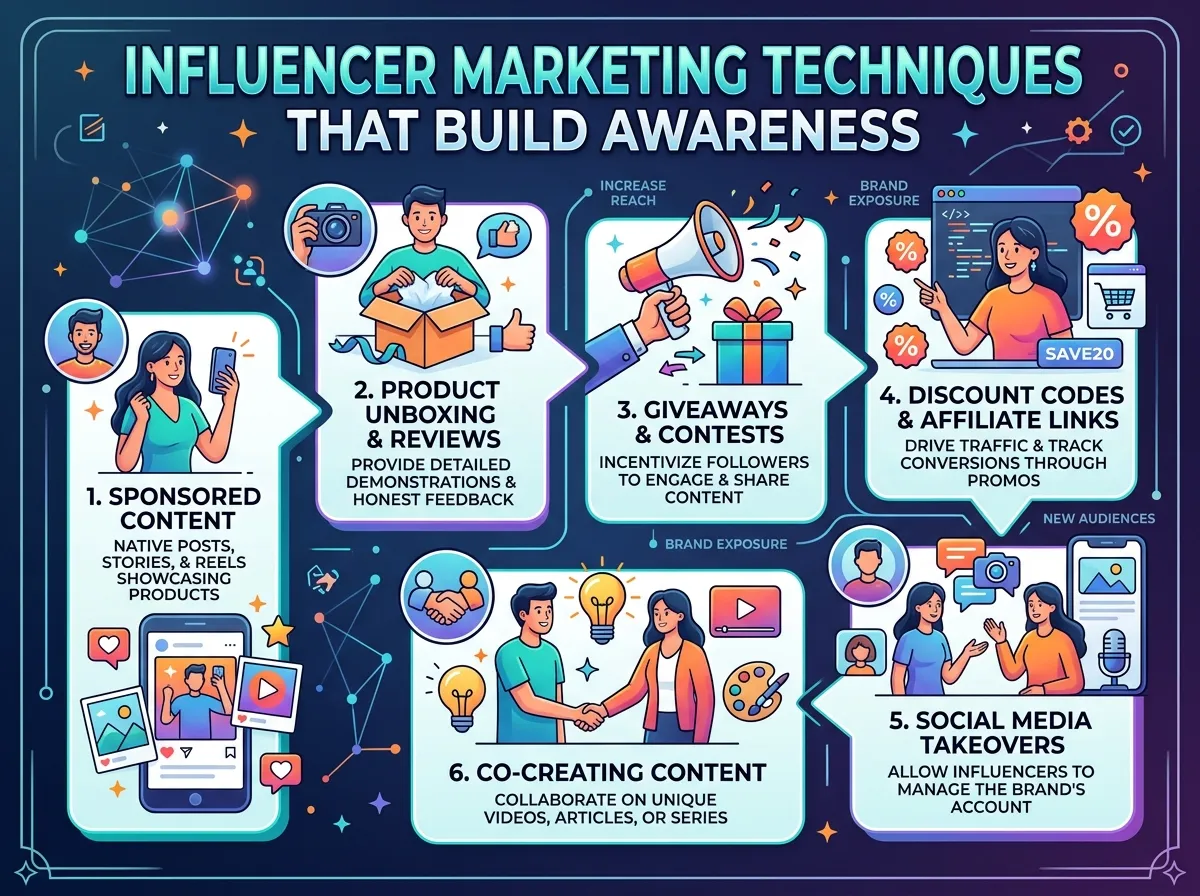
Different content formats can contribute to brand awareness in different ways. Product demonstrations can show how something works, storytelling can create emotional associations, educational content can establish expertise, and behind-the-scenes content can make a company feel more human.
Short-form videos are particularly effective for capturing attention, while longer videos, podcasts, interviews, and detailed posts can provide more space for explanation. Live content can create direct interaction between creators, brands, and audiences.
The most effective content depends on the creator’s established style. Businesses should avoid forcing every influencer to follow exactly the same format. Giving creators enough creative freedom can help campaigns feel authentic while still maintaining important brand messages.
Brands interested in expanding their approach can explore different influencer marketing techniques to understand how various content formats can support awareness and audience engagement.
Building a Social Media Brand Awareness Strategy
A strong social media brand awareness strategy connects influencer marketing with the wider identity of the business. Influencer content should not feel completely disconnected from the company’s website, social media pages, advertising, email campaigns, and other communication channels.
Consistency helps reinforce recognition. The visual identity, tone, key messages, and brand values should remain recognizable even when different creators communicate them in their own voices.
This does not mean every influencer needs to publish identical content. In fact, overly standardized content can reduce authenticity. Instead, businesses can establish a clear brand foundation while allowing creators to adapt the message to their individual audiences.
Influencer campaigns can also be supported by other digital marketing activities. For example, a brand may use influencer content to create awareness and then use website content, email marketing, retargeting, or social media engagement to continue the relationship.
Personalization and Influencer Marketing
Personalization is becoming increasingly important in digital marketing because audiences expect more relevant communication. Influencer marketing can naturally support personalization because creators often serve specific communities with distinct interests.
Businesses can take this concept further by combining creator insights with digital personalization. For example, audiences coming from different influencer campaigns may receive content that reflects their interests or the products they initially explored.
Technology can support this process as well. Concepts such as AI-driven personalization show how businesses can use data and intelligent systems to create more relevant experiences for different audience segments.
When influencer marketing and personalization work together, businesses can move beyond simply reaching people and begin creating experiences that feel more relevant to them.
Measuring the Impact of Influencer Marketing Brand Awareness
Measuring influencer marketing brand awareness requires looking beyond follower counts. Reach and impressions can show how many people were potentially exposed to a campaign, while engagement can provide insight into audience response.
Website traffic can also reveal whether influencer content encourages people to learn more about the brand. Branded search activity, social mentions, follower growth, content shares, and direct traffic can provide additional signals of growing awareness.
Surveys can sometimes be useful for measuring changes in brand recognition or recall. Businesses may compare how familiar audiences are with a brand before and after a campaign to understand whether awareness has increased.
The most useful measurement approach depends on campaign objectives. If the primary goal is awareness, reach, engagement, brand mentions, and recall may be more meaningful than immediate sales. If the campaign also supports conversions, referral traffic and tracked sales can provide additional information.
The Long-Term Value of Influencer Marketing
Influencer marketing can create value beyond the duration of a single campaign. Strong content may continue receiving views, shares, comments, and searches long after the original collaboration has ended.
Influencer relationships can also become an important part of a brand’s broader marketing ecosystem. A creator who understands the company’s products and audience may contribute to multiple campaigns over time, creating familiarity and consistency.
The long-term objective should be to build recognition and trust rather than simply generate temporary attention. When consumers repeatedly encounter a brand through relevant and credible creators, the brand can become more familiar within their consideration set.
This is where influencer marketing brand awareness becomes particularly powerful. The goal is not simply to make someone see a logo or product once. It is to create a memorable connection between the brand, the creator, the audience, and the problem or desire that the product addresses.
Conclusion
Influencer marketing brand awareness provides businesses with a powerful way to introduce their brands to relevant audiences while benefiting from the trust and relationships that creators have developed with their followers.
The strongest campaigns focus on relevance, authenticity, consistent messaging, meaningful engagement, and long-term relationships. Instead of choosing influencers based only on follower numbers, businesses can consider audience fit, content quality, credibility, engagement, and shared values.
When influencer partnerships are connected with a broader social media brand awareness strategy, they can support visibility throughout the customer journey. Combined with quality content, personalization, and other digital marketing channels, influencer marketing can become an important part of long-term brand growth.
Ultimately, successful influencer marketing is about more than reaching a large audience. It is about reaching the right audience with a message that feels credible, useful, and memorable. When those elements come together, influencer partnerships can turn awareness into familiarity, familiarity into trust, and trust into lasting relationships.
Frequently Asked Questions
1. What is influencer marketing brand awareness?
Influencer marketing brand awareness is the use of influencers and content creators to increase recognition and familiarity with a brand. Instead of focusing only on immediate sales, the strategy helps introduce a business to relevant audiences and create positive associations around its products or services.
2. How does influencer marketing increase brand awareness?
Influencers can introduce a brand to audiences that already trust and follow their content. When the brand is presented naturally through relevant posts, videos, reviews, or stories, followers may become familiar with the company and remember it when they need a related product or service.
3. What makes an influencer marketing strategy successful?
A successful influencer marketing strategy depends on audience relevance, authenticity, content quality, engagement, clear brand messaging, and appropriate creator selection. Choosing an influencer based solely on follower count may not produce the strongest results if their audience does not match the brand’s target market.
4. Are micro-influencers effective for brand awareness?
Yes. Micro-influencers can be highly effective because they often have focused audiences and strong relationships with their followers. Their smaller communities may also provide meaningful engagement and greater relevance for specific products, industries, or customer segments.
5. What is the role of social media influencer marketing?
Social media influencer marketing allows businesses to reach audiences through creators on social platforms. Influencers can use videos, posts, stories, live sessions, reviews, and other formats to introduce brands in ways that fit naturally with their existing content.
6. How can businesses choose the right influencer?
Businesses should consider the influencer’s audience, niche, engagement, content quality, reputation, communication style, and relationship with their followers. The creator should also share values that are compatible with the brand and have an audience that matches the company’s target customers.
7. Should brands focus on followers or engagement?
Both can provide useful information, but engagement and audience relevance are often more meaningful than follower count alone. A smaller creator with an active and relevant audience may provide stronger brand awareness opportunities than a large influencer whose followers have little interest in the company’s products.
8. Can influencer marketing work for B2B businesses?
Yes. B2B companies can work with industry experts, professional creators, analysts, educators, and thought leaders to increase brand awareness. Content can focus on education, industry insights, product demonstrations, expert discussions, interviews, or solutions to common business challenges.
9. How do you measure influencer marketing brand awareness?
Businesses can evaluate reach, impressions, engagement, social mentions, website traffic, follower growth, branded searches, referral traffic, and brand recall. The most appropriate metrics depend on the campaign’s objectives and whether the primary focus is awareness, engagement, or conversions.
10. Can influencer marketing create long-term brand growth?
Yes. Consistent influencer partnerships can help audiences repeatedly encounter and recognize a brand. When creators genuinely align with a business and continue producing relevant content, influencer marketing can contribute to stronger familiarity, trust, engagement, and long-term brand relationships.