Influencer Marketing Automation: A Complete Guide to Smarter Campaign Management

Influencer marketing automation transforms campaign management from a time-intensive, error-prone process into a scalable, data-driven system. The core components—AI-powered discovery, automated outreach, CRM-style relationship management, structured approval workflows, and real-time analytics—work together to reduce operational friction and improve campaign performance. The key is balance. Automate the operational. Protect the relational. Use data to make better decisions faster. And always connect your influencer efforts to the broader marketing ecosystem—because that’s where the compounding returns live.
Influencer marketing automation uses software tools to streamline the discovery, outreach, tracking, and reporting of influencer campaigns. Brands that adopt influencer marketing automation reduce manual workload by up to 80%, improve campaign consistency, and scale their influencer programs without proportionally increasing headcount or budget.
Managing influencer campaigns manually is a recipe for burnout. Spreadsheets pile up, emails go unanswered, and performance data sits scattered across platforms—making it nearly impossible to see what’s actually working. For marketing teams running campaigns at any real scale, the operational overhead alone can outweigh the creative value.
That’s where influencer marketing automation comes in. By using dedicated platforms and workflows to handle repetitive tasks—discovery, outreach, contract management, content approval, and reporting—brands can focus their energy on strategy and relationship-building rather than administrative chaos.
This guide breaks down everything you need to know about influencer marketing automation: what it is, how it works, which features matter most, and how to implement it in a way that actually drives results. Whether you’re running a lean in-house team or managing a full-scale influencer program, the frameworks here will help you work smarter.
What Is Influencer Marketing Automation?
Influencer marketing automation refers to the use of software platforms, AI-powered tools, and integrated workflows to manage the operational components of influencer marketing campaigns with minimal manual effort.
Rather than replacing human judgment, influencer marketing automation handles the time-consuming, repeatable tasks that slow teams down—leaving room for more strategic thinking and creative collaboration.
At its core, automation in influencer marketing typically covers:
- Discovery and vetting – Finding influencers who match your brand’s audience, niche, and performance benchmarks
- Outreach and communication – Sending personalized messages, follow-ups, and negotiation sequences at scale
- Contract and compliance management – Generating, sending, and tracking agreements automatically
- Content review and approval – Streamlining feedback loops between brand and creator
- Performance tracking and reporting – Aggregating data from multiple platforms into unified dashboards
The shift from manual to automated workflows isn’t just about saving time. It’s about building a campaign infrastructure that can grow with your brand.
Why Influencer Marketing Automation Matters in 2024
The influencer marketing industry is projected to reach $24 billion by the end of 2024, according to Influencer Marketing Hub. That growth reflects rising demand—but it also signals increasing competition for creator attention and audience trust.
Brands that rely on manual processes struggle to keep pace. A marketing manager spending 15 hours a week on influencer outreach has 15 fewer hours for campaign strategy, content optimization, or inbound marketing strategy refinement. At scale, those lost hours compound into missed opportunities.
Automation addresses three core pain points:
|
Pain Point |
Manual Approach |
Automated Approach |
|---|---|---|
|
Influencer discovery |
Hours of manual searching |
AI-filtered results in minutes |
|
Outreach |
Individual emails with no tracking |
Sequenced, personalized campaigns with open/response tracking |
|
Reporting |
Manually pulling platform data |
Real-time dashboards across all channels |
Beyond efficiency, automation also improves consistency. Campaigns run on standardized workflows produce more predictable outcomes—which makes it easier to identify what’s working and double down.
Key Features to Look for in an Influencer Marketing Automation Platform
Not all automation platforms are built the same. The right tool depends on your team size, campaign volume, and the channels you operate on. That said, certain features are non-negotiable for any serious program.
AI-Powered Influencer Discovery
The best platforms use AI to analyze millions of creator profiles across Instagram, TikTok, YouTube, and beyond—filtering by audience demographics, engagement rate, niche relevance, and past performance. This goes far beyond follower count, which is an increasingly unreliable metric on its own.
Look for platforms that surface micro-influencers (10K–100K followers) alongside larger accounts. Micro-influencers often generate stronger engagement rates and more authentic audience relationships—two factors that directly affect campaign ROI.
CRM and Relationship Management
Influencer relationships are long-term assets. A strong influencer marketing automation platform should function like a CRM, storing communication history, campaign performance, negotiated rates, and creator preferences. This context makes every subsequent outreach more relevant and every relationship easier to maintain.
Automated Outreach and Follow-Up Sequences
Manually sending hundreds of outreach emails is inefficient and inconsistent. Automation platforms allow teams to build outreach sequences—initial contact, follow-up, negotiation—with personalized variables (name, platform, niche) that make messages feel human even at volume.
This approach mirrors what high-performing email marketing customer engagement strategies already do in B2B marketing: use automation to enable personalization at scale, not replace it.
Contract Generation and E-Signature
Legal and compliance workflows kill momentum. Platforms that include contract templates, e-signature integrations, and automated reminders eliminate the back-and-forth that typically delays campaign launches by days or weeks.
Content Approval Workflows
Review cycles between brands and creators are often chaotic. Automated content approval workflows route drafts to the right stakeholders, collect consolidated feedback, and track revision history—reducing confusion and protecting deadlines.
Real-Time Analytics and Attribution
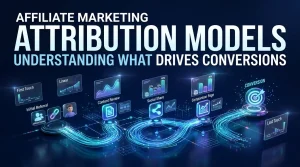
Understanding which influencers drive actual conversions—not just impressions—requires solid attribution. Look for platforms that integrate with your existing analytics stack and offer UTM tracking, promo code analysis, and multi-touch attribution modeling.
This is especially important for brands running integrated campaigns across social media customer engagement, paid ads, and content marketing simultaneously.
How to Build an Influencer Marketing Automation Strategy
Having the right tools means nothing without the right strategy behind them. Here’s a step-by-step framework for building an automation-powered influencer program that delivers consistent results.
Step 1: Define Your Campaign Goals and KPIs
Before automating anything, get clear on what success looks like. Are you optimizing for brand awareness, website traffic, email signups, or direct conversions? Each goal requires different creator profiles, content formats, and measurement frameworks.
Vague goals produce vague results. Specific KPIs—engagement rate above 4%, cost per click under $1.50, minimum 500 link clicks per campaign—give your automation workflows something concrete to optimize toward.
Step 2: Build Your Ideal Creator Profile
Your automation platform is only as good as the filters you set. Define your ideal influencer across these dimensions:
- Audience demographics – Age, location, gender, income level
- Niche alignment – Relevance to your product category
- Platform – Where your target audience actually spends time
- Engagement benchmarks – Minimum engagement rates by follower tier
- Content style – Tone, aesthetic, and production quality that fits your brand
This profile becomes the foundation of your automated discovery workflow.
Step 3: Set Up Outreach Sequences
Once you’ve identified target creators, build outreach sequences tailored to each campaign type. A product launch campaign warrants a different sequence than an ongoing ambassador program.
Effective outreach sequences typically include:
- Initial contact – Short, personalized, and specific to their content
- Follow-up (Day 5–7) – A gentle nudge with added context or a brief value proposition
- Final follow-up (Day 12–14) – A brief closing message that leaves the door open
Keep the messaging human. Automation handles the timing and delivery; your team handles the voice and value proposition.
Step 4: Automate Contract and Onboarding Workflows
Once a creator agrees to participate, speed matters. Delayed contracts lead to delayed campaigns. Use your platform’s contract automation to send agreements immediately upon verbal confirmation, with auto-reminders for unsigned documents.
Onboarding workflows should include campaign briefs, brand guidelines, key messaging, deadlines, and tracking links—delivered automatically as soon as a contract is signed.
Step 5: Manage Content Review Without Bottlenecks
Content review is where many campaigns stall. Build structured approval workflows with clear timelines: creators submit by Day X, first review by Day X+2, revisions due by Day X+4, final approval by Day X+5. Automated reminders keep every stakeholder on schedule.
Use this stage to ensure content aligns with both your brand guidelines and platform-specific best practices. Instagram Reels, TikTok videos, and YouTube Shorts each have different content norms—your briefs and review criteria should reflect that.
Step 6: Track Performance and Optimize in Real Time
Performance tracking is where inbound marketing strategy and influencer automation intersect most powerfully. Connect your influencer platform to Google Analytics, your CRM, or your e-commerce backend to track conversions—not just clicks.
Build a reporting cadence: weekly performance snapshots during active campaigns, and post-campaign analysis within 14 days of completion. Use that data to refine your creator profile, adjust content briefs, and improve outreach sequencing for the next campaign.
Influencer Marketing Automation vs. Manual Campaign Management
|
Factor |
Manual Management |
Automation-Powered Management |
|---|---|---|
|
Discovery time |
8–20 hours per campaign |
1–3 hours |
|
Outreach volume |
20–50 creators per week |
200–500 creators per week |
|
Reporting accuracy |
Inconsistent; human error likely |
Consistent; automated data pulls |
|
Relationship tracking |
Spreadsheet-based |
CRM with full history |
|
Scalability |
Plateaus quickly |
Scales with campaign volume |
|
Cost per campaign |
Higher (time = money) |
Lower at scale |
The numbers make a clear case. But the less-obvious advantage is strategic capacity. Teams freed from administrative tasks can invest more time in creator relationships, campaign ideation, and the kind of content marketing for customer engagement that actually moves audiences.
Common Mistakes Brands Make with Influencer Marketing Automation

Automation creates leverage—but it also amplifies mistakes. Here are the most common pitfalls and how to avoid them.
Over-Automating Creator Relationships
Influencer marketing works because it’s built on trust and authentic connection. Brands that automate every touchpoint—including relationship-building conversations—risk coming across as transactional. Reserve automation for operational tasks; keep the human touch in the parts of the relationship that matter.
Prioritizing Reach Over Relevance
Automated discovery tools can generate long lists of creators quickly. That speed can tempt teams to prioritize volume over fit. A creator with 2 million followers in the wrong niche will almost always underperform compared to a micro-influencer with 50,000 highly engaged followers in your exact target market.
Neglecting Attribution Setup
Launching campaigns without proper UTM parameters, unique promo codes, or affiliate tracking links makes it impossible to measure ROI. Set up attribution before outreach begins—not after content goes live.
Skipping the Creative Brief
Automation can deliver a brief to a creator instantly. But if that brief is vague or generic, the resulting content will be too. Invest time in detailed, campaign-specific creative briefs that give creators clear direction while leaving room for their authentic voice.
Top Influencer Marketing Automation Platforms in 2024
Several platforms lead the market, each with distinct strengths:
Grin
Best for e-commerce brands running high-volume campaigns. Grin integrates directly with Shopify and WooCommerce, making product seeding and affiliate tracking seamless. Its CRM capabilities are particularly strong for managing ongoing ambassador relationships.
Aspire (formerly AspireIQ)
Strong discovery and community management tools, with good support for user-generated content (UGC) campaigns. Useful for brands that want to blend influencer content with broader social media customer engagement strategies.
Traackr
Preferred by enterprise teams and agencies. Traackr’s data depth and reporting capabilities are best-in-class, with strong audience quality scoring to help brands avoid influencers with inflated or inauthentic followings.
Creator.co
A solid mid-market option with a marketplace model that allows creators to apply to campaigns. Good for brands newer to influencer marketing who want inbound creator interest rather than cold outreach.
Klaviyo + Influencer Integration
For brands that prioritize email marketing customer engagement as a primary channel, combining Klaviyo’s automation capabilities with influencer-generated content—used in email nurture sequences—creates a powerful cross-channel loop.
How Influencer Automation Connects to Your Broader Marketing Strategy
Influencer marketing doesn’t live in isolation. Its real power emerges when it’s connected to your broader inbound marketing customer engagement ecosystem.
Consider this content loop:
- An influencer creates authentic content that introduces your brand to a new audience
- That audience visits your website (SEO and inbound marketing work together to capture the visit)
- They opt into your email list
- Email marketing customer engagement sequences nurture them toward purchase
- Post-purchase, they engage with your brand community—potentially becoming advocates or even creators themselves
Automation makes each step of this loop more efficient and measurable. Influencer marketing automation platforms that integrate with your CRM, email platform, and analytics tools turn siloed campaigns into a connected customer journey.
What’s Next: The Future of Influencer Marketing Automation
AI is making influencer marketing automation smarter by the month. Predictive analytics can now estimate campaign ROI before a dollar is spent. Sentiment analysis tools assess audience response in real time. Automated content scoring evaluates creator submissions against brand guidelines before a human reviewer even opens the file.
The brands that will lead in influencer marketing over the next five years aren’t those with the biggest budgets—they’re the ones that build the most efficient, data-driven, and relationship-centered programs. Automation is the infrastructure that makes that possible.
Frequently Asked Questions
What is influencer marketing automation, and how does it work?
Influencer marketing automation uses software tools to manage the operational tasks in influencer campaigns—such as creator discovery, outreach, contract management, content review, and performance reporting—with minimal manual effort. Platforms use AI and workflow automation to reduce time spent on repetitive tasks while improving consistency and scalability.
Is influencer marketing automation suitable for small businesses?
Yes, though the right platform depends on campaign volume. Smaller brands benefit most from automation tools that offer influencer discovery, outreach sequencing, and basic performance tracking. Full enterprise-tier platforms may offer more features than a small team needs. Start with a mid-market tool and scale as your program grows.
How much does an influencer marketing automation platform cost?
Pricing varies significantly. Entry-level tools typically start between $50–$300 per month. Mid-market platforms range from $500–$2,000 per month. Enterprise solutions can exceed $5,000 per month, often with custom pricing based on campaign volume and team size.
What’s the difference between influencer marketing automation and influencer marketing management?
Influencer marketing management refers broadly to overseeing influencer campaigns—strategy, relationships, and execution. Influencer marketing automation specifically refers to using technology to handle the operational, repetitive components of that management process. Most modern influencer marketing platforms combine both.
Which metrics should I track when using influencer marketing automation?
Focus on metrics that connect to real business outcomes: engagement rate, click-through rate, conversion rate, cost per acquisition, and earned media value. Automation platforms should aggregate these across campaigns and channels into unified dashboards for easier analysis.
Can influencer marketing automation work for B2B brands?
Absolutely. B2B brands increasingly use LinkedIn creators, industry podcasters, and niche thought leaders as part of their inbound marketing strategy. Automation platforms that support outreach sequencing and CRM-style relationship management are especially valuable in B2B contexts, where relationship depth matters more than follower volume.
How do I measure ROI from influencer marketing automation?
ROI measurement requires proper attribution setup before campaigns launch. Use UTM parameters, unique discount codes, or affiliate links to track traffic and conversions at the influencer level. Compare revenue generated against total campaign costs—including platform fees, creator fees, and internal time. Automation platforms with attribution integrations make this significantly easier.