How to Measure Influencer Marketing Success: Top Metrics That Matter

Measuring influencer marketing success requires tracking meaningful KPIs such as engagement, reach, conversions, click-through rates, and ROI. By using analytics tools, unique tracking links, and performance data, brands can optimize campaigns, improve influencer partnerships, and maximize long-term marketing results.
To measure influencer marketing success, track metrics tied to your goals—engagement rate, reach, conversions, and ROI. Use trackable links, promo codes, and analytics platforms to connect spending with results. The right combination of these data points reveals whether your campaigns build awareness, drive sales, or both.
Brands now spend billions of dollars partnering with creators, yet many still struggle to prove those partnerships pay off. A flood of likes feels great, but likes alone don’t pay the bills. To measure influencer marketing the right way, you need to look past surface-level vanity numbers and focus on data that connects directly to business goals.
This guide breaks down the metrics that matter most, shows you how to calculate return on your spend, and gives you a practical framework for tracking performance across every campaign. Whether you’re running your first creator collaboration or scaling a six-figure program, you’ll walk away knowing exactly what to track—and why it counts.
By the end, you’ll understand which numbers signal real success, how to set up proper tracking, and how to turn raw data into smarter decisions for your next campaign.
Why Measuring Influencer Marketing Performance Is So Important
Spending money on creators without tracking outcomes is like driving with your eyes closed. You might reach your destination, but you won’t know how—or whether you can repeat the trip.
Clear measurement helps you justify budgets, identify your best-performing partners, and cut spending that delivers little value. When you understand influencer marketing analytics, you can shift resources toward the creators and content formats that actually move the needle.
There’s also a competitive angle. Companies that consistently track influencer campaign performance learn faster than those that don’t. They spot trends early, refine their messaging, and build long-term relationships with creators who genuinely resonate with their audience.
Measurement also protects you from fraud. Fake followers and inflated engagement remain common problems in the creator economy. Solid tracking helps you separate authentic influence from purchased numbers, so your budget goes toward real results.
What Are the Most Important Influencer Marketing Success Metrics?

Not every number deserves your attention. The metrics you prioritize should reflect your campaign goals, whether that’s brand awareness, audience growth, or direct sales. Below are the core influencer marketing success metrics every brand should understand.
Reach and Impressions
Reach tells you how many unique people saw a piece of content, while impressions count the total number of times it appeared—including repeat views from the same person.
These two numbers form the foundation of awareness campaigns. A high reach means a creator successfully delivered your message to a large, distinct audience. Impressions, meanwhile, hint at how often people encountered your brand, which can reinforce recognition over time.
Keep in mind that reach and impressions tell you about exposure, not action. They’re a starting point, not the full story.
Engagement Rate
Engagement rate measures how actively an audience interacts with content through likes, comments, shares, and saves. It’s one of the most reliable signals of whether content truly connects with viewers.
To calculate the influencer engagement rate, use this simple formula:
Engagement Rate = (Total Engagements ÷ Total Followers) × 100
For example, if a creator’s post earns 5,000 interactions and they have 100,000 followers, the engagement rate is 5%. A strong rate suggests the audience cares about the creator’s recommendations, which often translates into better campaign outcomes.
Micro-influencers frequently post higher engagement rates than mega-celebrities, even with smaller followings. This is why audience quality often matters more than raw follower counts.
Conversions and Sales
For brands focused on revenue, conversions are the ultimate proof of success. A conversion happens when someone takes a desired action—buying a product, signing up for a newsletter, or downloading an app—after seeing influencer content.
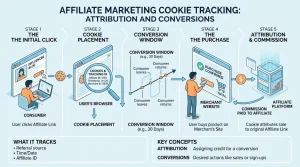
Track conversions using unique discount codes, affiliate links, or UTM parameters. These tools let you attribute specific sales to specific creators, giving you a clear picture of who drives real business value.
Click-Through Rate (CTR)
Click-through rate shows the percentage of people who clicked a link after viewing content. It bridges the gap between awareness and action.
CTR = (Total Clicks ÷ Total Impressions) × 100
A healthy CTR signals that your content and call-to-action successfully motivated people to learn more. If your reach is high but clicks are low, your messaging or offer may need work.
Audience Growth
A successful campaign often brings new followers to your own brand accounts. Tracking follower growth during and after a collaboration reveals how well a creator’s audience aligns with yours.
Sudden spikes in new followers, paired with steady engagement, suggest the partnership attracted genuinely interested people rather than passive scrollers.
How to Calculate Influencer Marketing ROI
Return on investment answers the question every executive cares about: did this spending make money? Understanding how to calculate influencer marketing ROI turns vague impressions into concrete financial accountability.
The basic formula is straightforward:
ROI = [(Revenue Generated − Campaign Cost) ÷ Campaign Cost] × 100
Suppose you spend $10,000 on a campaign and it generates $35,000 in sales. Your ROI would be:
[($35,000 − $10,000) ÷ $10,000] × 100 = 250%
That means every dollar you invested returned $2.50 in profit beyond your original spend.
Accounting for Non-Sales Value
Not every campaign aims for immediate sales. Some focus on awareness, content creation, or audience building. In these cases, you’ll want to factor in additional sources of value when you assess influencer marketing ROI:
- Earned media value (EMV): an estimate of what equivalent exposure would cost through paid advertising.
- Content reuse: the value of repurposing creator content across your own channels, ads, and emails.
- Audience growth: the long-term worth of new followers gained.
Combining these elements gives a fuller view of how your creator partnerships pay off beyond the cash register.
Common ROI Tracking Methods
Different tools help you connect spending to outcomes. Here’s a quick comparison:
|
Tracking Method |
Best For |
How It Works |
|---|---|---|
|
Unique promo codes |
Direct sales |
Each creator gets a custom code customers enter at checkout |
|
Affiliate links |
E-commerce |
Creators earn commission on trackable sales |
|
UTM parameters |
Web traffic & conversions |
Tagged URLs reveal which creator drove site visits |
|
Dedicated landing pages |
Lead generation |
Custom pages capture campaign-specific signups |
|
Surveys (“How did you hear about us?”) |
Brand awareness |
Customers self-report their discovery source |
Choosing the right method depends on your goals. If direct revenue matters most, promo codes and affiliate links offer the cleanest data.
Which Influencer Marketing KPIs Should You Set?
Key performance indicators give your campaign direction. Without clear influencer marketing KPIs, you can’t tell whether a campaign succeeded or simply happened.
Start by matching your KPIs to your primary objective:
Awareness-Focused KPIs
If your goal is visibility, prioritize:
- Total reach and impressions
- Audience growth on brand channels
- Branded hashtag usage
- Share of voice within your industry
Engagement-Focused KPIs
When community building matters most, track:
- Engagement rate
- Comments and sentiment
- Saves and shares
- User-generated content volume
Conversion-Focused KPIs
For revenue-driven campaigns, measure:
- Conversion rate
- Cost per acquisition (CPA)
- Average order value from campaign traffic
- Total attributed revenue
Setting two or three primary KPIs keeps your reporting focused. Trying to track everything at once often buries the insights that matter beneath a pile of irrelevant data.
How Do You Track Influencer Campaign Performance Over Time?
Single-campaign snapshots only tell part of the story. To truly understand influencer campaign performance, you need to monitor results across multiple collaborations and timeframes.
Start by building a simple dashboard that logs each campaign’s key metrics. Record the creator, content format, spend, reach, engagement, and conversions. Over time, patterns emerge—maybe video content consistently outperforms static posts, or one creator delivers a stronger return than five others combined.
Comparing campaigns side by side helps you forecast future results and negotiate smarter contracts. A creator who delivered a 6% engagement rate and strong sales last quarter earns a different conversation than one whose numbers fell flat.
Tools That Simplify Influencer Marketing Analytics
Manual tracking works for small programs, but dedicated platforms save time as you scale. Influencer marketing analytics tools can automatically pull data from social platforms, track sales attribution, and generate reports.
Popular options include native platform insights (like Instagram and TikTok analytics), Google Analytics for web traffic, and specialized influencer platforms that consolidate everything into one dashboard. The right tool depends on your budget and the complexity of your program.
Common Mistakes to Avoid When Measuring Success
Even experienced marketers stumble. Watch out for these frequent errors:
- Chasing vanity metrics. Follower counts and likes feel impressive but rarely predict revenue. Focus on metrics tied to action.
- Ignoring qualitative feedback. Comments reveal sentiment that numbers miss. A campaign with modest reach but glowing comments may be more valuable than one with high reach and indifference.
- Skipping baseline measurement. Without knowing your starting point, you can’t measure improvement. Record your baseline numbers before each campaign launches.
- Measuring too soon. Some results, especially conversions, take time to appear. Give campaigns enough runway before declaring victory or defeat.
- Forgetting attribution windows. A purchase may happen days or weeks after someone first sees a creator’s post. Set realistic attribution windows to capture delayed conversions.
Turning Your Metrics Into Smarter Campaigns

Data only matters when it shapes decisions. The point of all this tracking isn’t to fill spreadsheets—it’s to make your next campaign better than your last.
Start by reviewing your results against the KPIs you set. Identify which creators, formats, and messages delivered the strongest performance, then double down on what works. Drop or rethink the partnerships that fell short.
Set clear goals before each campaign, choose two or three metrics that genuinely reflect those goals, and use trackable links or codes from day one. With consistent tracking and honest analysis, you’ll move from guessing to knowing—and your influencer budget will work harder with every campaign you run.
Ready to put this into practice? Pick one upcoming campaign, define your primary KPI, and set up a single tracking method this week. Small, consistent steps build the data foundation that fuels long-term growth.
Frequently Asked Questions
What is the most important metric in influencer marketing?
There’s no single answer—the most important metric depends on your goal. For awareness campaigns, reach and impressions matter most. For community building, engagement rate is key. For revenue-focused efforts, conversions and ROI take priority. Always match your primary metric to your specific objective.
What is a good engagement rate for influencers?
Engagement rates vary by platform and follower count. As a general guide, 1–3% is considered average on Instagram, 3–6% is strong, and anything above 6% is excellent. Micro-influencers often achieve higher rates than larger accounts because their audiences tend to be more loyal and niche-focused.
How long does it take to see results from an influencer campaign?
It depends on your goal. Awareness and engagement metrics appear almost immediately, often within hours of a post going live. Conversions and sales can take longer—anywhere from a few days to several weeks—since customers may need time to consider a purchase. Set attribution windows of at least 30 days for the clearest picture.
How do you calculate influencer marketing ROI?
Use the formula: ROI = [(Revenue Generated − Campaign Cost) ÷ Campaign Cost] × 100. For non-sales goals, also factor in earned media value, content reuse, and audience growth to capture the full return on your investment.
Can you measure influencer marketing without direct sales tracking?
Yes. When direct sales tracking isn’t possible, use proxy metrics like reach, engagement rate, branded hashtag usage, audience growth, and customer surveys that ask “How did you hear about us?” These indicators help you gauge impact even without a clear checkout-to-creator link.
Conclusion
Measuring influencer marketing success goes beyond counting likes and followers. The most effective campaigns are evaluated using meaningful KPIs such as engagement rate, reach, conversions, click-through rate, and return on investment. By setting clear objectives before launching a campaign and using tools like UTM parameters, affiliate links, promo codes, and analytics platforms, brands can accurately measure performance and identify high-performing influencers. Regularly reviewing campaign data helps improve future collaborations, optimize marketing budgets, and strengthen audience relationships. A data-driven measurement strategy ensures every influencer partnership contributes to brand awareness, customer acquisition, and sustainable business growth over time.