Affiliate Marketing Attribution Models: Understanding What Drives Conversions

Affiliate marketing attribution models help businesses determine how affiliates contribute to conversions and sales. First-touch and last-touch models provide simple ways to assign credit, while multi-touch and data-driven approaches offer broader insight into complex customer journeys. Accurate affiliate sales tracking, consistent commission rules, cross-channel analysis, and performance-based evaluation help businesses reward partners fairly and make more informed marketing decisions.
Affiliate marketing attribution models help businesses understand which affiliates, promotional channels, and customer interactions contribute to sales. When customers discover a product through a blog, click an influencer’s referral link, and eventually purchase after seeing a promotional email, identifying which interaction deserves credit can become complicated. Without a clear attribution method, businesses may reward the wrong partners, misjudge campaign performance, or overlook affiliates who play an important role early in the buying process.
A well-designed attribution approach connects affiliate activity with actual customer behavior. Instead of evaluating every partnership solely by its final conversion numbers, businesses can examine how affiliates introduce products, influence purchasing decisions, and encourage customers to complete transactions. This broader perspective supports more accurate commission decisions, stronger partner relationships, and better marketing investments.
Understanding the Purpose of Affiliate Attribution

Affiliate marketing attribution is the process of assigning credit for a conversion to one or more marketing interactions. A conversion may represent a completed purchase, a subscription, a qualified lead, or another action defined by the business. In affiliate programs, attribution determines which publisher or partner receives recognition and commission for influencing that outcome.
The importance of attribution becomes clear when multiple affiliates interact with the same customer. A customer might first read a product comparison article, later watch a creator’s review, and finally click a discount link before buying. If the program automatically credits only the last affiliate, the earlier partners receive no recognition, even if their content introduced the product and helped establish trust.
Affiliate conversion attribution provides a structured way to evaluate these interactions. The selected model determines how credit is distributed and influences the business’s understanding of affiliate contribution. Choosing an appropriate method requires considering the sales cycle, customer behavior, commission rules, tracking capabilities, and objectives of the affiliate program.
Attribution is not simply a technical setting. It shapes how a company values its partners and allocates its marketing budget. A model that consistently overlooks discovery-stage affiliates may encourage publishers to focus only on customers who are already close to purchasing. A more balanced approach can help businesses recognize the different roles partners play throughout the customer journey.
Why Different Attribution Models Produce Different Results
No single attribution model tells the complete story of a customer’s decision. Each model highlights a different part of the conversion process, which means two businesses can examine the same customer journey and reach different conclusions about affiliate performance.
A first-touch attribution model emphasizes the interaction that introduced the customer to the business. It can be useful when a company wants to understand which partners generate awareness and attract new audiences. A last-touch attribution model gives credit to the final eligible interaction before conversion. This approach is often easier to implement and can be useful when the program prioritizes immediate purchasing actions.
Multi-touch attribution models distribute credit across multiple interactions rather than assigning the entire conversion to one point. These models can provide a broader view of the affiliate’s role, particularly when customers research products over several days or weeks. However, they require more complete tracking and careful decisions about how credit should be allocated.
Businesses should also recognize that attribution results are estimates based on the available data and selected rules. A credited conversion does not automatically prove that an affiliate independently caused the sale. Customers may have purchased anyway, and some interactions may be missing from the tracking record. The purpose of attribution is to improve decision-making, not to create an unrealistic picture of marketing influence.
First-Touch Attribution and the Value of Discovery
The first-touch attribution model assigns conversion credit to the first recorded eligible marketing interaction in the customer journey. In an affiliate program, this might be a publisher’s product review, a comparison website, or an educational article that introduces a customer to a brand.
This model is particularly relevant for businesses trying to expand their reach. Affiliates that introduce unfamiliar products can influence whether potential customers begin researching a brand at all. Their value may not appear in immediate sales figures, especially when the buying process involves several visits before a purchase.
For example, a customer may discover a software product through an affiliate’s detailed review. The customer returns several days later through a search engine and completes a purchase after visiting another affiliate’s website. Under a first-touch model, the original publisher receives the conversion credit, assuming the initial interaction was successfully recorded and qualifies under the program’s rules.
The main limitation is that first-touch attribution can overlook later interactions that helped resolve customer concerns or encouraged the final purchase. A publisher that introduces a product deserves consideration, but the business should not assume that the first interaction was the only meaningful influence.
First-touch reporting is most useful when evaluated alongside metrics such as new-customer acquisition, referral quality, and the number of customers who continue engaging after their first visit.
Last-Touch Attribution and Closing the Sale
Last-touch attribution assigns credit to the final recorded eligible interaction before a conversion. Many affiliate programs use a last-click variation in which the affiliate associated with the last qualifying referral click receives the commission. The exact rules depend on the program’s tracking and attribution policy.
The model is straightforward to understand. If a customer discovers a product through a review website, visits an influencer’s content, and finally clicks a coupon publisher’s referral link before purchasing, the coupon publisher may receive the commission under a last-touch arrangement.
This method is useful when businesses need a simple, consistent way to process affiliate commissions. It can also help identify partners that regularly appear close to the point of purchase. For programs with shorter buying cycles, a last-touch model may provide a practical starting point.
However, last-touch attribution can undervalue affiliates that create awareness or help customers compare alternatives. A publisher might introduce the brand and answer important questions, while another affiliate receives credit because the customer clicks a final promotional link. If the business relies exclusively on last-touch reporting, its commission structure may gradually favor partners that capture existing purchase intent rather than those that create it.
Businesses should therefore review last-touch results alongside customer acquisition data and other indicators of partner contribution. Clear rules about coupon codes, referral windows, and qualifying clicks are also essential to reduce confusion and disputes.
Multi-Touch Attribution Models for Complex Customer Journeys

Multi-touch attribution models distribute conversion credit among multiple recorded interactions. Rather than treating the first or final affiliate click as the only important event, these approaches recognize that customers may need several types of information before making a decision.
Consider a customer purchasing an expensive product. An affiliate blog introduces the product, a creator demonstrates its features, a comparison publisher explains competing options, and another partner provides a promotion. Each interaction may contribute differently to the customer’s confidence and readiness to purchase.
A multi-touch model can help businesses understand this sequence. It may distribute credit equally across eligible interactions, assign greater weight to the first and last interactions, or use a more customized allocation method. The best approach depends on the purpose of the analysis and the quality of the available data.
Linear attribution divides credit equally among recorded interactions. It is relatively easy to explain and prevents one interaction from automatically receiving all the recognition. However, equal credit does not necessarily reflect the actual importance of each touchpoint.
Position-based attribution gives greater weight to selected points in the journey, commonly the first and last interactions, while distributing the remaining credit among interactions in between. This approach can balance customer discovery with purchase completion, although the chosen weighting remains a business assumption.
Time-decay attribution gives more credit to interactions closer to the conversion. It may suit businesses where recent product evaluations or offers strongly influence purchasing decisions. Yet it can still undervalue earlier content that generated the initial interest.
No multi-touch method should be adopted simply because it appears more sophisticated. A complex model built on incomplete or inconsistent data can create misleading conclusions. Businesses should choose a model they can explain, maintain, and connect to their actual commercial objectives.
Data-Driven Affiliate Attribution and Better Decisions
Data-driven affiliate attribution uses observed customer interactions and conversion information to estimate how different touchpoints contribute to outcomes. Depending on the available technology, the analysis may consider historical conversion patterns, partner interactions, channel combinations, and differences between customer journeys.
Unlike a fixed rule that always assigns credit to the first or last interaction, a data-driven approach can use evidence from multiple journeys to identify patterns. For example, the analysis may show that certain review publishers frequently introduce new customers, while particular comparison websites appear in journeys that lead to higher-value purchases.
These findings can improve partner evaluation and commission planning. A business might discover that an affiliate with fewer total conversions contributes a larger share of new customers or assists purchases with higher average order values. Such insights can prevent the program from relying on raw conversion volume as its only measure of success.
Reliable data is essential. Tracking records should use consistent campaign identifiers, affiliate IDs, conversion events, timestamps, and agreed attribution windows. Businesses must also account for missing interactions, duplicate conversion events, consent requirements, and privacy restrictions.
Data-driven attribution does not eliminate uncertainty. Its conclusions depend on the data collected and the assumptions used in the analysis. Businesses should validate findings against actual sales outcomes and avoid making major commission changes based on small samples or short observation periods.
Affiliate Sales Tracking and Conversion Accuracy
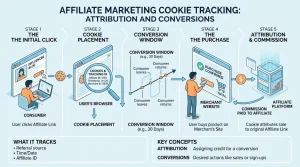
Affiliate sales tracking records the referral activity and completed actions needed to calculate commissions and assess program performance. Common tracking methods include referral links, cookies, unique promotional codes, server-to-server conversion tracking, and approved integrations with ecommerce or analytics platforms.
Each method has strengths and limitations. Referral links can identify the affiliate associated with a click, while promotional codes may help connect purchases with a partner even when a tracked link is not used. Server-to-server tracking can improve the reliability of conversion reporting when browser-based tracking is restricted, provided the implementation follows the relevant privacy and consent requirements.
Businesses should establish consistent rules for assigning affiliate conversions. These rules need to explain the attribution window, how repeat clicks are handled, which conversions qualify, and how refunds, cancellations, and duplicate events affect commission calculations.
Tracking should also distinguish between a recorded referral and a completed business outcome. A large number of affiliate clicks does not necessarily indicate meaningful commercial value. Reports should connect traffic with purchases, qualified leads, average order value, customer retention, and other measures relevant to the program.
Accurate tracking becomes especially important when several partners participate in a customer journey. Without consistent identifiers and event records, a business may accidentally count the same sale more than once or assign it to the wrong affiliate. Regular reconciliation between affiliate reports and internal transaction records helps identify these problems before they affect partner payments.
Affiliate Marketing Performance Attribution Beyond Sales Volume
Affiliate marketing performance attribution becomes more useful when businesses evaluate both the number of conversions and the quality of those conversions. A partner generating many low-value transactions may not always contribute more profit than a partner generating fewer purchases from customers who remain loyal.
Performance reviews can compare conversion rates, average order value, revenue per click, new-customer share, refund rates, and customer lifetime value where reliable data is available. These measures help explain whether an affiliate contributes profitable growth or simply produces activity that looks impressive in a dashboard.
For example, a content publisher may attract customers who spend time researching and make larger purchases, while a discount publisher may generate a higher volume of smaller transactions. Both partners can be valuable, but their contribution should be assessed in the context of the business model and customer acquisition goals.
Attribution data also supports more informed advertising decisions. When affiliates use paid promotion, businesses need to understand how those referrals interact with other marketing channels and whether the resulting sales meet program policies. A broader online advertising strategy can help align affiliate activity with paid media objectives, audience targeting, and campaign measurement.
Performance attribution should not become a ranking exercise based on a single metric. Instead, it should help businesses understand which partnerships deliver the most relevant customers, which content supports purchase decisions, and where program improvements are likely to have the greatest impact.
Customer Journey Tracking Across Channels
Affiliate customer journey tracking examines the sequence of interactions a customer has with a business before and after a conversion. This may include affiliate content, search visits, social media referrals, email communications, paid advertisements, and direct website visits, depending on what the business can lawfully and reliably observe.
Cross-channel attribution analysis can reveal how affiliate activity works alongside other marketing efforts. A customer may discover a brand through an affiliate article, return through an email, and complete a purchase after clicking a paid advertisement. If reporting looks only at the final channel, the affiliate’s earlier contribution may remain hidden.
Connecting channels requires consistent campaign tagging, standardized event definitions, and a shared understanding of how conversion credit is assigned. Businesses should also document gaps in the data rather than assuming every interaction can be observed.
Customer journey analysis can improve both affiliate management and the customer experience. If a large number of customers require several visits before purchasing, businesses may need clearer product information, stronger comparison content, or more relevant offers. If customers frequently abandon their journey after a particular interaction, the business can investigate whether the landing page, pricing, or product explanation creates uncertainty.
Understanding the wider journey also helps companies manage partnerships that publish or reuse content. Agreements covering influencer usage rights can clarify how promotional material may be reused across affiliate landing pages, advertisements, and other marketing channels. Clear permissions help businesses maintain consistent messaging while respecting creators’ contractual rights.
Building an Affiliate Commission Attribution Strategy
An affiliate commission attribution strategy defines how conversion credit is assigned and how that credit affects partner compensation. The policy should be established before disputes arise, because affiliates need to understand the conditions under which their referrals qualify for payment.
The first decision is selecting a model that matches the business’s buying cycle. A company selling inexpensive products through short customer journeys may find last-touch attribution sufficient for its needs. A business selling higher-value services with extensive research may benefit from multi-touch reporting to understand the contribution of discovery, evaluation, and closing interactions.
The business should then define the rules surrounding attribution. These include eligible referral sources, attribution windows, coupon-code usage, duplicate clicks, cross-device limitations, returns, cancellations, and commission adjustments. The policy should be accessible to affiliates and applied consistently.
Commission rates should also reflect commercial realities. Attribution can identify the interactions receiving credit, but the commission structure must account for margins, customer quality, product categories, and the value of new customers. A partner should not automatically receive a higher commission merely because a model assigns it more credit.
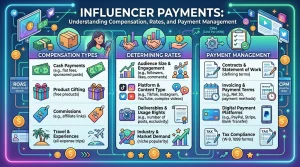
Budget planning is another important consideration. Businesses need to understand how commission expenses interact with other acquisition costs and promotional spending. Reviewing the influencer marketing budget can provide useful context when affiliate programs overlap with creator partnerships, sponsored content, or paid promotional collaborations. Although influencer marketing and affiliate marketing are not identical, both can involve partner compensation and performance-based investment.
A strong strategy should be reviewed regularly. Changes in customer behavior, tracking technology, privacy requirements, and partner mix may make an older model less suitable. Periodic testing and transparent communication help keep the attribution policy useful and fair.
The Role of Content and Influencer Partnerships

Different affiliate partners influence customers in different ways. Editorial publishers often explain product features and compare alternatives, while creators may demonstrate how a product works or show how it fits into everyday life. Coupon websites and deal publishers may be more influential when a customer is ready to buy.
Understanding these differences helps businesses interpret attribution results more accurately. A creator who introduces a product to a new audience may contribute to awareness even when another affiliate receives the final conversion credit. A detailed publisher review may help customers understand the product’s advantages, while a discount partner may encourage them to complete the transaction.
Businesses that work with both influencers and affiliates should establish clear campaign tracking and compensation rules. The relationship between these models is easier to understand when teams have a shared view of how influencer marketing works, including how creators reach audiences, build trust, and encourage action.
Partner roles should be evaluated according to the objectives of each collaboration. Awareness-focused content may be assessed through qualified referral traffic and new-customer activity, while conversion-focused partnerships may be measured through purchases, revenue, and profitability. This does not mean every partner requires a separate attribution model, but it does mean that results should be interpreted in the context of the role each partner is expected to perform.
Common Attribution Mistakes Businesses Should Avoid
One frequent mistake is treating attributed conversions as definitive proof of causation. Attribution assigns credit according to a model; it does not necessarily show what would have happened without the affiliate’s involvement. Businesses should consider incrementality testing or other suitable evaluation methods when they need to understand whether a partnership generates additional sales.
Another problem is changing attribution rules without communicating with affiliates. Even a technically valid adjustment can create distrust if partners discover that their commissions are being calculated differently without notice. Clear documentation and consistent implementation are essential.
Incomplete tracking can also distort results. Missing referral identifiers, inconsistent campaign parameters, browser restrictions, and unrecorded conversions may make one partner appear less effective than another. Before changing commission rates, businesses should investigate whether the underlying data is comparable.
Finally, businesses should avoid selecting a model solely because it produces favorable results. The purpose of attribution is to support better decisions, not to justify a preferred outcome. A useful model should remain understandable, consistent, and aligned with business goals even when the results reveal weaknesses in an existing program.
Creating a More Reliable Affiliate Measurement System
A reliable affiliate measurement system combines clear attribution rules, consistent tracking, relevant performance indicators, and regular reviews. The business should be able to explain why a conversion was credited to a particular partner and how that decision affects commission payment.
Reporting should distinguish between direct conversion results and broader partner influence. First-touch and last-touch reports can provide useful reference points, while multi-touch analysis may offer additional context for longer customer journeys. Comparing these views can reveal how strongly partner rankings depend on the selected model.
Teams should also maintain a record of model changes and review how those changes affect reported results. If a new attribution method causes a major shift in affiliate credit, the business should determine whether the difference reflects customer behavior, improved tracking, or simply a change in calculation rules.
Ultimately, affiliate marketing attribution models work best when they support transparent partner relationships and commercially sound decisions. By understanding where customers discover products, which interactions influence their choices, and how those journeys lead to revenue, businesses can create affiliate programs that reward meaningful contributions and improve long-term performance.
Frequently Asked Questions
1. What are affiliate marketing attribution models?
Affiliate marketing attribution models are methods used to assign credit for a conversion to an affiliate or to multiple marketing interactions. They help businesses understand which partners contribute to customer discovery, product evaluation, and purchase completion. The selected model affects performance reporting and may determine which affiliate receives a commission.
2. What is the difference between first-touch and last-touch attribution?
First-touch attribution credits the first recorded eligible interaction in the customer journey, making it useful for evaluating discovery and audience acquisition. Last-touch attribution credits the final eligible interaction before conversion, helping businesses identify partners that appear close to the purchase. Each model emphasizes a different stage of the journey.
3. Why is multi-touch attribution important in affiliate marketing?
Multi-touch attribution recognizes that customers may interact with several affiliates before purchasing. It distributes conversion credit across those interactions according to a defined method. This can provide a more complete view of partner contribution, particularly for products with longer research periods or complicated buying decisions.
4. How does affiliate conversion attribution work?
Affiliate conversion attribution uses tracking records and program rules to connect a completed action with an eligible referral interaction. The system may consider referral links, cookies, promotional codes, timestamps, and attribution windows. The selected model then determines which affiliate receives credit for the conversion.
5. What is data-driven affiliate attribution?
Data-driven affiliate attribution analyzes available customer journey and conversion data to estimate how different interactions contribute to outcomes. It can help identify patterns that fixed first-touch or last-touch rules may miss. Its usefulness depends on data quality, adequate conversion volume, appropriate analysis, and transparent assumptions.
6. How can businesses improve affiliate sales tracking?
Businesses can improve tracking by using consistent affiliate identifiers, reliable conversion events, standardized campaign parameters, and clearly defined attribution windows. They should also reconcile affiliate reports with internal transaction records and account for refunds, cancellations, duplicate events, and privacy requirements.
7. Which metrics should be included in affiliate marketing performance attribution?
Useful metrics include conversion rate, total revenue, average order value, revenue per click, new-customer share, refund rate, and customer lifetime value when available. Businesses should select metrics based on their goals and evaluate both conversion volume and customer quality rather than relying on a single performance indicator.
8. How does cross-channel attribution analysis help affiliate programs?
Cross-channel attribution analysis examines how affiliate referrals interact with other marketing channels, such as search, email, social media, and paid advertising. It can reveal which channels introduce customers, support their research, and contribute to final purchases. The findings can help businesses coordinate marketing investments more effectively.
9. How should businesses choose an affiliate commission attribution strategy?
Businesses should consider their sales cycle, product value, customer behavior, tracking capabilities, profit margins, and partner objectives. They should document how commissions are assigned, explain the rules to affiliates, and review the model periodically. The most suitable strategy is one that is consistent, understandable, and aligned with business goals.
10. Does affiliate attribution prove that an affiliate caused a sale?
No. Attribution assigns credit based on recorded interactions and predefined rules, but it does not automatically prove that an affiliate caused an otherwise unlikely purchase. Customers may have bought without that interaction, and some touchpoints may not be tracked. Incrementality testing can help businesses investigate whether affiliate activity generates additional sales.