How to Run a Successful Influencer Marketing Campaign for Brands
A successful influencer marketing campaign requires clear goals, the right influencer partnerships, a strong creative brief, and consistent performance tracking to drive measurable results for your brand.
Running an influencer marketing campaign has shifted from a trendy experiment to a core brand growth strategy. According to Influencer Marketing Hub’s benchmark report, the influencer marketing industry is projected to reach $24 billion globally—and brands are allocating bigger budgets to it every year. The reason is simple: consumers trust people over polished advertisements. A recommendation from a creator they follow daily carries more weight than a 30-second TV spot ever could.
But a great influencer marketing campaign doesn’t happen by accident. Behind every viral brand collaboration is a structured process—goal-setting, influencer vetting, contract negotiation, content briefing, and performance analysis. Without that foundation, even the most generous budgets produce disappointing results.
This guide breaks down exactly how to run an influencer marketing campaign from scratch. You’ll learn how to define the right goals, find influencers who actually fit your brand, build a campaign brief that delivers results, and measure what matters. Whether you’re a startup running your first influencer marketing campaign or a marketing manager at an established brand looking to scale, this step-by-step playbook covers everything you need.
By the end, you’ll have a clear, actionable framework for building influencer marketing campaigns that generate real ROI—not just vanity metrics.
What Is an Influencer Marketing Campaign?
An influencer marketing campaign is a structured collaboration between a brand and one or more social media creators, designed to promote a product, service, or message to a targeted audience. Unlike traditional advertising, an influencer marketing campaign leverages the creator’s personal relationship with their followers to build authentic awareness and trust.
These campaigns can take many forms—sponsored posts, product reviews, giveaways, brand ambassador programs, or full content series. What defines an influencer marketing campaign isn’t the format; it’s the intentional use of creator influence to achieve a specific business objective.
What separates a good influencer marketing campaign from a bad one?
The difference comes down to alignment. A poorly executed influencer marketing campaign pairs a brand with the wrong creator, produces content that feels forced, and fails to reach the intended audience. A strong influencer marketing campaign starts with deep clarity on who you’re trying to reach, what you want them to do, and which creators have genuine influence over that group.
Why Brands Invest in Influencer Marketing Campaigns

Before diving into tactics, it’s worth understanding why an influencer marketing campaign consistently outperforms many other digital channels.
Trust is the core driver. Nielsen’s 2023 Trust in Advertising report found that 71% of consumers trust influencer opinions more than branded advertising. When a creator your audience follows recommends your product, that endorsement carries social proof that paid ads simply cannot replicate.
Reach is increasingly hard to buy. Organic social reach has declined steadily across platforms. An influencer marketing campaign gives brands direct access to highly engaged, niche audiences without fighting algorithm suppression.
Content creation scales faster. A single influencer marketing campaign can produce dozens of pieces of authentic content—content that performs organically and can be repurposed for paid media.
ROI is measurable. Unlike some brand awareness tactics, an influencer marketing campaign produces trackable outcomes: clicks, conversions, code redemptions, affiliate sales, and follower growth.
How to Plan an Influencer Marketing Campaign: Step-by-Step
Step 1: Define Your Campaign Goals and KPIs
Every influencer marketing campaign must start with a clear objective. Without one, you cannot select the right influencers, measure success, or optimize over time.
Common goals for an influencer marketing campaign include:
- Brand awareness – Reach new audiences and increase brand recognition
- Product launches – Drive visibility and early adoption for a new product
- Lead generation – Capture emails, sign-ups, or inquiry form submissions
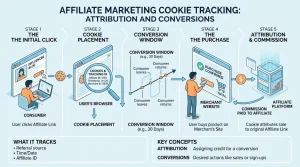
- Sales and conversions – Drive direct purchases through discount codes or affiliate links
- Content creation – Generate authentic UGC that can be repurposed across channels
- Community building – Grow a loyal audience around your brand identity
Once you’ve set a goal, match it to specific KPIs. If your influencer marketing campaign is focused on awareness, track reach, impressions, and share of voice. If it’s conversion-focused, track click-through rates, promo code redemptions, and revenue attributed to the campaign.
|
Campaign Goal |
Primary KPIs |
|---|---|
|
Brand Awareness |
Reach, Impressions, Follower Growth |
|
Product Launch |
Views, Saves, Story Swipe-Ups |
|
Lead Generation |
Link Clicks, Sign-Ups, Form Fills |
|
Sales/Conversions |
Promo Code Use, Revenue, ROAS |
|
Content Creation |
UGC Volume, Engagement Rate |
Step 2: Identify Your Target Audience
Your influencer marketing campaign will only succeed if it reaches the right people. Before searching for creators, build a detailed picture of your ideal customer: their age, location, interests, income level, values, and the platforms they spend time on.
This profile should drive every decision in your influencer marketing campaign—especially creator selection. A fitness brand targeting women aged 25–35 in the US should not run an influencer marketing campaign with a creator whose audience skews male and international, regardless of follower count.
Use your existing customer data, social media analytics, and tools like Sparktoro or Google Analytics to validate your assumptions before moving forward.
Step 3: Select the Right Platform
Platform selection is one of the most consequential decisions in any influencer marketing campaign. Each platform serves different content formats, demographics, and campaign objectives.
|
Platform |
Best For |
Primary Content Format |
|---|---|---|
|
|
Visual brands, fashion, beauty, lifestyle |
Photos, Reels, Stories |
|
TikTok |
Gen Z, viral reach, entertainment |
Short-form video |
|
YouTube |
In-depth reviews, tutorials, long-form |
Long-form video |
|
|
Home, food, DIY, fashion discovery |
Static pins, idea pins |
|
|
B2B brands, SaaS, professional services |
Articles, short posts |
|
Twitch |
Gaming, tech, live engagement |
Live streaming |
Your platform choice should follow your audience—not the other way around. Running an influencer marketing campaign on TikTok makes sense for consumer brands targeting younger audiences. For B2B software companies, a LinkedIn-based influencer marketing campaign will typically deliver stronger quality leads.
Step 4: Find and Vet the Right Influencers
Influencer discovery is where many brands go wrong. Follower count is not a reliable indicator of campaign performance. A micro-influencer with 20,000 highly engaged followers in your niche will almost always outperform a celebrity with 2 million passive ones in a targeted influencer marketing campaign.
Influencer tiers to consider:
|
Tier |
Follower Range |
Best Use Case |
|---|---|---|
|
Nano |
1K–10K |
Hyper-local or niche campaigns |
|
Micro |
10K–100K |
High engagement, targeted reach |
|
Mid-tier |
100K–500K |
Balance of reach and engagement |
|
Macro |
500K–1M |
Broad awareness campaigns |
|
Mega/Celebrity |
1M+ |
Mass brand awareness |
When vetting influencers for your influencer marketing campaign, evaluate the following:
- Audience demographics – Do their followers match your target customer?
- Engagement rate – Likes and comments relative to follower count (industry benchmark: 1–3% for macro, 3–6% for micro)
- Content quality – Does their content style align with your brand aesthetic?
- Authenticity – Do their sponsored posts feel genuine or forced?
- Past partnerships – Have they worked with direct competitors?
Tools like AspireIQ, Upfluence, Grin, and Heepsy can help you search, filter, and analyze influencer profiles at scale when building your influencer marketing campaign.
Step 5: Set Your Budget
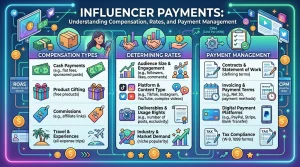
Budget planning for an influencer marketing campaign depends on your goals, the scale of the campaign, and the tier of influencers you’re targeting.
Typical pricing benchmarks (Instagram,):
- Nano influencer: $10–$100 per post
- Micro influencer: $100–$500 per post
- Mid-tier influencer: $500–$5,000 per post
- Macro influencer: $5,000–$20,000 per post
- Celebrity: $20,000+ per post
Beyond creator fees, your influencer marketing campaign budget should account for:
- Product gifting and shipping
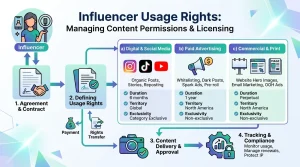
- Creative assets or usage rights
- Platform management tools
- Paid amplification of top-performing content
- Agency or management fees (if applicable)
A common rule of thumb: allocate 60–70% of your influencer marketing campaign budget to creator fees, 20% to paid amplification, and 10–20% to tools and operations.
Step 6: Build Your Outreach Strategy
Once you’ve identified target creators, you need a thoughtful outreach process. Cold outreach for an influencer marketing campaign should be personalized, concise, and clear about what you’re offering.
A strong outreach message:
- Addresses the creator by name
- Mentions a specific piece of their content you genuinely appreciated
- Briefly describes your brand and the campaign concept
- States the compensation clearly (fee, gifting, commission)
- Includes a clear call to action (schedule a call, reply to confirm interest)
Avoid generic mass outreach templates. Creators receive hundreds of collaboration requests weekly—a personalized message significantly improves your response rate and sets the tone for a productive influencer marketing campaign partnership.
Step 7: Create a Detailed Campaign Brief
A well-crafted brief is the backbone of any successful influencer marketing campaign. It gives creators the context they need to produce great content while preserving the creative freedom that makes their content authentic.
Your influencer marketing campaign brief should include:
Brand Overview
- Company mission, values, and tone of voice
- Key messaging and brand positioning
Campaign Overview
- Objective and KPIs
- Target audience description
Deliverables
- Exact content formats required (e.g., 1x Instagram Reel, 3x Stories)
- Posting timeline and deadlines
- Platform-specific requirements
Creative Direction
- Mandatory talking points or messages
- Products to feature
- Any restrictions (competitors not to mention, claims not to make)
Approval Process
- Content review timeline
- Number of revision rounds allowed
Compensation
- Payment terms and method
- Affiliate code or tracking link details
The brief should guide without micromanaging. Overly scripted content consistently underperforms in an influencer marketing campaign because audiences can detect inauthenticity immediately.
Step 8: Launch, Monitor, and Optimize
Once your influencer marketing campaign goes live, active monitoring is essential. Track early performance data—reach, engagement, link clicks, story views—and identify which content is resonating.
If certain creators are overperforming, consider boosting their content with paid spend. Platforms like Meta allow you to whitelist influencer posts for paid amplification, effectively turning organic influencer content into high-performing paid ads for your influencer marketing campaign.
Stay in regular communication with your creators. If something isn’t working, address it quickly. A collaborative relationship between brand and creator produces better outcomes than a transactional one.
For brands managing multiple partnerships simultaneously, inbound marketing automation best practices suggest using project management tools like Notion or Monday.com to track deliverable timelines, approval status, and content going live.
Step 9: Measure Results and Report
The final step in any influencer marketing campaign is comprehensive performance analysis. Pull data from each platform and compare against your original KPIs.
Key metrics to analyze:
|
Metric |
What It Measures |
|---|---|
|
Reach & Impressions |
Total audience exposed to the campaign |
|
Engagement Rate |
Quality of audience interaction |
|
Click-Through Rate |
Traffic driven to landing pages |
|
Conversion Rate |
Percentage of visitors who completed the goal |
|
Cost Per Acquisition |
Efficiency of campaign spend |
|
Earned Media Value |
Equivalent cost of the content if purchased as ads |
Document everything in a post-campaign report. This data becomes the foundation for optimizing your next influencer marketing campaign—which creators to rebook, which platforms to prioritize, and which content formats to double down on.
Types of Influencer Marketing Campaigns: A Quick Reference
|
Campaign Type |
Description |
Best For |
|---|---|---|
|
Sponsored Post |
Creator publishes a paid post featuring your product |
Awareness, launches |
|
Product Gifting |
Brand sends free product in exchange for honest review |
Authentic UGC |
|
Brand Ambassador |
Long-term partnership with recurring content |
Brand loyalty |
|
Affiliate/Commission |
Creator earns % of sales via unique link/code |
Direct sales |
|
Takeover |
Creator temporarily runs your brand’s social account |
Engagement |
|
Co-creation |
Brand and creator co-develop a product or campaign |
Deep partnerships |
|
Event Campaign |
Creator attends and covers a brand event |
PR, reach |
|
Challenge/Hashtag |
Creator launches a branded challenge |
Viral reach |
Choosing the right type of influencer marketing campaign depends on your budget, timeline, and goals. For brands just starting, gifting campaigns offer a low-cost entry point. For brands ready to scale, a brand ambassador influencer marketing campaign built on long-term relationships consistently delivers stronger ROI.
Tools to Manage Your Influencer Marketing Campaign Effectively
Managing an influencer marketing campaign at scale requires the right technology stack. Relying on spreadsheets and email threads becomes unmanageable as your program grows.
Discovery and Vetting:
- Upfluence – AI-powered influencer search with audience analytics
- AspireIQ – Creator marketplace and relationship management
- Heepsy – Filtering by niche, engagement rate, and location
Campaign Management:
- Grin – End-to-end influencer marketing campaign management
- Later Influence – Scheduling, content approval, and tracking
- Klear – Analytics and ROI reporting
Performance Tracking:
- Google Analytics – Track traffic and conversions from campaign links
- Bitly – Custom short links for click tracking
- Refersion – Affiliate and commission tracking
For brands integrating influencer efforts with broader digital marketing, marketing automation tools for small business inbound marketing can help connect influencer-driven traffic to email nurture sequences, retargeting ads, and CRM workflows seamlessly.
Common Mistakes That Kill an Influencer Marketing Campaign
Even experienced marketing teams make costly errors. Knowing what to avoid is just as important as knowing what to do.
1. Prioritizing follower count over engagement
A creator with 500K disengaged followers will underperform a micro-influencer with 30K passionate ones. Engagement rate is a far more reliable predictor of influencer marketing campaign performance.
2. Skipping the brief
Assuming creators will instinctively know what you want leads to off-brand content, missed messaging, and wasted spend. Every influencer marketing campaign needs a clear, detailed brief.
3. Lack of audience alignment
If the creator’s audience doesn’t match your target customer, even perfect content won’t convert. Audience fit is non-negotiable.
4. No tracking links or promo codes
Without attribution tools, you cannot measure the ROI of your influencer marketing campaign. Always include UTM parameters, unique discount codes, or affiliate links.
5. One-off partnerships only
Single posts rarely move the needle. Repeated exposure builds trust. Brands that invest in ongoing influencer relationships consistently see stronger results from each subsequent influencer marketing campaign.
6. Ignoring FTC disclosure requirements
In the US, the FTC requires creators to clearly disclose paid partnerships. Non-compliance can result in legal penalties for your brand and damage creator reputations. Ensure every influencer marketing campaign includes clear sponsorship disclosures (#ad, #sponsored, or platform-native disclosure tools).
How Automation Can Scale Your Influencer Marketing Campaign
As your influencer marketing program matures, manual processes become bottlenecks. This is where automation plays a critical role.
A step-by-step inbound marketing automation setup can help brands automate influencer outreach sequences, track responses, trigger onboarding workflows when a creator confirms, and send automated reminders for content deadlines—all without adding headcount.
Platforms like HubSpot offer powerful CRM functionality that can be adapted for influencer relationship management. A HubSpot inbound marketing automation guide can walk you through building contact pipelines for creators, automating follow-up sequences, and tracking partnership history across your influencer marketing campaign portfolio.
For brands scaling their program, marketing automation funnel optimization tips recommend segmenting influencers by tier, platform, and historical performance. This allows you to trigger different workflows for nano vs. macro creators and personalize communication at scale.
Understanding how to scale inbound marketing using automation also applies directly to the post-campaign phase. Automated lead nurturing with marketing automation tools can capture influencer-driven traffic and move new visitors through email sequences, retargeting flows, and conversion funnels without manual intervention—compounding the results of each influencer marketing campaign long after the content goes live.
How to Build Long-Term Influencer Relationships That Compound Results

The most effective brands don’t just run isolated influencer marketing campaigns—they build ongoing creator communities. A creator who has worked with your brand multiple times becomes a genuine advocate. Their audience notices the consistency and authenticity.
Long-term influencer relationships deliver:
- Lower cost per post – Returning creators often offer better rates
- Better content quality – Familiarity with the brand produces more authentic content
- Stronger audience trust – Repeated mentions build credibility with the creator’s followers
- Deeper data – Multiple campaign cycles give you richer performance data to optimize against
To build these relationships, treat influencers as creative partners rather than vendors. Give them input on campaign direction, share campaign results with them, celebrate their wins publicly, and offer exclusivity opportunities that make them feel valued.
An influencer marketing campaign built on genuine partnership consistently outperforms transactional, one-off collaborations.
Conclusion
A successful influencer marketing campaign is built on strategic clarity, genuine creator alignment, and disciplined performance measurement. From defining goals and selecting the right platform to crafting a strong brief and tracking every conversion, each step in your influencer marketing campaign process compounds into measurable brand growth. The brands that treat influencer marketing as a long-term channel—investing in real relationships and continuous optimization—are the ones that consistently pull ahead. Start with a focused, well-planned influencer marketing campaign, measure rigorously, refine based on data, and build from there. Executed with intention, influencer marketing remains one of the highest-ROI channels available to brands today.
Frequently Asked Questions
1. What is an influencer marketing campaign?
An influencer marketing campaign is a brand collaboration with social media creators designed to promote a product, service, or message to a targeted audience through authentic, creator-produced content.
2. How much does an influencer marketing campaign cost?
Costs range widely—from a few hundred dollars for nano-influencer gifting campaigns to tens of thousands for macro-influencer partnerships. Budget depends on influencer tier, platform, deliverable scope, and campaign duration.
3. How do I find the right influencers for my campaign?
Use discovery platforms like Upfluence, AspireIQ, or Heepsy to search by niche, engagement rate, audience demographics, and platform. Prioritize audience fit and engagement quality over raw follower count.
4. What metrics should I track in an influencer marketing campaign?
Key metrics include reach, impressions, engagement rate, click-through rate, conversion rate, cost per acquisition, and earned media value. The right metrics depend on your campaign objective.
5. What is the difference between a micro-influencer and a macro-influencer?
Micro-influencers have between 10K and 100K followers and typically deliver higher engagement rates and more targeted reach. Macro-influencers have between 500K and 1M followers and are better suited for broad awareness campaigns.
6. How long should an influencer marketing campaign run?
Campaign length depends on the goal. A product launch campaign may run two to four weeks. A brand ambassador program can run six to twelve months. Longer campaigns generally produce stronger brand recall and audience trust.
7. Do I need a contract for an influencer marketing campaign?
Yes. A clear contract protects both parties. It should outline deliverables, deadlines, compensation, content approval rights, usage rights, exclusivity clauses, and FTC disclosure requirements.
8. How do I measure the ROI of an influencer marketing campaign?
Track revenue attributed to unique promo codes or affiliate links, monitor UTM-tagged traffic in Google Analytics, and calculate cost per acquisition against total campaign spend.
9. What platforms work best for an influencer marketing campaign?
Instagram and TikTok are most effective for consumer brands targeting younger audiences. YouTube works well for in-depth product reviews. LinkedIn is best for B2B brands. Platform selection should always follow your target audience’s behavior.
10. Can small businesses run effective influencer marketing campaigns?
Absolutely. Small businesses often see the strongest results from nano and micro-influencer campaigns, which are cost-effective and deliver highly targeted reach within specific niches or local markets.