Whitelisting vs. Darkposting: The Ultimate Guide for Influencer Marketing
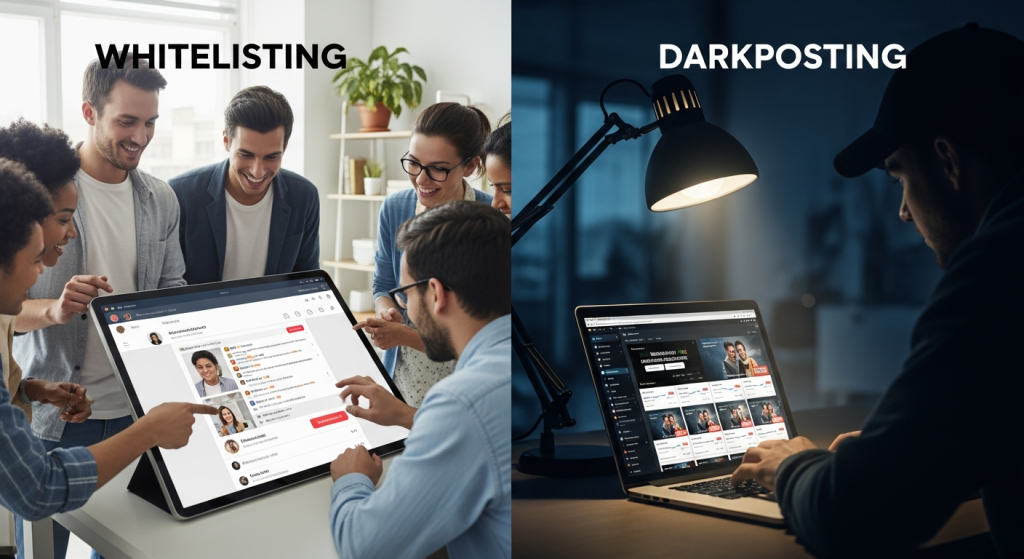
Whitelisting and darkposting empower brands to scale influencer content through paid ads while preserving authenticity. These strategies deliver precise targeting, higher ROI, and scalable performance—especially effective for ecommerce, SaaS, and NFT marketing campaigns.
Influencer marketing has evolved far beyond simple sponsored posts. Two powerful strategies—whitelisting and darkposting—are reshaping how brands amplify influencer content and reach their target audiences. These techniques give marketers greater control over distribution, targeting, and performance measurement, yet many professionals still struggle to apply them effectively.
As organic reach declines and paid social competition increases, brands need scalable ways to maximize influencer partnerships. Whitelisting allows brands to run ads through an influencer’s handle, combining creator authenticity with precise audience targeting and analytics. Darkposting, meanwhile, promotes influencer content as paid ads that remain invisible on public feeds, making it ideal for testing creatives, messaging, and segmented audiences.
Together, whitelisting and darkposting bridge influencer trust with performance marketing, driving stronger ROI and smarter campaign optimization.
What is Whitelisting in Influencer Marketing?
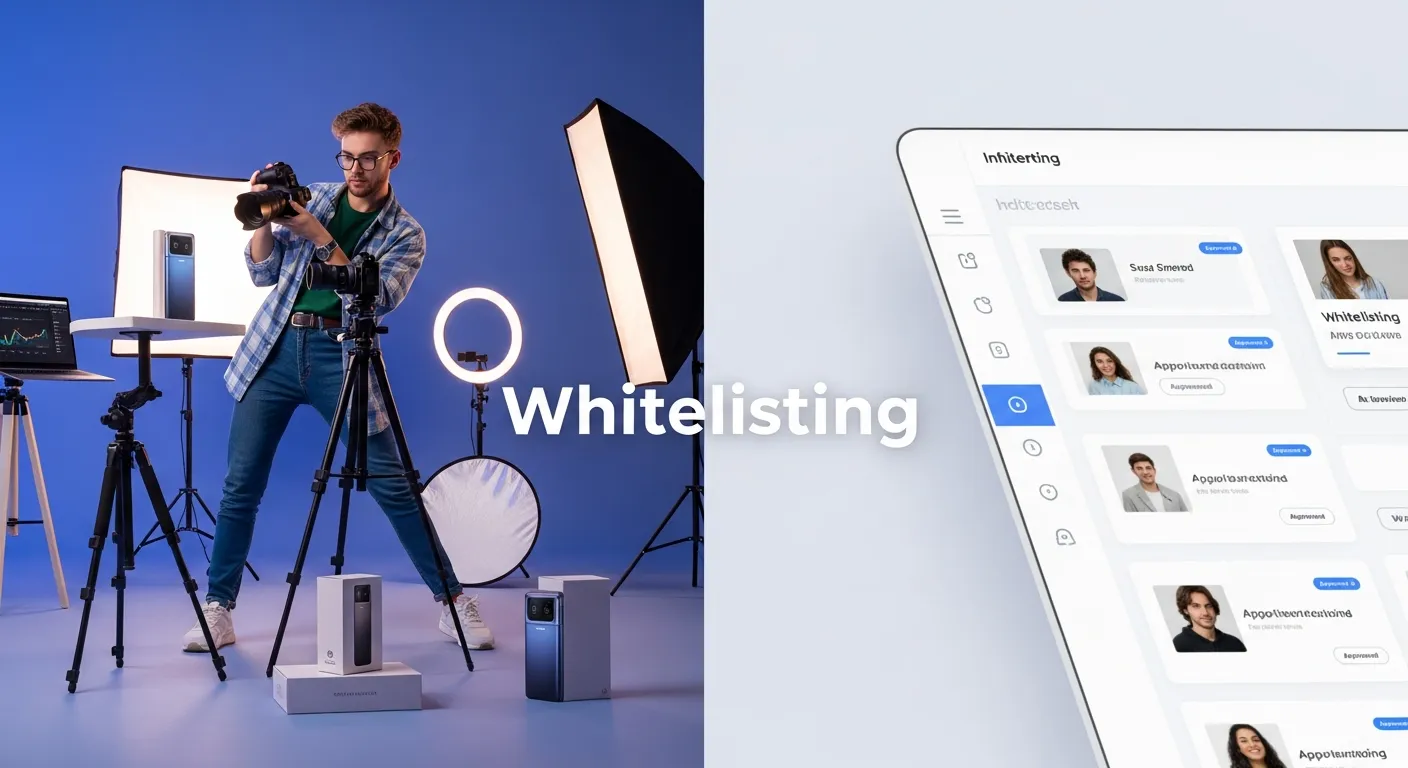
Whitelisting is a strategic partnership approach where influencers grant brands permission to use their social media accounts for advertising purposes. When an influencer “whitelists” a brand, they’re essentially allowing the company to run paid advertisements directly from the influencer’s profile.
This process creates a unique advertising opportunity. Instead of promoting content from the brand’s official account, the ads appear to come from the trusted influencer’s profile. The content maintains the influencer’s authentic voice and visual style while leveraging the brand’s advertising budget and targeting capabilities.
How Whitelisting Works
The whitelisting process typically involves several key steps:
Partnership Setup: The brand and influencer establish a formal agreement that includes whitelisting permissions. This contract outlines usage rights, duration, and compensation terms.
Account Access: The influencer provides the brand with advertising access to their social media account through platform-specific tools like Facebook Business Manager or TikTok Ads Manager.
Content Selection: Brands choose which of the influencer’s posts to promote or create new content specifically for the whitelisted campaigns.
Campaign Launch: The brand runs targeted advertisements using the influencer’s account as the source, reaching audiences beyond the influencer’s organic followers. Learn more about A Simple Introduction to an Entry-Level Influencer Marketing.
Benefits of Whitelisting
Whitelisting offers several compelling advantages for both brands and influencers:
Enhanced Credibility: Ads appearing from influencer accounts feel more authentic and trustworthy compared to traditional markerting advertising. Consumers are more likely to engage with content that appears to come from someone they follow and trust.
Extended Reach: Brands can target specific demographics, interests, and behaviors beyond the influencer’s organic audience. This precision targeting often leads to better return on ad spend.
Performance Tracking: Detailed analytics help brands measure campaign effectiveness, including engagement rates, click-through rates, and conversion metrics.
Content Longevity: High-performing influencer content can continue generating results long after the original partnership ends, maximizing the value of the initial investment.
Understanding Darkposting in Influencer Marketing

Darkposting, also known as unpublished post advertising, involves creating sponsored content that doesn’t appear on the influencer’s public feed but can be promoted as paid advertisements. These “dark” posts exist solely in the advertising ecosystem, invisible to organic followers but visible to targeted paid audiences.
This strategy allows brands to test different creative variations, messaging, and targeting approaches without cluttering the influencer’s regular content feed. Darkposting provides flexibility and control while preserving the influencer’s content aesthetic and posting schedule.
The Darkposting Process
Darkposting follows a structured approach:
Content Creation: Brands and influencers collaborate to create sponsored content specifically designed for paid promotion rather than organic posting.
Post Setup: The content is uploaded to the advertising platform but remains unpublished on the influencer’s public profile.
Audience Targeting: Brands define specific audience segments to receive the darkposted content through paid advertising.
Campaign Optimization: Multiple versions of darkposts can be tested simultaneously to identify the most effective creative and messaging combinations.
Advantages of Darkposting
Darkposting delivers unique benefits that make it attractive for specific campaign objectives:
Creative Freedom: Brands can experiment with different messaging, calls-to-action, and visual elements without affecting the influencer’s organic content strategy.
Testing Capabilities: Multiple variations of the same concept can be tested to optimize performance before committing to larger advertising budgets.
Feed Preservation: Influencers maintain control over their organic content while still participating in paid advertising campaigns.
Targeted Messaging: Different darkposts can be created for different audience segments, enabling highly personalized advertising approaches.
Key Differences Between Whitelisting and Darkposting
While both strategies involve influencer partnerships and paid advertising, they serve different purposes and offer distinct advantages:
Content Visibility
Whitelisted content typically starts as organic posts on the influencer’s profile before being promoted through paid advertising. Darkposted content never appears organically and exists only within the paid advertising ecosystem.
Audience Exposure
Whitelisting exposes content to both organic followers and targeted paid audiences. Darkposting reaches only the specifically targeted paid audiences, providing more precise control over who sees the content.
Content Volume
Whitelisting usually involves selecting existing high-performing posts for promotion. Darkposting allows for the creation of multiple content variations specifically designed for different advertising objectives.
Campaign Duration
Whitelisted content can be promoted for extended periods, often months after the original post. Darkposts are typically created for specific campaign periods and objectives.
When to Use Whitelisting vs. Darkposting
Choosing between whitelisting and darkposting depends on your campaign objectives, budget, and partnership structure.
Ideal Scenarios for Whitelisting
Brand Awareness Campaigns: When you want to maximize reach and leverage the influencer’s established audience trust.
Product Launches: Promoting new products or services where authentic endorsement is crucial for adoption.
Long-term Partnerships: When working with brand ambassadors or ongoing influencer relationships.
Budget Efficiency: When you need to extend the life and reach of already successful organic content.
Perfect Situations for Darkposting
Testing and Optimization: When you need to test different creative approaches or messaging strategies.
Sensitive Campaigns: For promotions or sales that might not align with the influencer’s typical content style.
Audience Segmentation: When targeting different demographics require different messaging approaches.
High-Volume Campaigns: When running multiple simultaneous campaigns with different objectives.
Best Practices for Implementation
Successfully implementing whitelisting and darkposting requires careful planning and execution.
Whitelisting Best Practices
Clear Agreements: Establish detailed contracts outlining usage rights, duration limits, and approval processes for promoted content.
Performance Selection: Choose high-performing organic posts with strong engagement rates for whitelisted promotion.
Audience Alignment: Ensure your target audience aligns with the influencer’s follower demographics for optimal performance.
Budget Allocation: Start with smaller budgets to test performance before scaling successful whitelisted campaigns.
Darkposting Best Practices
Creative Variation: Develop multiple versions of darkposts to test different approaches and identify top performers.
Brand Guidelines: Maintain consistent brand messaging while preserving the influencer’s authentic voice and style.
Approval Workflows: Establish clear approval processes for darkposted content to ensure quality and brand alignment.
Performance Monitoring: Track performance metrics closely to optimize targeting and creative elements in real-time.
Measuring Success and ROI
Both whitelisting and darkposting require comprehensive measurement strategies to evaluate effectiveness and return on investment.
Key Performance Indicators
Engagement Metrics: Track likes, comments, shares, and saves to measure audience interaction with promoted content.
Reach and Impressions: Monitor how many people see your promoted content and how frequently they encounter it.
Click-Through Rates: Measure how effectively your content drives traffic to landing pages or product pages.
Conversion Tracking: Use platform-specific pixels and tracking tools to measure sales, sign-ups, or other desired actions.
Cost Efficiency: Calculate cost-per-click, cost-per-acquisition, and return on ad spend to evaluate campaign profitability.
NFT Marketing Use Case
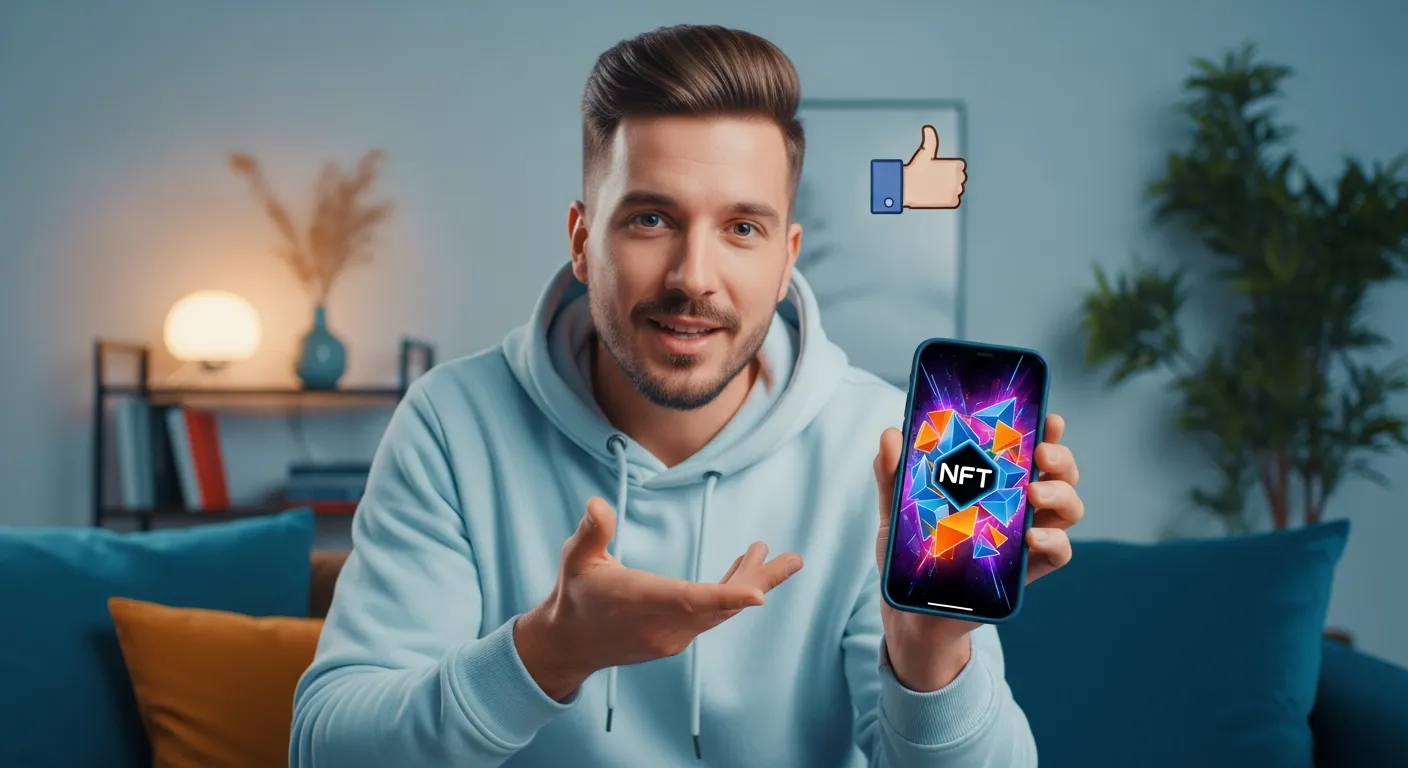
In NFT marketing, trust and community credibility are critical. Whitelisting allows NFT projects to run ads directly from respected Web3 influencers, making promotions feel organic rather than hype-driven. Darkposting enables projects to test narratives—utility-focused vs. art-driven vs. community-led—before public launches. These strategies are commonly used for whitelist sign-ups, Discord growth, mint announcements, and secondary market traction. By combining influencer authority with paid targeting, NFT projects can reach genuine collectors while avoiding spammy promotion tactics.
Maximizing Your Influencer Marketing Impact
Whitelisting and darkposting represent powerful evolution in influencer marketing strategy. These approaches transform traditional influencer partnerships into sophisticated advertising campaigns that combine authentic content with precision targeting.
The choice between whitelisting and darkposting—or using both in combination—depends on your specific campaign objectives, audience targeting needs, and content strategy. Successful brands often integrate both approaches into comprehensive influencer marketing programs that maximize reach, engagement, and return on investment.
Start by identifying your primary campaign objectives and audience targeting requirements. Then, work with influencer partners who understand these advanced strategies and can collaborate effectively on implementation. With proper planning and execution, whitelisting and darkposting can significantly amplify your influencer marketing results while maintaining the authenticity that makes influencer content so effective.
Conclusion
Whitelisting and darkposting redefine influencer marketing by blending creator authenticity with the precision of paid media. When executed correctly, these strategies allow brands to scale high-performing influencer content, reach highly targeted audiences, and gain full control over optimization and analytics. Whitelisting builds trust by delivering ads through familiar creator profiles, while darkposting enables brands to test creatives, audiences, and messaging without cluttering public feeds. Together, they reduce wasted ad spend and improve conversion rates across the funnel.
12 Frequently Asked Questions (FAQ)
1. What is influencer whitelisting?
Influencer whitelisting allows brands to run paid advertisements directly from an influencer’s social media account. This creates ads that feel more authentic, as they appear to come from a trusted creator rather than a brand page.
2. What is darkposting?
Darkposting refers to paid influencer advertisements that do not appear on the influencer’s public feed. These ads are shown only to selected audiences through paid targeting, allowing brands to test and scale content discreetly.
3. Which is better for conversions?
Whitelisting generally delivers higher conversions because it leverages influencer credibility and social proof. Audiences are more likely to trust and engage with ads that appear directly from influencers they already follow.
4. Can both be used together?
Yes, many brands strategically combine whitelisting and darkposting. Darkposting is often used for testing creatives, while whitelisting scales the highest-performing content for broader reach and conversions.
5. Is whitelisting expensive?
Whitelisting costs vary based on influencer size, duration, and usage rights. However, it often delivers stronger ROAS by extending the lifespan and performance of proven influencer content.
6. Does darkposting affect influencer feeds?
No, darkposting does not impact an influencer’s organic feed. The content remains hidden from public profiles, allowing influencers to maintain content consistency and brand alignment.
7. Are these strategies compliant?
Yes, whitelisting and darkposting are compliant when proper contracts, disclosures, and platform guidelines are followed. Clear agreements protect both brands and influencers legally and ethically.
8. Do NFTs use whitelisting?
Yes, NFT projects frequently use whitelisting to promote mint launches, Discord communities, and utility announcements through trusted Web3 influencers, increasing credibility and collector confidence.
9. Which platforms support these methods?
Major platforms such as Meta (Facebook & Instagram), TikTok, YouTube, and Snapchat support influencer whitelisting and darkposting through their advertising managers.
10. Do influencers approve ads?
In most cases, influencers approve all ad creatives before launch. Approval terms, duration, and usage rights are typically outlined in the influencer agreement.
11. Can small brands use this?
Absolutely. Small brands can start with low budgets, test performance through darkposting, and gradually scale successful campaigns using whitelisting without large upfront investments.
12. Is this the future of influencer marketing?
Yes, influencer marketing is evolving toward paid amplification models. Whitelisting and darkposting are becoming standard practices for brands seeking scalable, data-driven, and performance-focused influencer campaigns.