Influencer Marketing vs Paid Media: What’s the Difference?
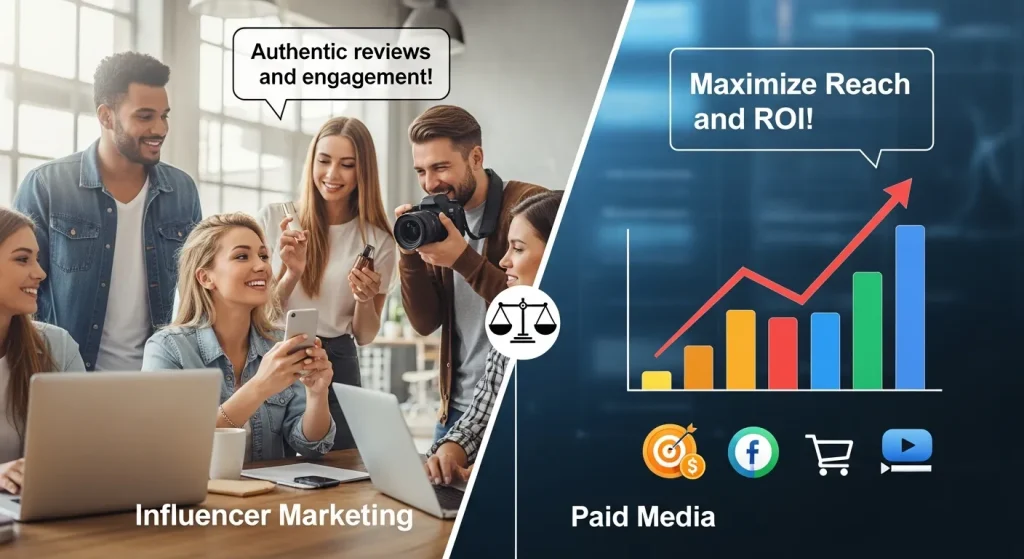
Explore the evolving dynamics of Influencer Marketing and Paid Media. This comprehensive guide highlights their differences, hybrid nature, and integration strategies, offering actionable insights for marketers to optimize campaigns and achieve measurable results in the digital landscape.
When you think of paid media, your mind likely jumps to traditional digital advertising avenues: search engine ads, banner displays, or promoted posts on social platforms. But what about Influencer Marketing? As creator partnerships become the cornerstone of successful digital strategies, the debate regarding where Influencer Marketing ends and traditional paid marketing begins is becoming increasingly complex.
Whether you are a seasoned Chief Marketing Officer trying to optimize your budget allocation or a digital marketing specialist unraveling the complexities of online advertising, understanding the nuance between these two powerhouses is critical. In this comprehensive guide, we will dissect the characteristics of paid marketing, define the evolving scope of Influencer Marketing, and explain why integrating these approaches is the future of brand growth.
What is Paid Media? The Foundation of Digital Advertising
Before we can determine whether Influencer Marketing truly falls under the umbrella of paid marketing, we must first establish a concrete definition of paid media itself. In the digital ecosystem, paid media acts as the fuel that accelerates your content’s reach.
Defining Paid Media
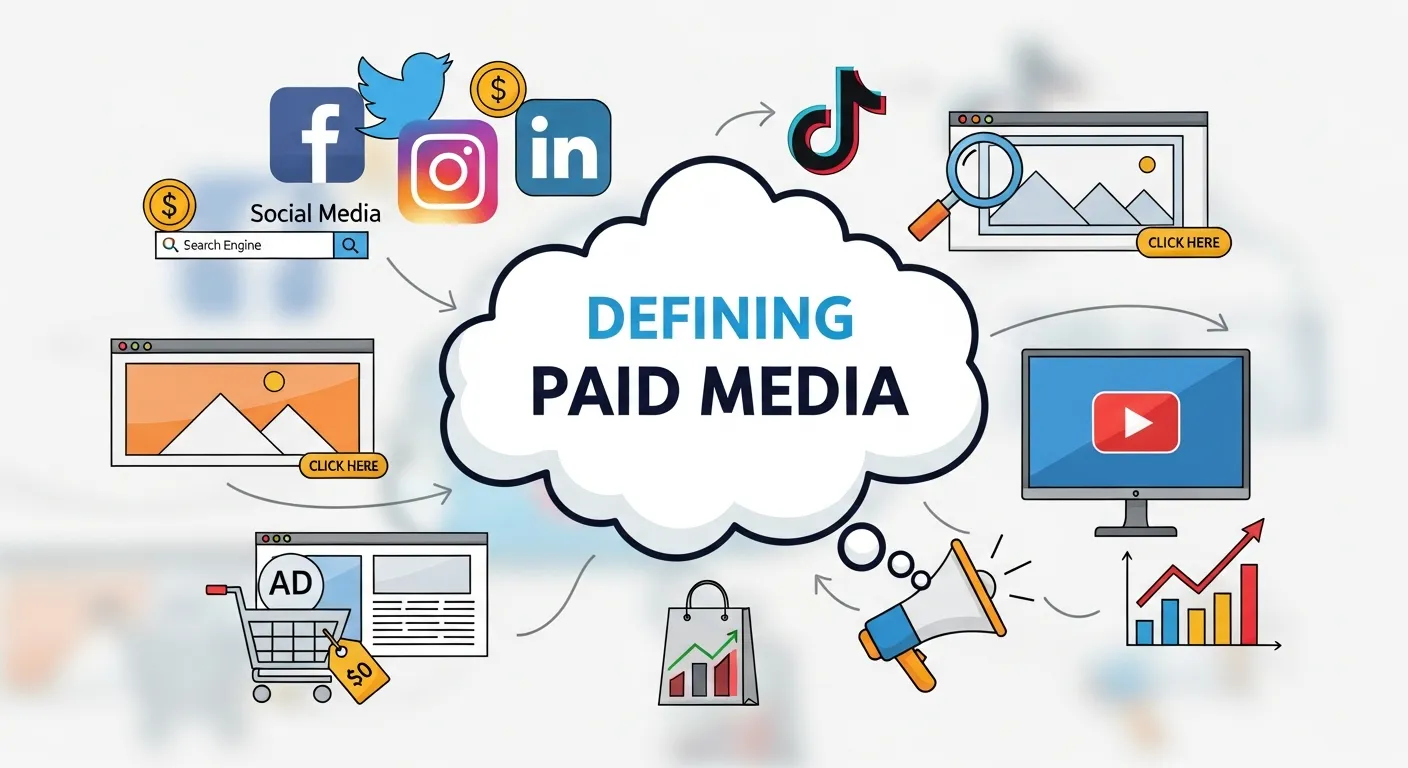
Paid media consists of any external marketing effort that involves a direct financial transaction to secure visibility for your brand, product, or service. Unlike owned media (your website, blog) or earned media (public relations, organic shares), paid marketing guarantees placement in front of a specific audience.
This category encompasses a wide array of channels:
- Search Engine Advertising: Platforms like Google Ads and Bing Ads allow brands to bid on keywords, ensuring their solutions appear when users express active intent.
- Social Media Advertising: Facebook, Instagram, LinkedIn, and TikTok offer robust ad managers that allow for granular targeting based on user behavior and demographics.
- Display Advertising: Banner ads and visual creatives placed on third-party websites through networks like the Google Display Network.
- Sponsored Content: Native ads and placements on publisher sites that blend in with editorial content.
The Core Characteristics of Paid Marketing
To differentiate paid marketing from other forms, look for these three defining pillars:
- Direct Payment for Visibility: The transaction is explicit—you pay the platform or publisher, and they display your message.
- Targeted Reach: Paid marketing allows for precision. You can target specific demographics, psychographics, locations, and interests.
- Analytics and Control: You have near-total control over the creative, the copy, and the landing page, with detailed metrics on clicks, impressions, and conversions.
Paid marketing provides businesses with a direct, scalable route to visibility. The philosophy is straightforward: we invest capital to reach our target audience through specific media where we know they spend their time.
Defining Influencer Marketing: The Trust Economy
Now that we’ve established the parameters of paid marketing, let’s shift our focus to the dynamic world of Influencer Marketing. This strategy relies on partnerships with individuals—creators—who have cultivated a dedicated audience and hold significant sway over their followers’ purchasing decisions.
How Influencer Marketing Operates

Influencer Marketing is distinct because it borrows the “social capital” of a creator. Brands partner with influencers to:
- Create Branded Content: Influencers produce unique assets—Instagram Reels, TikToks, YouTube vlogs—that feature the brand’s offering.
- Provide Social Proof: By sharing honest opinions or testimonials, influencers validate the product’s worth to a skeptical audience.
- Drive Action: Influencers use their persuasion skills to encourage followers to take specific steps, such as visiting a website or using a discount code.
The Power of Authenticity
At its core, Influencer Marketing relies on leveraging trust. Consumers have grown weary of faceless corporate advertising. They are statistically more likely to trust recommendations from creators they admire than traditional paid marketing advertisements. This “parasocial relationship”—the one-sided bond users feel with creators—is the engine that drives high conversion rates in Influencer Marketing campaigns.
Comparative Analysis: The Differences Between the Two
While both strategies aim to increase revenue and brand awareness, they operate on different mechanics. Understanding these differences is vital for effective budget allocation.
1. Control Over Messaging
In traditional paid marketing, the brand is the dictator of the message. Every word of copy, every pixel of the image, and every second of the video is approved by the brand. The message is uniform and safe.
In Influencer Marketing, the brand must relinquish some control. To maintain authenticity, the influencer must speak in their own voice. While brands can provide briefs and talking points, the final output is filtered through the creator’s lens. This lack of control can be scary, but it is necessary for the content to resonate.
2. Audience Reception
Paid marketing is often viewed as an interruption. Users scroll past ads, install ad blockers, or skip video commercials. It is an intrusion into their entertainment.
Influencer Marketing is viewed as entertainment or value. Because the user has opted to follow the creator, they are inviting that content into their feed. When a product is integrated seamlessly into a creator’s narrative, the audience is far more receptive compared to a standard paid marketing ad unit.
3. Longevity of Content
A paid marketing campaign stops the moment you stop paying. Once the budget dries up, the traffic hits zero.
Influencer Marketing often has a long-tail effect. A YouTube video review or a blog post by an influencer can remain indexed in search engines for years, driving traffic long after the initial campaign has ended. This organic residual value is something traditional paid marketing rarely offers.
Influencer Marketing vs Paid Marketing
|
Feature |
Paid Marketing |
Influencer Marketing |
|---|---|---|
|
Primary Goal |
Direct acquisition, traffic, and retargeting. |
Trust building, brand awareness, and social proof. |
|
Control |
High. Brand controls 100% of the creative. |
Moderate. Creator controls the voice and style. |
|
Cost Model |
CPM, CPC, CPA (Performance-based). |
Flat fee, product gifting, or commission. |
|
Audience Trust |
Lower. Consumers know it is an ad. |
Higher. Consumers view it as a recommendation. |
|
Scalability |
Instant. Can scale budget up or down in seconds. |
Slower. Requires negotiation and content creation time. |
|
Longevity |
Temporary. Visibility ends when the budget stops. |
Permanent/Long-term. Content often stays on feeds. |
The Hybrid Nature: Does Influencer Marketing Qualify as Paid Media?
Here is where the lines blur. Technically, Influencer Marketing shares many similarities with paid marketing, leading many professionals to categorize it under the same budget line.
Arguments for “Yes”
- Monetary Exchange: Most serious Influencer Marketing campaigns involve direct payments. If you are paying for reach and placement, it fits the definition of paid marketing.
- Goal-Oriented Strategy: Just like traditional paid marketing campaigns, influencers are hired to drive specific measurable outcomes like sales or app installs.
- Sponsored Content Disclosure: Legal frameworks (like the FTC in the US) require influencers to disclose partnerships with tags like #ad or #sponsored. This legal requirement effectively categorizes the output as a commercial advertisement, similar to paid marketing.
Arguments for “No”
- Authenticity vs. Ad-Like Quality: Many argue that Influencer Marketing feels more personal and authentic, unlike the cold, controlled messaging of paid marketing ads.
- Organically-Sourced Impact: Influencer posts, while paid for, can go viral organically. The algorithm treats them as content, not just ads. This ability to achieve earned media reach beyond the paid scope separates it from traditional media buying.
The Verdict: It is a Hybrid
Influencer Marketing is best viewed as a hybrid that bridges paid marketing, earned media, and owned media.
- Paid: You pay for the creation and initial distribution.
- Earned: The community engagement, shares, and conversations generated are organic.
- Owned: If negotiated correctly, the brand can repurpose the influencer content for its own channels.
Integrating Product Strategy with Promotion
To truly succeed with Influencer Marketing and paid marketing, you must align these promotional tactics with a robust underlying product strategy. Without a solid foundation, even the best marketing spend will fail to retain customers. This involves detailed planning regarding market entry and the utilization of modern technology.
Developing a cohesive plan
Before spending a dime on paid marketing or creators, ensure your product roadmap is solid. A great campaign cannot fix a product with no market fit. Marketing and product teams must collaborate to define the unique selling propositions that influencers will highlight. For detailed steps, see this guide on how to create a proper product marketing plan how to create a proper product marketing plan.
Leveraging AI in your strategy
The landscape of paid marketing is shifting rapidly due to artificial intelligence. From predictive analytics for ad bidding to AI-generated briefs for influencers, technology is streamlining how we approach campaigns. To understand how these technological changes are shaping the future, see this in-depth resource: how AI is changing the future of product marketing.
Entering new markets
When launching in a new territory, Influencer Marketing can be more effective than traditional ads because locals trust local voices. Combining this with a paid marketing blitz ensures you capture both trust and reach simultaneously. For a detailed approach on entering new markets, see this guide on building a product marketing strategy for a new market entry.
Benefits of Treating Influencer Marketing Like Paid Media
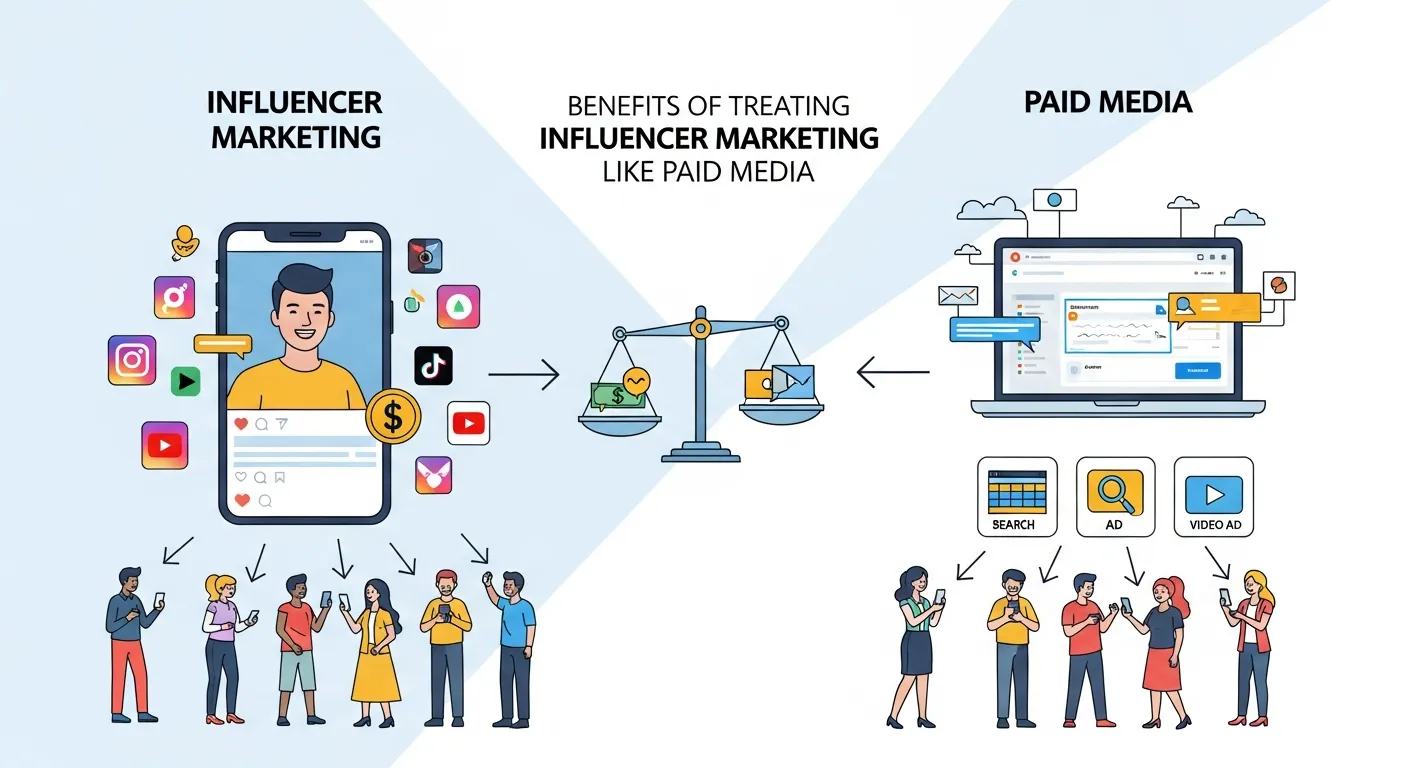
By viewing Influencer Marketing as a rigorous component of your paid marketing strategy rather than a vague “brand awareness” play, you can unlock numerous advantages.
1. Measurable ROI
Modern Influencer Marketing is no longer a guessing game. It is highly measurable. By using unique tracking links, UTM parameters, and discount codes, brands can track conversions just as they would with a Google Ads campaign. Metrics like cost-per-click (CPC) and cost-per-acquisition (CPA) allow brands to benchmark Influencer Marketing against other paid marketing channels.
2. Scalable Reach
Collaborating with influencers provides a direct audience base that may otherwise be difficult to access through standard targeting. Influencers have curated audiences. When you treat this as paid marketing, you can systematically layer influencers to cover different segments of your target market, effectively scaling your reach horizontally.
3. Complementary to Programmatic Ads
Pairing Influencer Marketing with programmatic ad buying amplifies your reach. This is often called “Whitelisting” or “Creator Licensing.” This is where a brand gains access to the influencer’s ad account to run paid marketing ads appearing to come from the influencer’s handle. This technique often yields a lower CPA than brand-handle ads because it looks like organic content.
4. More Impactful Storytelling
Influencer Marketing adds a storytelling dimension to paid marketing. Instead of a static banner ad that screams “BUY NOW,” the influencer’s narrative makes your product part of a lifestyle. It contextualizes the value proposition in a way that standard paid marketing cannot.
Challenges of Integrating Influencer Marketing into Paid Strategy
While the benefits are substantial, adopting Influencer Marketing as a disciplined part of your paid marketing strategy comes with hurdles.
Lack of Control
Brands must trust influencers to craft content. In traditional paid marketing, you can A/B test a headline instantly. With influencers, revisions take time, and too many revisions can ruin the relationship and the authenticity of the content.
Regulatory Compliance
Influencers need to ensure compliance with FTC guidelines on sponsorship disclosures. If an influencer fails to tag a post correctly, the brand is liable. This adds a layer of legal risk not present in platform-controlled paid marketing.
ROI Reliability
Not every influencer collaboration guarantees measurable business outcomes. An influencer might have high engagement but low conversion power. In contrast, paid marketing algorithms are designed to optimize for conversions automatically over time. Choosing the right influencer requires human intuition and data analysis.
Finding Balance in Digital Strategies
The question “Is Influencer Marketing actually paid marketing?” may not have a binary answer. But for high-growth companies, the better question is, “How does Influencer Marketing fit into our holistic media strategy?”
The true genius of Influencer Marketing is in its adaptive nature. Understanding that it has connections to traditional paid marketing while retaining its own attributes as a hybrid method will give brands the ability to plan more effectively.
Where to Start?
If you’re looking to incorporate Influencer Marketing into your paid marketing arsenal, keep these essentials in mind:
- Choose Influencers Strategically: Look for influencers whose values align with your brand. Micro-influencers often deliver better engagement at lower costs compared to mega-influencers.
- Set Clear Goals: Define what success looks like. Is it paid marketing efficiency? Is it brand lift? Is it direct sales?
- Track, Iterate, and Optimize: Treat influencer campaigns like you would any paid marketing ad set. Use data to optimize your approach, kill underperforming partnerships, and double down on winners.
Integrating Influencer Marketing into your paid marketing strategy creates the potential to truly engage with people at scale. It transforms your strategy from a monologue (ads talking at people) to a dialogue (creators talking with people).
Frequently Asked Questions (FAQ)
Q1: Why is there confusion between Influencer Marketing and paid media?
The confusion stems from the fact that money changes hands in both scenarios. Since brands pay influencers for visibility, it technically fits the definition of paid media. However, the delivery method relies on human connection and organic reach, which complicates the categorization.
Q2: What are the primary benefits of using influencers over standard ads?
Influencers offer social proof that standard ads cannot replicate. They have built trust with audiences over the years, meaning their endorsement carries weight. For more details on influencer marketing benefits and best practices.
Explore more about influencer marketing benefits and best practices here.
Q3: Can Influencer Marketing really be measured like paid ads?
Yes, with the right tools. By using tracked links, unique promo codes, and pixel tracking, you can attribute sales directly to specific influencers. This allows you to calculate Return on Ad Spend (ROAS) just as you would for a Facebook ad campaign.
Q4: How do I find the right influencers for my brand?
You need to look for creators who share your brand values and have an audience that matches your target demographic. Manual searching is possible, but using dedicated influencer outreach platforms can significantly streamline the process.
Check out this list of influencer outreach tools for your next collab.
Q5: Is Influencer Marketing more expensive than Facebook Ads?
It varies wildly. Influencer marketing can have a higher upfront cost for content creation, but the CPM (Cost Per Mille) can sometimes be lower than competitive paid ad auctions. Additionally, the content created by influencers can be reused, adding value that a standard ad impression does not have.
Q6: What Key Performance Indicators (KPIs) should I track?
You should track engagement rates, click-through rates, and conversion rates. Additionally, tracking “Saved” posts is a great indicator of purchase intent. For a detailed overview, see this comprehensive influencer marketing KPI guide.
Read this comprehensive influencer marketing KPI guide for more details.
Q7: What is “Whitelisting” in Influencer Marketing?
Whitelisting is the process of a brand gaining advertising access to an influencer’s social media account. The brand then puts paid media budget behind the influencer’s posts, allowing them to run ads that look like organic content from the creator’s handle.
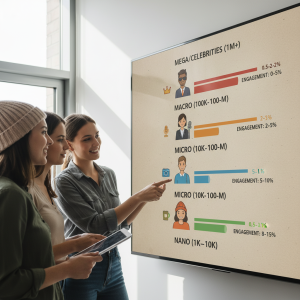
Q8: How do micro-influencers differ from macro-influencers in paid strategies?
Micro-influencers (10k-100k followers) typically have higher engagement rates and lower costs, making them great for conversion-focused campaigns. Macro-influencers offer massive reach and are better suited for top-of-funnel brand awareness objectives within a paid marketing strategy.
Q9: Do I need a contract for Influencer Marketing?
Absolutely. Just like any paid media insertion order, you need a contract that outlines deliverables, usage rights, payment terms, and exclusivity clauses. This protects your brand and ensures the influencer understands the campaign requirements.
Q10: Can I use influencer content on my website?
Generally, yes, but only if you have negotiated usage rights. Owning the rights to repurpose influencer content on your website, email newsletters, and paid ads is a powerful way to maximize the ROI of your collaboration.