Influencer Brand Fit: Finding Creators Who Truly Match Your Brand
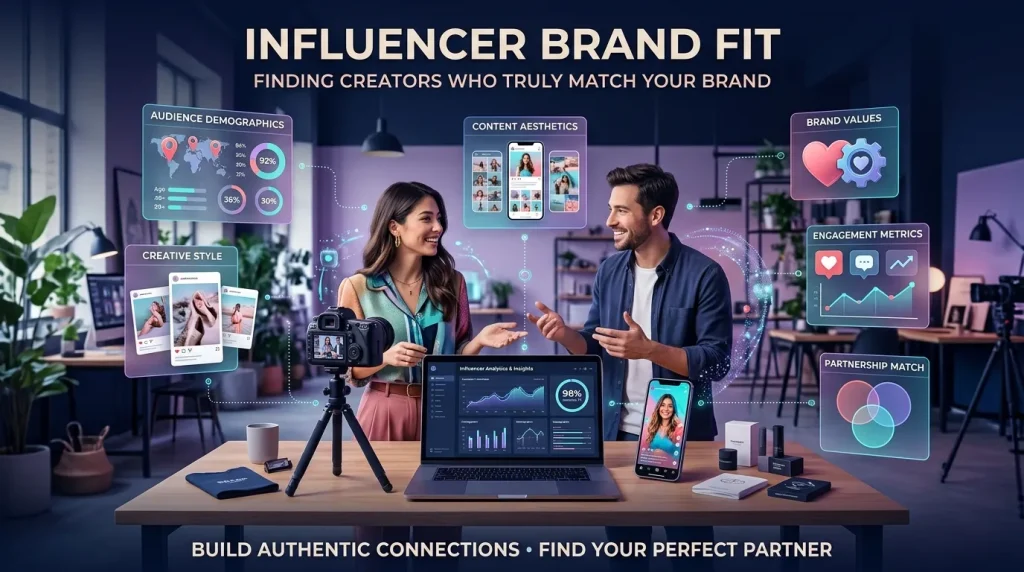
Influencer Brand Fit is the alignment between a creator’s values, content style, audience, and a brand’s identity. Strong compatibility makes influencer partnerships more authentic and relevant, helping businesses build trust, improve campaign performance, and develop lasting creator relationships. Effective selection requires evaluating audience relevance, creative compatibility, reputation, campaign objectives, and partnership expectations.
A successful influencer partnership is not built on follower counts alone. A creator may have a large audience, impressive engagement, and polished content, yet still be the wrong choice for a brand. The real value of influencer marketing comes from the connection between the creator’s identity, audience expectations, content style, and the brand’s purpose.
Influencer Brand Fit describes how naturally an influencer aligns with a company’s values, products, communication style, and target customers. When this connection is strong, sponsored content feels relevant rather than forced. Followers can understand why the creator is recommending a product, and the partnership has a better chance of building trust.
This alignment matters because influencer marketing is more than a promotional transaction. It is a relationship in which a brand becomes part of a creator’s established community. Choosing the right partner can strengthen brand credibility, improve campaign relevance, and support long-term marketing goals.
The challenge is to look beyond surface-level statistics and evaluate the deeper qualities that make a collaboration meaningful.
Why Influencer Brand Fit Matters More Than Popularity
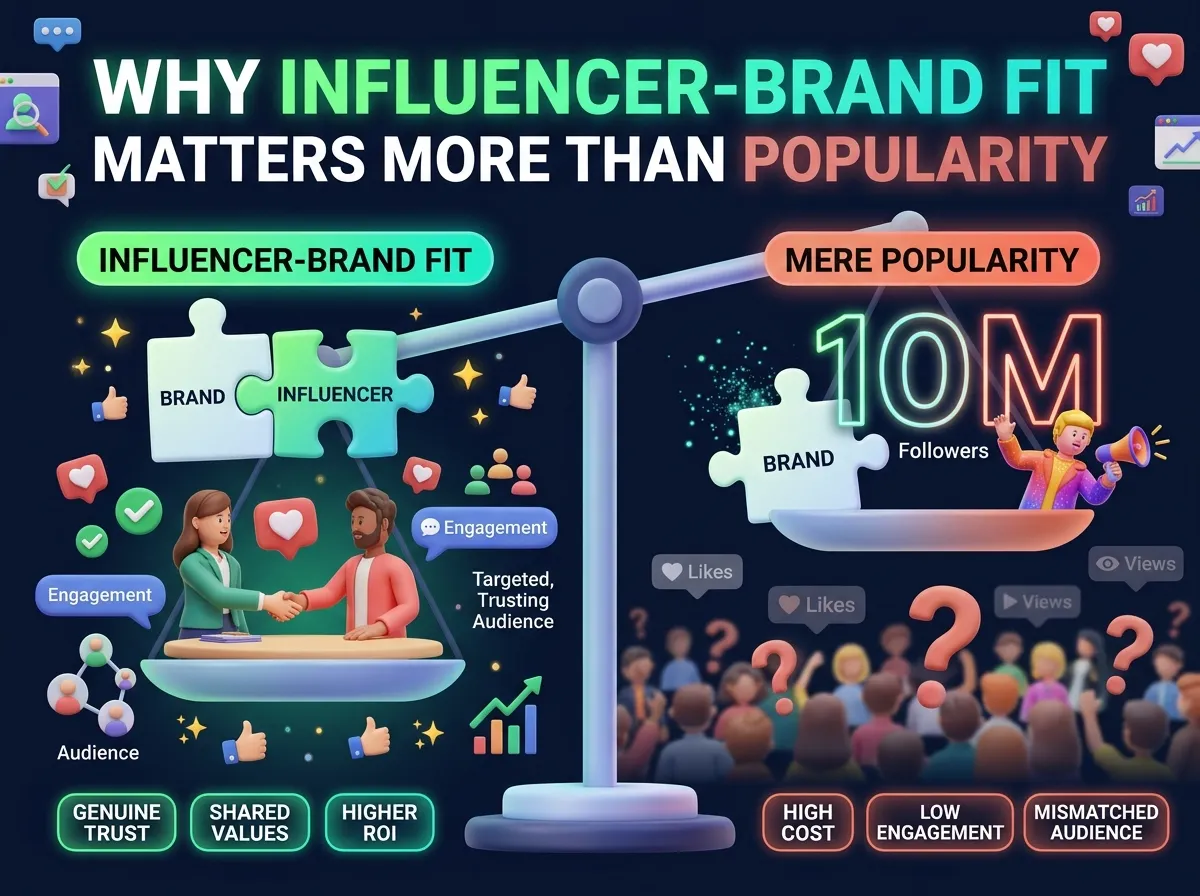
Influencer marketing often begins with discovery. Brands search for creators in a particular niche, compare their audience sizes, and review engagement rates. These figures are useful, but they cannot fully explain whether a creator is suitable for a specific campaign.
Consider a premium skincare brand that wants to reach customers interested in thoughtful beauty routines. A creator with millions of followers may regularly publish unrelated entertainment content, while a smaller beauty creator may have an audience that actively discusses skincare ingredients, routines, and product experiences.
The smaller creator may offer a stronger connection to the brand’s objectives, even if the larger creator appears more impressive on paper.
This is the difference between reach and relevance. Reach measures how many people may see a campaign. Relevance helps determine whether those people are likely to understand, appreciate, and respond to the message.
Strong brand fit can also make collaboration easier. When a creator already understands the product category and shares a compatible communication style, campaign content often requires less explanation and feels more natural.
For businesses investing in influencer partnerships, this alignment can support better audience trust, more meaningful engagement, and a clearer brand identity.
Influencer Brand Alignment: Connecting Values With Creator Identity
Influencer brand alignment begins with shared values. A creator’s public identity, content themes, and communication habits should reflect the principles a company wants to represent.
A sustainability-focused brand, for example, may look for creators who regularly discuss responsible consumption, product durability, or environmental awareness. Partnering with someone whose content frequently promotes excessive disposable purchases could create a contradiction that audiences notice.
Alignment does not require the creator and brand to be identical. In fact, different perspectives can make a campaign more interesting. The important factor is whether the partnership feels credible within the creator’s existing identity.
A creator who genuinely appreciates a product category can explain its benefits in a way that fits their usual content. Their audience is more likely to see the collaboration as a relevant recommendation rather than an unrelated advertisement.
Brands should also consider how creators communicate. A company known for thoughtful, professional messaging may not be comfortable with a partner whose content relies heavily on controversy or aggressive humor. Similarly, a playful consumer brand may benefit from a creator whose personality is energetic and informal.
The strongest alignment occurs when the brand’s values and the creator’s authentic voice can coexist without either side having to pretend.
Brand Influencer Compatibility and Audience Expectations
Audience compatibility is one of the most important parts of influencer selection. A creator may be personally compatible with a brand, but the partnership can still struggle if their followers have little interest in the product or service.
A useful evaluation begins with understanding the audience’s needs, interests, and purchasing context.
For example, a creator who shares practical home organization content may be a natural partner for storage products, household tools, or interior accessories. Their audience already engages with content related to improving living spaces.
A brand offering complex business software, however, may need a creator whose followers include professionals, business owners, or decision-makers. In this case, a lifestyle audience may not provide the right context for the campaign.
Brand influencer compatibility therefore involves more than demographic overlap. It also considers the audience’s interests, the problems they want to solve, and the type of content they trust.
A strong audience match allows the creator to introduce a product within a familiar conversation. This makes the campaign easier to understand and gives followers a reason to pay attention.
Influencer Audience Relevance: Looking Beyond Follower Numbers
Follower count is often the first statistic brands notice, but audience relevance deserves greater attention.
A creator’s audience may include people from different countries, age groups, professional backgrounds, and interest categories. Not all of these followers will be suitable for every campaign.
Brands should examine whether the creator’s audience overlaps with the intended customer group. They can also review the topics that generate meaningful discussion and the types of posts that receive consistent engagement.
Comments can provide useful context. If followers regularly ask questions about products, request recommendations, or discuss practical experiences, the creator may have an audience that values their opinions.
However, engagement should be interpreted carefully. A large number of likes does not automatically indicate purchase interest, and comments may reflect entertainment rather than product relevance.
Audience relevance becomes stronger when several signals work together: consistent topic interest, suitable audience characteristics, authentic engagement, and a clear connection between the creator’s content and the brand’s offering.
Influencer Partnership Selection: Choosing the Right Creator
Influencer partnership selection is a process of matching business objectives with creator strengths.
A brand launching a new product may need creators who can explain its features and introduce it to an interested audience. A company focused on reputation building may prefer creators whose content encourages thoughtful discussion and reinforces brand credibility.
The selection process should begin with the campaign’s purpose. Without a clear objective, brands may choose creators simply because they appear popular or frequently collaborate with other companies.
Once the objective is defined, the brand can evaluate creators according to their niche, audience, content quality, communication style, and previous partnership experience.
Reviewing a creator’s recent content is particularly valuable. It shows whether their current identity matches the campaign and whether their sponsored posts fit naturally within their usual publishing style.
A creator’s past collaborations can also reveal useful patterns. If they frequently promote unrelated products in a short period, followers may become less attentive to their recommendations. A more selective partnership history may indicate that the creator values relevance and audience trust.
The ideal creator is not necessarily the most famous or the least expensive. It is the person whose content and audience can support the campaign’s intended outcome.
Brand Values and Influencer Matching in Practice
Brand values influence how a company communicates, develops products, and builds customer relationships. When those values are reflected in influencer content, the partnership can reinforce a consistent identity.
A fitness brand that emphasizes realistic wellness may prefer creators who share balanced routines and practical experiences. A company focused on professional development may seek creators who demonstrate expertise, curiosity, and thoughtful communication.
The challenge is that values are not always visible in a profile description. They become clearer through a creator’s long-term content, public conversations, and approach to sponsored recommendations.
Brands should pay attention to how creators discuss products when they are not advertising. Their natural interests often reveal whether a partnership would be credible.
This does not mean creators must have used a brand’s product for years before collaborating. A new partnership can still be authentic when the creator understands the product, believes it offers value, and has the freedom to communicate honestly.
A meaningful match gives both parties room to contribute. The brand provides a clear purpose and useful product information, while the creator brings personal perspective and audience understanding.
Influencer Marketing Fit Analysis: A Deeper Look at Compatibility
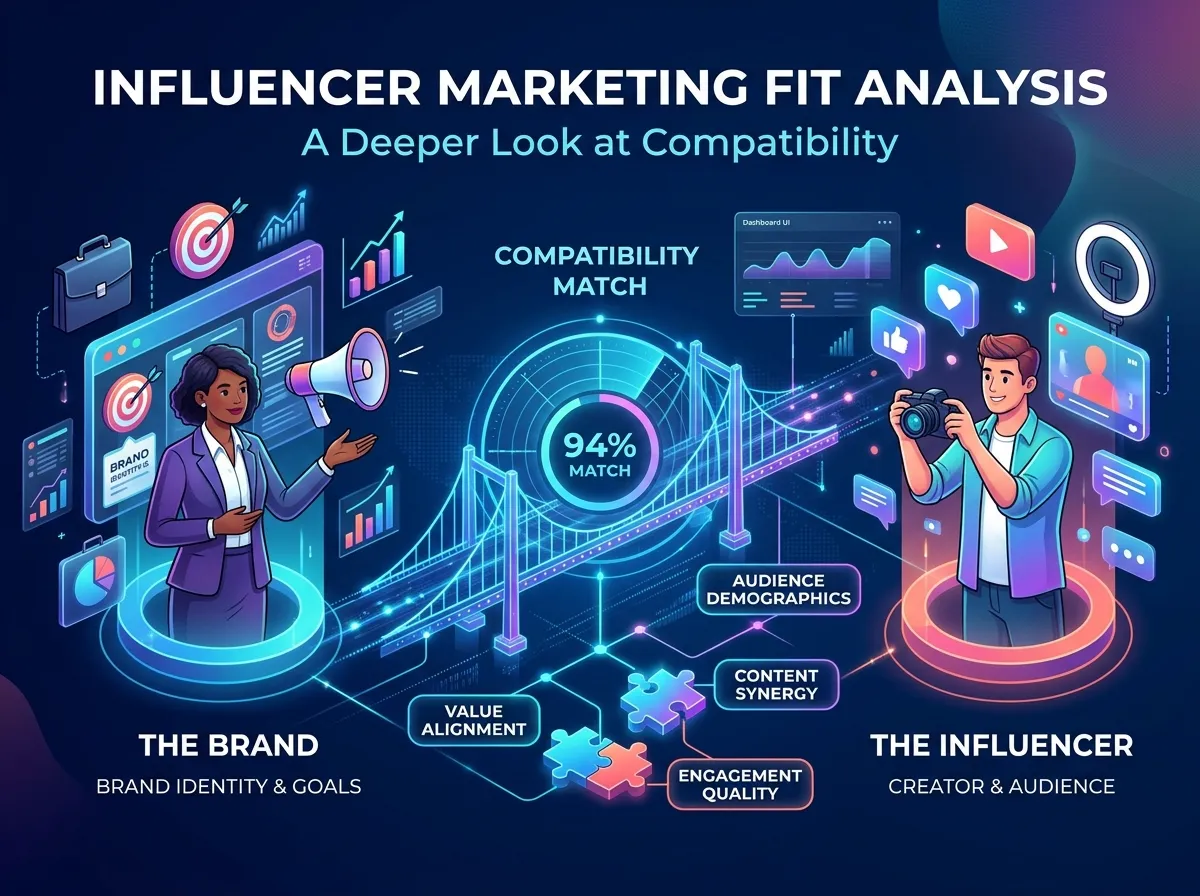
A thoughtful influencer marketing fit analysis considers several dimensions together rather than relying on one score.
Content relevance is an important starting point. The creator’s usual topics should connect naturally with the brand’s product category or campaign message.
Audience relevance follows closely. The creator should reach people who are likely to benefit from the product, understand its value, or be interested in the brand’s message.
Creative compatibility also matters. Some creators produce educational videos, while others focus on storytelling, reviews, humor, or visual inspiration. A campaign should suit the creator’s strengths rather than forcing an unfamiliar format.
Reputation and communication style deserve equal attention. A creator’s public behavior and approach to partnerships can affect how audiences perceive the brand. Reviewing past content helps identify potential inconsistencies before a collaboration begins.
Finally, brands should consider the creator’s willingness to work within reasonable campaign expectations. A strong partnership needs clear deliverables, accurate product information, and mutual respect for creative independence.
These dimensions create a more complete picture of compatibility. They also help marketers explain why a creator was selected, making the decision easier to evaluate internally.
Creator Brand Compatibility and Creative Freedom
One of the most common mistakes in influencer marketing is treating creators as advertising placements rather than creative partners.
A brand may provide a detailed script, strict wording, and a fixed visual concept. Although these requirements can protect important product information, excessive control may remove the personality that attracted the audience in the first place.
Creator brand compatibility works best when expectations are clear but the content remains recognizably the creator’s own.
For example, a technology brand may require a creator to demonstrate specific product features and avoid inaccurate claims. Within those boundaries, the creator can choose the examples, storytelling style, and presentation that suit their audience.
This balance helps sponsored content feel integrated into the creator’s regular work.
The relationship should also allow honest feedback. If a creator identifies a product limitation or believes a campaign message may confuse followers, the brand should consider that perspective. A credible collaboration does not require pretending that every product is perfect for every person.
Creative freedom is not the absence of brand standards. It is the ability to communicate the brand’s message in a way that remains truthful, relevant, and natural.
Influencer Audience Brand Match Across Different Industries
The meaning of a strong audience match changes depending on the industry.
In beauty and personal care, audiences may value product demonstrations, ingredient explanations, and personal routines. A creator who regularly shares practical beauty experiences can introduce a product in a familiar context.
In travel, the match may depend on destination interests, travel style, and audience expectations around accommodation or experiences. A luxury travel brand may need a different creator profile from a company promoting affordable family trips.
For business-to-business marketing, audience relevance often involves professional influence rather than consumer popularity. A creator may have a modest following but regularly reach industry specialists, managers, or business owners.
This is why B2B Influencer Marketing requires a different perspective on creator selection. Professional credibility, subject knowledge, and access to a relevant business community can be more valuable than broad entertainment reach.
Across industries, the principle remains consistent: the audience should have a genuine reason to care about the creator’s connection with the brand.
Brand-Influencer Collaboration Strategy: Building a Relationship That Lasts
A successful collaboration is often stronger when it is treated as a relationship rather than a single sponsored post.
Long-term partnerships allow creators to become more familiar with the product, understand the company’s values, and communicate benefits with greater confidence. Audiences may also find repeated, relevant recommendations more credible than a one-time promotion from an unfamiliar creator.
A brand-influencer collaboration strategy should establish a shared understanding of the campaign’s purpose, expected content, timeline, compensation, and evaluation process.
The relationship should also account for practical matters such as content approvals, disclosure requirements, usage rights, and brand permissions. These details help avoid confusion after content has been created or published.
For a closer look at protecting brand assets and managing authorized usage, Brand Permissions provides relevant context. Clear permissions are particularly important when a company intends to reuse creator content in advertisements, on product pages, or across its own social channels.
A well-managed partnership gives the creator a clear framework while allowing the brand to maintain consistency and protect its reputation.
Influencer Partnership Evaluation: Measuring the Right Outcomes
Once a creator has been selected and the campaign is underway, evaluation should focus on whether the partnership is delivering the intended value.
The right measurement approach depends on the campaign objective. A brand seeking awareness may examine reach, audience impressions, video views, and brand-related searches. A campaign focused on engagement may consider meaningful comments, saves, shares, and audience responses.
For sales-oriented partnerships, referral traffic, tracked conversions, qualified leads, and revenue may be more relevant. These measures help distinguish visibility from commercial impact.
Yet numbers alone cannot explain the full quality of a partnership. Audience sentiment, the relevance of comments, and the way followers respond to the creator’s recommendation can reveal whether the collaboration feels credible.
Compensation should also reflect the scope and value of the work. Content production, audience access, exclusivity, and usage rights can all influence the partnership’s commercial terms. Brands planning their budgets can explore Influencer Payments to better understand creator compensation and the factors that shape rates.
A useful evaluation considers both immediate campaign results and the relationship’s longer-term potential. A creator who consistently attracts the right audience and communicates the brand naturally may be a valuable partner even when one campaign does not produce an immediate sales spike.
When Influencer Brand Fit Goes Wrong
A poor influencer match can create problems that extend beyond weak campaign performance.
If the creator’s audience has little interest in the product, the campaign may generate views without meaningful engagement. If the creator’s public identity conflicts with the brand’s values, the partnership may confuse customers or weaken brand credibility.
Another issue arises when a company chooses a creator solely because competitors are working with them. Popularity does not guarantee compatibility, and a partnership that looks impressive externally may not serve the brand’s own audience or positioning.
Misaligned expectations can also affect the collaboration. A brand may expect direct sales from a campaign designed primarily for awareness, or a creator may receive unclear instructions that make the content feel unnatural.
These problems are often preventable through careful research, transparent communication, and realistic campaign objectives.
The most important lesson is that influencer selection should be based on a genuine connection between the creator, the audience, and the brand—not simply on visibility or trend appeal.
Making Influencer Brand Fit a Long-Term Advantage
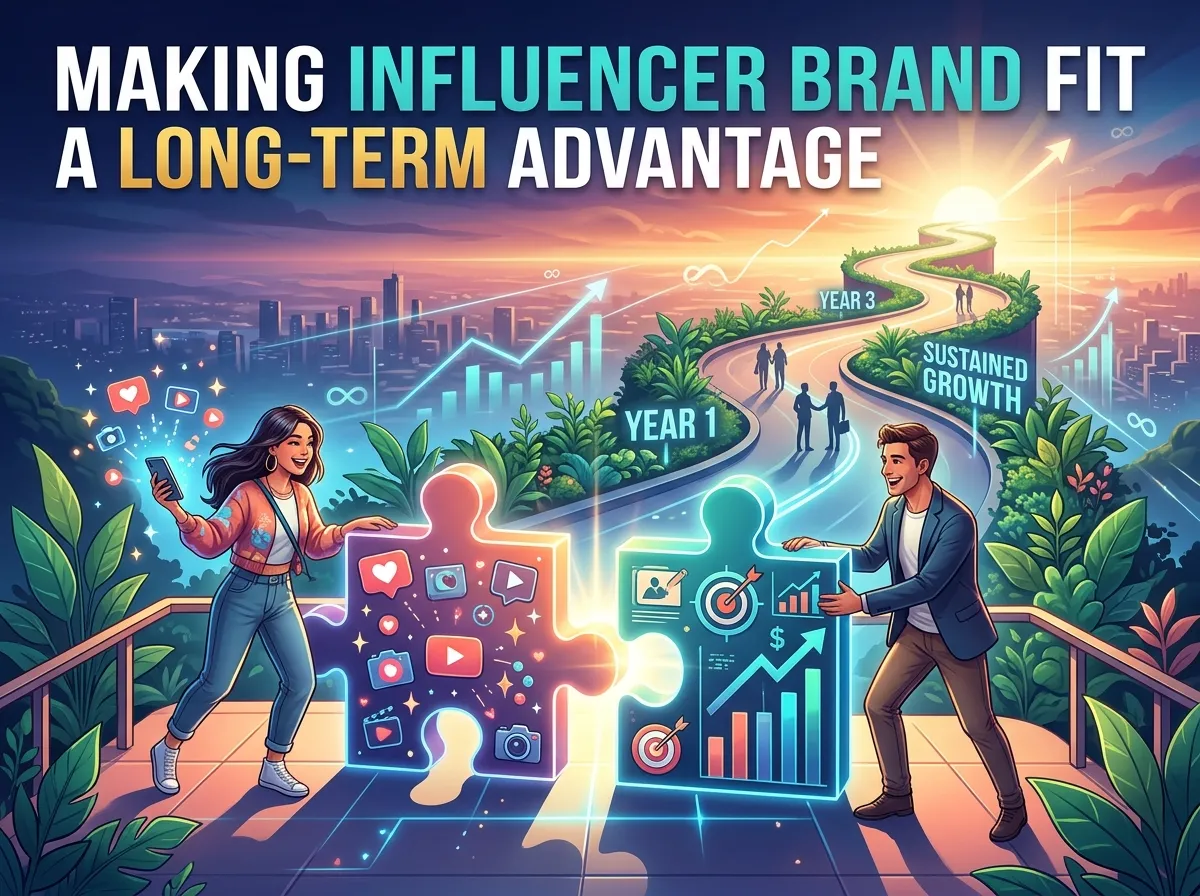
Influencer marketing becomes more effective when brands consistently choose creators who reflect their identity and understand their audience.
Strong Influencer Brand Fit creates a foundation for partnerships that feel relevant, credible, and mutually beneficial. It helps companies communicate through voices their audiences already recognize while giving creators opportunities to produce content that aligns with their interests.
The process requires more than reviewing follower counts. Brands need to consider shared values, audience relevance, content quality, creative compatibility, reputation, and campaign objectives.
When these elements work together, influencer collaborations can contribute to more than short-term exposure. They can strengthen customer relationships, improve brand perception, and support a consistent marketing presence over time.
Ultimately, the right influencer is not simply someone who can promote a product. It is someone whose audience, perspective, and content make the brand’s message meaningful.
10 Frequently Asked Questions
1. What is Influencer Brand Fit?
Influencer Brand Fit is the degree to which a creator’s identity, values, audience, and content align with a brand’s products, goals, and communication style.
2. Why is influencer brand alignment important?
It helps sponsored content feel natural and credible, making it easier for audiences to understand the creator’s connection with the brand.
3. How do brands evaluate influencer audience relevance?
Brands review audience interests, demographics, engagement quality, content topics, and the connection between followers’ needs and the promoted product.
4. Is follower count the most important factor in influencer selection?
No. Audience relevance, engagement quality, content credibility, and brand compatibility can be more valuable than follower count alone.
5. What is influencer marketing fit analysis?
It is the process of evaluating a creator’s content, audience, values, reputation, and creative style to determine whether they are suitable for a brand campaign.
6. How can brands match their values with influencers?
They can review the creator’s long-term content, public communication, previous partnerships, and genuine interests to identify shared values and potential conflicts.
7. What makes a strong brand-influencer collaboration?
A strong collaboration combines clear objectives, relevant audience alignment, fair compensation, transparent expectations, and creative freedom within appropriate brand standards.
8. How does influencer brand fit affect campaign performance?
A strong match can improve content relevance, audience engagement, trust, and the likelihood that followers will consider the brand’s products or services.
9. Can B2B brands benefit from influencer brand fit?
Yes. B2B brands can work with industry experts and professional creators whose knowledge and audience relationships support business credibility and relevant reach.
10. How should brands measure influencer partnership success?
Brands should evaluate results according to campaign goals, including reach, engagement, referral traffic, qualified leads, conversions, revenue, and audience sentiment.