How to Master Influencer Marketing on Any Budget
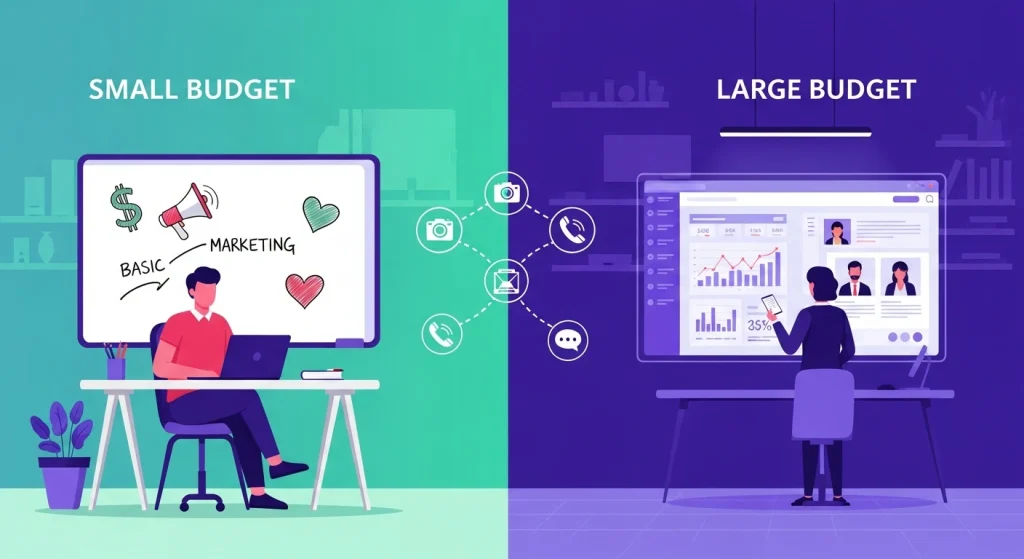
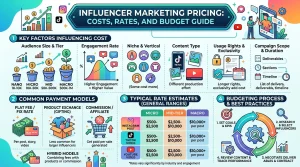
Influencer marketing doesn’t require a celebrity endorsement budget. Small businesses and startups can build authentic relationships with content creators, drive meaningful engagement, and achieve impressive ROI without breaking the bank.
The key lies in strategic planning, creative partnerships, and focusing on genuine connections rather than follower counts. This guide reveals practical strategies for launching successful influencer campaigns regardless of your budget constraints.
Understanding Budget-Friendly Influencer Marketing
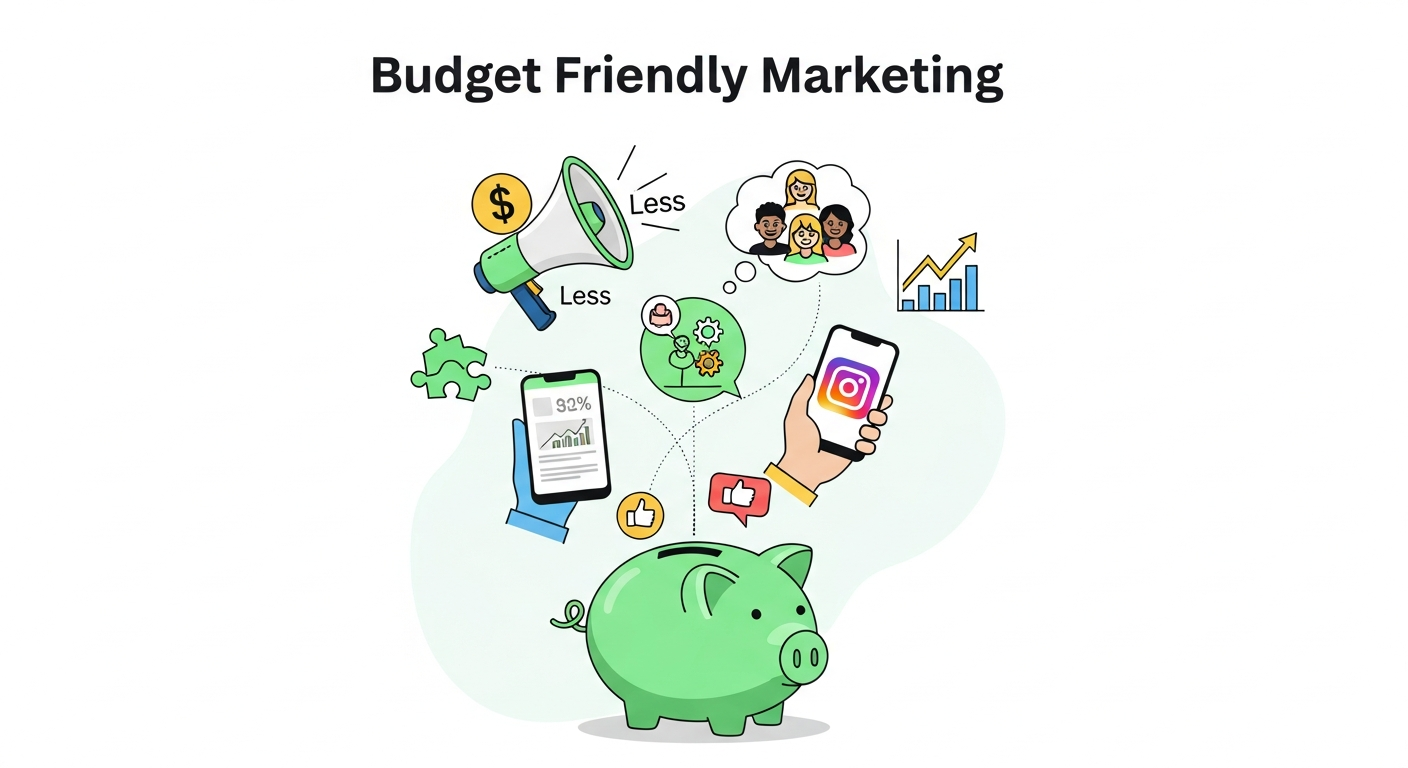
Budget constraints shouldn’t prevent you from leveraging influencer marketing effectively. The landscape has evolved beyond expensive celebrity partnerships to include diverse collaboration opportunities that deliver strong results.
Micro-Influencers Offer Better Value
Micro-influencers with 1,000 to 100,000 followers often provide superior engagement rates compared to macro-influencers. Their audiences tend to be more engaged, trusting, and likely to take action on recommendations.
These content creators typically charge significantly less than major influencers while maintaining authentic connections with their communities. Many are willing to work with smaller brands in exchange for products, services, or modest compensation.
Nano-Influencers Drive Authentic Engagement
Nano-influencers possess fewer than 1,000 followers but maintain extremely high engagement rates within their niche communities. These individuals often influence friends, family, and local networks with genuine enthusiasm for products they love.
Working with nano-influencers requires minimal investment while generating authentic word-of-mouth marketing that feels natural and trustworthy to their audiences.
Strategic Planning for Budget-Conscious Campaigns
Successful budget influencer marketing begins with clear objectives and realistic expectations about what you can achieve within your financial constraints.
Define Your Goals and Metrics
Establish specific, measurable goals before launching any influencer campaign. Common objectives include:
- Increasing brand awareness within target demographics
- Driving website traffic and email signups
- Generating sales or leads
- Building social media following
- Creating user-generated content
Choose metrics that align with your business objectives rather than vanity metrics like follower counts or total impressions.
Research Your Target Audience
Understanding your ideal customer enables you to identify influencers whose audiences match your target demographic. Analyze your existing customers to determine their interests, social media habits, and preferred content types.
Use social media analytics tools to research where your target audience spends time online and what type of content resonates with them.
Set Realistic Budget Expectations
Determine how much you can invest in influencer marketing without compromising other essential business activities. Consider both monetary costs and time investment required for campaign management.
Remember that successful influencer marketing often requires ongoing relationships rather than one-time campaigns, so plan for sustained investment over time.
Finding the Right Influencers Within Budget
Discovering affordable influencers who align with your brand requires strategic searching and relationship-building rather than expensive influencer marketing platforms.
Leverage Social Media Search Functions
Use platform-specific search features to find relevant influencers within your niche. Search for hashtags related to your industry, products, or target audience to discover active content creators.
Instagram, TikTok, and YouTube search functions help identify emerging influencers before they become expensive to work with.
Explore Influencer Marketing Platforms
Several platforms connect businesses with budget-friendly influencers:
- AspireIQ offers access to micro and nano-influencers
- Upfluence provides filtering options for different budget ranges
- Grin specializes in long-term influencer relationships
- Klear offers detailed analytics for influencer evaluation
Many platforms allow you to filter by engagement rates, audience demographics, and pricing to find suitable matches.
Build Relationships Organically
Engage authentically with potential influencers before proposing partnerships. Like their content, leave thoughtful comments, and share their posts when appropriate.
This organic relationship-building often leads to more favorable partnership terms and genuine enthusiasm for your brand.
Collaborate with Local Influencers
Local influencers often charge less than national creators while providing access to geographically relevant audiences. They’re particularly valuable for businesses with physical locations or region-specific services.
Local partnerships can include event collaborations, store visits, or community-focused content that builds authentic connections.
Creative Partnership Strategies

Budget constraints encourage creative partnership approaches that benefit both parties without requiring large cash investments.
Product Exchange Partnerships
Offering products or services in exchange for content creation works well with influencers who genuinely use and enjoy your offerings. This approach works particularly well for:
- Beauty and fashion brands
- Food and beverage companies
- Technology products
- Health and wellness services
Ensure the product value aligns with the influencer’s typical rates and audience size.
Affiliate Marketing Programs
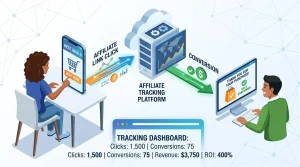
Create affiliate partnerships where influencers earn commissions on sales generated through their unique codes or links. This performance-based approach reduces upfront costs while incentivizing influencers to create compelling content.
Successful affiliate programs offer competitive commission rates and provide influencers with tracking tools to monitor their performance.
Long-term Brand Ambassador Programs
Develop ongoing relationships with select influencers who become authentic brand advocates. Ambassador programs often cost less per post than one-time campaigns while building stronger brand associations.
Consider offering exclusive discounts, early access to new products, or special events for your ambassadors.
User-Generated Content Campaigns
Encourage followers to create content featuring your products through contests, challenges, or hashtag campaigns. This strategy generates multiple pieces of content while building community engagement.
Offer prizes or recognition to participants, creating value without requiring individual influencer payments.
Maximizing Campaign Impact on Limited Budgets
Strategic campaign management ensures you extract maximum value from every dollar invested in influencer partnerships.
Focus on Quality Over Quantity
Working with fewer, highly engaged influencers often delivers better results than spreading your budget across many partnerships. Quality collaborations allow for deeper creative development and stronger brand alignment.
Repurpose Influencer Content
Maximize your investment by repurposing influencer-created content across your own marketing channels. Use their photos, videos, and testimonials in email campaigns, social media posts, and website content.
Always obtain proper permissions and credit influencers when repurposing their content.
Cross-Platform Content Strategies
Encourage influencers to create content for multiple platforms to increase reach and engagement. A single collaboration might include Instagram posts, Stories, TikTok videos, and YouTube mentions.
Track Performance Metrics
Monitor campaign performance using trackable links, promo codes, and social media analytics. Understanding which partnerships deliver the best ROI helps optimize future campaigns.
Key metrics to track include:
- Engagement rates on sponsored content
- Website traffic from influencer posts
- Conversion rates and sales attribution
- Brand mention sentiment
- Follower growth and quality
Building Long-term Influencer Relationships
Sustainable influencer marketing focuses on developing ongoing partnerships rather than transactional one-time deals.
Invest in Relationship Management
Treat influencers as business partners rather than advertising channels. Regular communication, feedback, and support help build lasting relationships that benefit both parties.
Provide Creative Freedom
Allow influencers creative control over how they present your brand to their audiences. Their understanding of what resonates with their followers often leads to more authentic and effective content.
Offer Exclusive Opportunities
Provide your best influencer partners with exclusive access to new products, events, or behind-the-scenes content. These perks help maintain engagement without requiring additional budget.
Show Appreciation and Recognition
Recognize successful partnerships publicly and privately. Share their content, write testimonials, and refer other brands when appropriate. Building goodwill encourages continued collaboration.
Measuring Success and ROI
Effective measurement helps optimize future campaigns and justify influencer marketing investments to stakeholders.
Establish Baseline Metrics
Record baseline metrics before launching campaigns to accurately measure impact. Include website traffic, social media engagement, email subscribers, and sales data.
Use Campaign-Specific Tracking
Implement unique tracking codes, landing pages, and affiliate links for each influencer partnership. This granular tracking reveals which collaborations deliver the best results.
Calculate True ROI
Consider both direct sales and indirect benefits when calculating ROI. Brand awareness, user-generated content, and long-term customer relationships all contribute to campaign value.
Document Lessons Learned
Maintain records of what worked well and what didn’t for each campaign. This knowledge helps refine future strategies and avoid repeating mistakes.
Your Budget-Friendly Influencer Marketing Success Plan
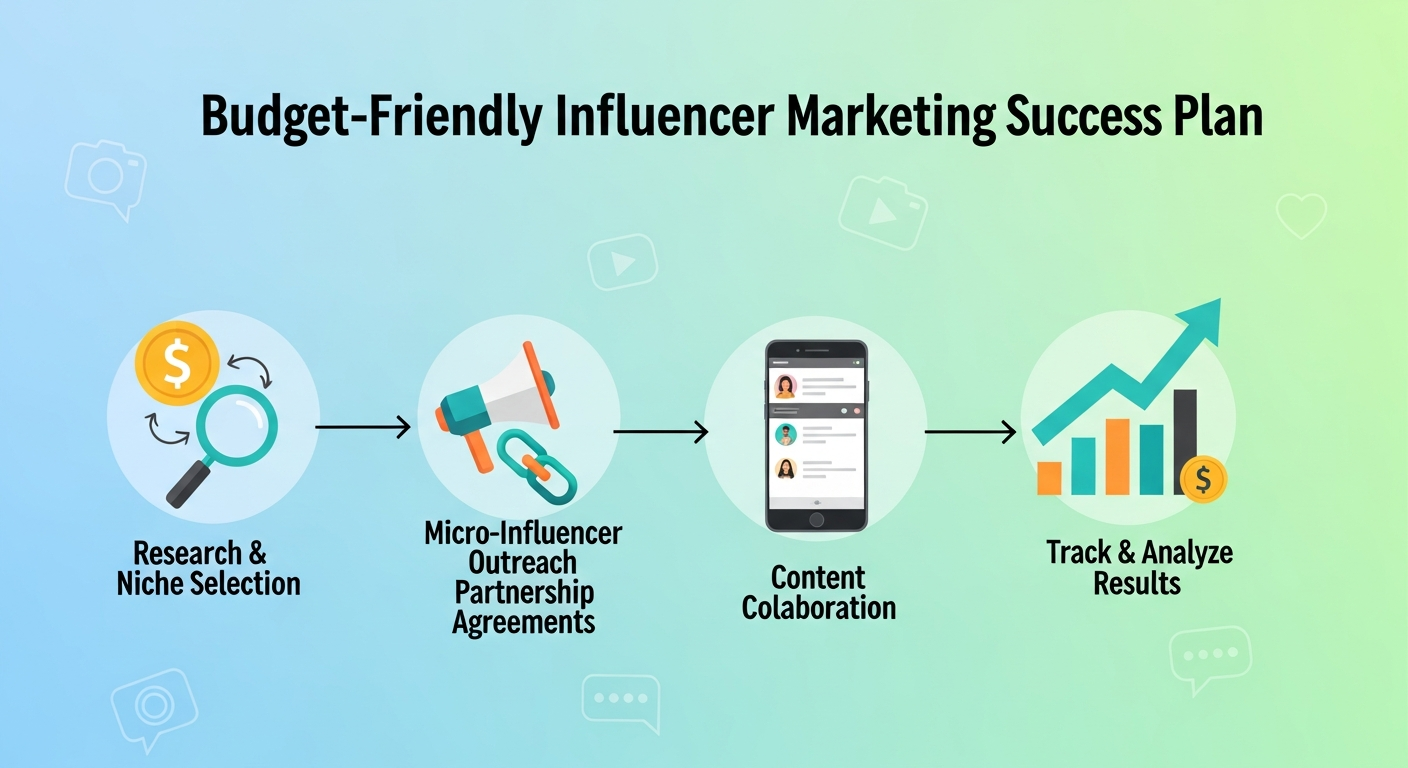
Influencer marketing success doesn’t require unlimited budgets—it demands strategic thinking, creative partnerships, and authentic relationship building. Small businesses can compete effectively by focusing on micro-influencers, developing long-term partnerships, and maximizing the value of every collaboration.
Start by identifying your target audience and setting clear objectives. Research potential influencers who align with your brand values and engage their communities authentically. Develop creative partnership proposals that provide value to both parties while staying within your budget constraints.
Remember that successful influencer marketing is about building genuine relationships, not just buying advertising space. Focus on quality partnerships that deliver measurable results and contribute to your long-term business growth.
Begin with a small test campaign to validate your approach, then scale successful strategies while continuously optimizing based on performance data. With patience, creativity, and strategic planning, any business can harness the power of influencer marketing regardless of budget size.
Conclusion
Influencer marketing isn’t reserved for brands with massive budgets. By focusing on authenticity, micro-influencers, and creative collaboration models, small businesses can achieve meaningful engagement and measurable ROI. Strategic planning, relationship-building, and content repurposing turn limited budgets into powerful growth engines. With the right approach, influencer marketing becomes a sustainable, scalable strategy that delivers long-term brand value—not just short-term visibility.
FAQs
1. What is budget-friendly influencer marketing?
Budget-friendly influencer marketing is a strategy that focuses on collaborating with micro and nano-influencers through affordable, value-driven partnerships. Instead of paying high fees to celebrities, brands leverage creators with smaller but highly engaged audiences to generate authentic content, trust, and measurable results at a lower cost.
2. Can small businesses use influencer marketing effectively?
Yes, small businesses can use influencer marketing very effectively. By focusing on niche audiences and authentic storytelling, smaller brands often outperform larger companies. Influencers help humanize brands, build trust quickly, and reach potential customers without the need for expensive advertising budgets.
3. Are micro-influencers better than celebrities for ROI?
In many cases, micro-influencers deliver better ROI than celebrities. They typically have higher engagement rates, stronger audience trust, and more meaningful interactions. Because their followers view them as relatable, recommendations feel more genuine, leading to better conversions at a fraction of the cost.
4. How much should a small business spend on influencer marketing?
There is no fixed budget requirement. Small businesses can start with product gifting, affiliate commissions, or campaigns costing a few hundred dollars. The key is aligning spending with clear goals and gradually increasing investment as performance and ROI become measurable.
5. Which platforms work best for budget influencer campaigns?
Platforms like Instagram, TikTok, and YouTube Shorts are ideal for budget campaigns because they offer strong organic reach and high engagement. These platforms prioritize short-form, authentic content, allowing small brands to gain visibility without relying heavily on paid promotion.
6. Is gifting products a valid influencer marketing strategy?
Yes, product gifting is a valid and widely used strategy, especially with nano and micro-influencers. When influencers genuinely like and use a product, their content feels natural and trustworthy. This approach works best when the product offers real value and aligns with the creator’s niche.
7. How can I find affordable influencers for my brand?
Affordable influencers can be found by searching relevant hashtags, exploring platform search features, and using influencer marketplaces with engagement-based filters. Reviewing comment quality, audience relevance, and posting consistency helps identify creators who deliver value beyond follower numbers.
8. Should brands use contracts with influencers?
Yes, even simple influencer contracts are highly recommended. Contracts help define content expectations, timelines, compensation, disclosure requirements, and content usage rights. Clear agreements protect both parties and ensure smooth, professional collaborations.
9. How do I measure influencer marketing ROI?
Influencer ROI can be measured using engagement rates, website traffic, conversions, promo code usage, affiliate sales, and audience growth. Long-term benefits such as brand awareness, user-generated content, and customer loyalty should also be considered when evaluating success.
10. Can influencer content be reused across marketing channels?
Yes, influencer content can be repurposed across social media, websites, ads, and email campaigns with proper permission. Repurposing content increases ROI by extending the lifespan and reach of each collaboration while maintaining authentic social proof.
11. Are long-term influencer partnerships better than one-time posts?
Long-term partnerships are often more effective than one-off collaborations. Ongoing relationships build stronger trust with audiences, reduce content costs over time, and create consistent brand messaging. Influencers become genuine brand advocates rather than temporary promoters.
12. Is influencer marketing scalable on a limited budget?
Yes, influencer marketing is highly scalable even with limited budgets. By testing small campaigns, tracking performance, and reinvesting in what works, brands can gradually expand reach, increase influencer partnerships, and grow sustainably without overspending.