Affiliate Marketing vs. Influencer Marketing: What’s the Difference?
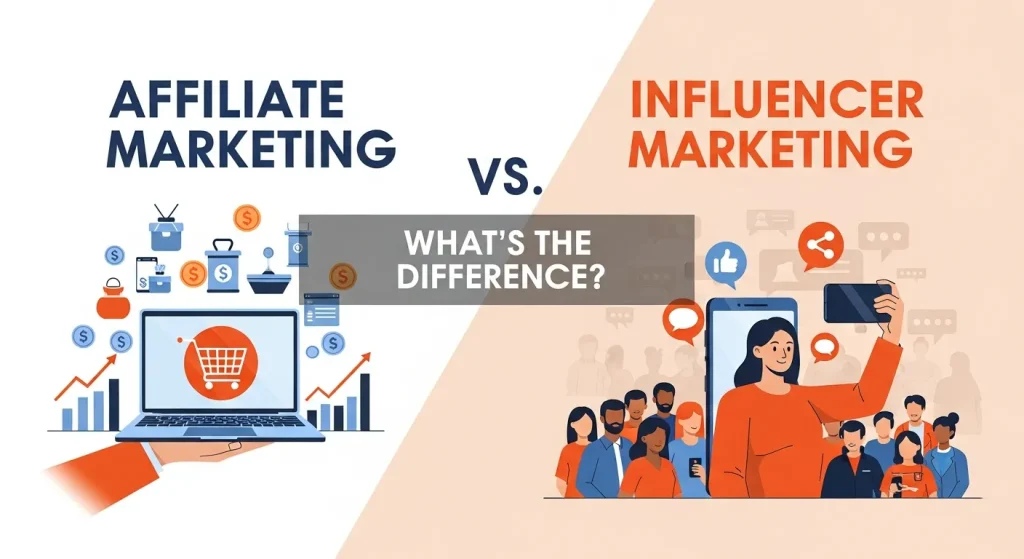
Affiliate Marketing vs Influencer Marketing pays partners commissions for driving measurable sales via tracked links, while influencer marketing pays creators to promote brands to their audience for awareness, trust, and engagement—sales may follow indirectly.
Two of the hottest digital marketing techniques being discussed today are affiliate marketing and influencer marketing. They’re attracting brands that want to drive reach, traffic and conversion. But, even though both involve partnering to sell a product or service, considerable variations exist in approach, purpose, and execution.
For marketers and business owners trying to choose which method to use, this guide will help differentiate affiliate marketing and influencer marketing. We’ll examine how each operates – their strengths and downsides, as well as when it’s best to use one over the other.
What is Affiliate Marketing?
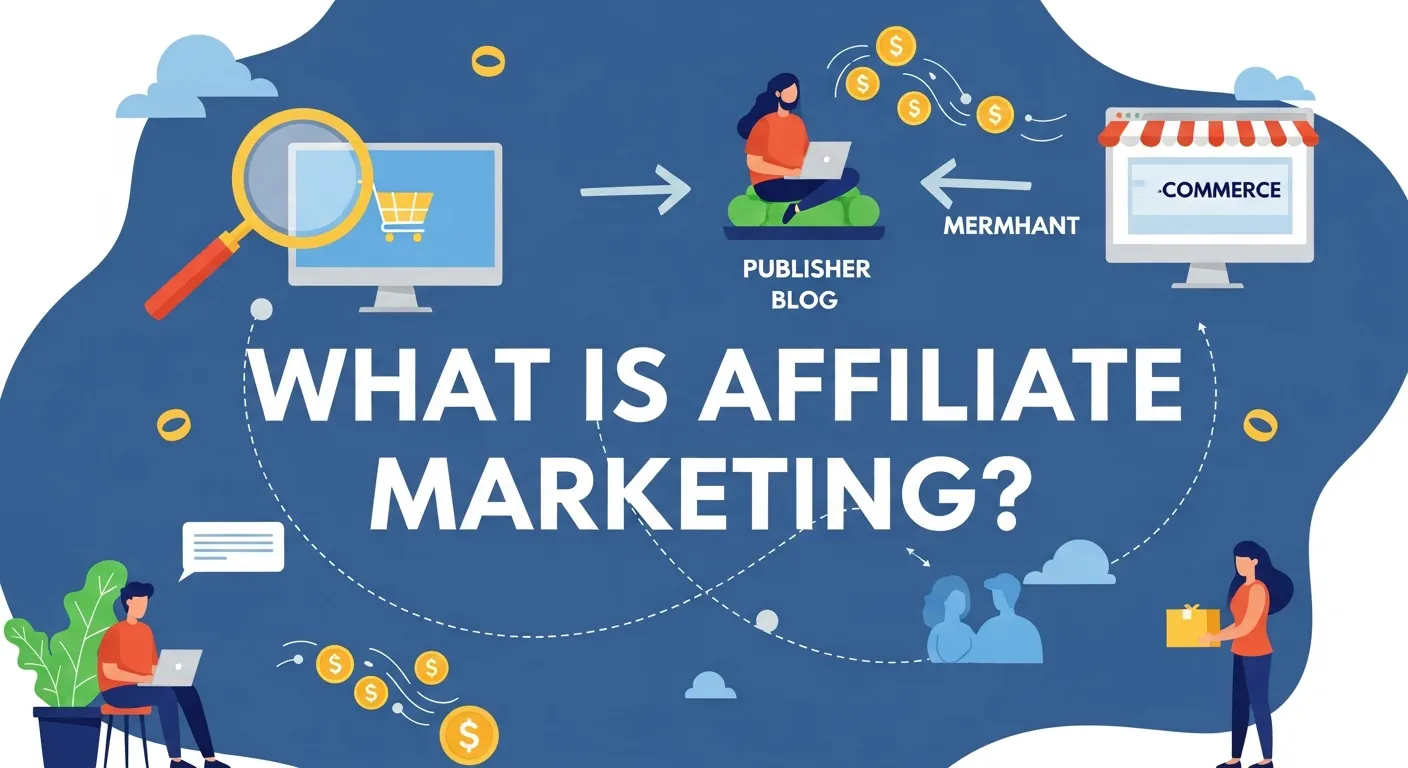
Affiliate marketing is a performance-based strategy where affiliates (usually website owners, bloggers, or online marketers) earn a commission for driving traffic, leads, or sales to a brand’s website through personalized affiliate links.
How Does Affiliate Marketing Work?
Here’s a simplified breakdown of the affiliate marketing process:
- A brand partners with affiliates who promote its products through a unique affiliate link.
- The affiliate uses this link in blogs, social media posts, emails, or videos to drive traffic to the brand’s website.
- When a consumer clicks the link and makes a purchase (or performs a desired action, such as signing up for a free trial), the affiliate earns a commission.
For example, a tech blogger might partner with an electronics company to promote a new laptop. If the blogger includes an affiliate link in their product review and readers use that link to buy the laptop, the blogger receives a commission for each sale.
Benefits of Affiliate Marketing
- Performance-Based Payment: Brands only pay affiliates when they achieve a specific action (e.g., sales), making it cost-effective.
- Scalable: You can partner with as many affiliates as you’d like, allowing for a large and diverse promotional reach.
- Measurable Results: With tracking tools, it’s easy to measure ROI for affiliate campaigns.
Drawbacks of Affiliate Marketing
- Low Creative Control: Affiliates create their own content, which may not always align with your brand voice.
- Quality Variation: Partnering with the wrong affiliates can dilute brand reputation if they poorly represent your product.
What is Influencer Marketing?
Influencer marketing, on the other hand, involves partnering with individuals on social media who have a dedicated following. These influencers promote your brand through authentic content in the form of posts, stories, videos, or live streams.
How Does Influencer Marketing Work?
This is how influencer marketing typically flows:
- A brand identifies influencers whose audience aligns with its target market.
- The brand reaches out with collaboration offers, detailing content requirements and compensation.
- The influencer creates sponsored content to share with their audience, incorporating the product naturally into their storytelling.
For instance, a beauty brand might collaborate with a makeup influencer to showcase a tutorial using their products in an Instagram Reel or TikTok video.
Benefits of Influencer Marketing
- Authenticity: Influencers have established trust with their followers, making their recommendations feel genuine and relatable.
- High Engagement: Influencer content often garners more engagement compared to traditional ads.
- Brand Awareness: You can quickly introduce your product to a highly targeted and loyal audience.
Drawbacks of Influencer Marketing
- Higher Upfront Costs: Influencers, especially those with large followings, may require significant fees for collaborations.
- Risk of Mismatched Partnerships: Choosing an influencer who doesn’t resonate with your audience can result in wasted resources.
- Limited ROI Metrics: While it’s easier now to track metrics like engagement and reach, tying influencer efforts directly to sales isn’t always straightforward.
Key Differences Between Affiliate Marketing and Influencer Marketing
To make an informed decision, you need to understand where these two methods vary. Below is a side-by-side comparison:
| Affiliate Marketing | Influencer Marketing | |
| Goal | Drive measurable actions (sales, leads). | Build brand awareness and trust. |
| Partnership | Affiliates are often bloggers, website owners, or marketers with proven audiences. | Influencers are individuals on social media with engaged followers. |
| Payment Model | Performance-based (commission per sale or action). | Upfront fees or rates per campaign are often fixed. |
| Content Control | Affiliates produce content independently. | Brands can negotiate content specifics. |
| Best Suited For | Long-term business partnerships. | Short-term bursts of attention or strategic campaigns. |
When to Use Affiliate Marketing
Affiliate marketing is a long-term game, making it ideal if your primary goal is cost-effective customer acquisition and tracking measurable outcomes like sales. This strategy works best for businesses with robust customer acquisition funnels (e.g., e-commerce brands or subscription services).
For example:
- E-commerce Brands: If you sell products online, you can recruit bloggers and marketers with relevant traffic sources to drive consistent sales.
- Software Services: SaaS companies often use affiliates to promote free trials, which eventually convert to paid subscriptions.
How to Structure High-Performing Affiliate Programs

While Affiliate marketing is performance-driven, success depends heavily on how well your affiliate-programs are structured. Many brands fail not because the model doesn’t work, but because their commission models, onboarding systems, or support resources are weak.
A strong affiliate structure ensures scalability, partner motivation, and long-term growth.
Key Elements of a Successful Affiliate Program
1. Competitive Commission Models
- Flat-rate per sale
- Percentage-based commission
- Tiered rewards for high performers
- Recurring commissions (ideal for SaaS or subscriptions)
2. Clear Tracking & Attribution
- First-click vs. last-click attribution
- Cookie duration policies
- Cross-device tracking (important as mobile dominates traffic)
3. Affiliate Enablement Resources
- Pre-made banners and creatives
- Email swipe copy
- SEO-friendly product descriptions
- Data dashboards for performance monitoring
4. Incentive Systems
- Performance bonuses
- Exclusive discounts for top affiliates
- Early product access
Example Commission Structure Table
| Business Type | Commission Model | Recommended Cookie Duration | Best Incentive Type |
|---|---|---|---|
| E-commerce | 5–20% per sale | 30–60 days | Tiered commission boosts |
| SaaS Subscription | 20–40% recurring | 60–90 days | Recurring lifetime rewards |
| Online Courses | 30–50% per sale | 30 days | Launch bonuses |
| Digital Marketplace | 10–25% per transaction | 30 days | Volume-based incentives |
When designed correctly, affiliate programs become a scalable revenue engine within your broader marketing-strategy.
The Role of Mobile & Marketplace Advertising in Modern Affiliate Marketing
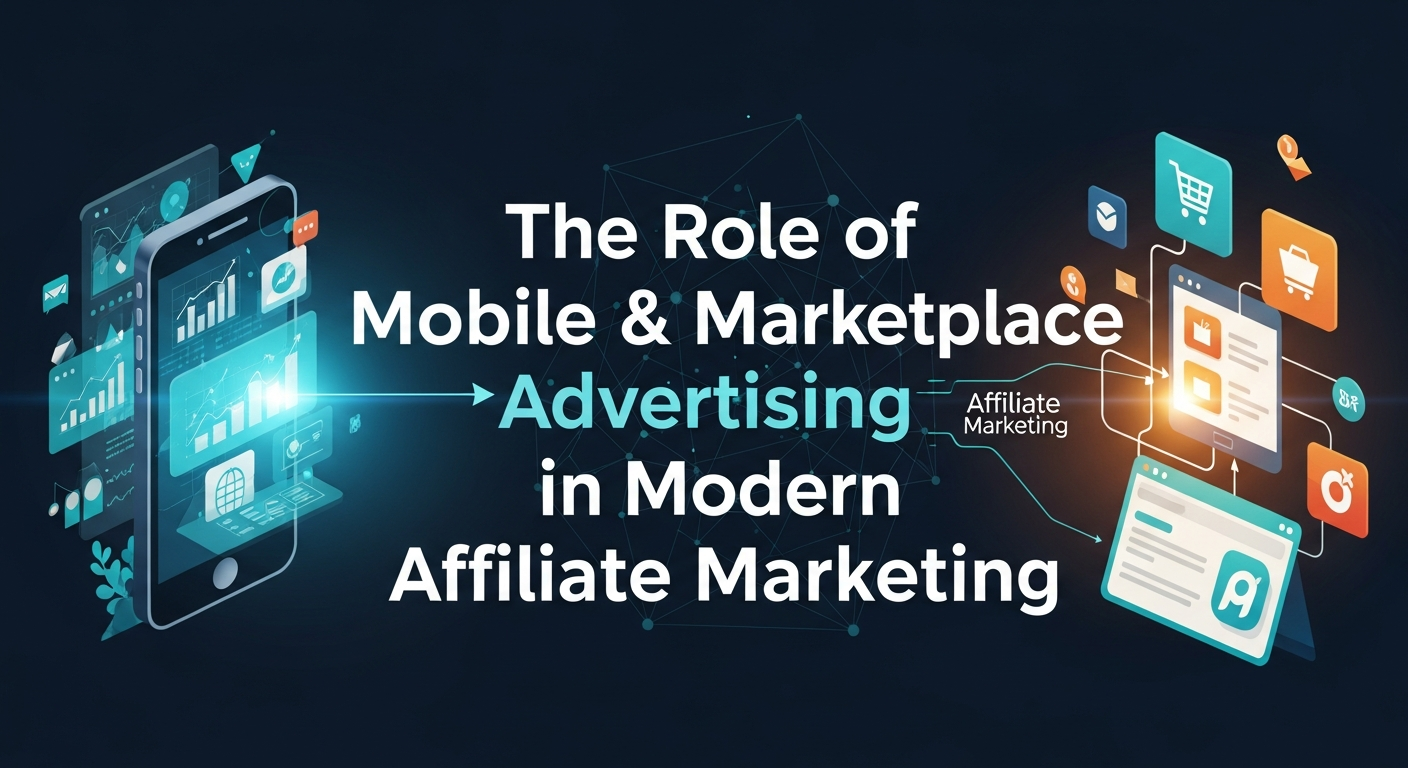
Affiliate marketing has significantly transformed digital marketing, especially with the rise of mobile-first consumers and large digital marketplaces.
Today, more than half of affiliate traffic comes from mobile devices. That means brands must optimize for:
- Mobile landing pages
- Fast-loading checkout processes
- Mobile-friendly tracking links
- In-app attribution
This is where work-mobile-marketing becomes critical. If your funnel is not optimized for mobile, affiliates may send traffic that never converts.
Additionally, affiliate marketing increasingly overlaps with marketplace-advertising platforms such as:
- Amazon Associates
- App marketplaces
- Online course platforms
- Subscription service hubs
Affiliates now promote products not only through blogs but also through:
- Comparison websites
- Deal sites
- Review platforms
- Coupon aggregators
Mobile vs Desktop Affiliate Performance Comparison
| Metric | Mobile Traffic | Desktop Traffic |
|---|---|---|
| Conversion Rate | Lower average | Higher average |
| Volume | Higher | Moderate |
| Checkout Abandonment Rate | Higher | Lower |
| Speed Sensitivity | Extremely High | Moderate |
Brands that optimize for mobile-first affiliate funnels often see significantly improved ROI.
Compliance, Transparency & Brand Protection in Affiliate Marketing

As Affiliate marketing continues to evolve, compliance and ethical practices are becoming increasingly important in brand-marketing. Both affiliates and brands must adhere to advertising regulations, disclosure laws, and platform-specific policies.
Why Compliance Matters
- Protects brand reputation
- Avoids legal penalties
- Builds consumer trust
- Prevents misleading promotions
For example:
- Affiliates must clearly disclose partnerships (#ad, #affiliate)
- Claims about products must be accurate
- Email promotions must follow anti-spam regulations
Common Affiliate Compliance Risks
| Risk Type | Example | Prevention Strategy |
|---|---|---|
| Misleading Claims | Exaggerated product benefits | Provide approved messaging guidelines |
| Trademark Bidding | Affiliates bidding on your brand name | Clear PPC rules in agreements |
| Cookie Stuffing | Forced tracking without user action | Use secure affiliate platforms |
| Fake Leads or Fraud | Bot-generated signups | Fraud detection tools |
Creating clear affiliate agreements and ongoing monitoring systems protects long-term brand equity.
When to Use Influencer Marketing
Influencer marketing works best when your goal goes beyond direct sales and focuses on perception, positioning, and audience connection. Unlike performance-driven channels, influencer campaigns are designed to build credibility, spark conversations, and shape how people feel about your brand.
This approach is particularly powerful in competitive markets where trust and relatability influence buying decisions more than price alone.
Influencer marketing is most effective in the following scenarios:
1. You’re Launching a New Product
When introducing a new product, visibility and credibility are critical. Influencers can showcase your product in action, demonstrate real-life usage, and answer common objections through storytelling.
Instead of simply advertising features, influencers:
- Provide social proof
- Create first impressions
- Generate early momentum
- Encourage audience curiosity
A well-executed launch campaign can quickly create buzz and accelerate market adoption.
2. You Want to Build a Lifestyle Narrative
Some products are not just functional — they represent identity, values, or aspirations. Influencers excel at integrating products naturally into their daily lives, making your brand feel authentic rather than promotional.
This is especially effective for:
- Fashion and beauty brands
- Fitness and wellness products
- Travel and hospitality services
- Sustainable and eco-conscious brands
Through consistent storytelling, influencers help position your brand within a specific lifestyle or community.
3. You Need Rapid Brand Awareness
If your goal is immediate reach — such as during a seasonal campaign, flash sale, or limited-time offer — influencers can deliver fast exposure to targeted audiences.
Their established communities allow brands to:
- Access niche markets instantly
- Boost engagement quickly
- Increase website traffic in a short timeframe
This makes influencer marketing ideal for time-sensitive campaigns.
4. You Want Stronger Audience Engagement
Influencer content often drives higher engagement than traditional advertising because it feels conversational and personal. Followers trust influencers’ opinions and are more likely to comment, share, or ask questions.
If your objective includes:
- Community building
- Growing social media presence
- Increasing brand conversations
Then influencer partnerships can significantly amplify interaction.
Which Strategy Should You Choose?
Choosing between affiliate marketing and influencer marketing depends on your primary objective, budget flexibility, and growth timeline.
Here’s a clearer strategic breakdown:
Choose Affiliate Marketing If:
- You prioritize measurable ROI
- You want performance-based payouts
- Your focus is customer acquisition
- You have a well-optimized conversion funnel
- Long-term scalability matters most
Affiliate marketing is ideal when your goal is predictable, trackable revenue growth.
Choose Influencer Marketing If:
- You want rapid brand visibility
- You’re entering a new market
- You’re launching a product
- Emotional branding matters
- You want stronger engagement
Influencer marketing is ideal when brand perception and awareness are your top priorities.
The Smart Approach: Combine Both
In many cases, the most effective strategy is integration rather than choosing one over the other.
You can:
- Turn influencers into affiliates
- Provide them with unique tracking links
- Pay a hybrid model (flat fee + commission)
- Measure both engagement and conversions
This blended model allows you to benefit from influencer credibility while maintaining affiliate-style performance tracking.
Wrapping Up
The discussion relates to Affiliate Advertising vs. Influencer Advertising. Now that you’ve understood the reason for discussion let’s discuss the two most powerful marketing tools that serve business to support different goals. Whether you’re making sales via affiliate links or getting the hype machine going with influencer collabs, these approaches can take your brand to the next level when used thoughtfully.
If you’re trying to optimize for impact and time-saving, think about how you could combine these strategies as part of a single strategy. Not sure how to get started? Join our consultation today with experts to discover which approach your business can leverage.
Final Thought
If your brand needs trust and storytelling, start with influencer marketing.
If you need direct, measurable growth, prioritize affiliate marketing.
If your budget allows — combine both for maximum impact.
Frequently Asked Questions (FAQs)
1. What is the main difference between Affiliate Marketing vs Influencer Marketing?
The main difference is in the payment and goal structure. In Affiliate Marketing vs Influencer Marketing, affiliate marketing focuses on performance-based commissions for sales or leads, while influencer marketing emphasizes brand awareness, engagement, and audience trust through paid collaborations.
2. Which is more cost-effective: affiliate marketing or influencer marketing?
Affiliate marketing is generally more cost-effective because brands only pay when a measurable action occurs. Influencer campaigns often require upfront fees, making them higher risk but potentially more powerful for awareness-driven influencer strategy goals.
3. Can affiliate marketing and influencer marketing work together?
Yes. Many brands combine both approaches by turning influencers into affiliates. This hybrid affiliate-marketing-influence model allows influencers to earn commissions while also creating authentic promotional content.
4. Is affiliate marketing better for small businesses?
Yes, affiliate marketing is often ideal for small businesses because it minimizes upfront costs and focuses on performance. A well-structured affiliate-marketing guide can help startups scale without heavy advertising expenses.
5. When should a business choose influencer marketing?
Businesses should choose influencer marketing when launching new products, building lifestyle branding, or aiming for rapid visibility. A well-planned influencer-marketing-strateg helps brands connect emotionally with audiences.
6. How does affiliate marketing fit into a long-term marketing strategy?
Affiliate marketing works well as a long-term revenue engine. Once affiliate-programs are established, they consistently generate traffic and conversions, making them a stable part of your broader marketing ecosystem.
7. Are influencers part of the digital marketing evolution?
Yes. Influencers-digital-marketing has significantly transformed how brands communicate online. Social platforms have enabled creators to become powerful brand advocates with highly targeted audiences.
8. Which strategy provides better ROI?
Affiliate marketing usually provides clearer ROI because performance metrics like clicks, leads, and sales are directly trackable. Influencer campaigns may require additional tracking tools to measure full conversion impact.
9. Can these strategies support eco-friendly strategies?
Absolutely. Brands promoting sustainable or eco-friendly strategies can leverage influencers to educate audiences while using affiliate marketing to drive measurable, sustainable product sales.
10. What should beginners start with: affiliate or influencer marketing?
Beginners with limited budgets often start with affiliate marketing due to its low financial risk. However, brands prioritizing storytelling and audience connection may begin with a focused influencer strategy.